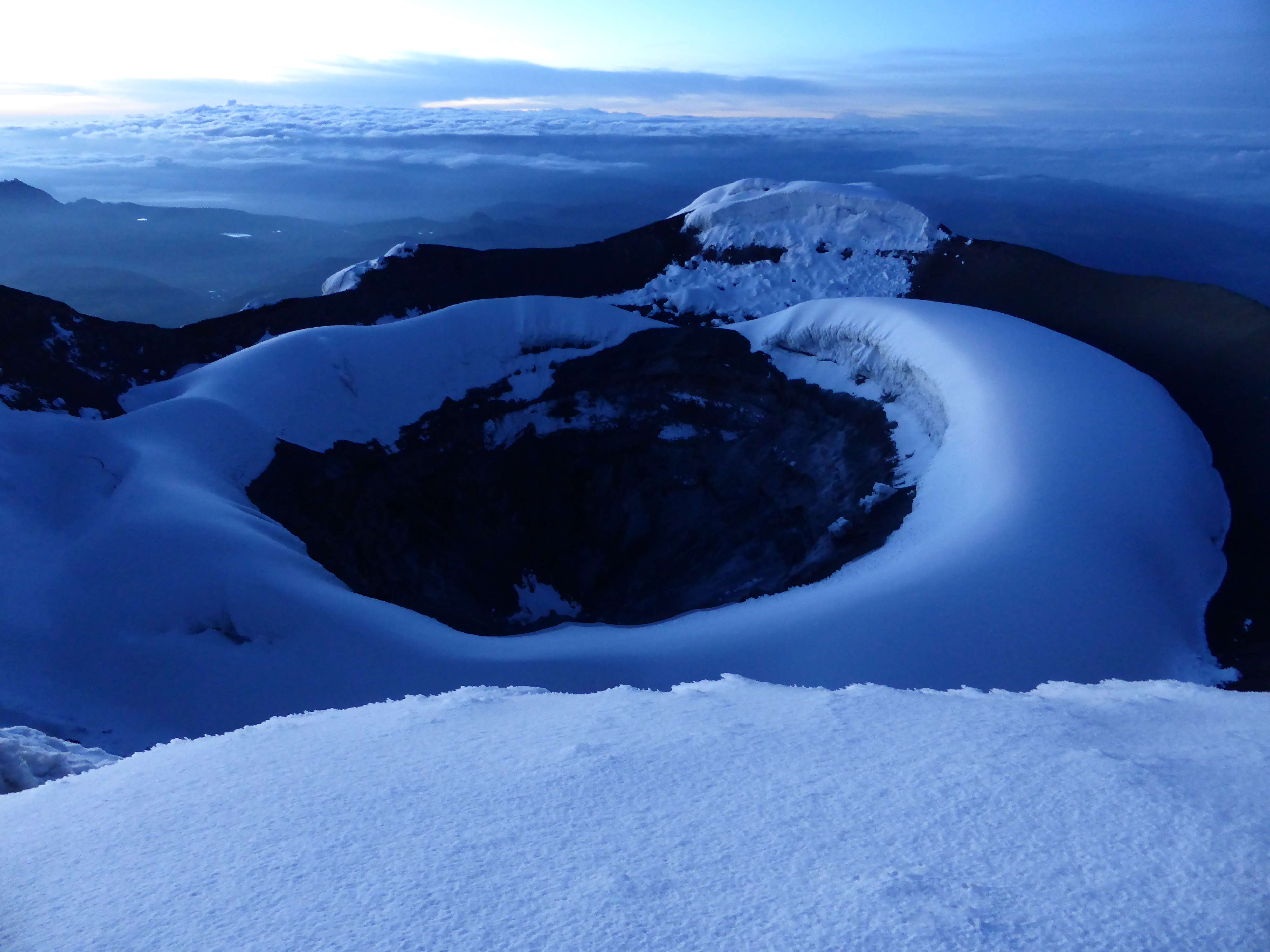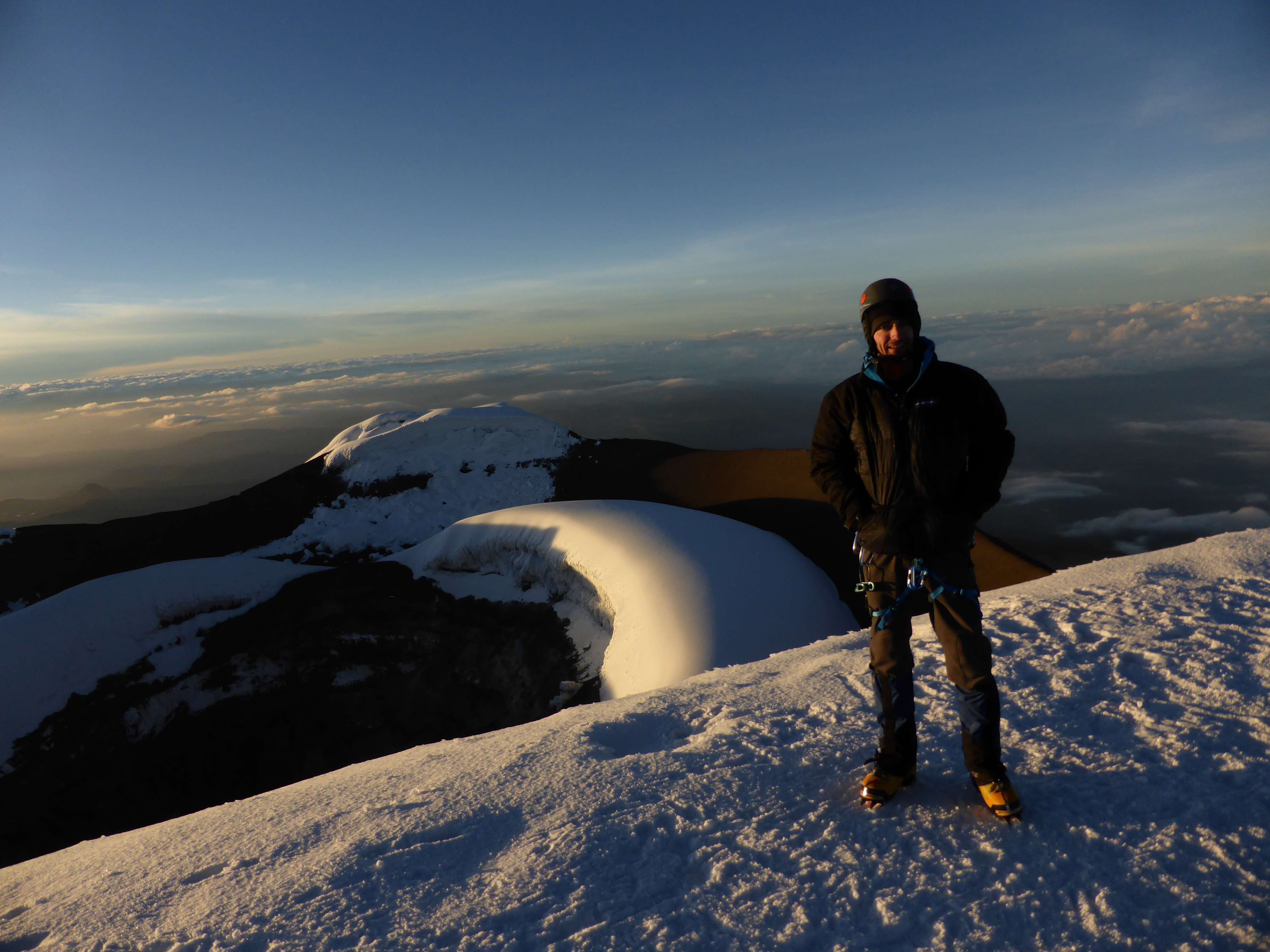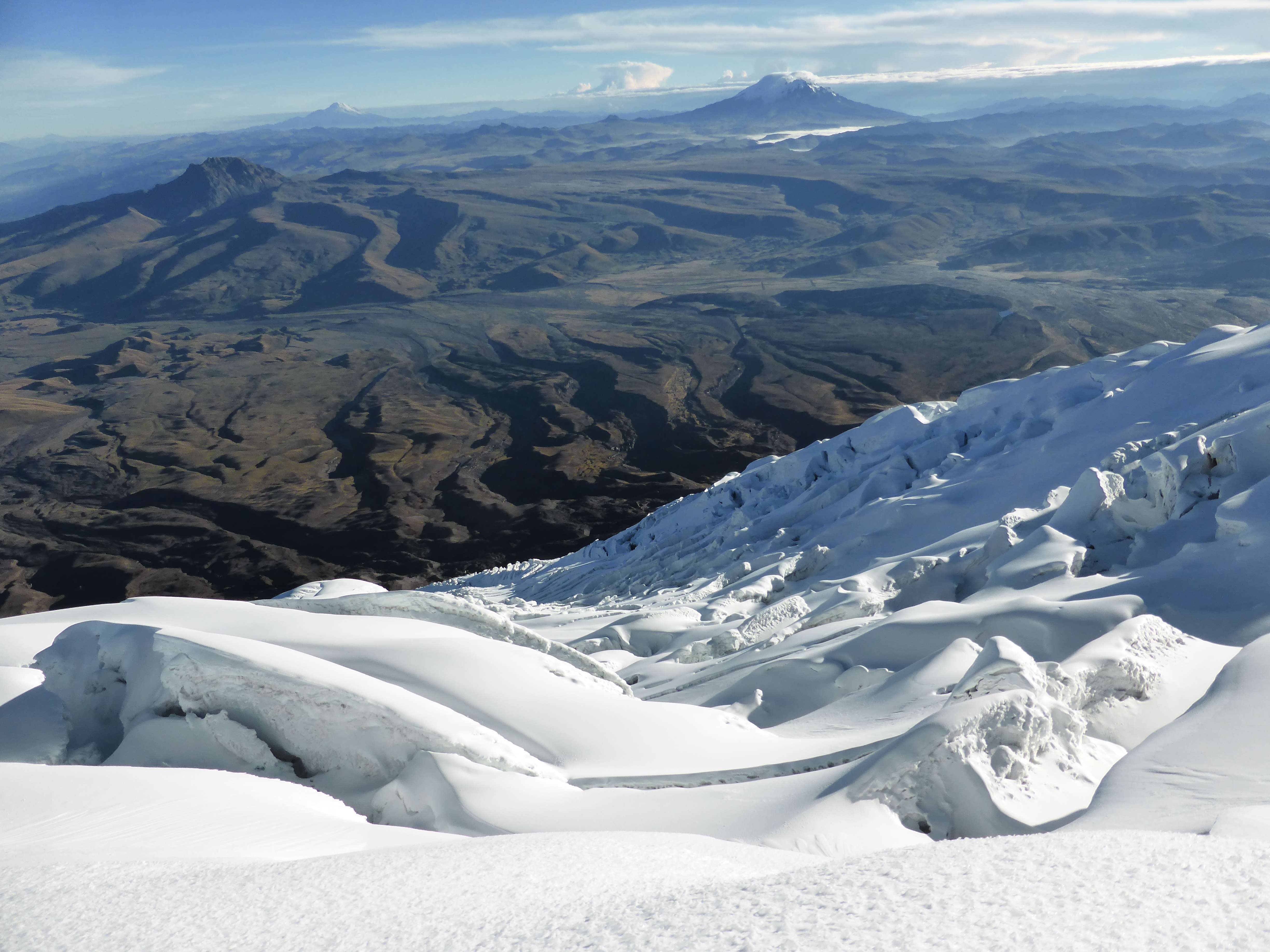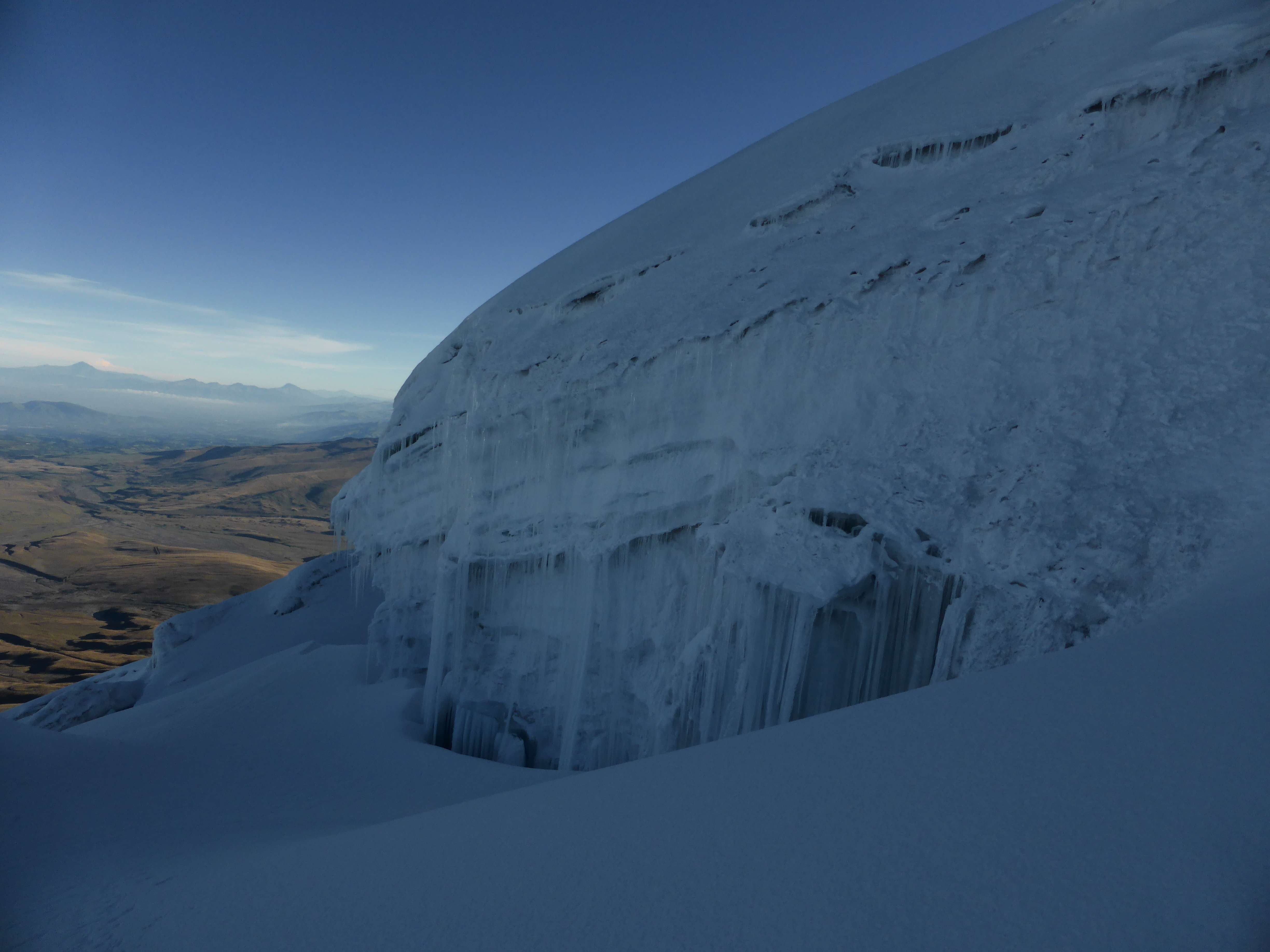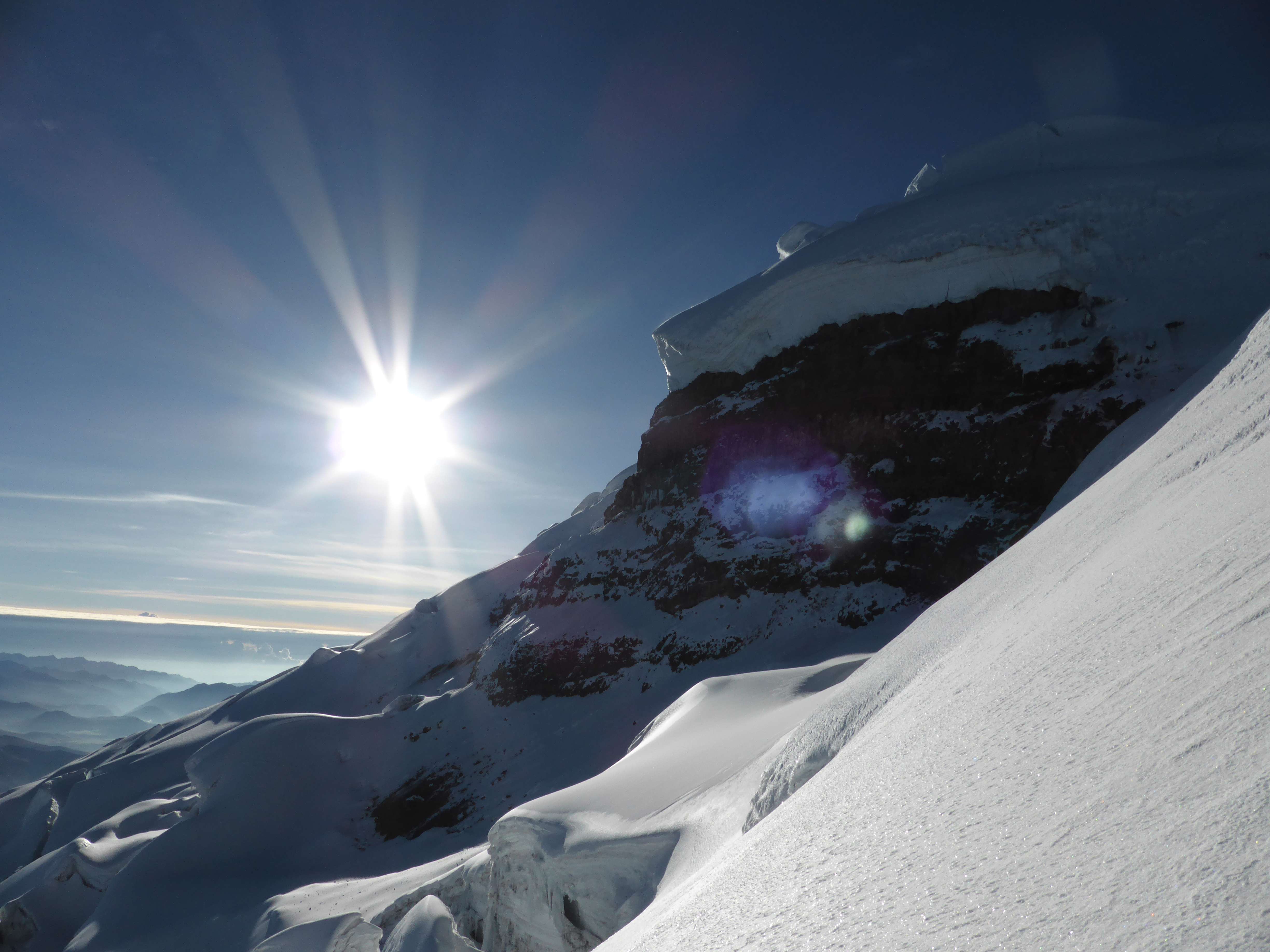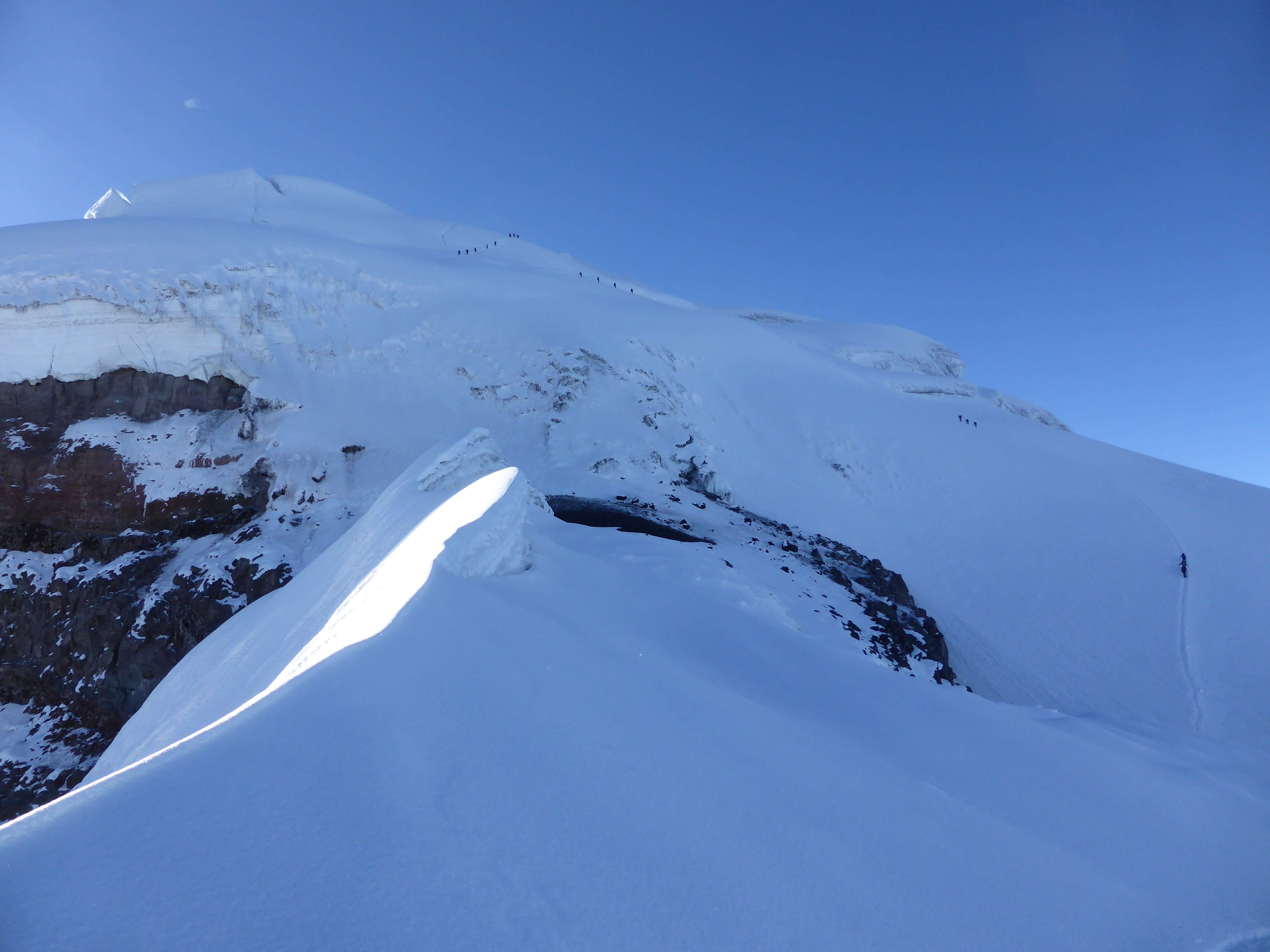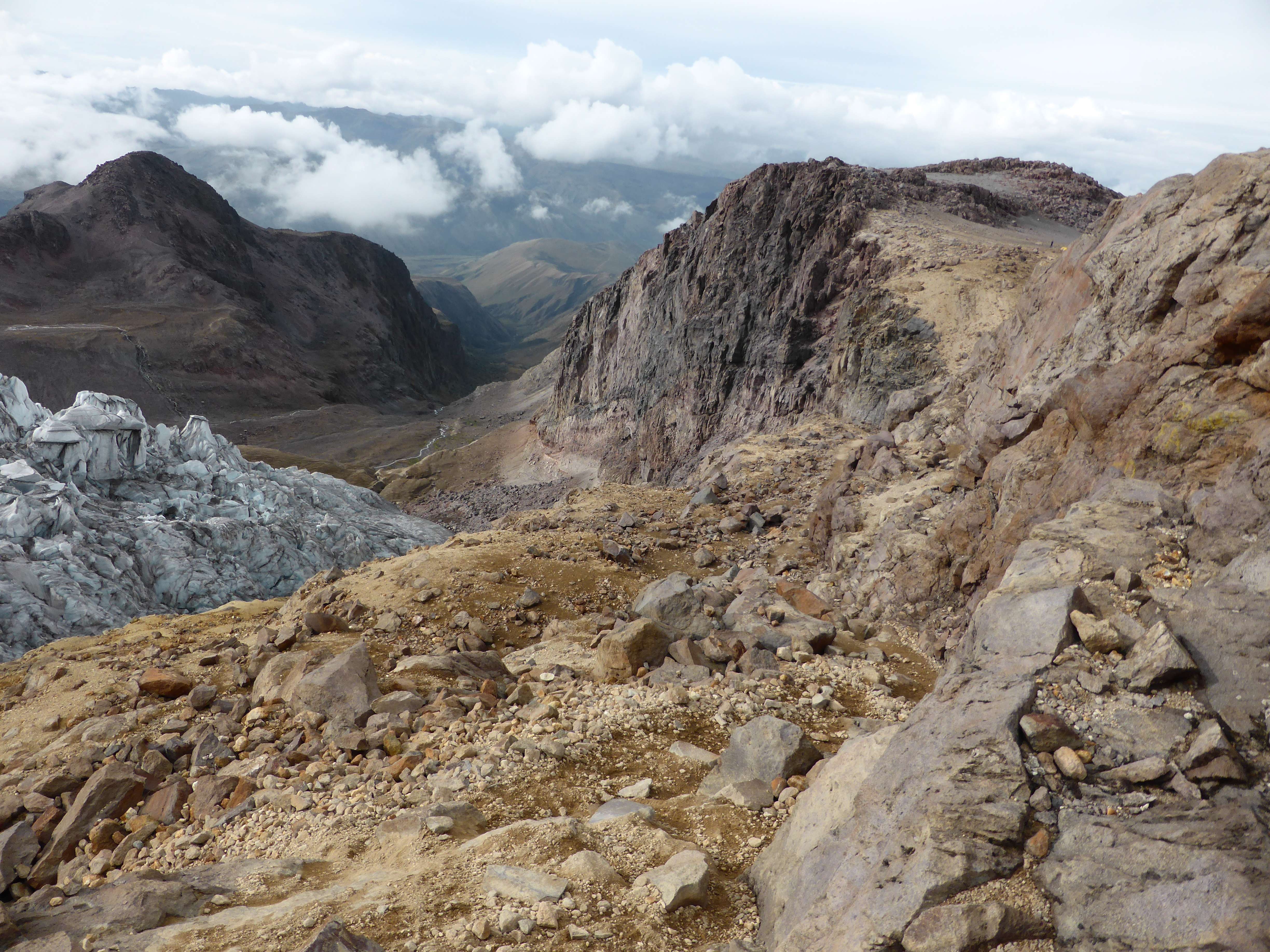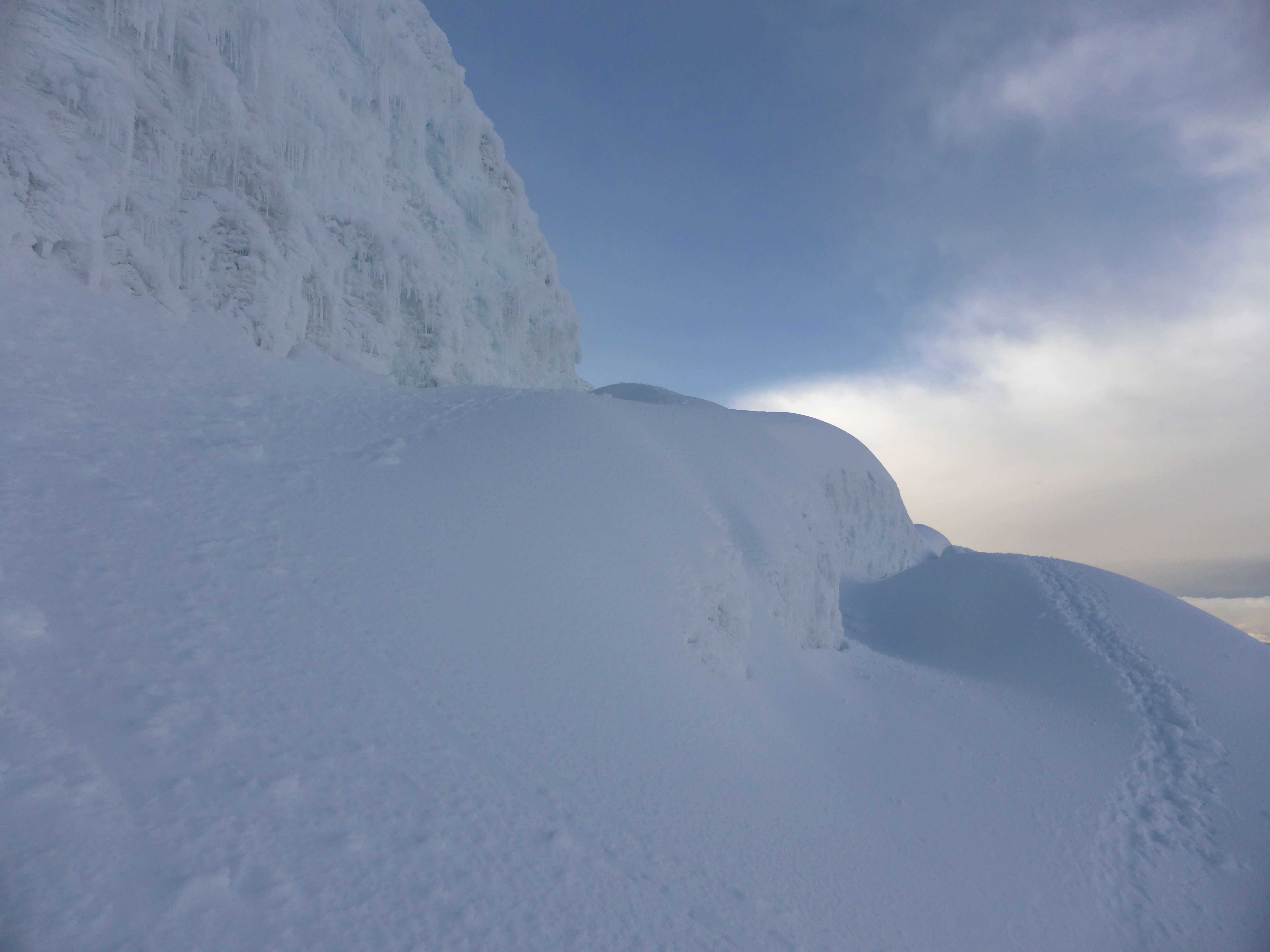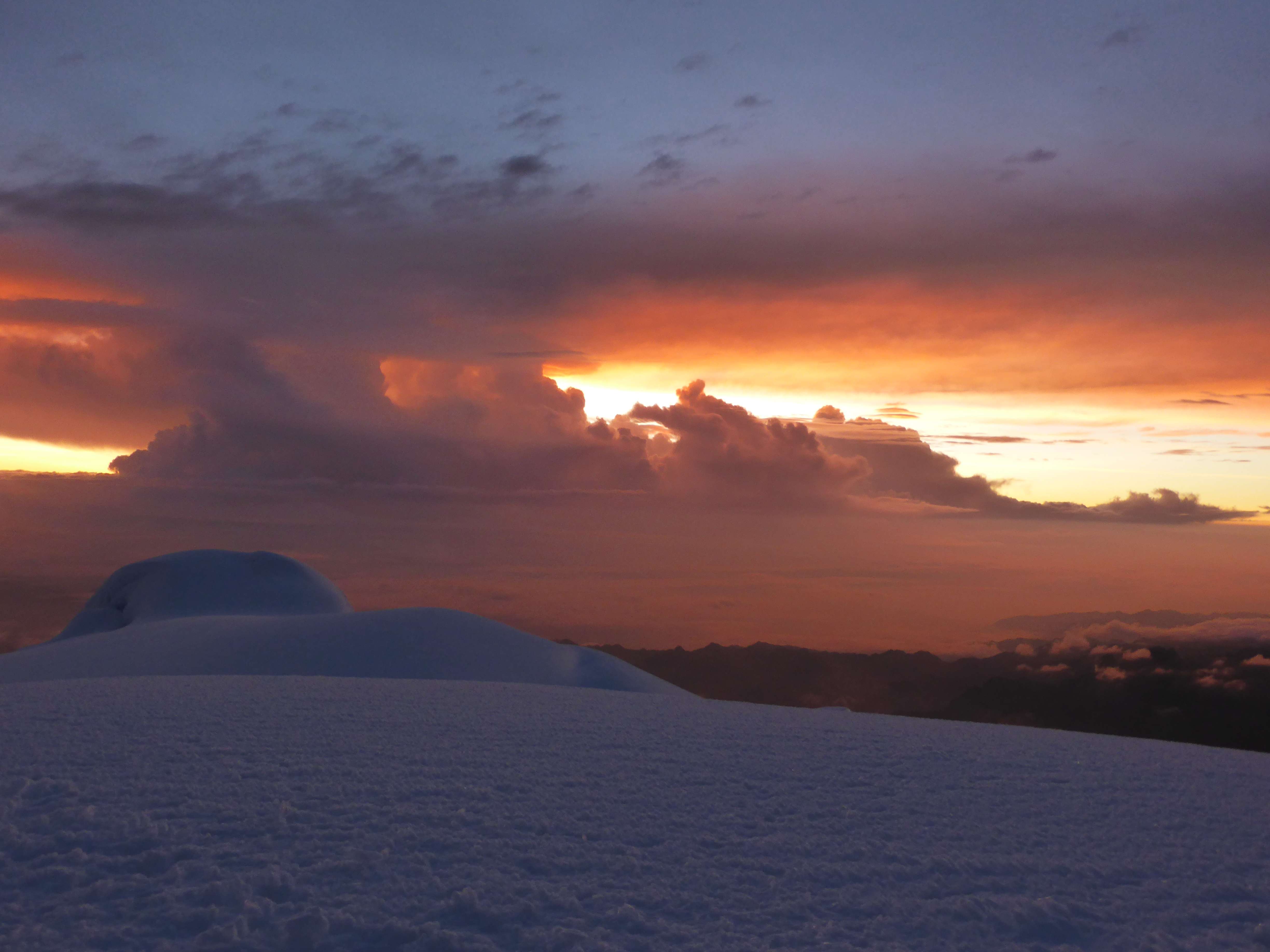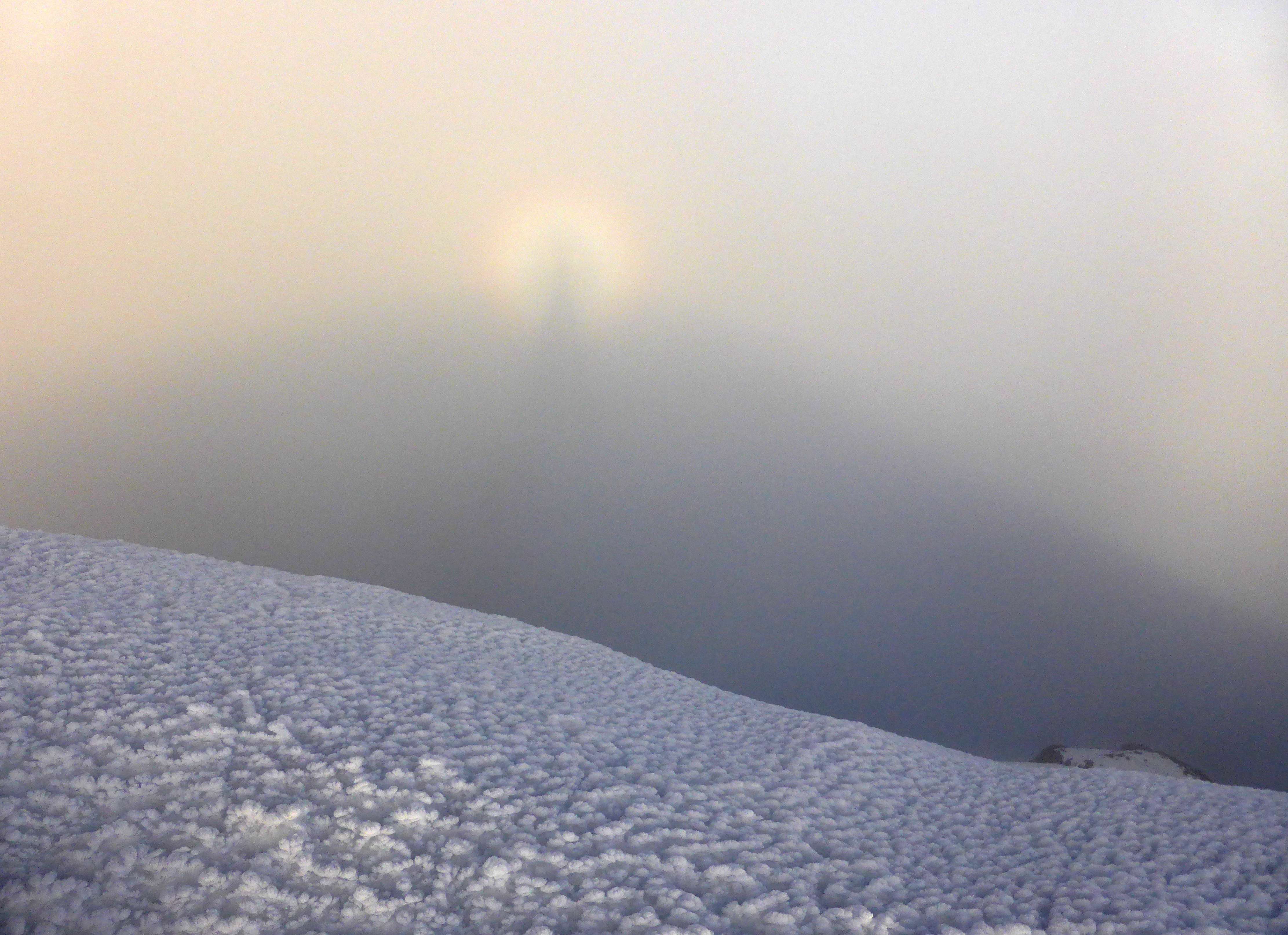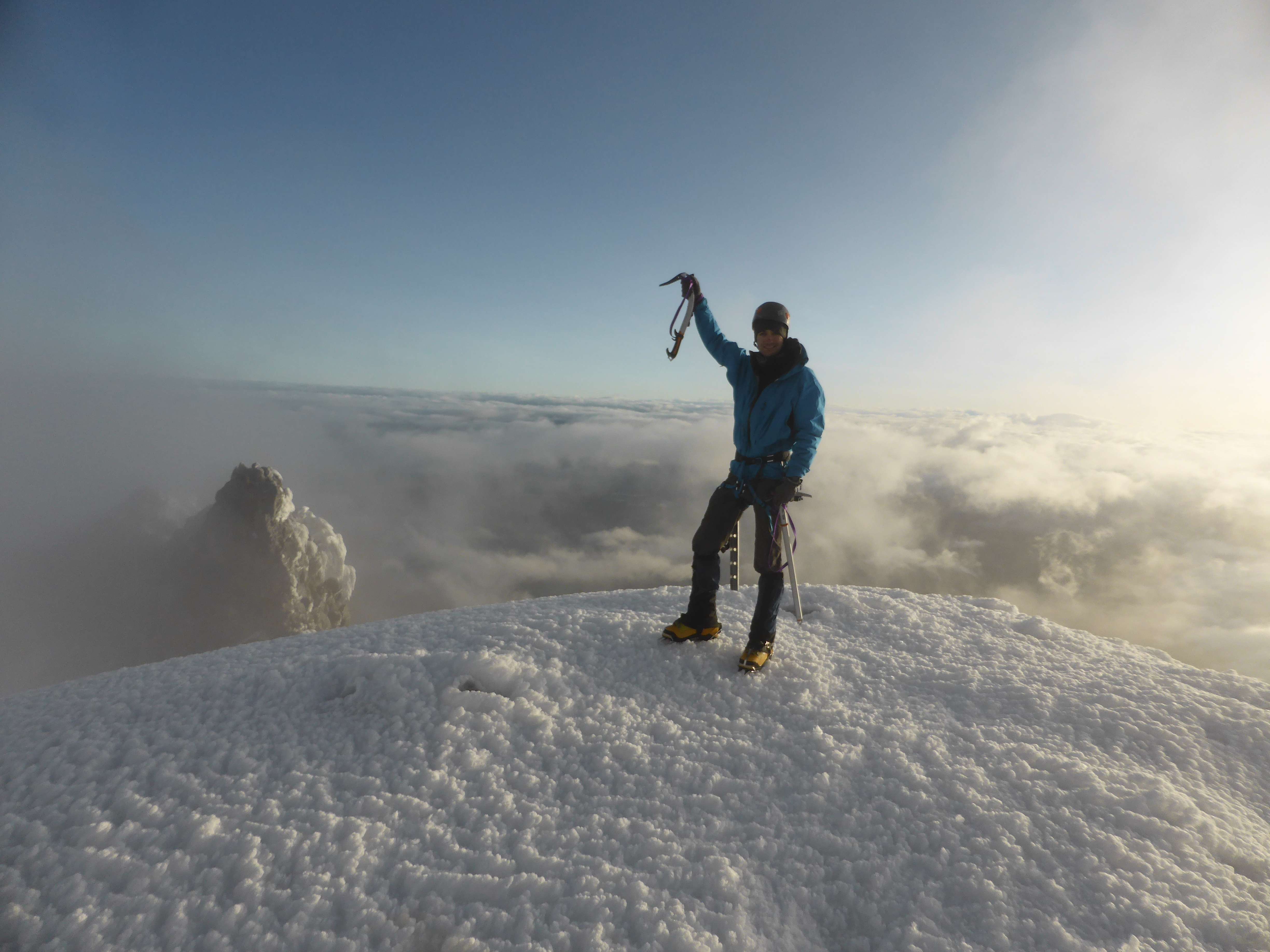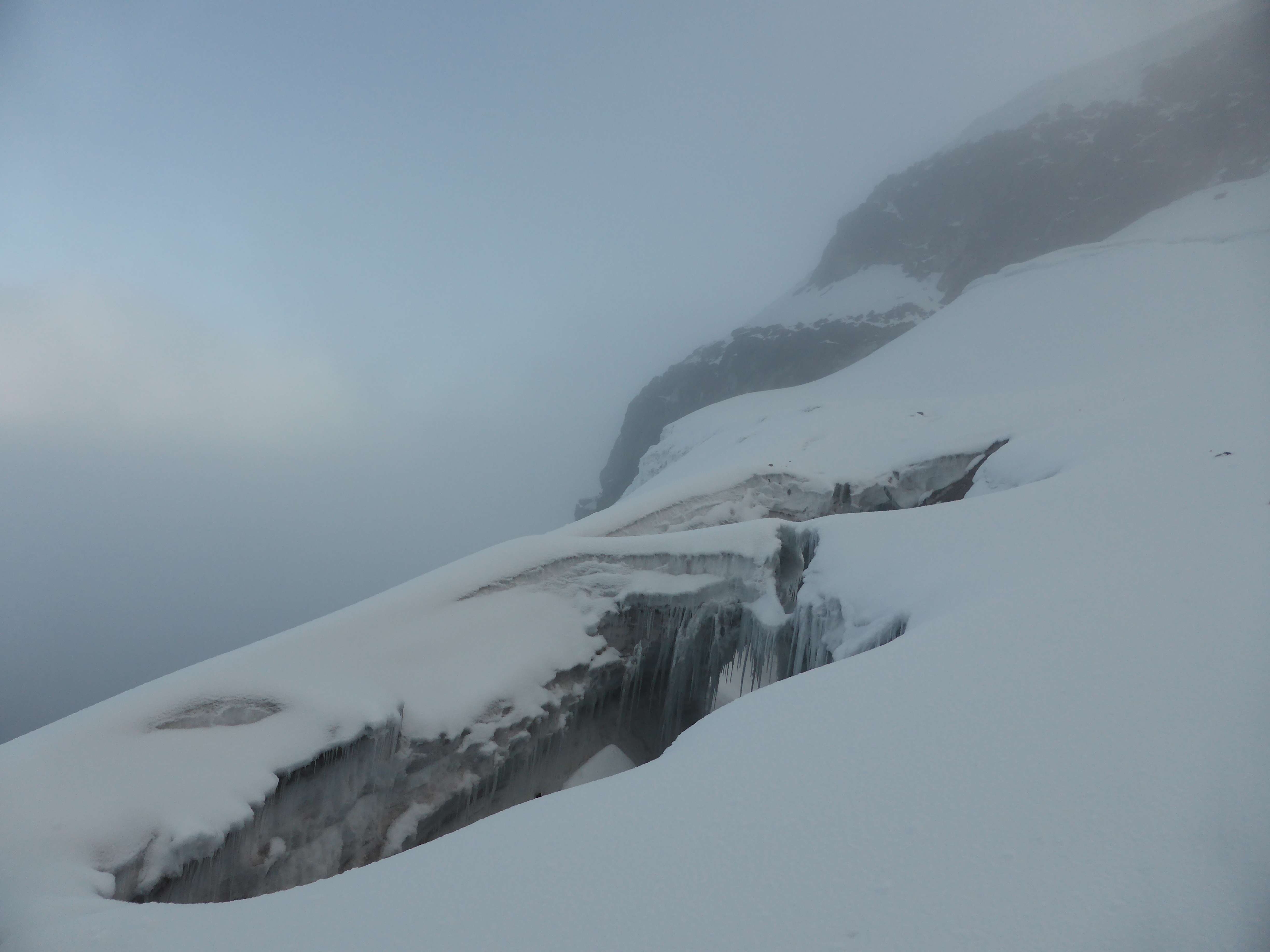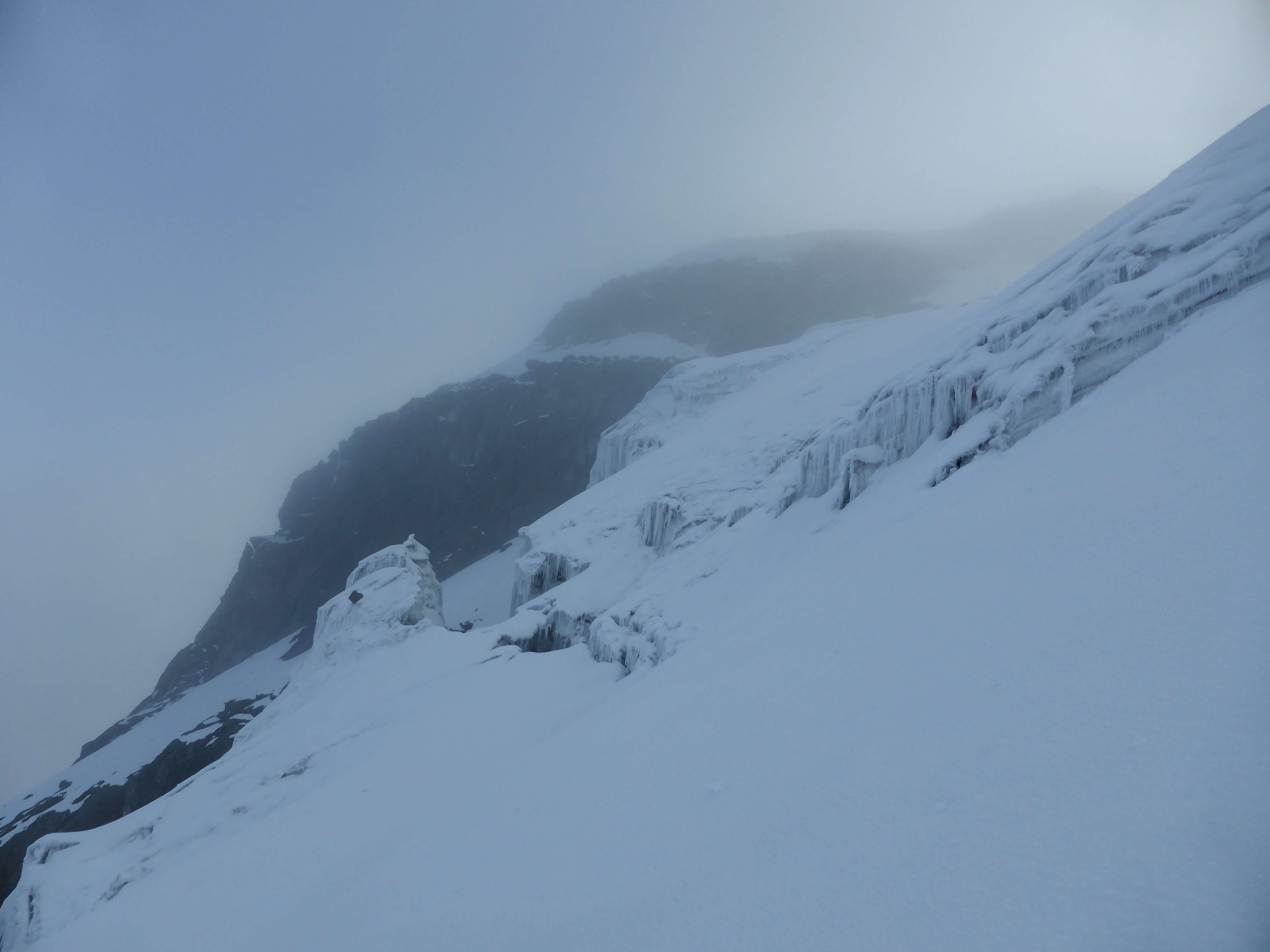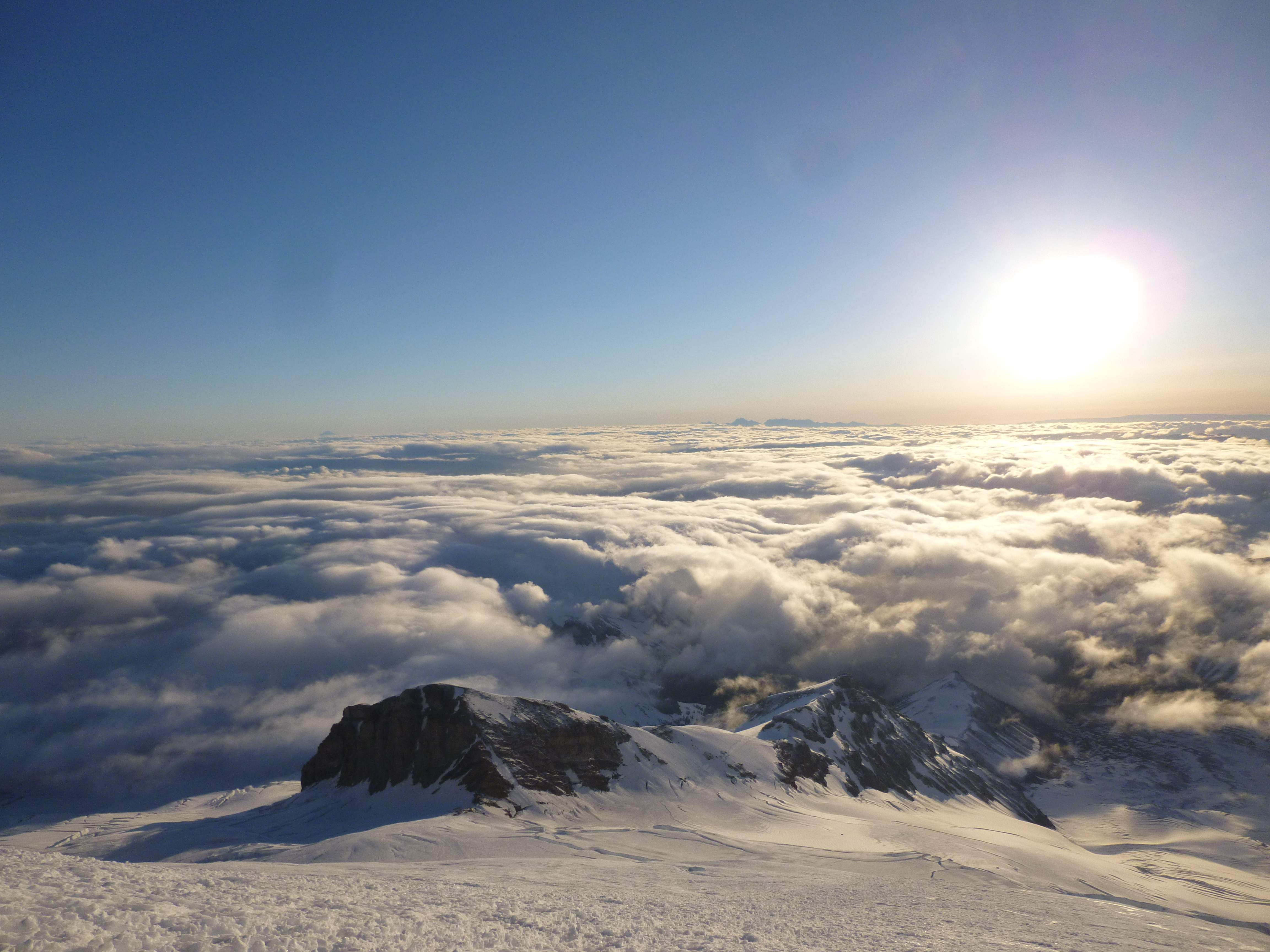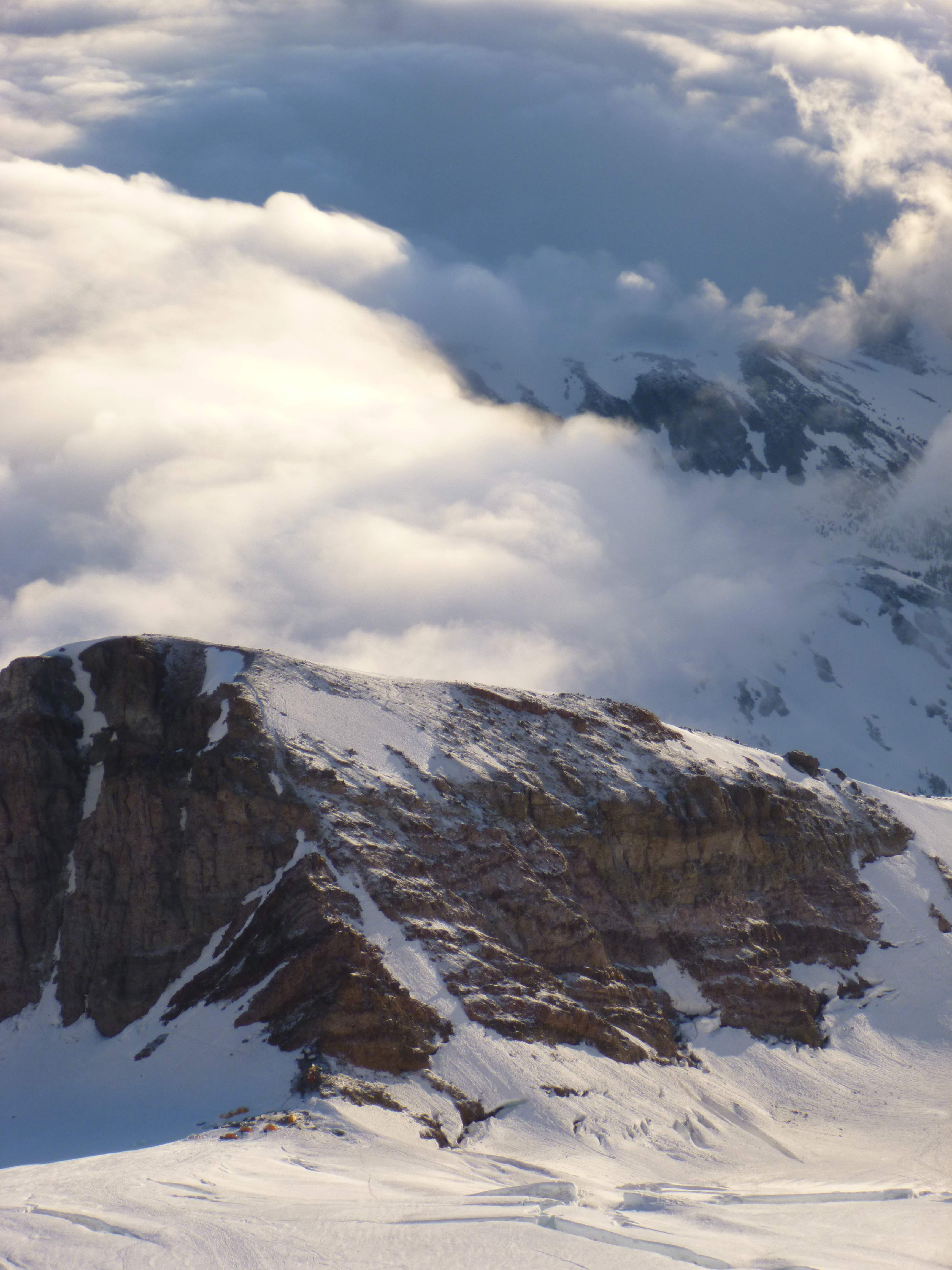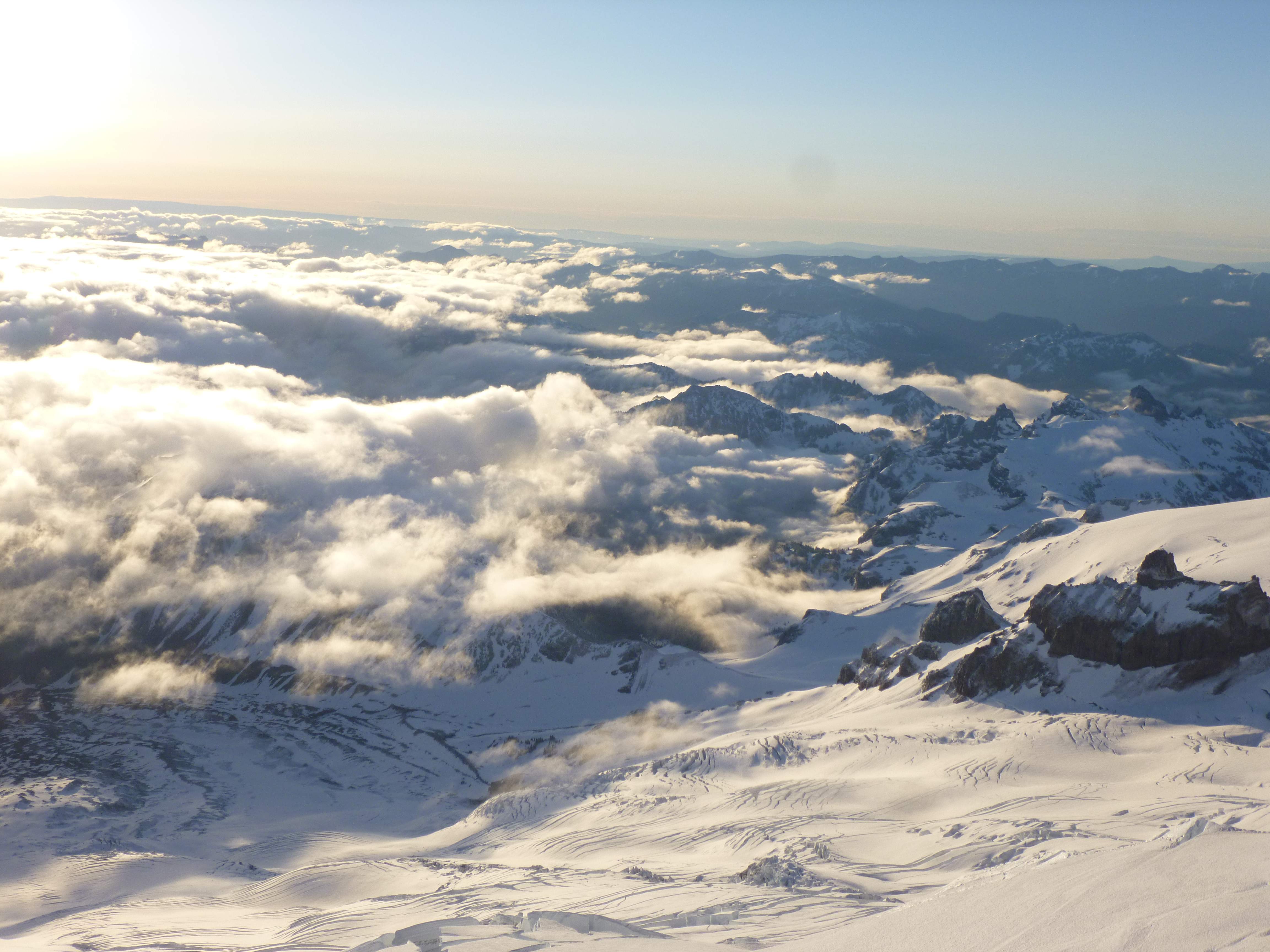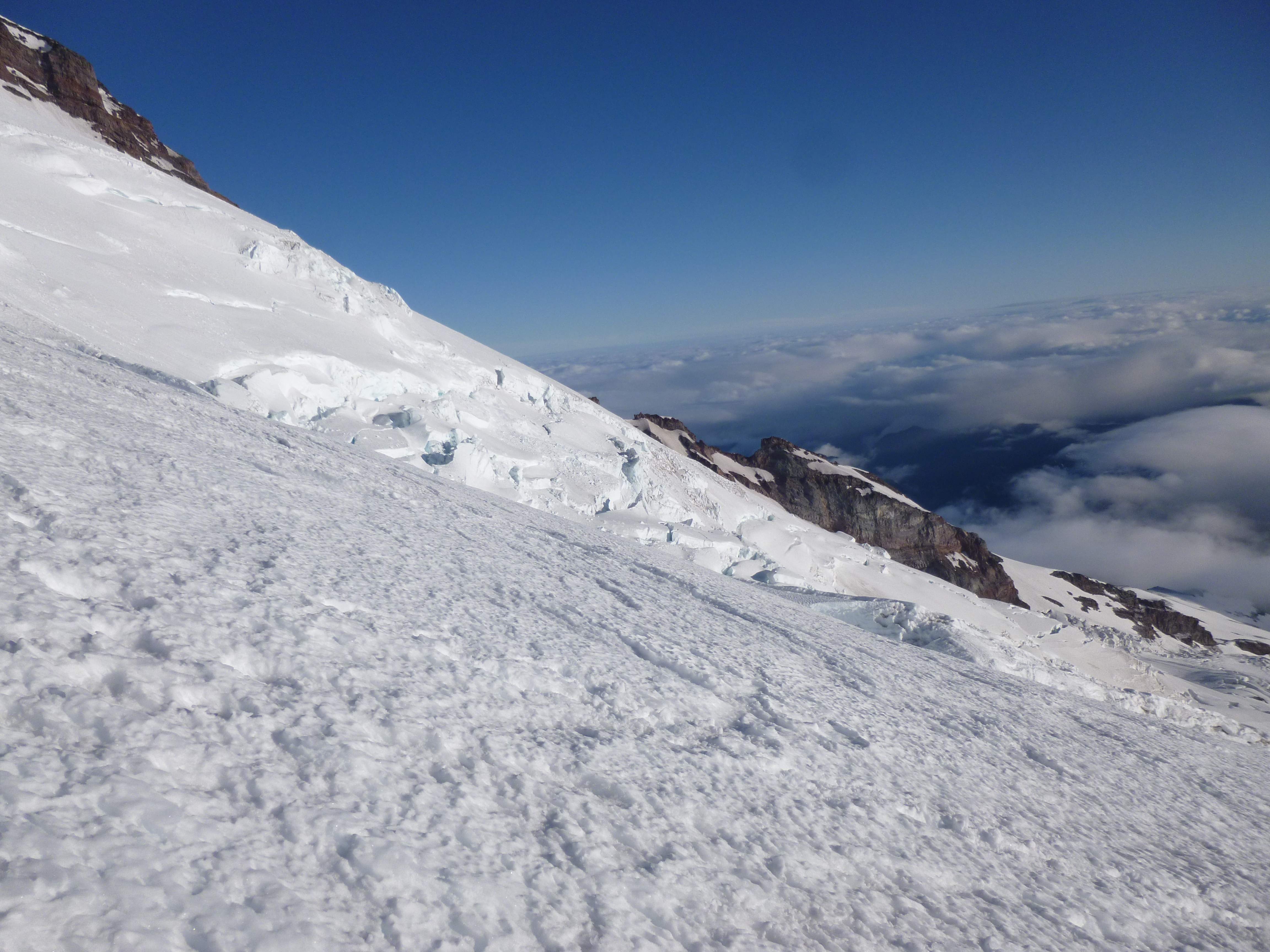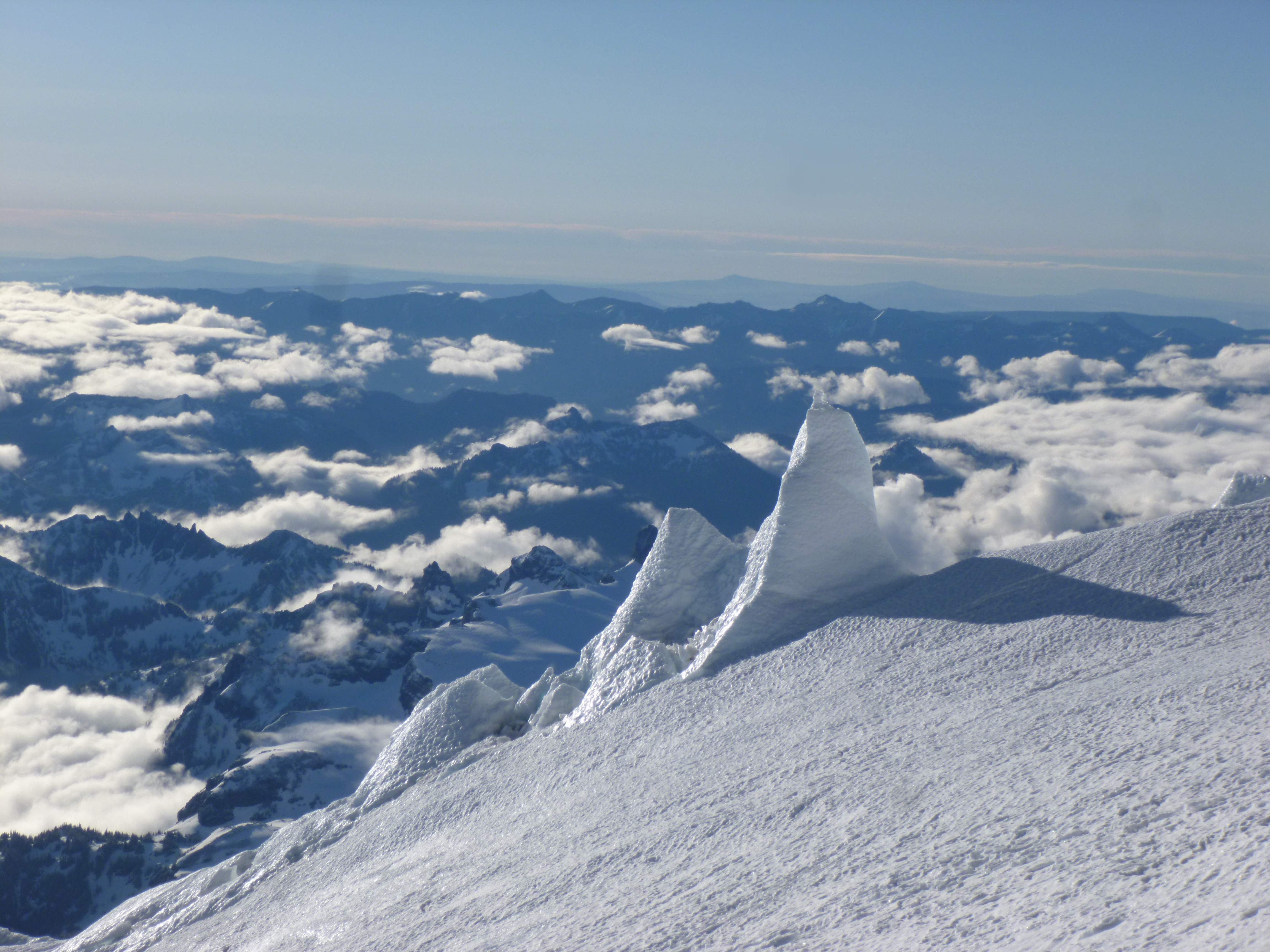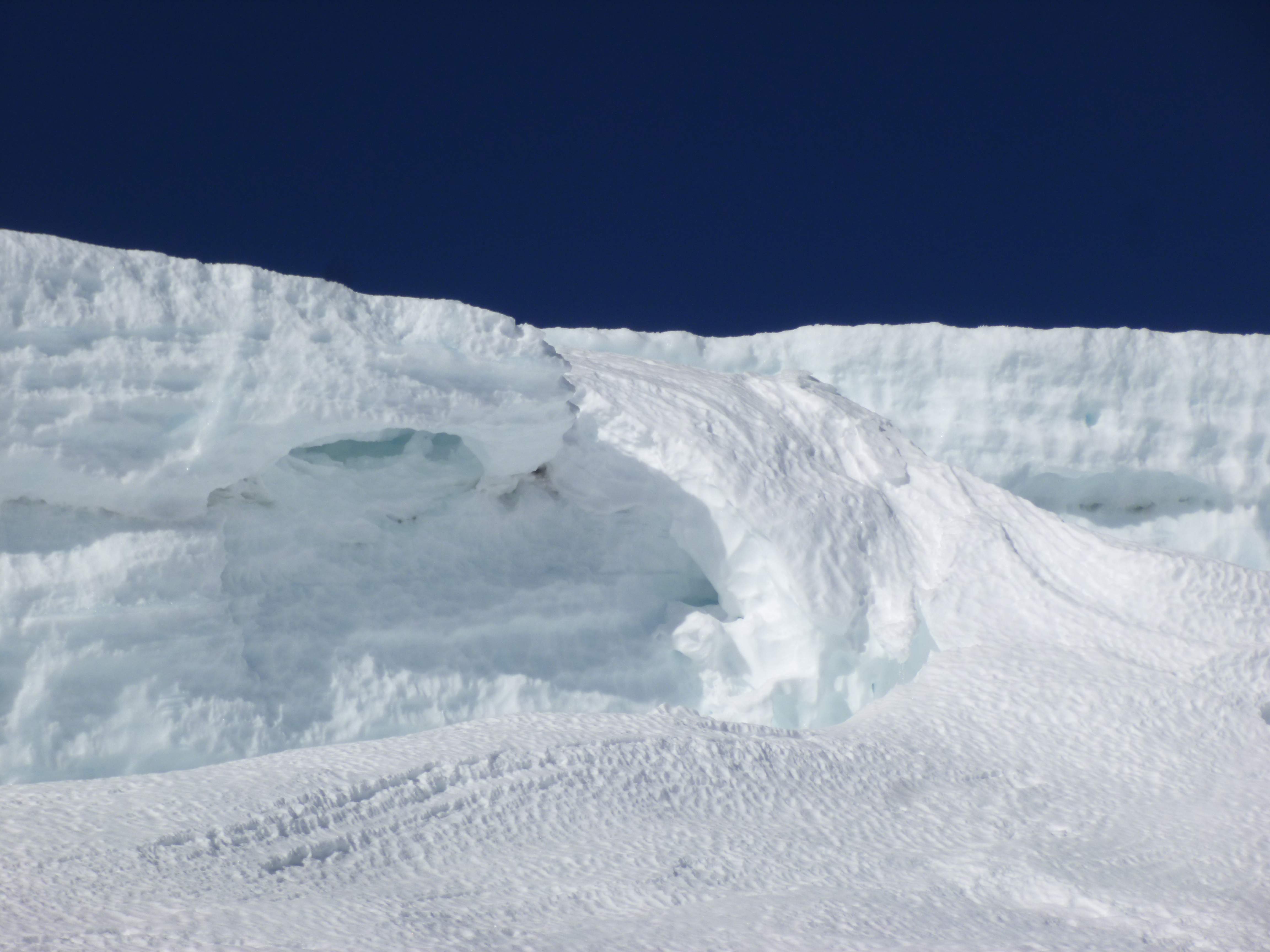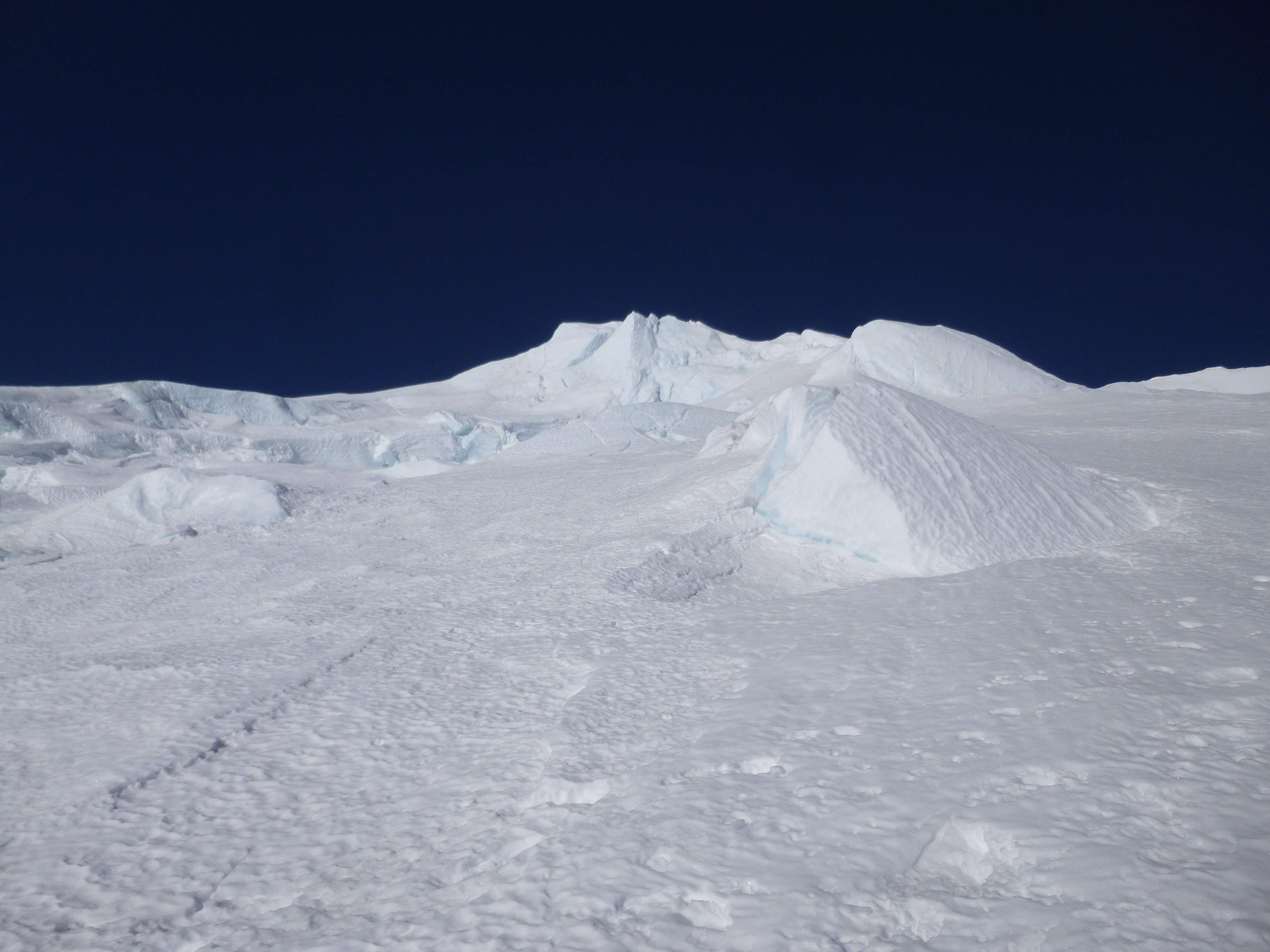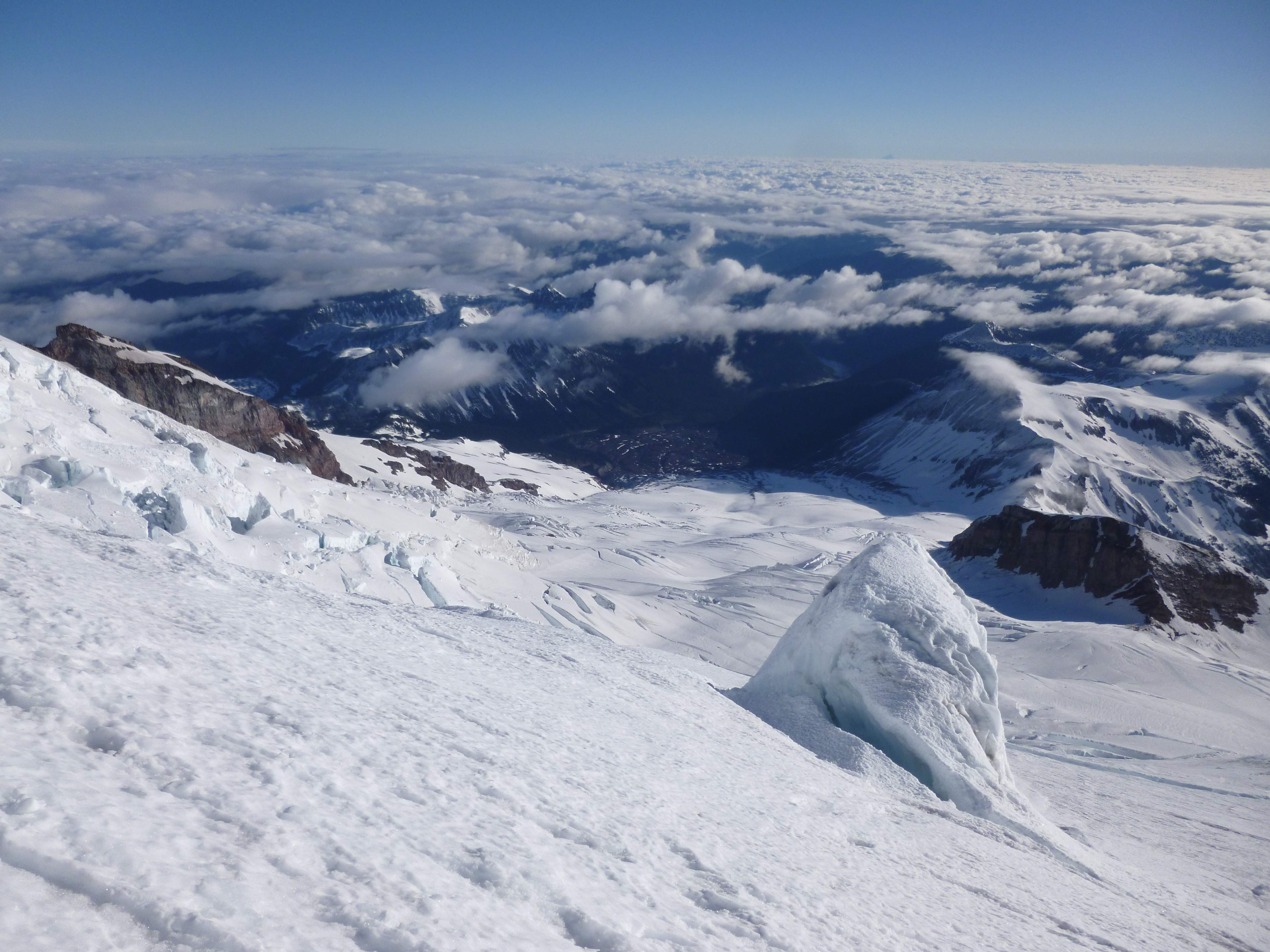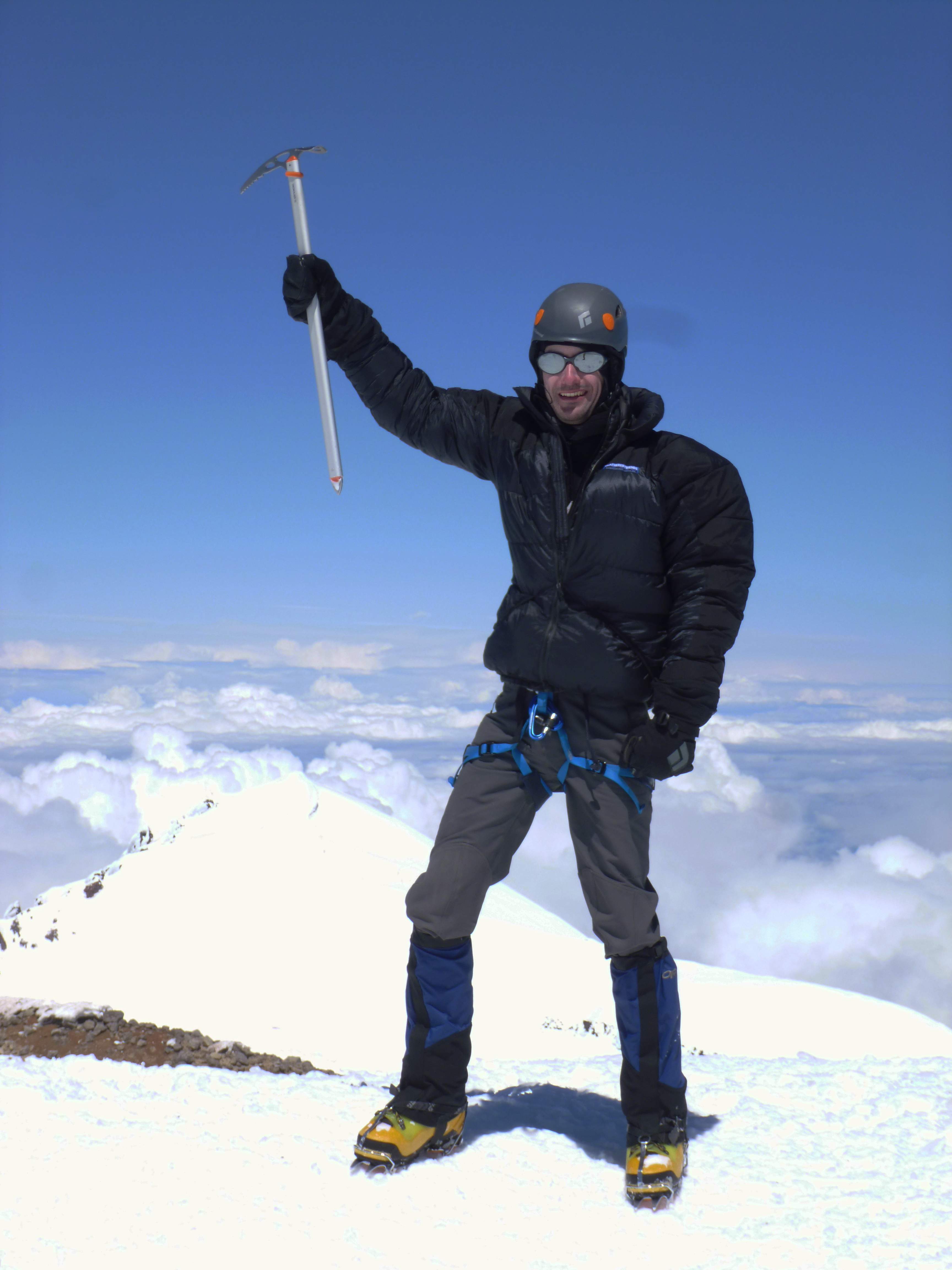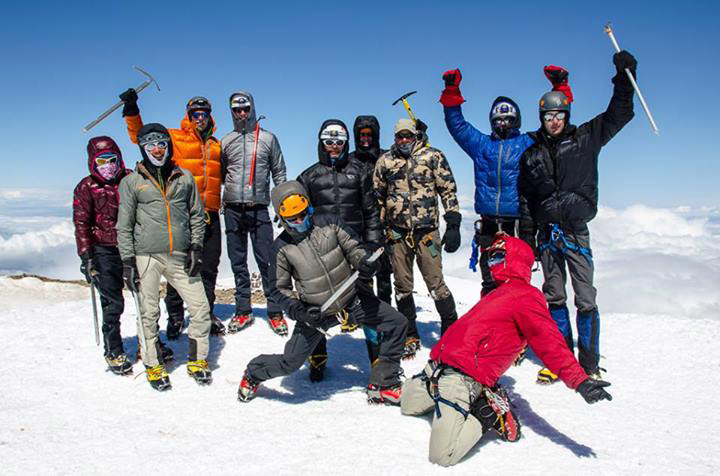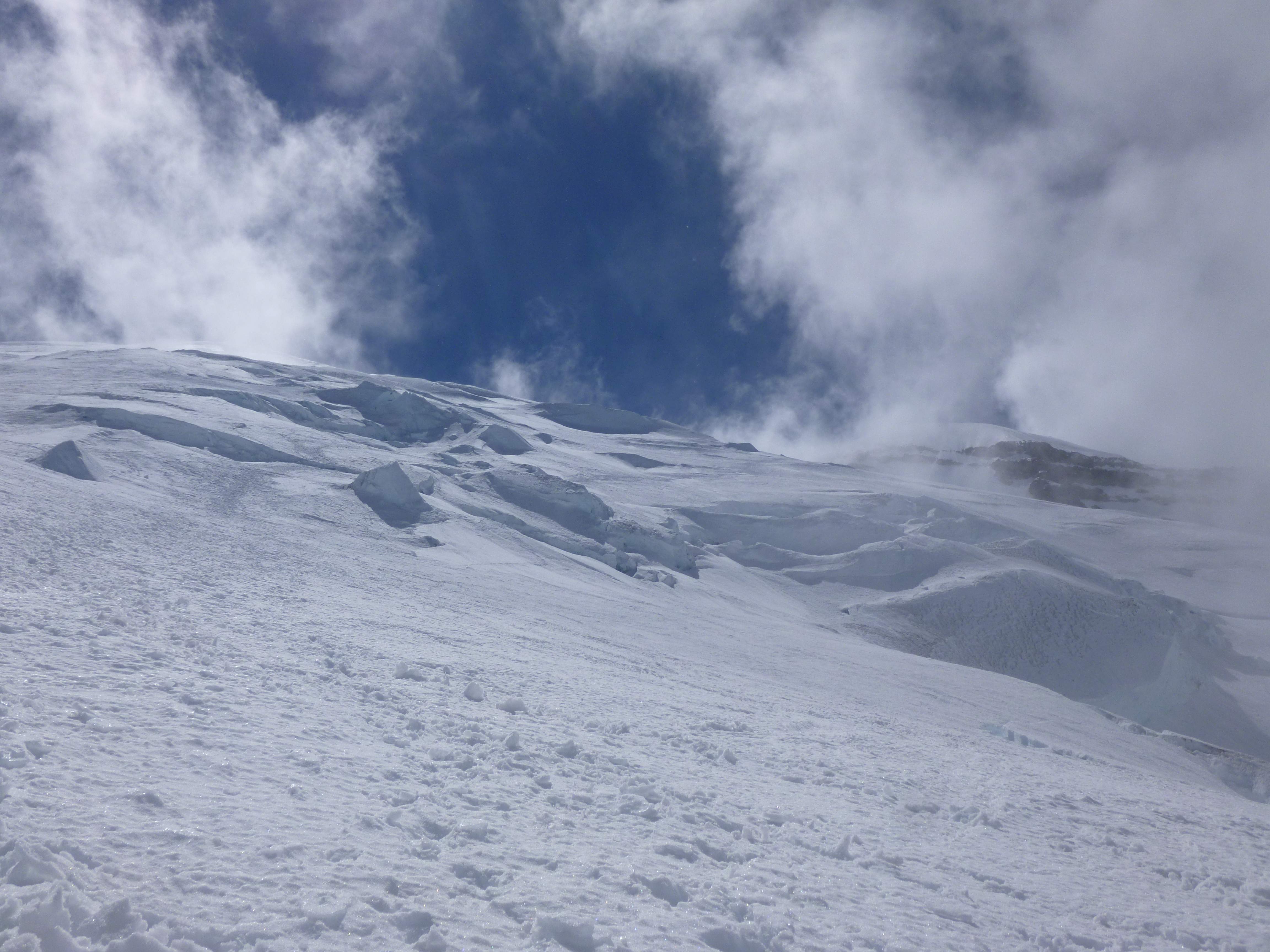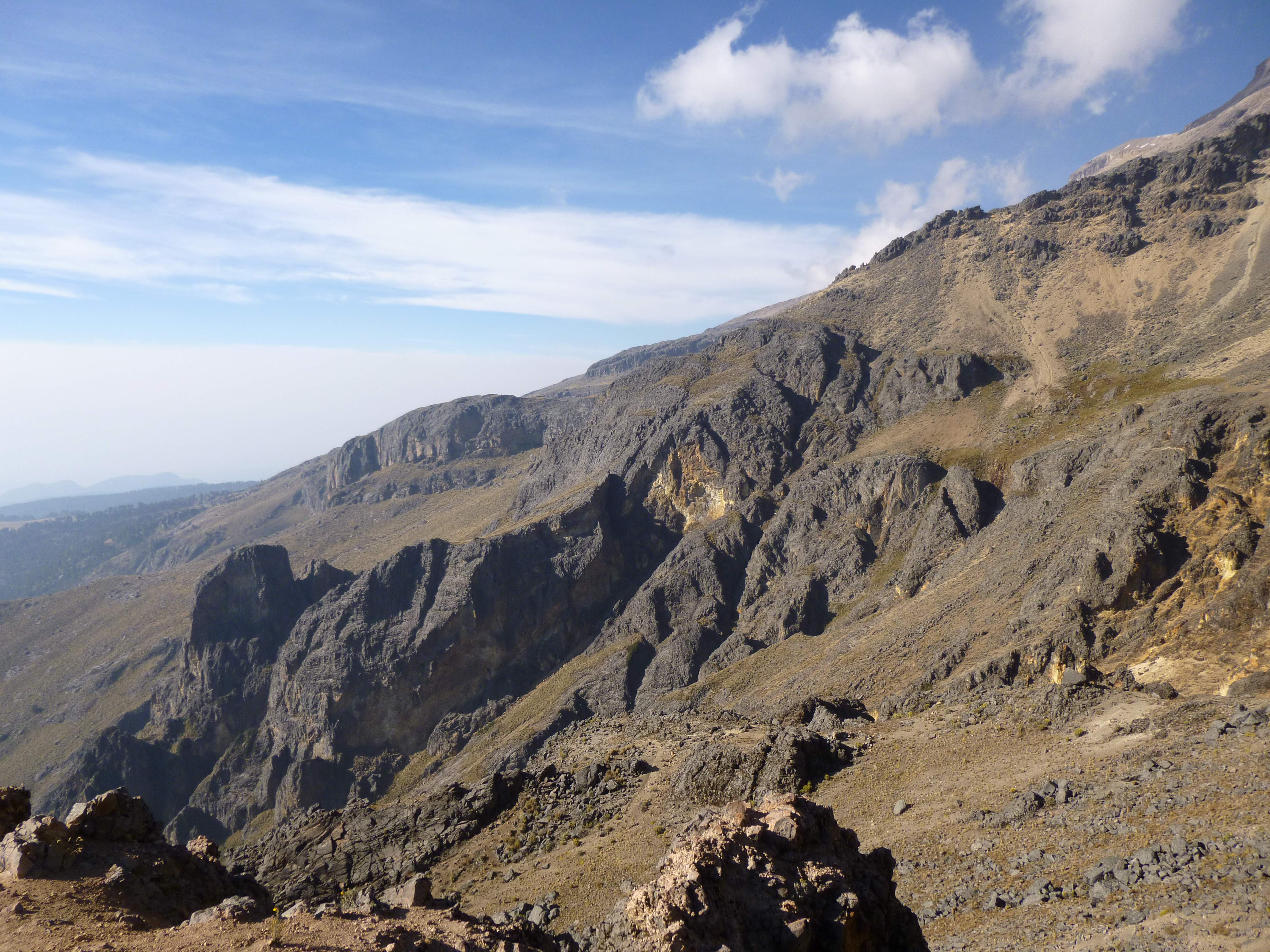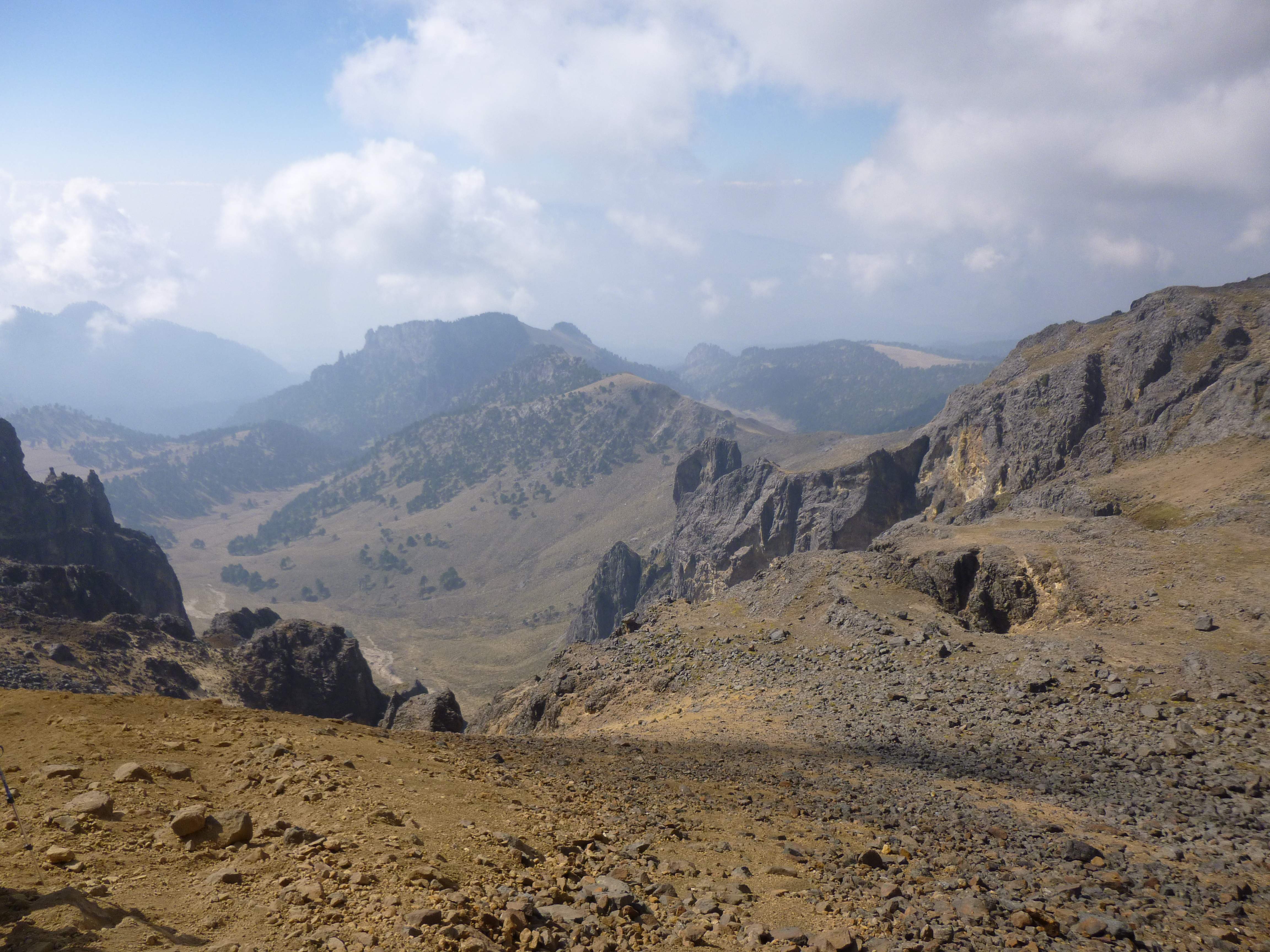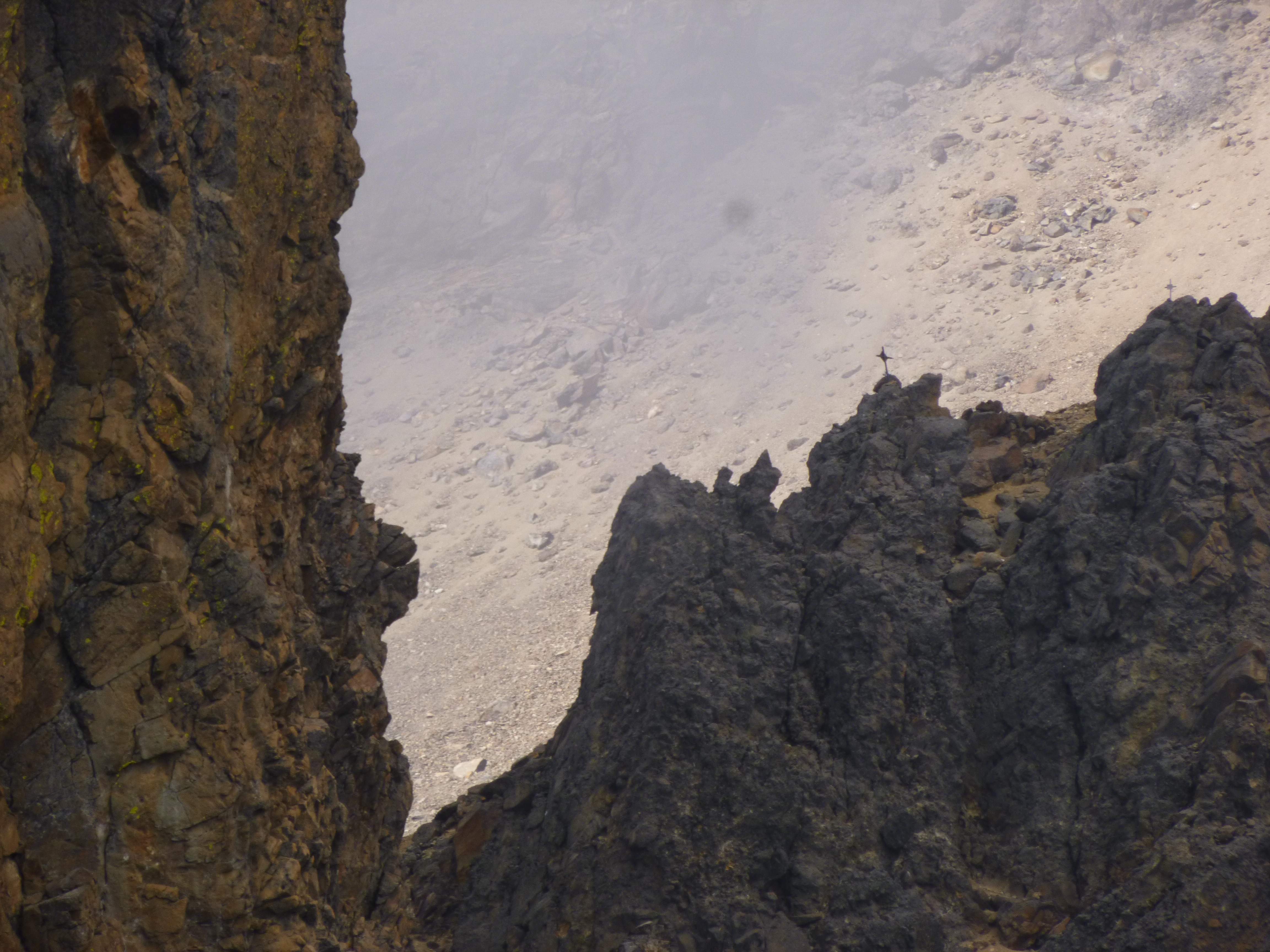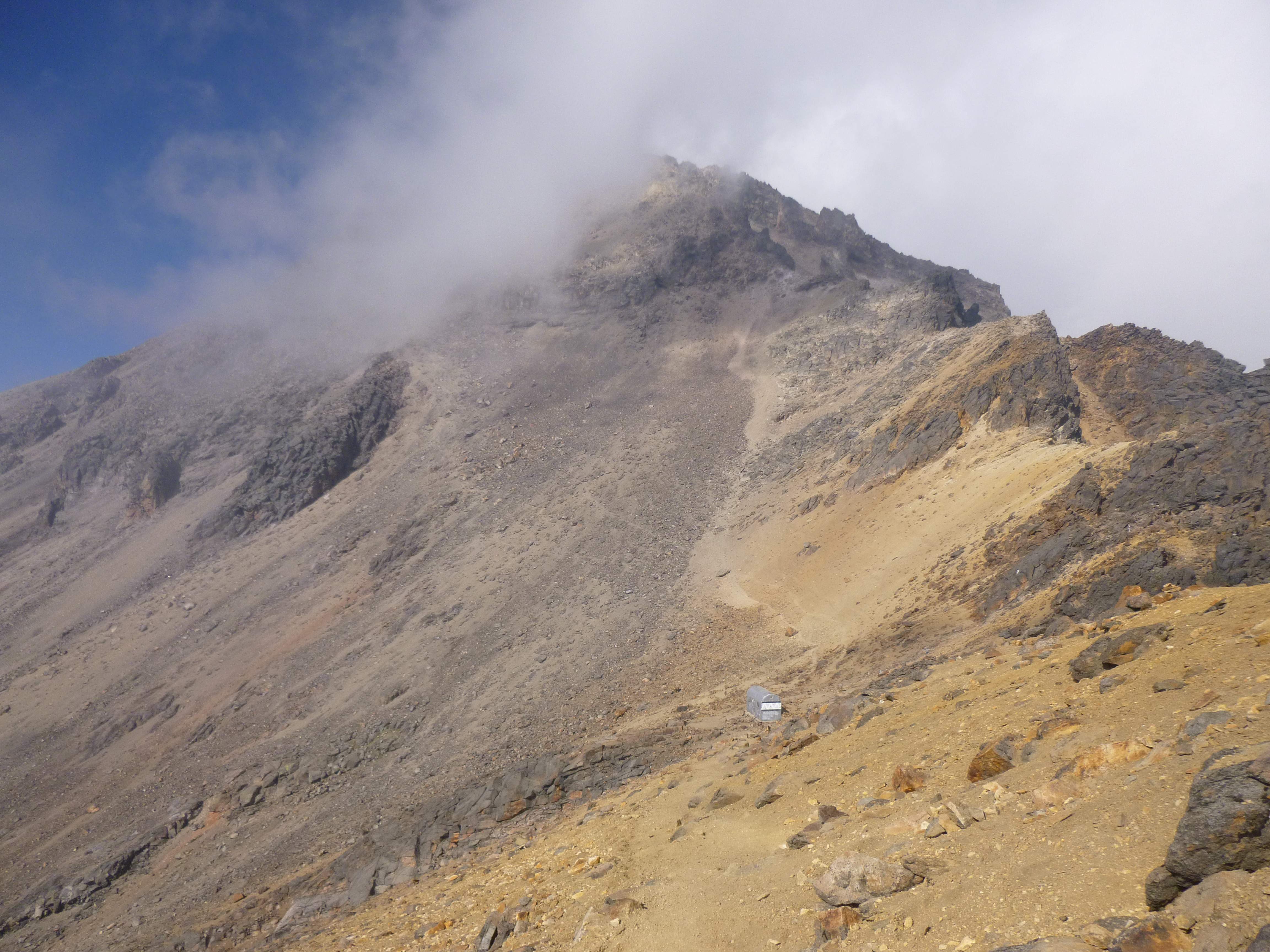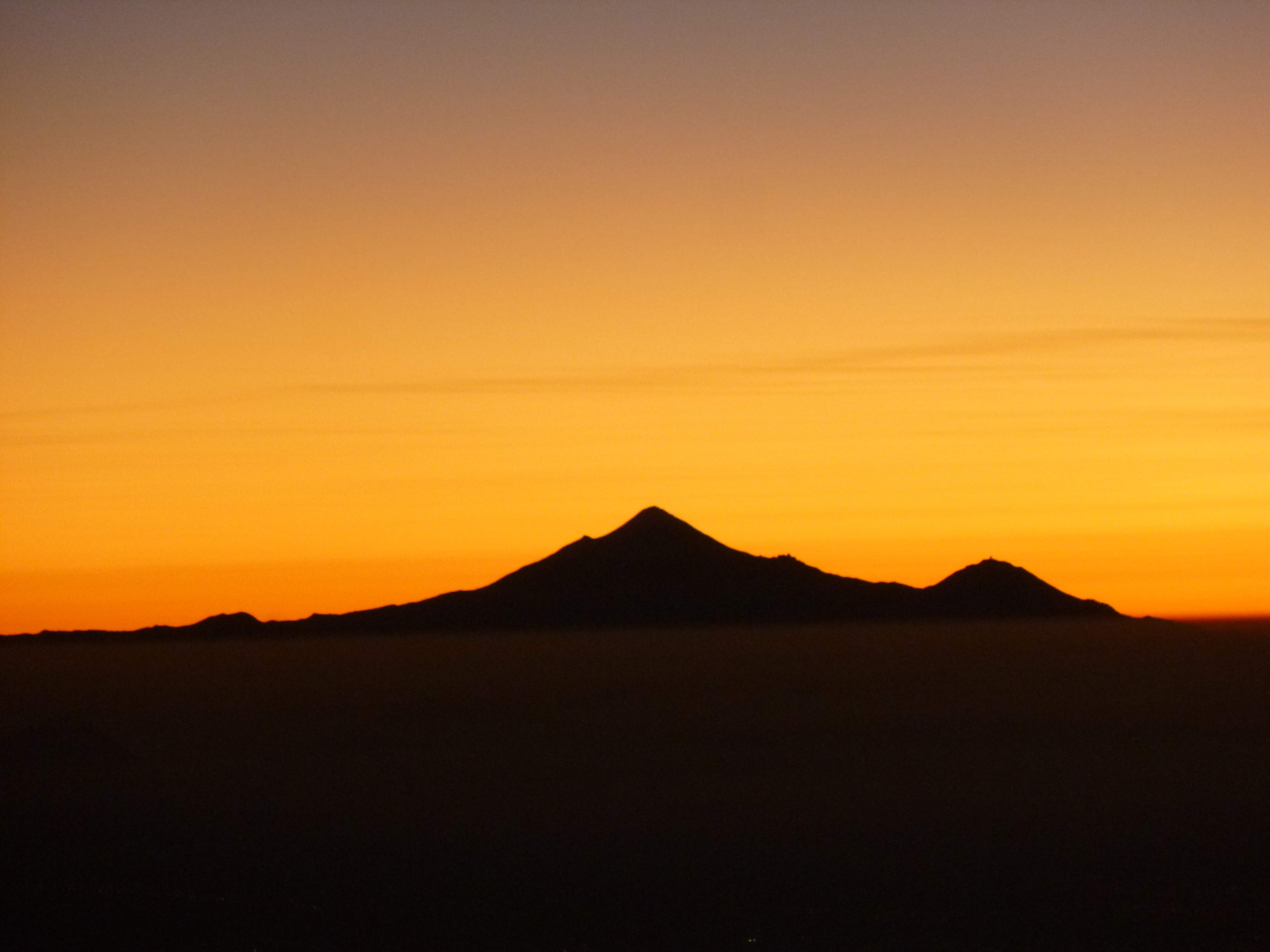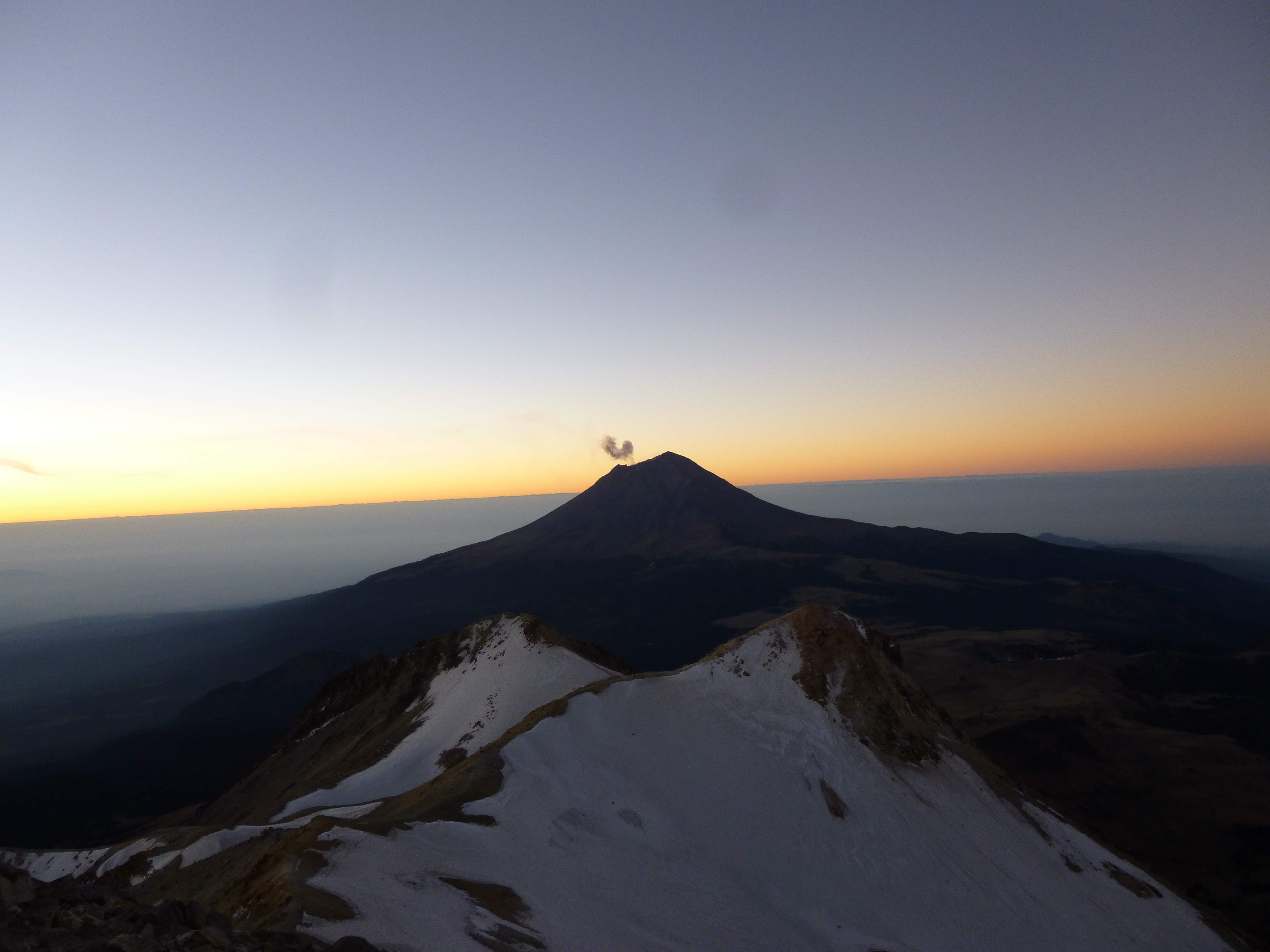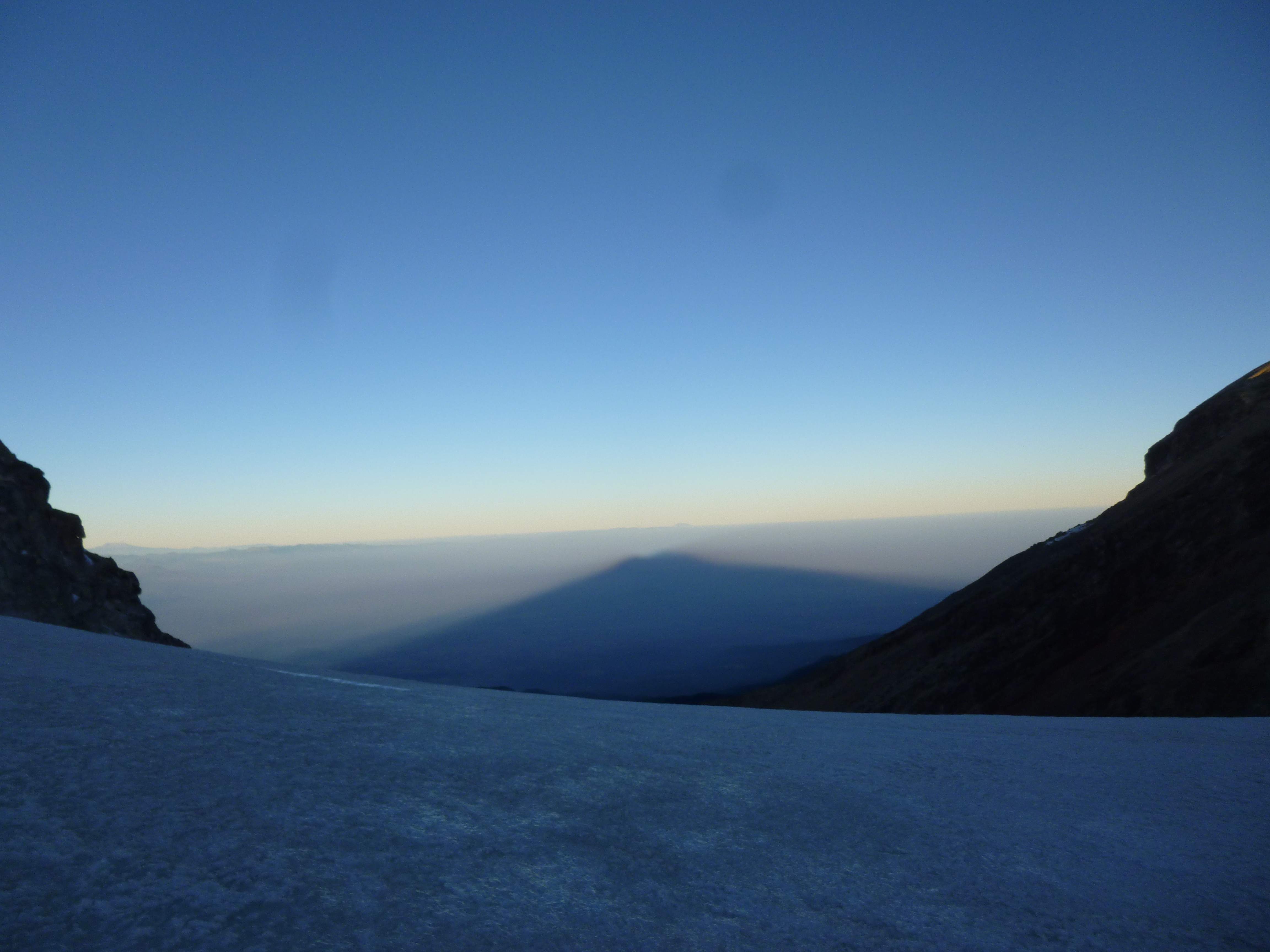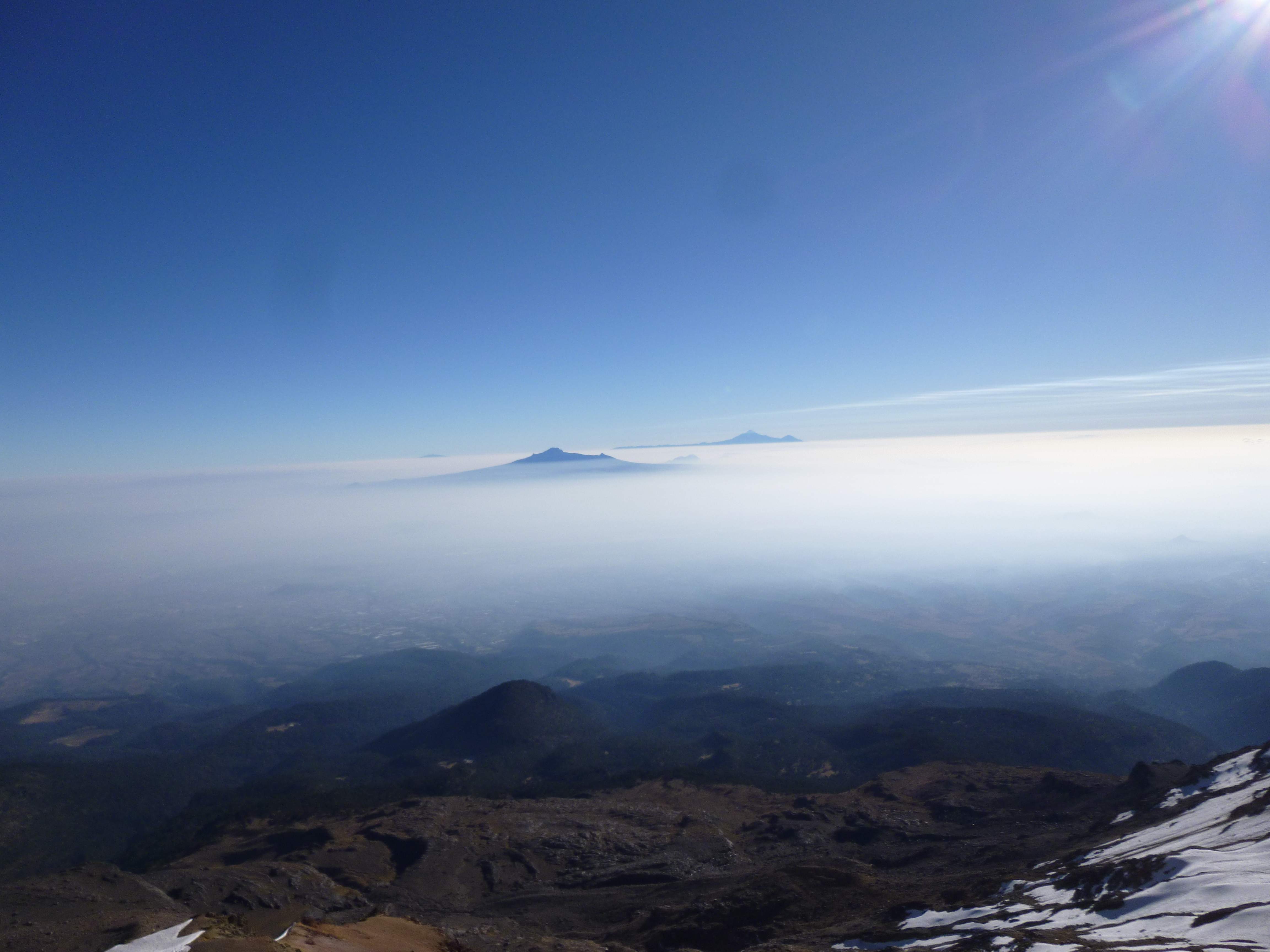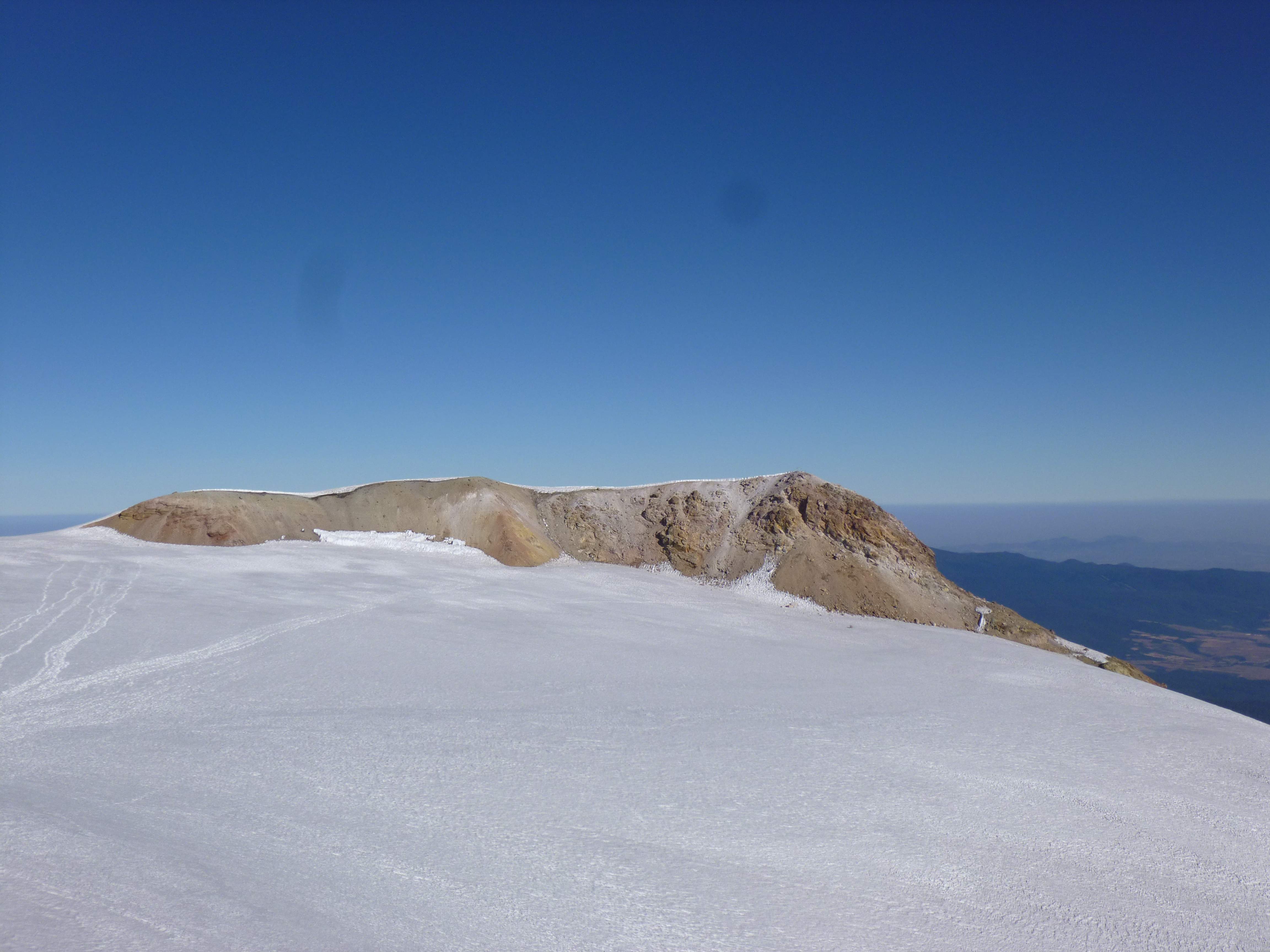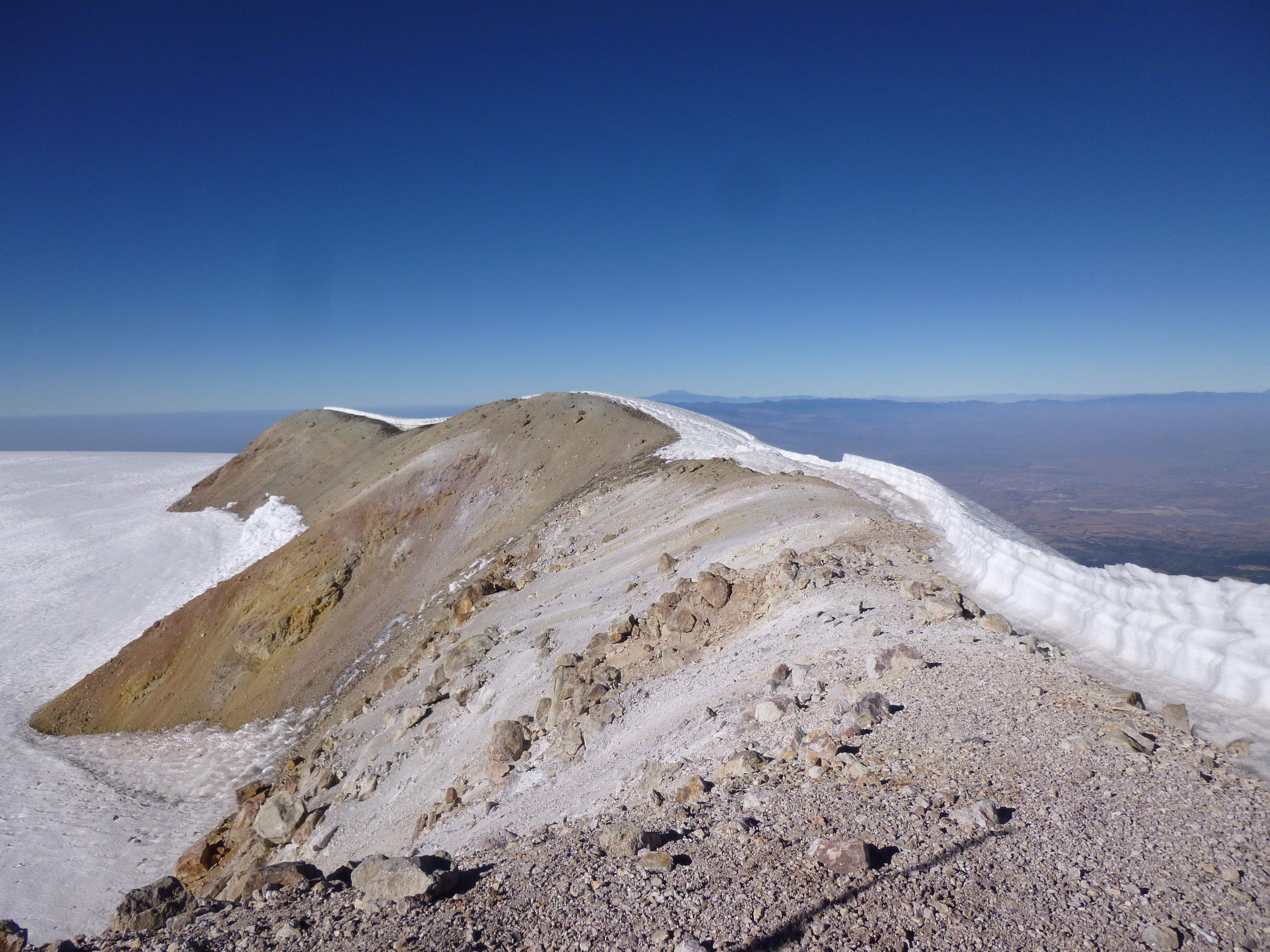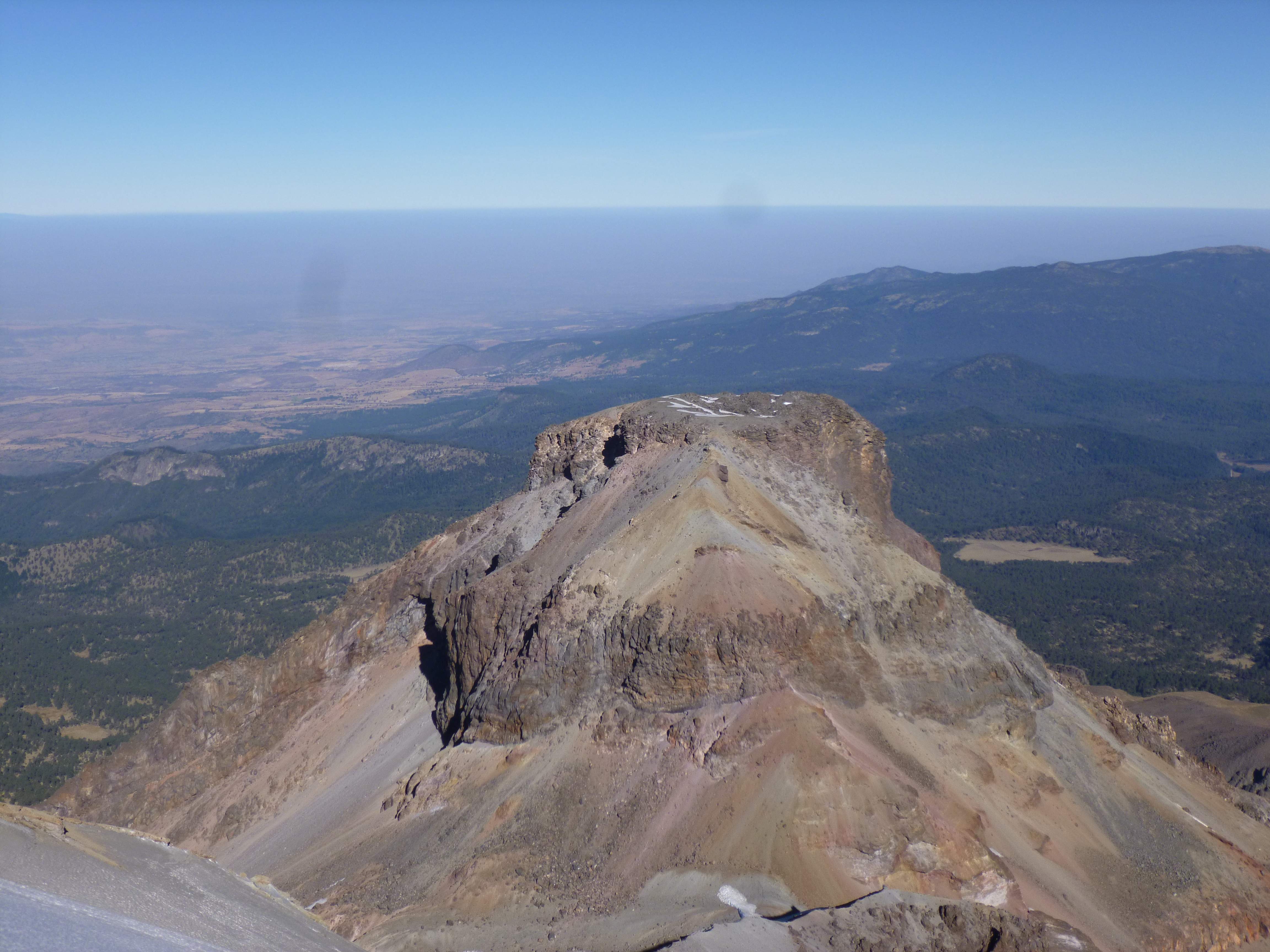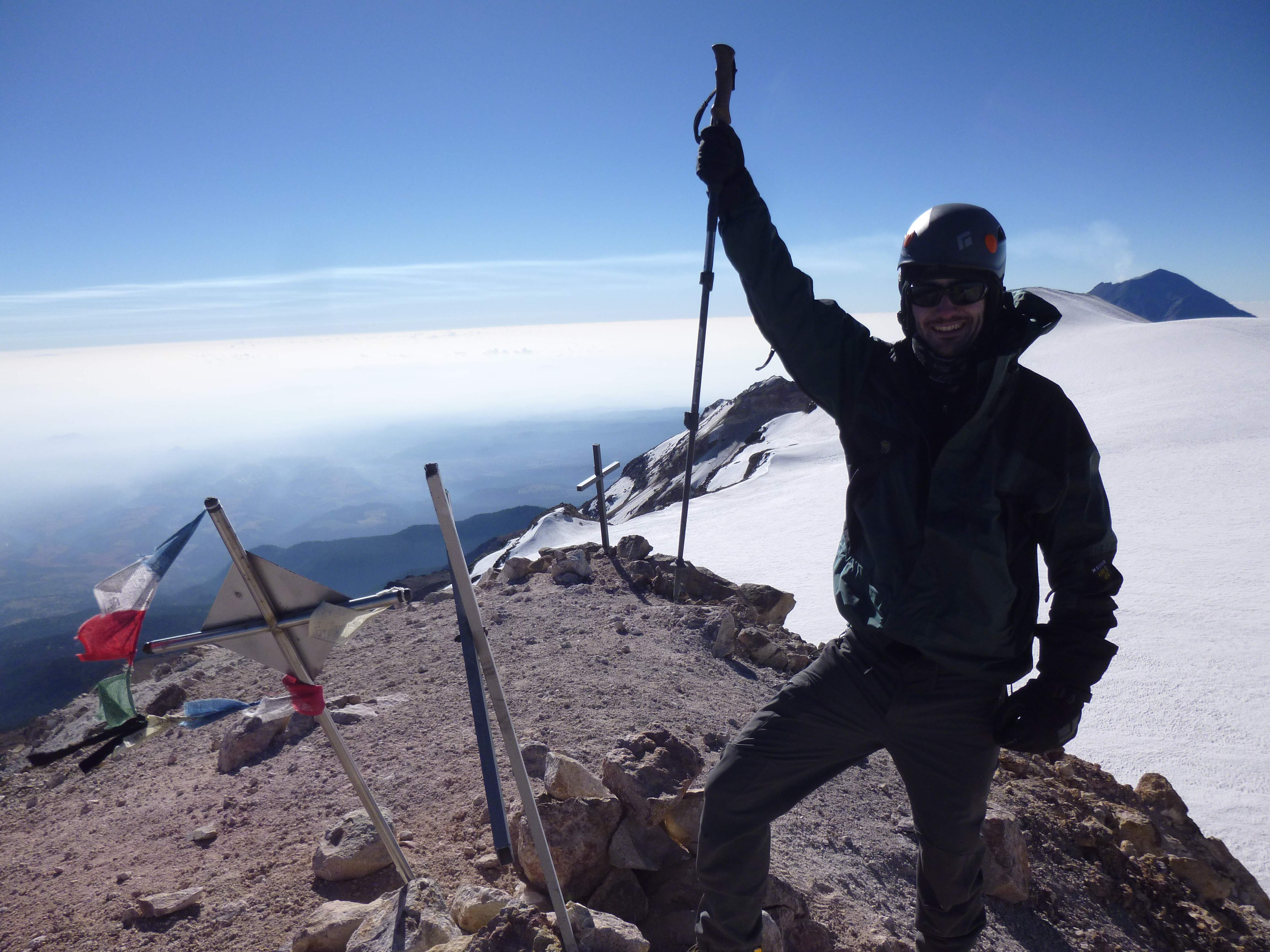
Chimborazo – January 2014

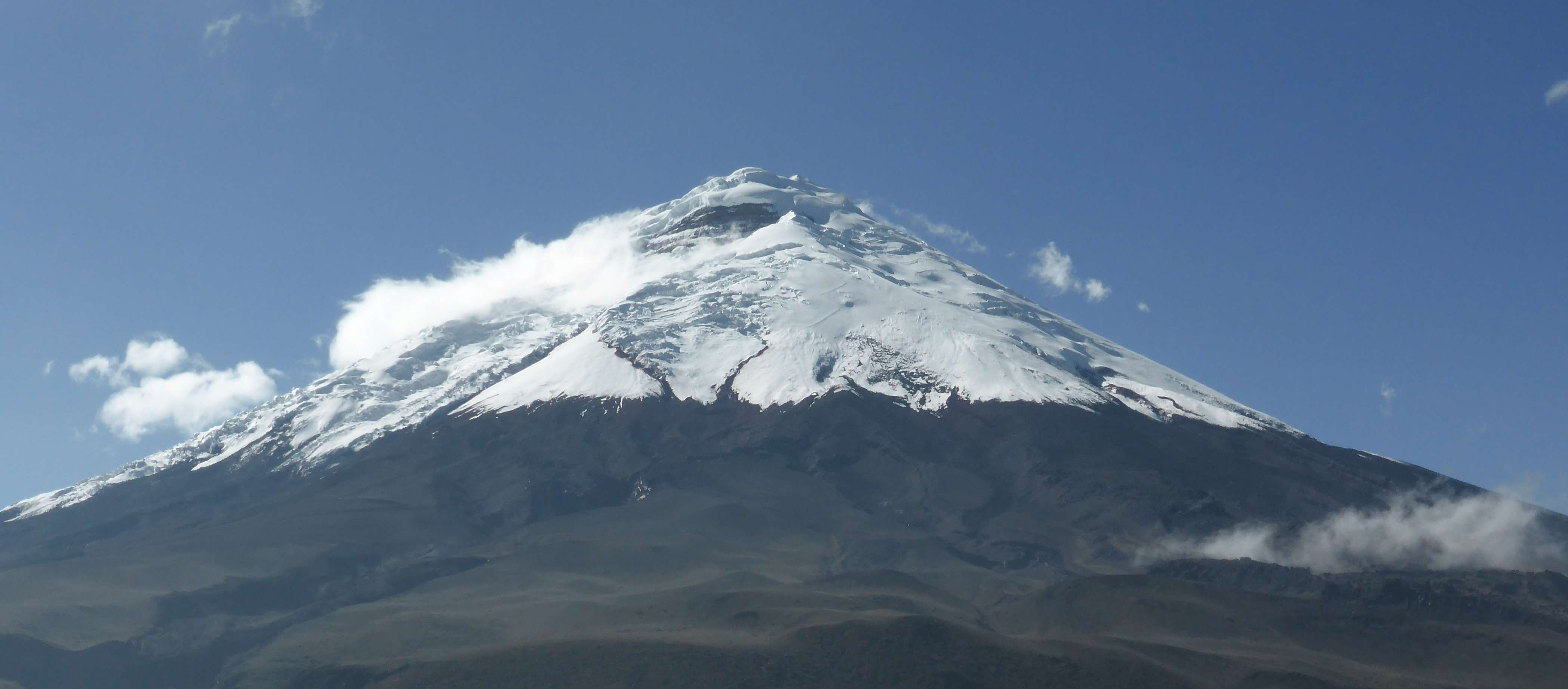
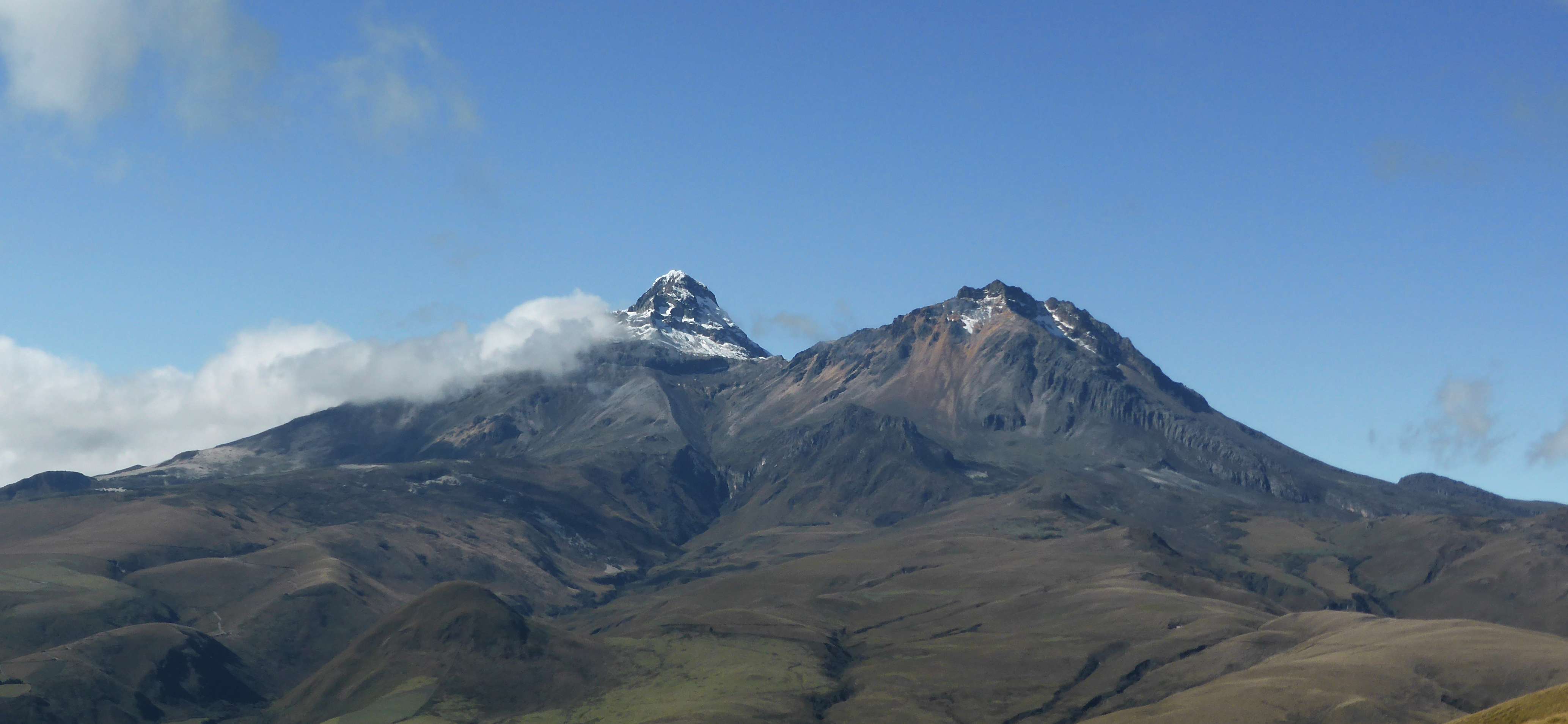
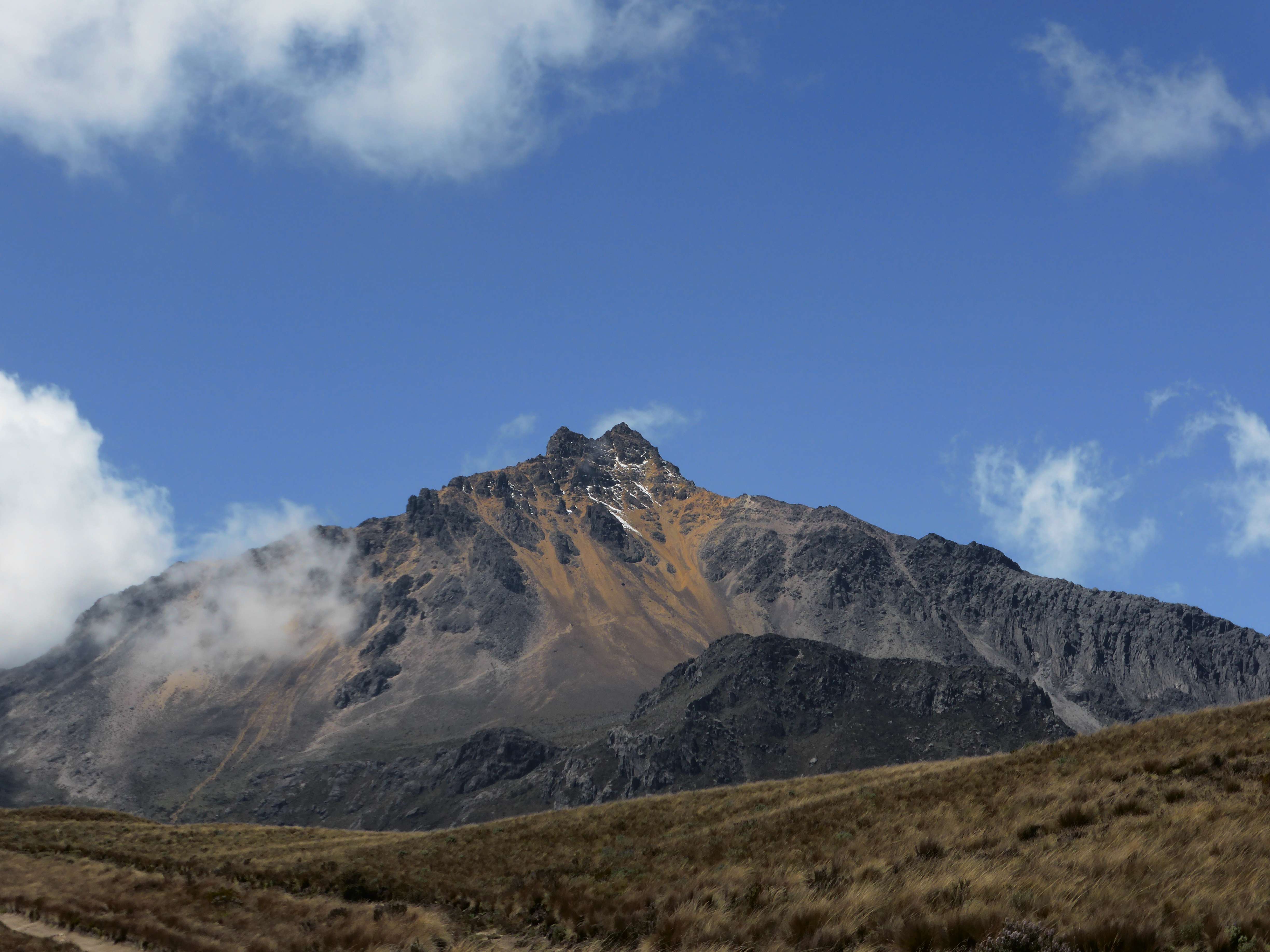
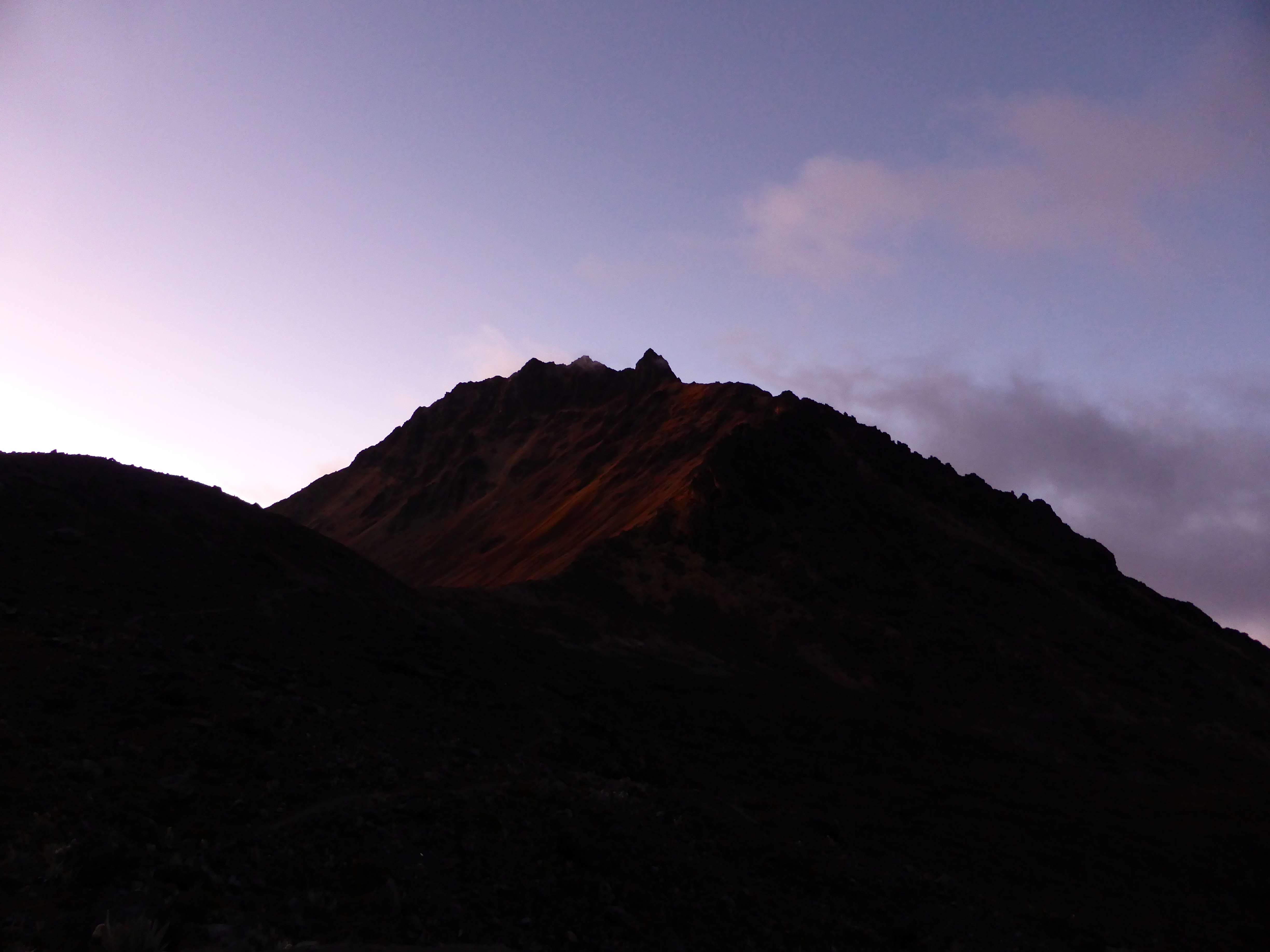
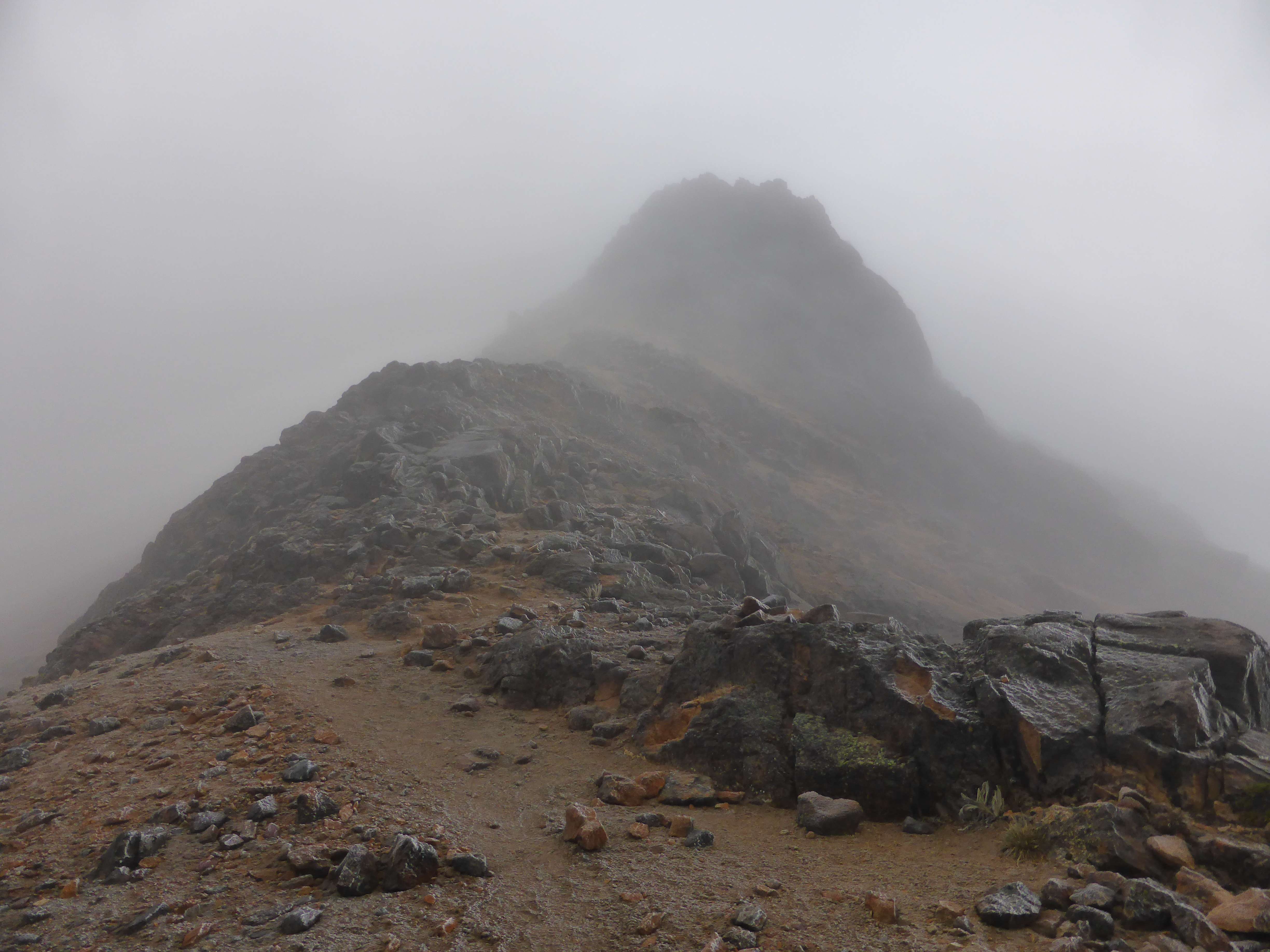
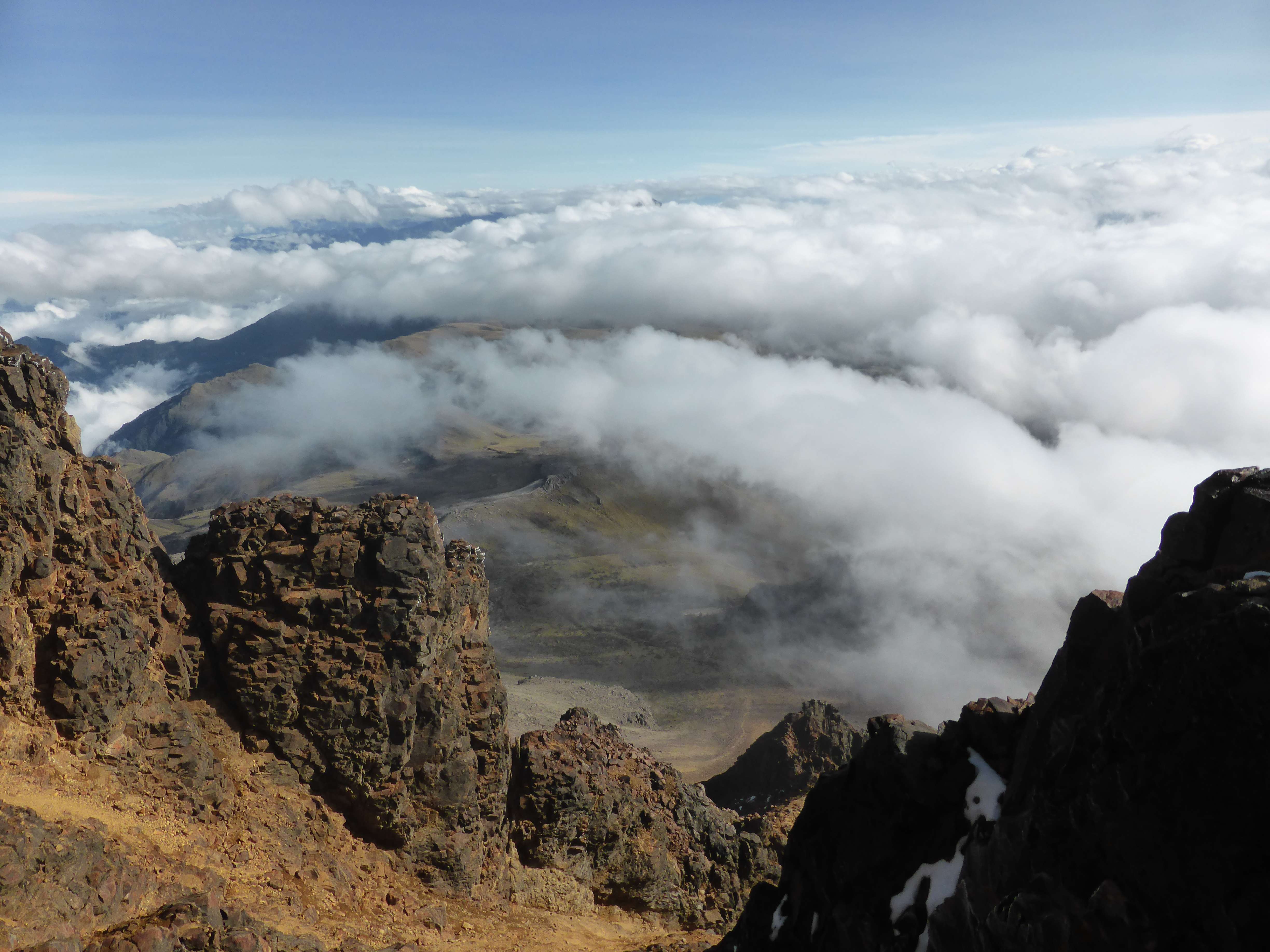
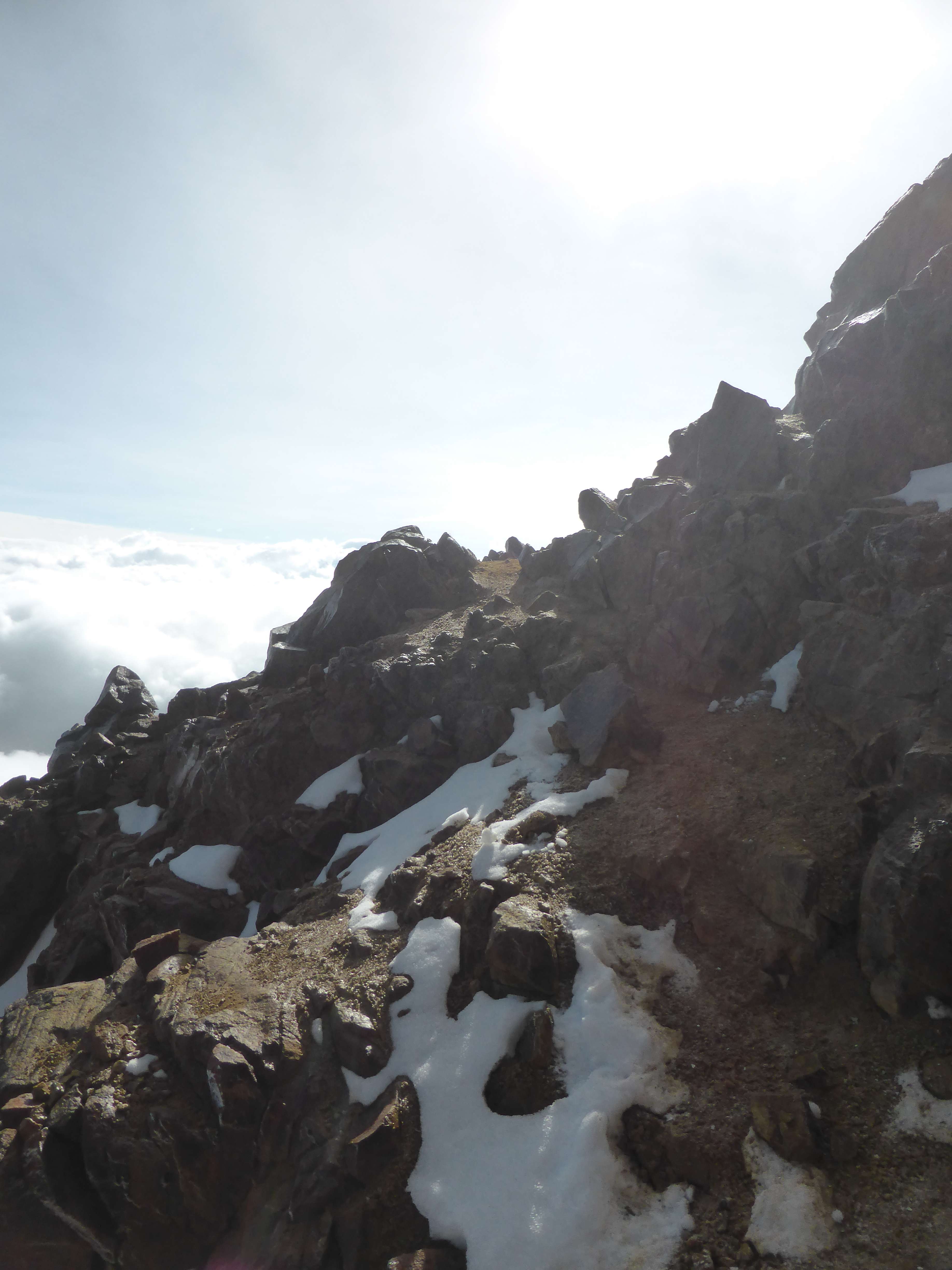
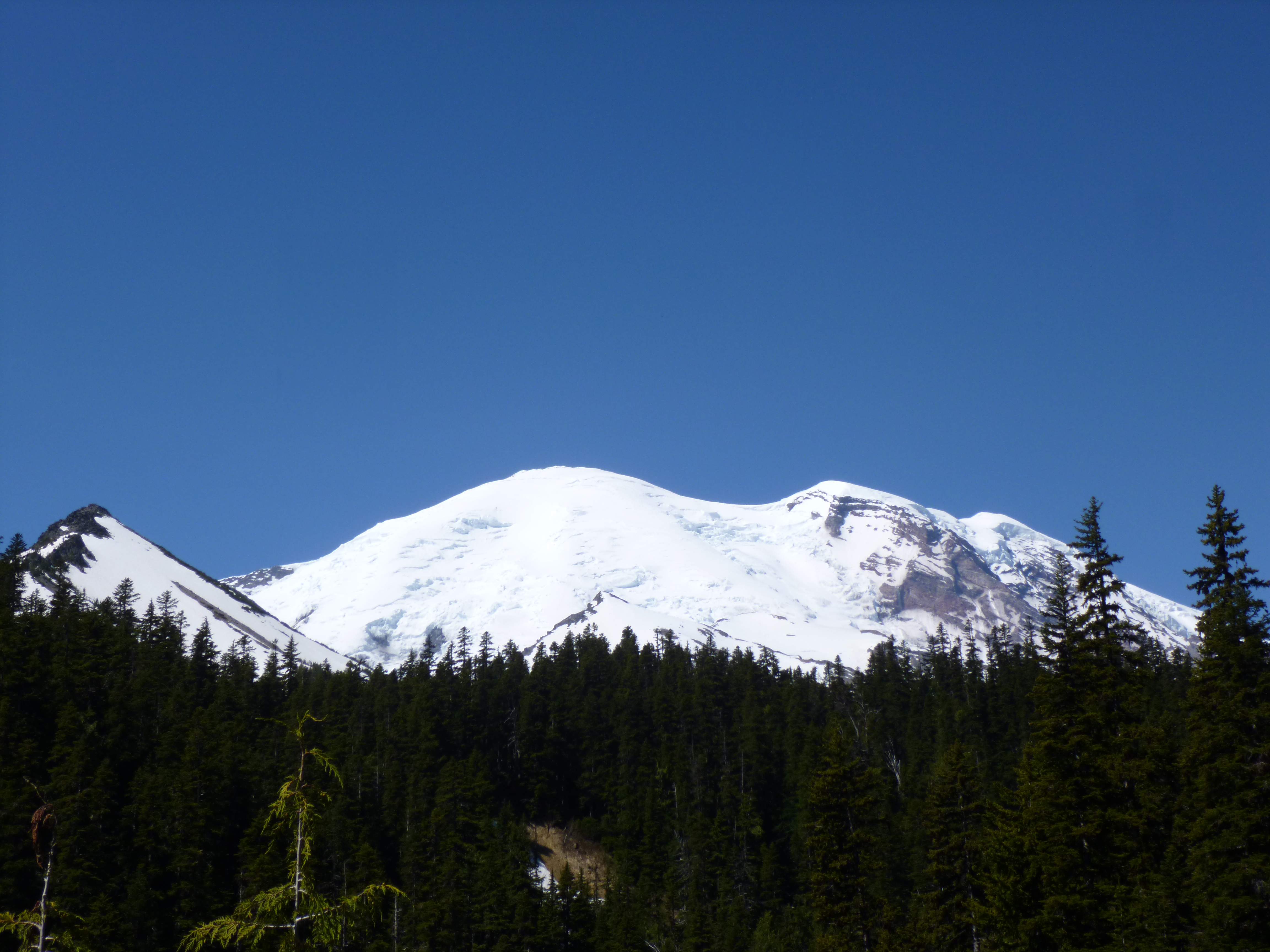
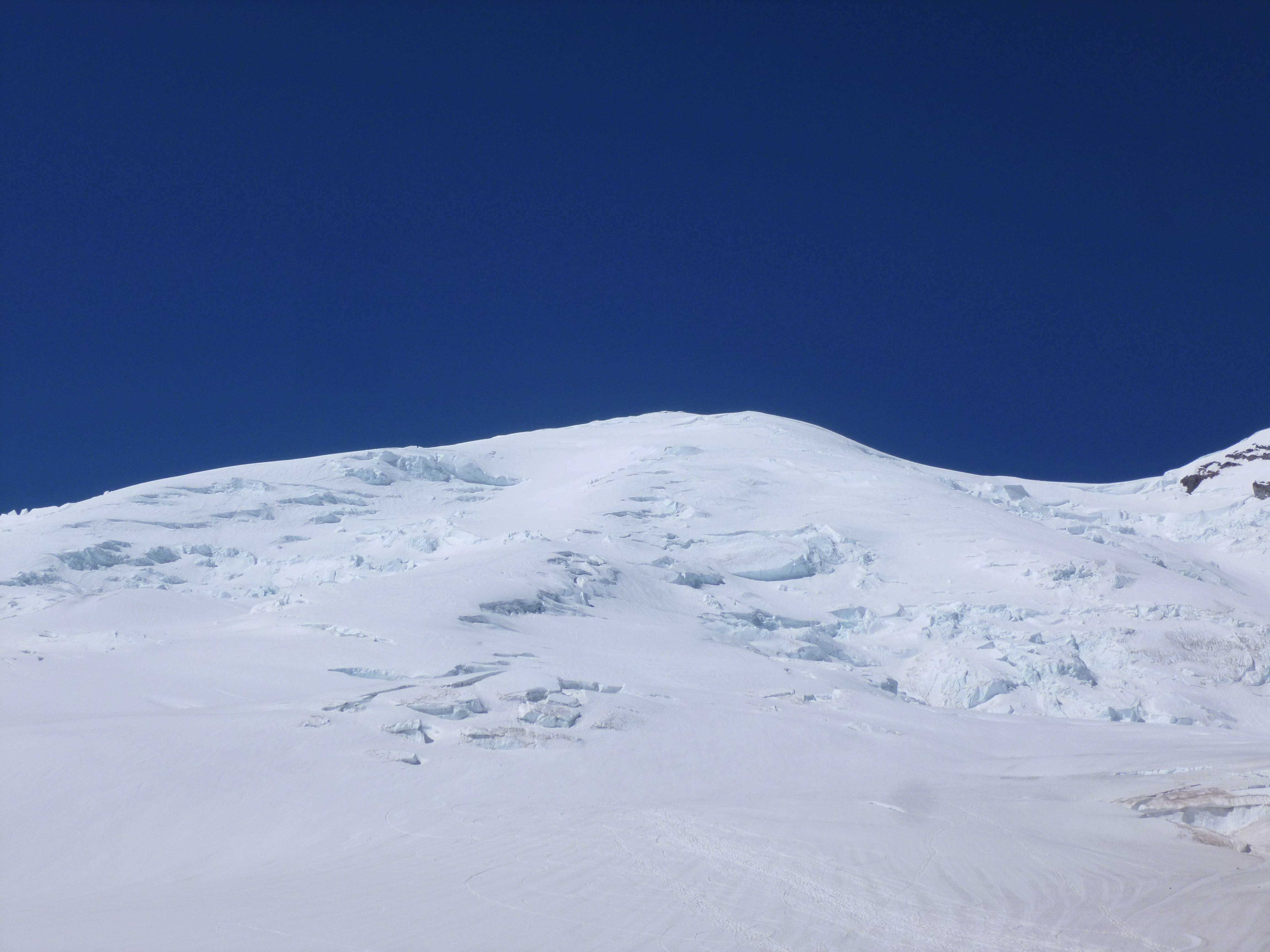
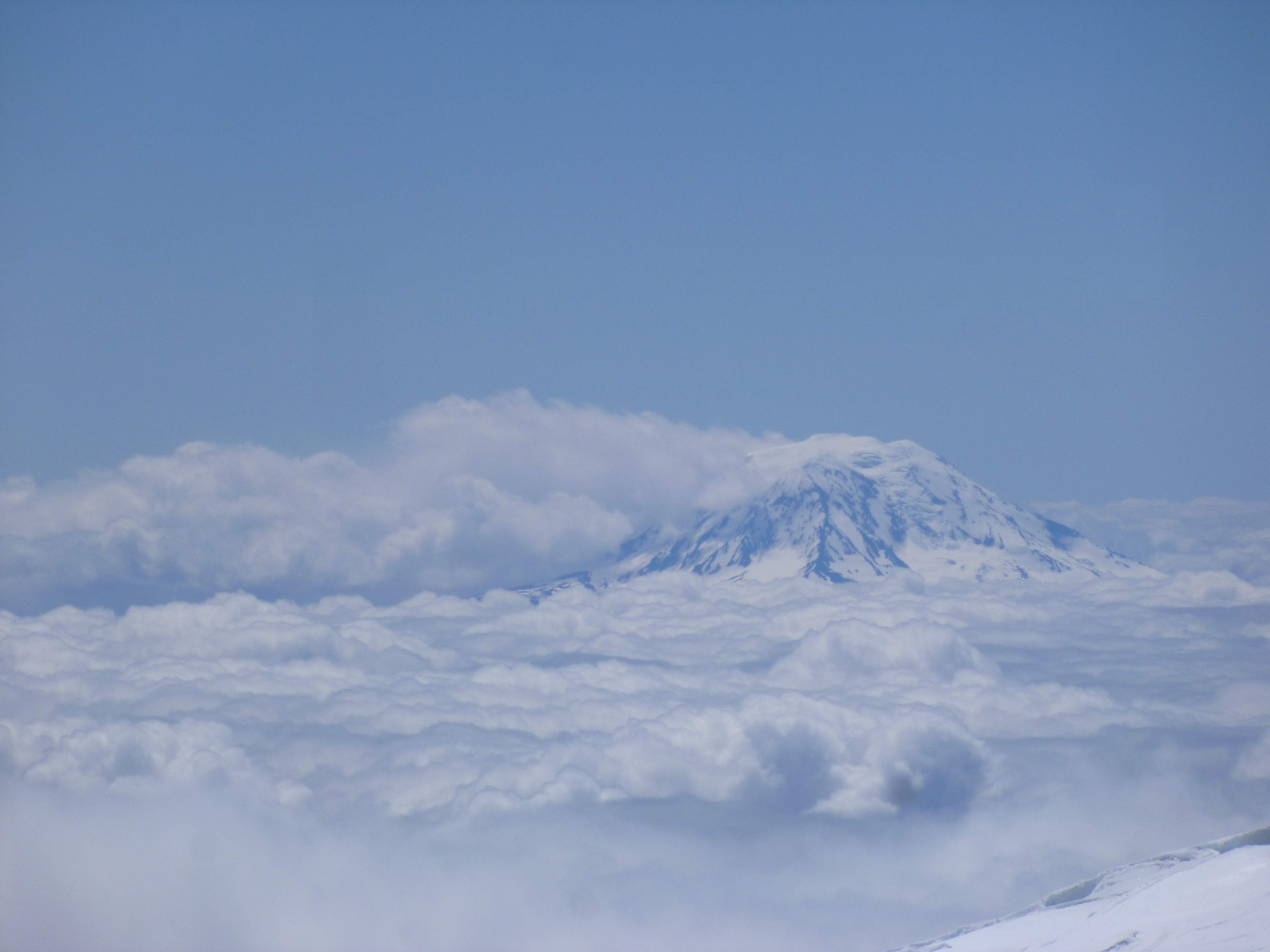
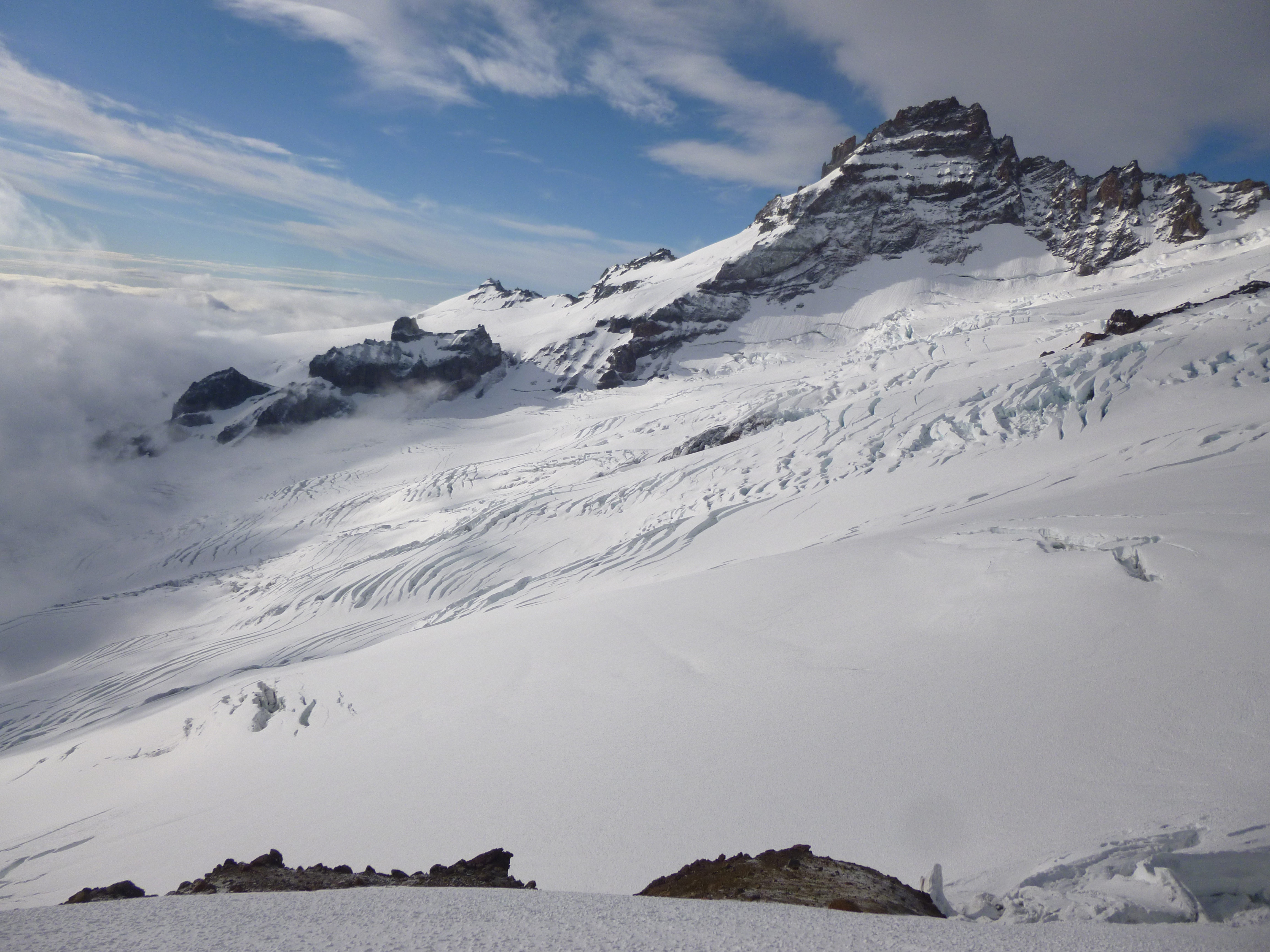
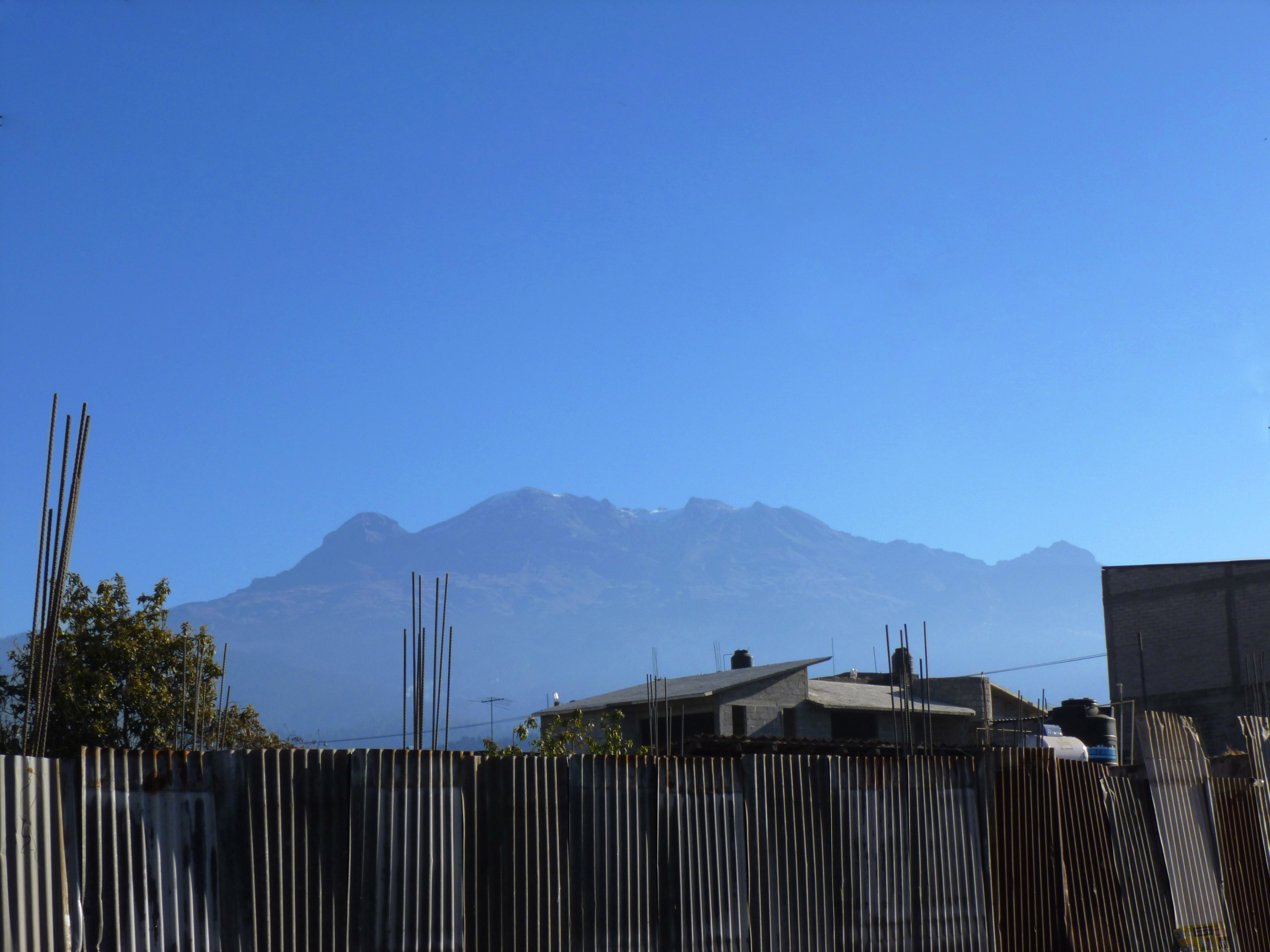
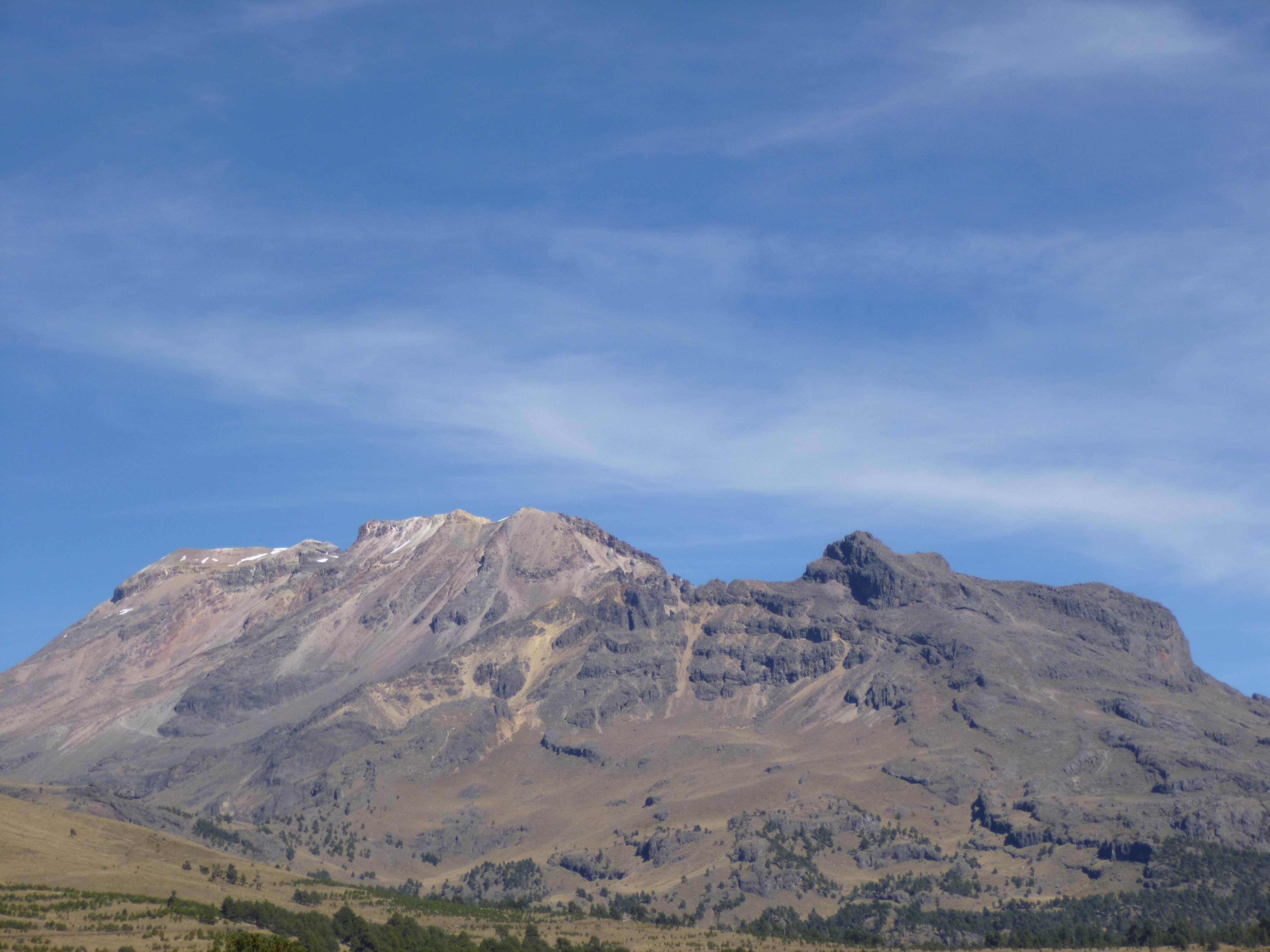
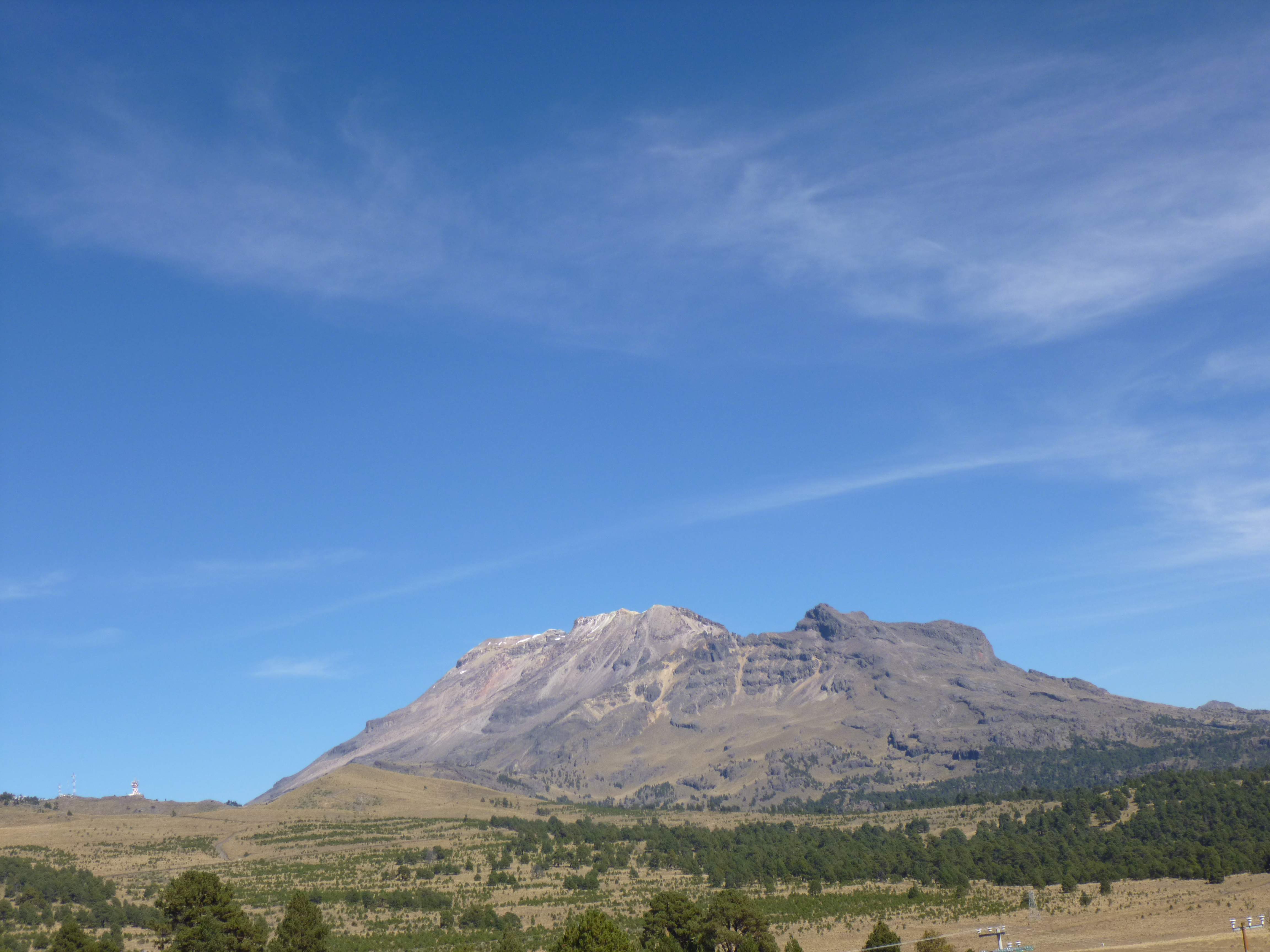
Chimborazo.

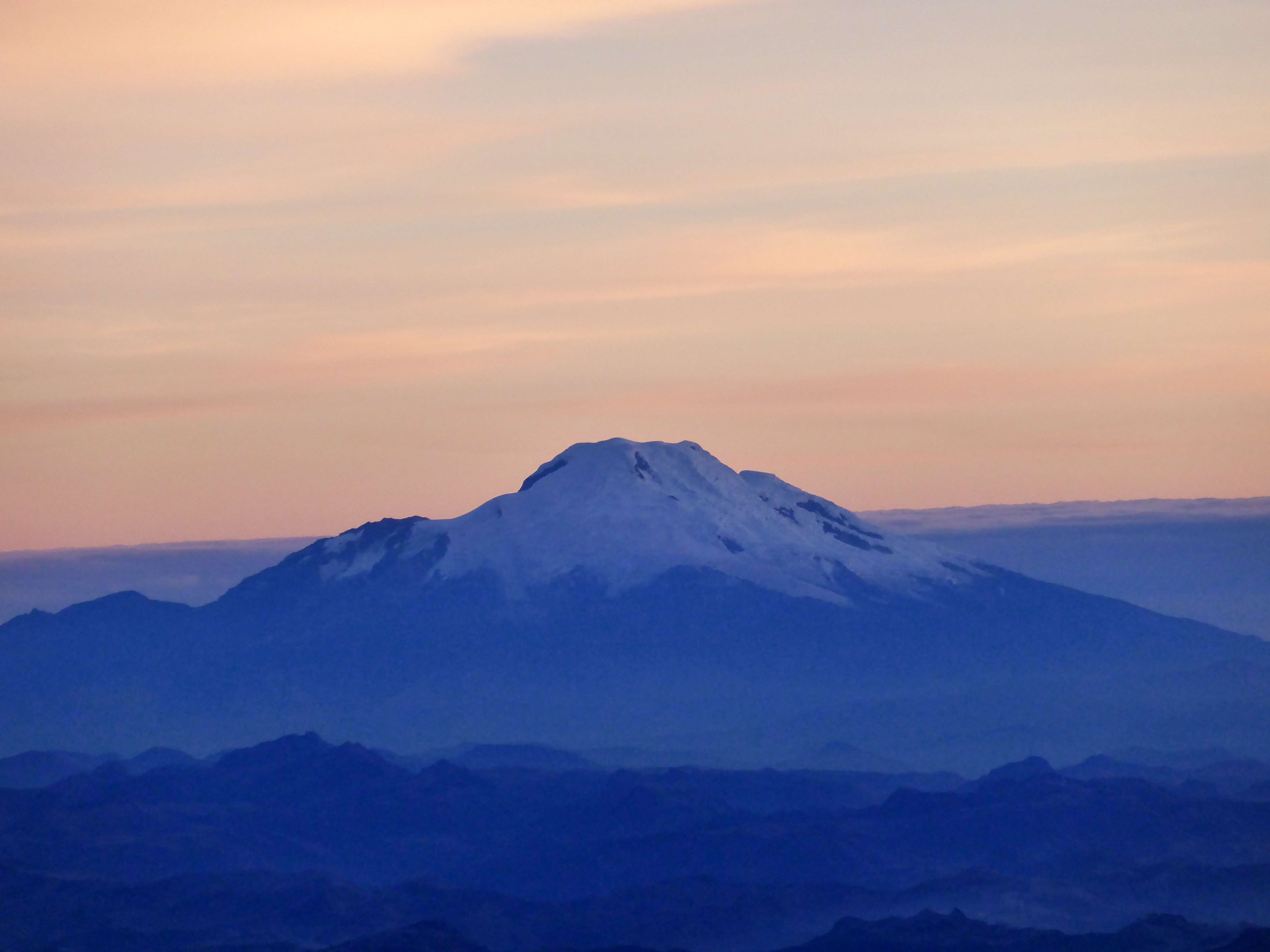
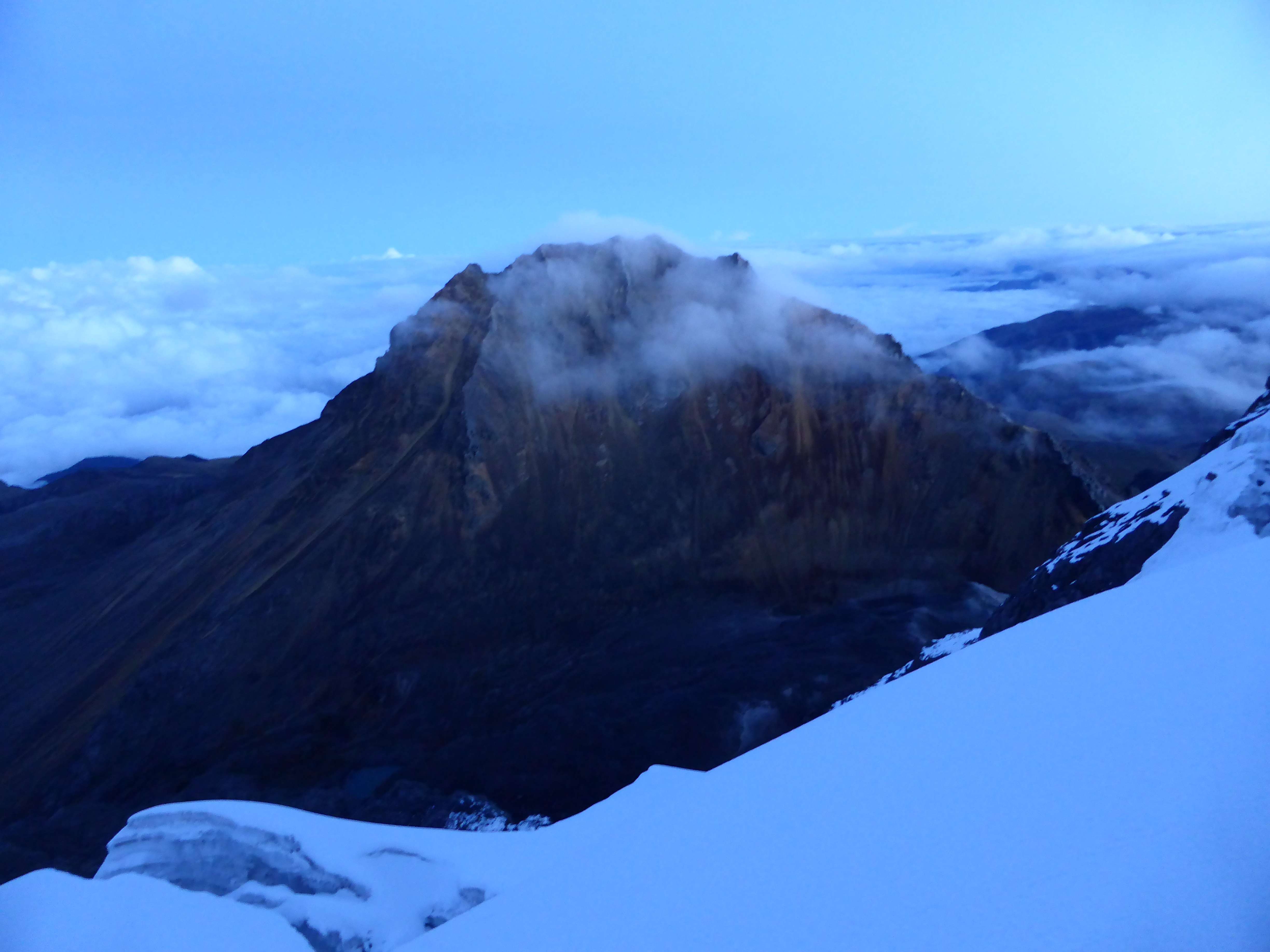
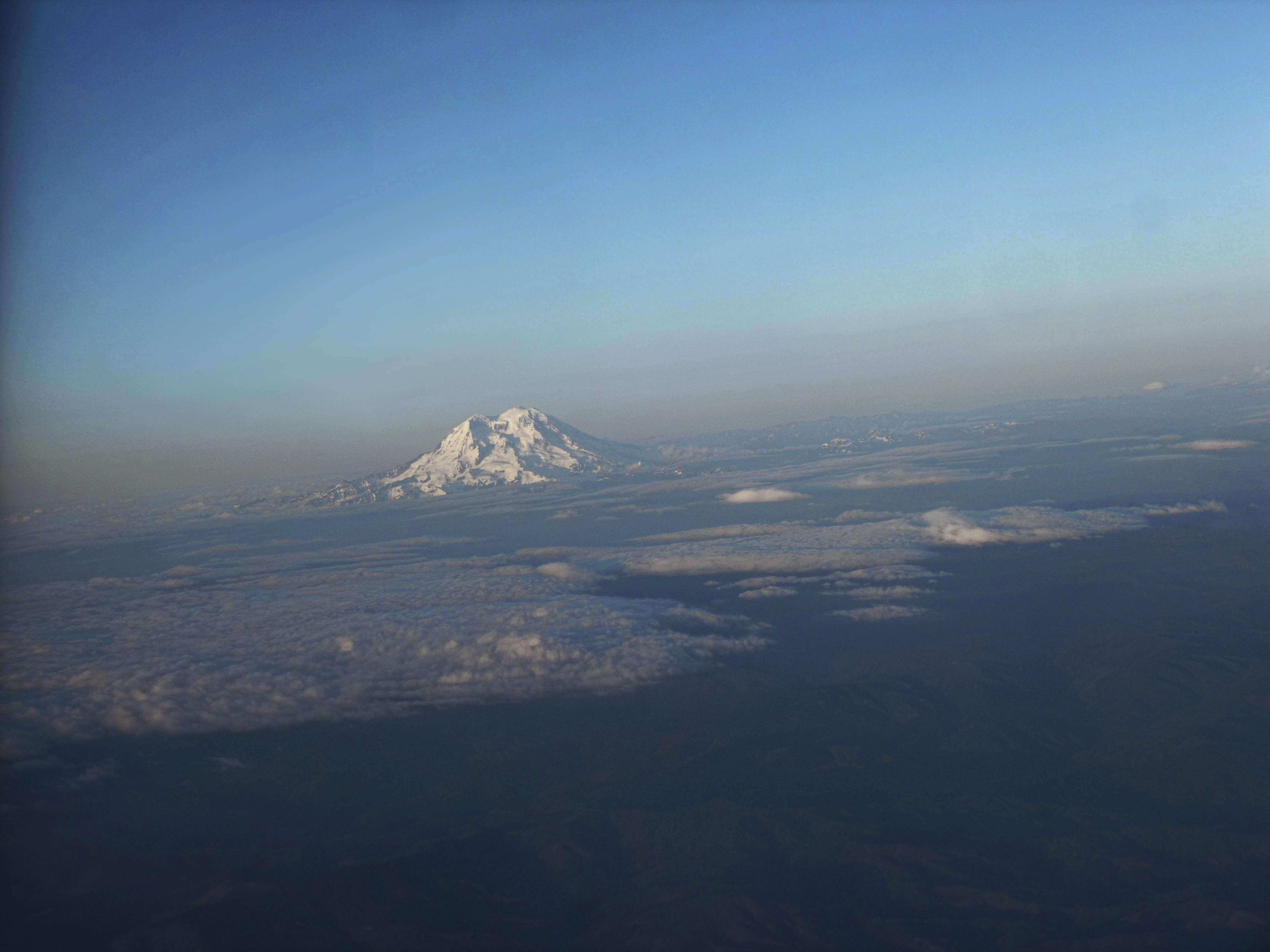
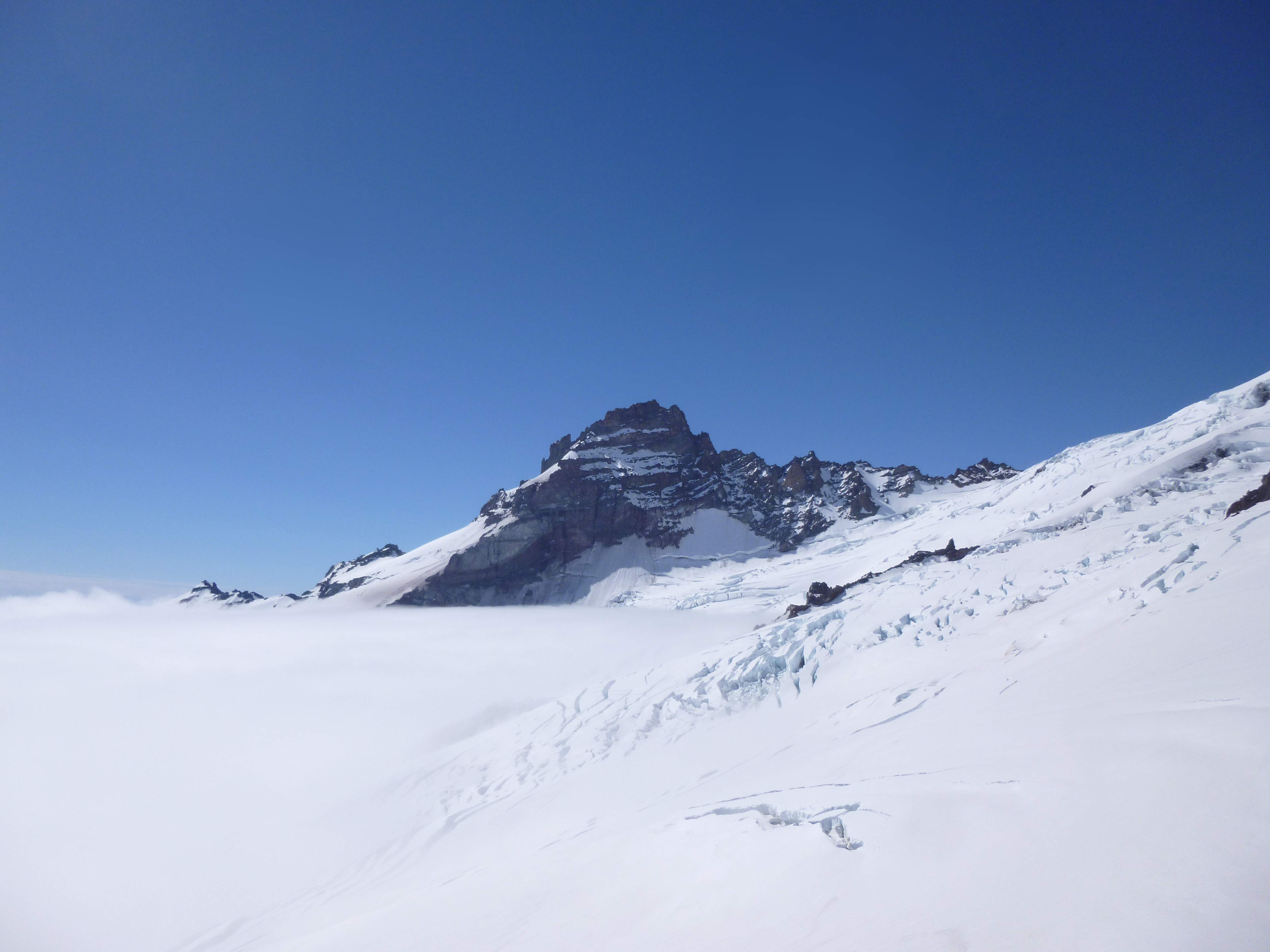
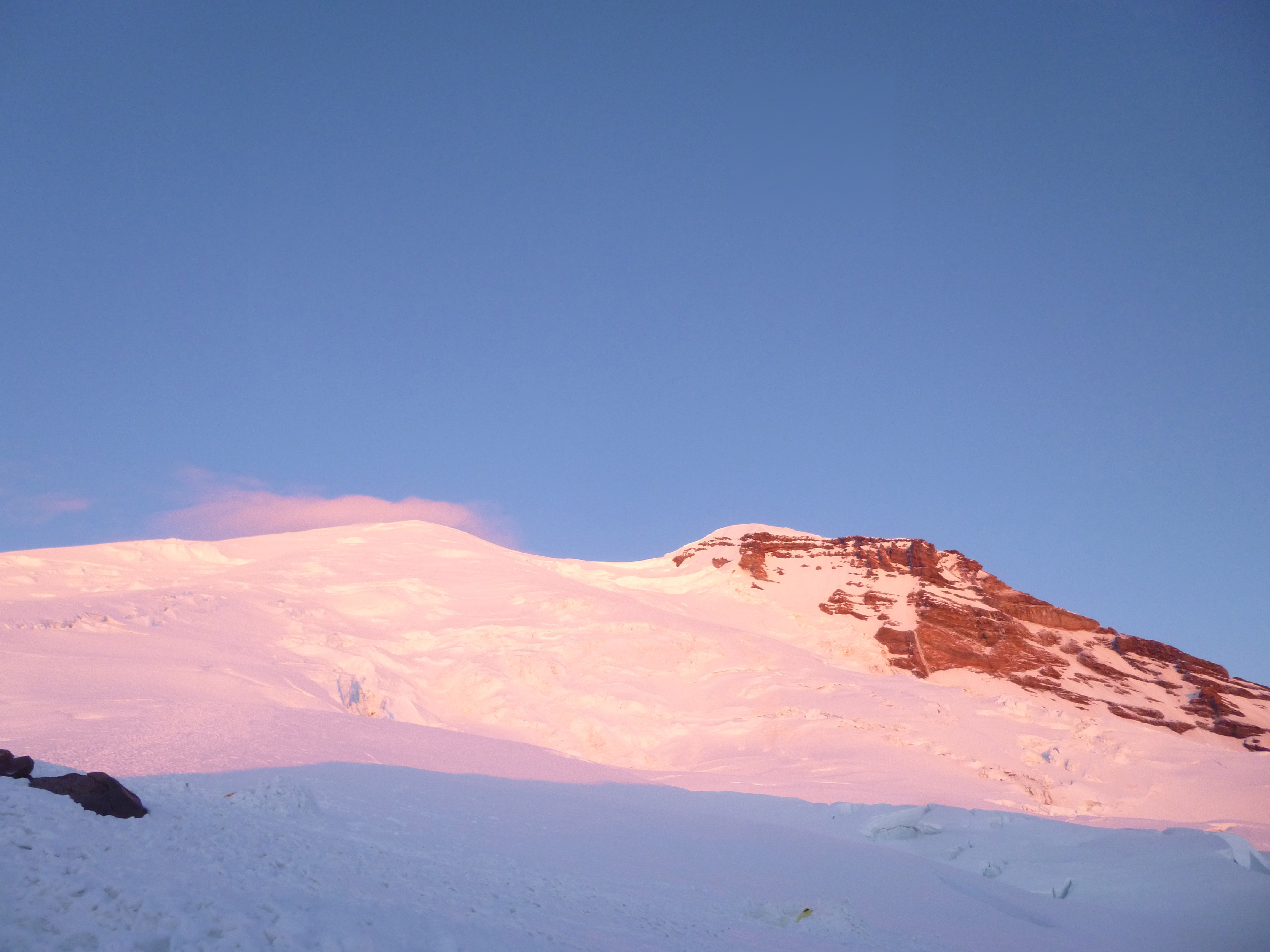
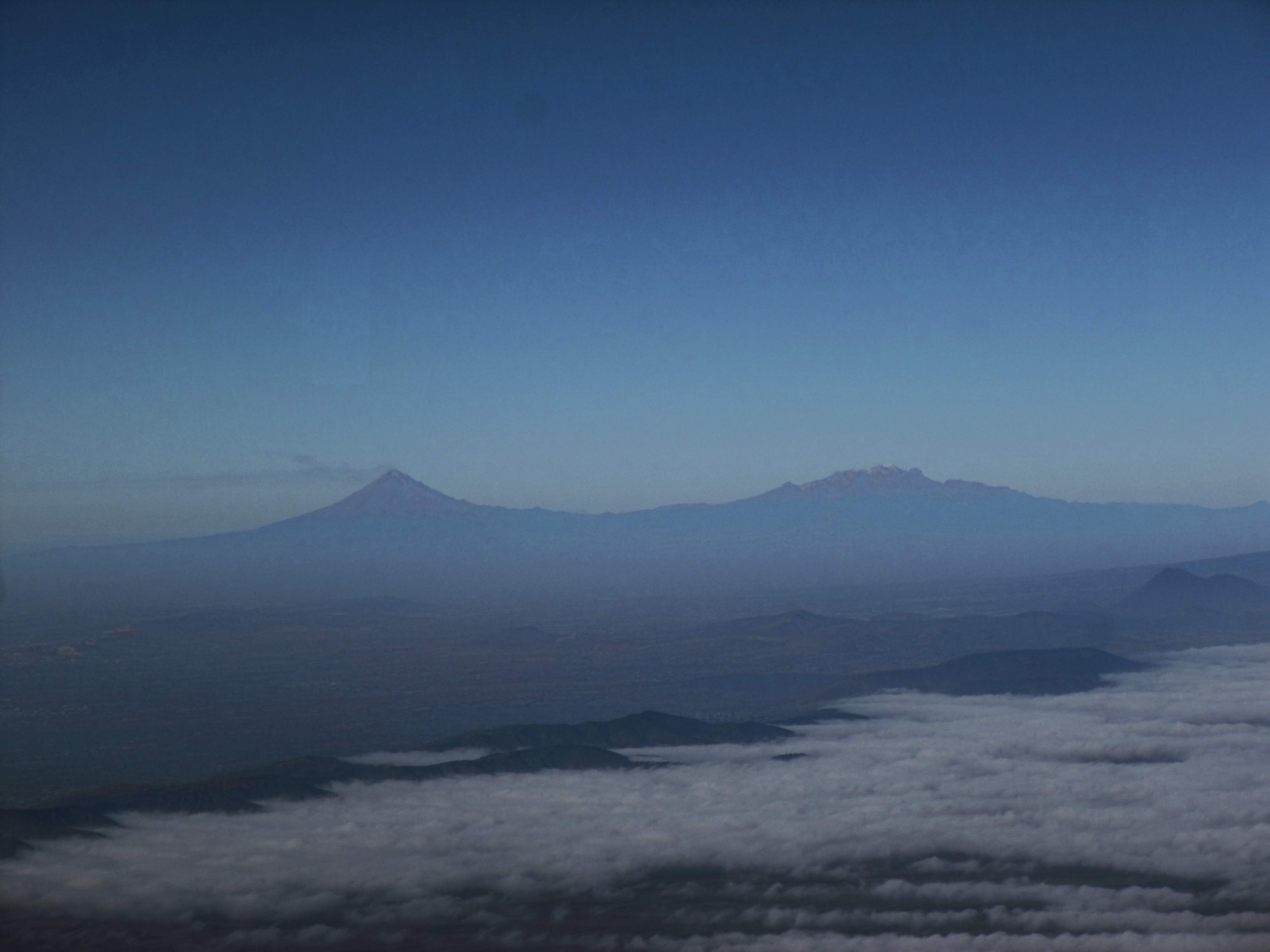
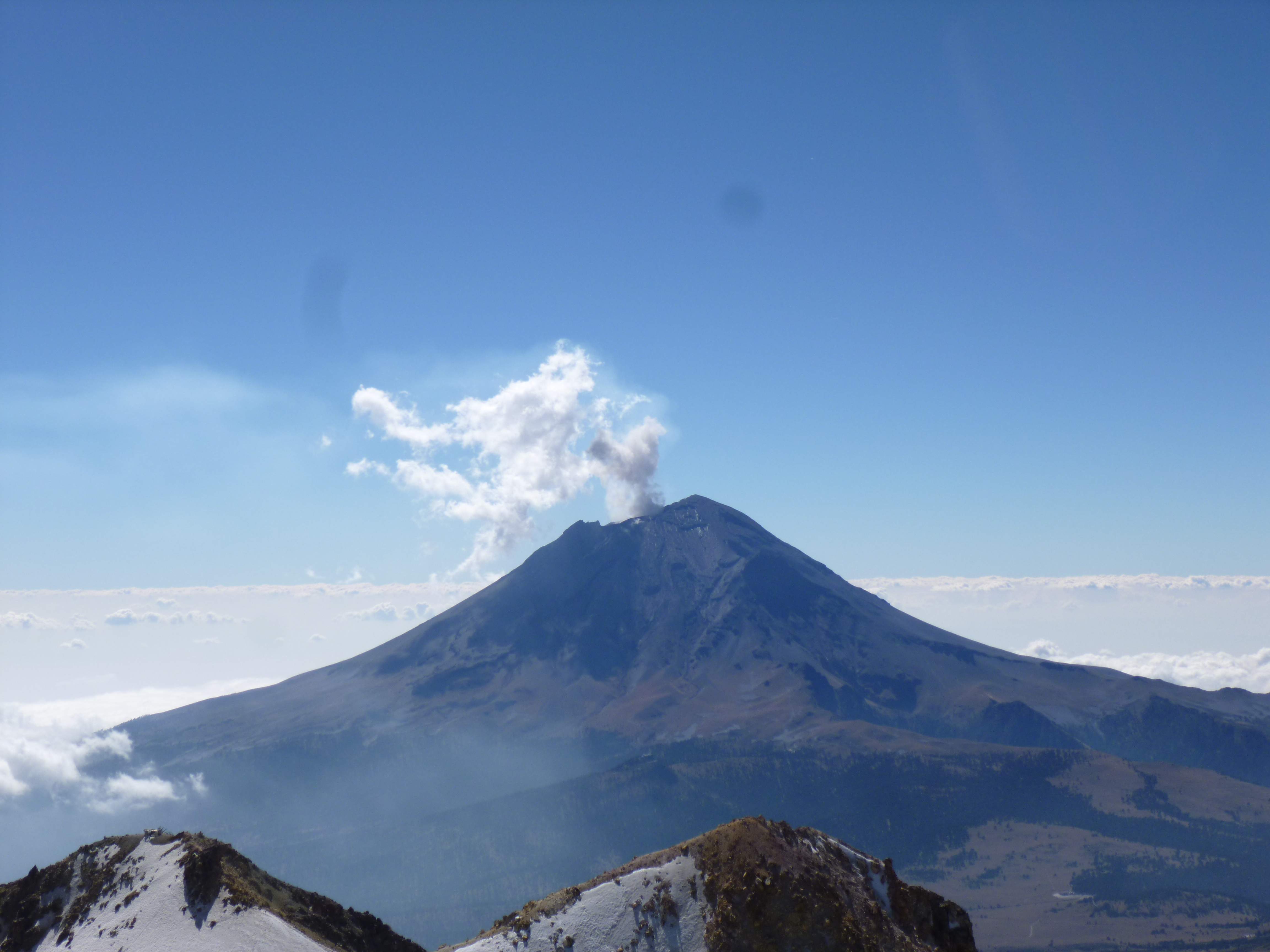
Chimborazo, seen from the summit of Cotopaxi.

6310m Chimborazo is a massive inactive volcano, and Ecuador’s highest mountain. Due to the earth’s equatorial bulge Chimborazo’s high-point is the spot located farthest from the Earth’s center, further than the much higher Himalayan peaks due to their more northerly latitude. Given the right time this also makes Chimborazo’s summit the point on earth closest to the sun.
...

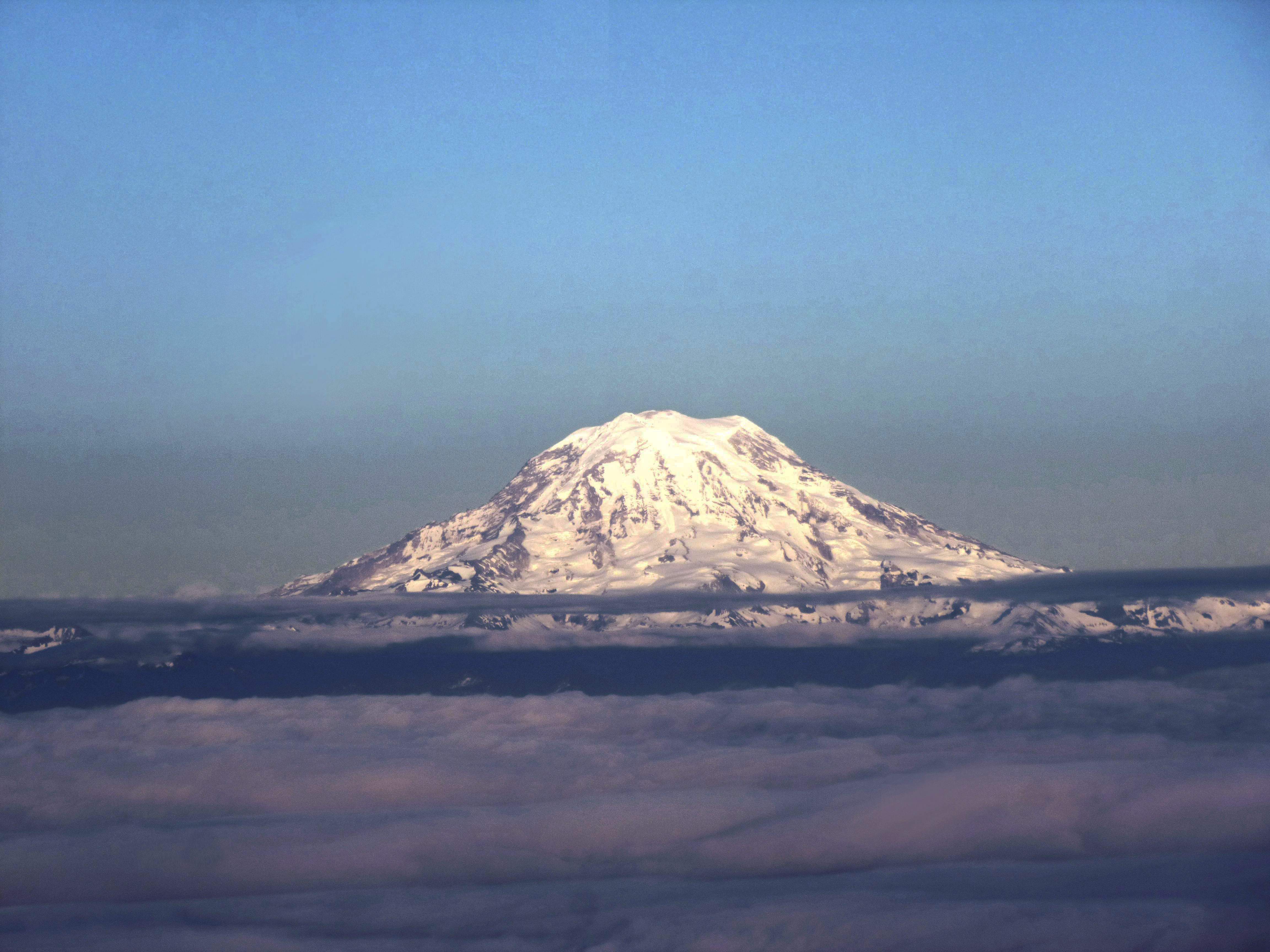
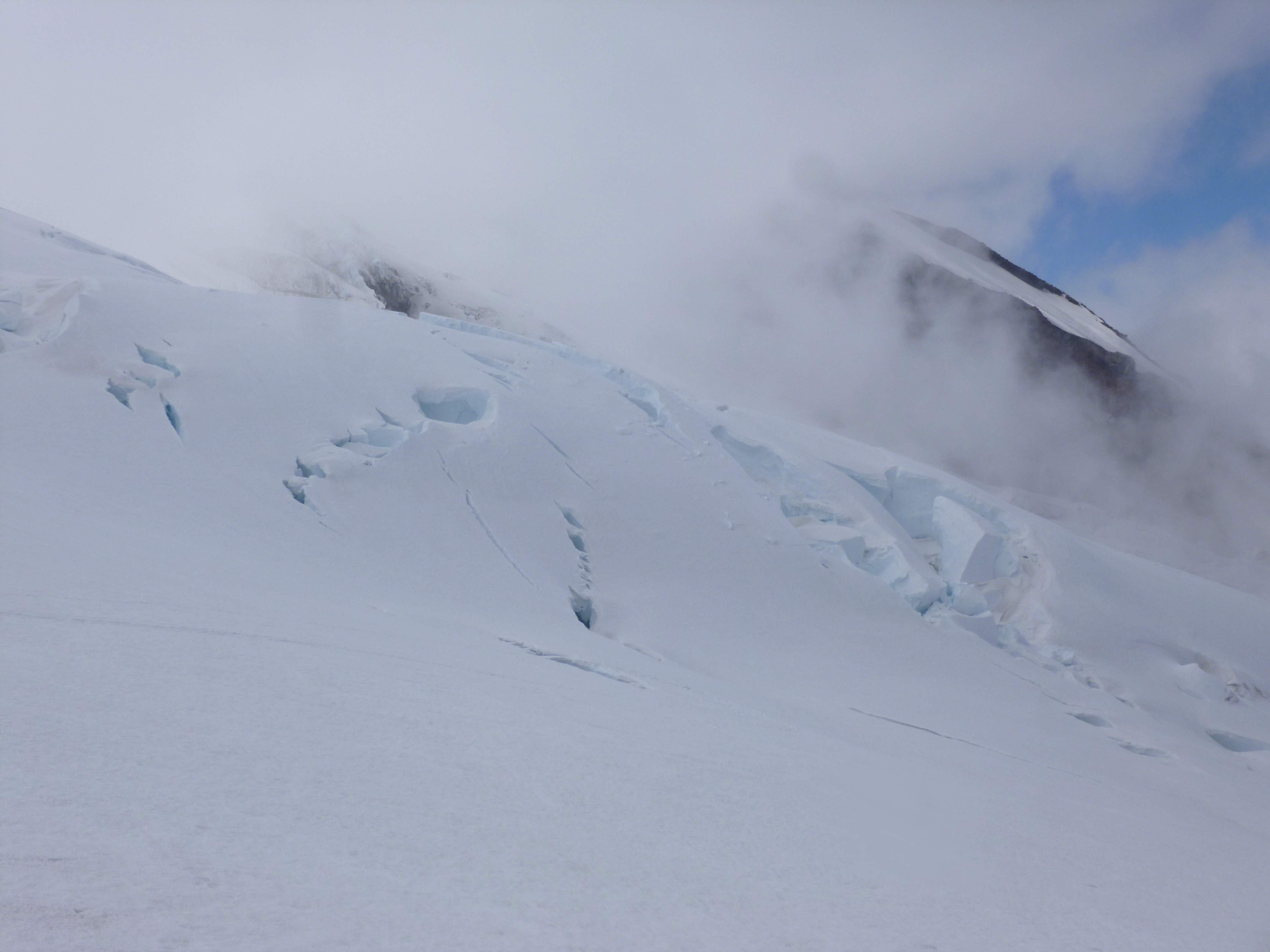
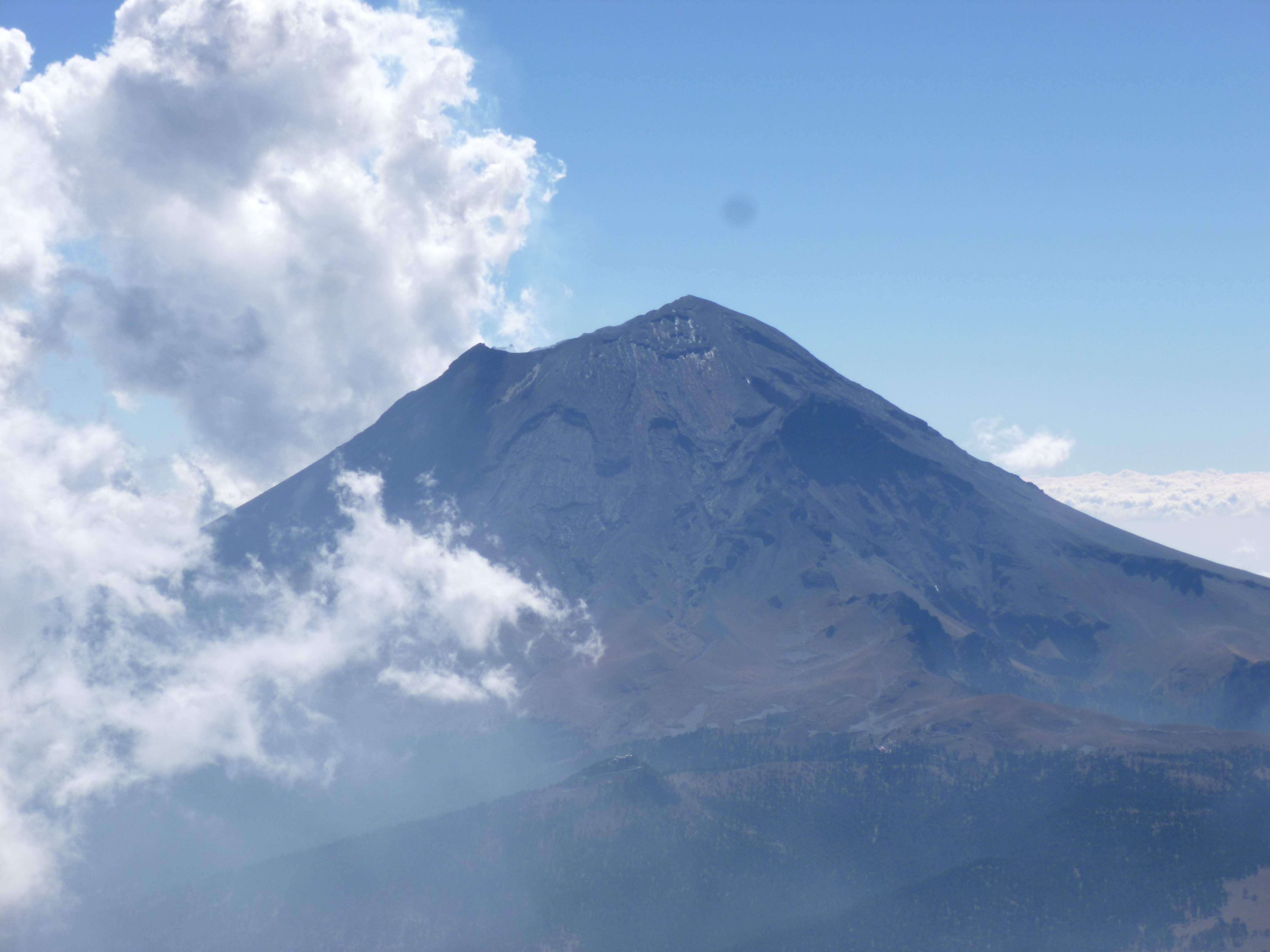
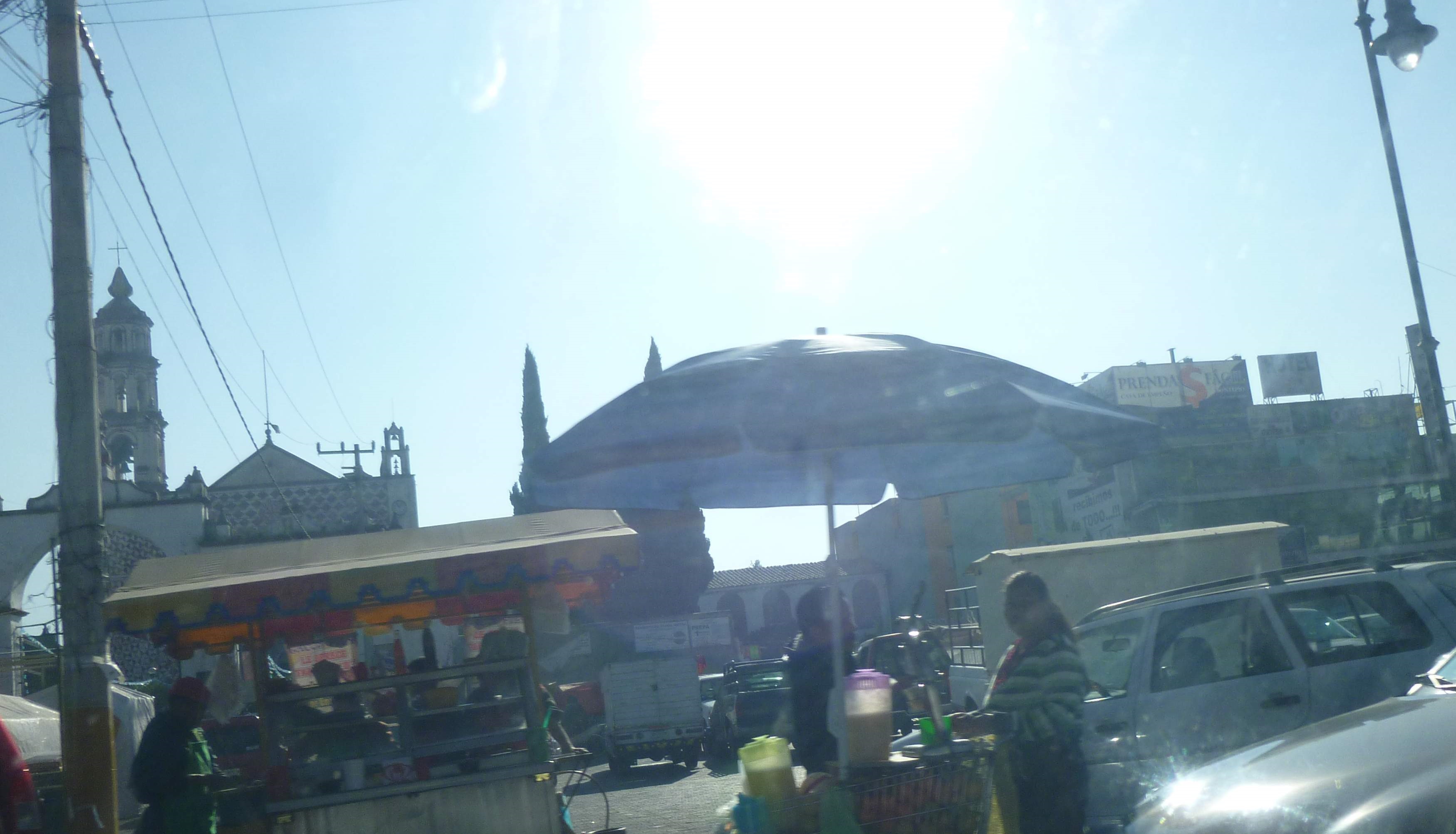
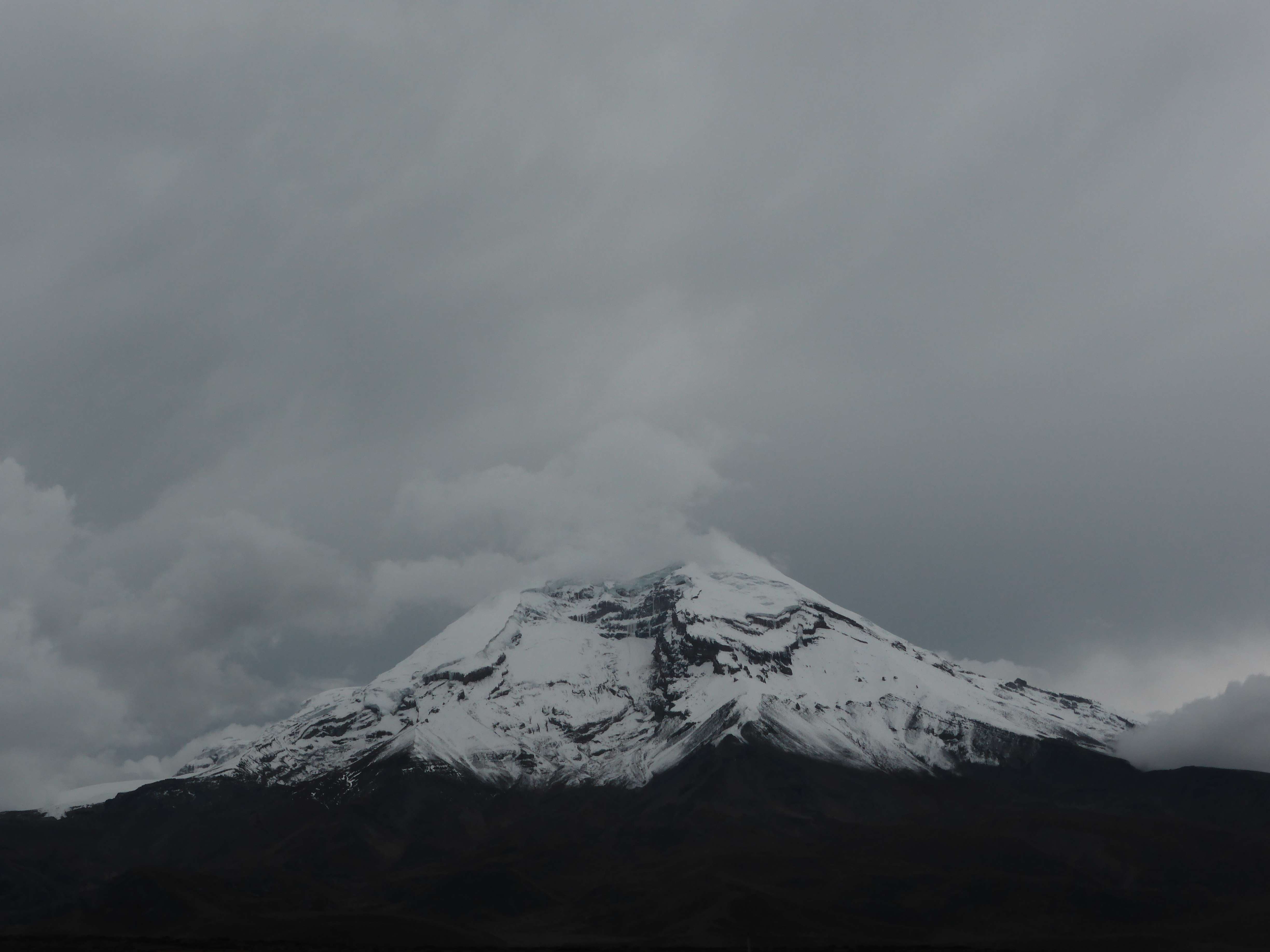
Chimborazo in the clouds, from the drive to the base of the mountain.

Along with the much lower Illiniza Sur, Chimborazo was one of my primary climbing goals while visiting Ecuador.  I came to Chimborazo thoroughly acclimatized, having spent almost two weeks climbing several of Ecuador’s other 5000+m volcanoes – my detailed climbing itinerary can be seen here.  I had enjoyed great snow conditions and reasonable weather at the beginning of my trip, successfully climbing the Illinizas, Cayambe, and Cotopaxi before travelling to Antisana, Ecuador’s fourth highest.

Antisana had chased me off with a lightning storm, fog, and abnormally warm air temperatures, leaving me well aware of Ecuador’s potential for rapidly changing weather.   I was nervous about Chimborazo – while the standard route’s technical grade is low, in recent years Chimborazo has gained notoriety for being out of condition.  I had read accounts of a dry route covered in ice, with high objective hazard presented by rockfall.  There was good news however; other climbers and Ecuadorian guides whom I had met at my hostel and on other mountains had informed me that Chimborazo had recently seen snowfall.  Fresh snow once consolidated would prevent rockfall, and also hopefully make for decent climbing conditions.

...

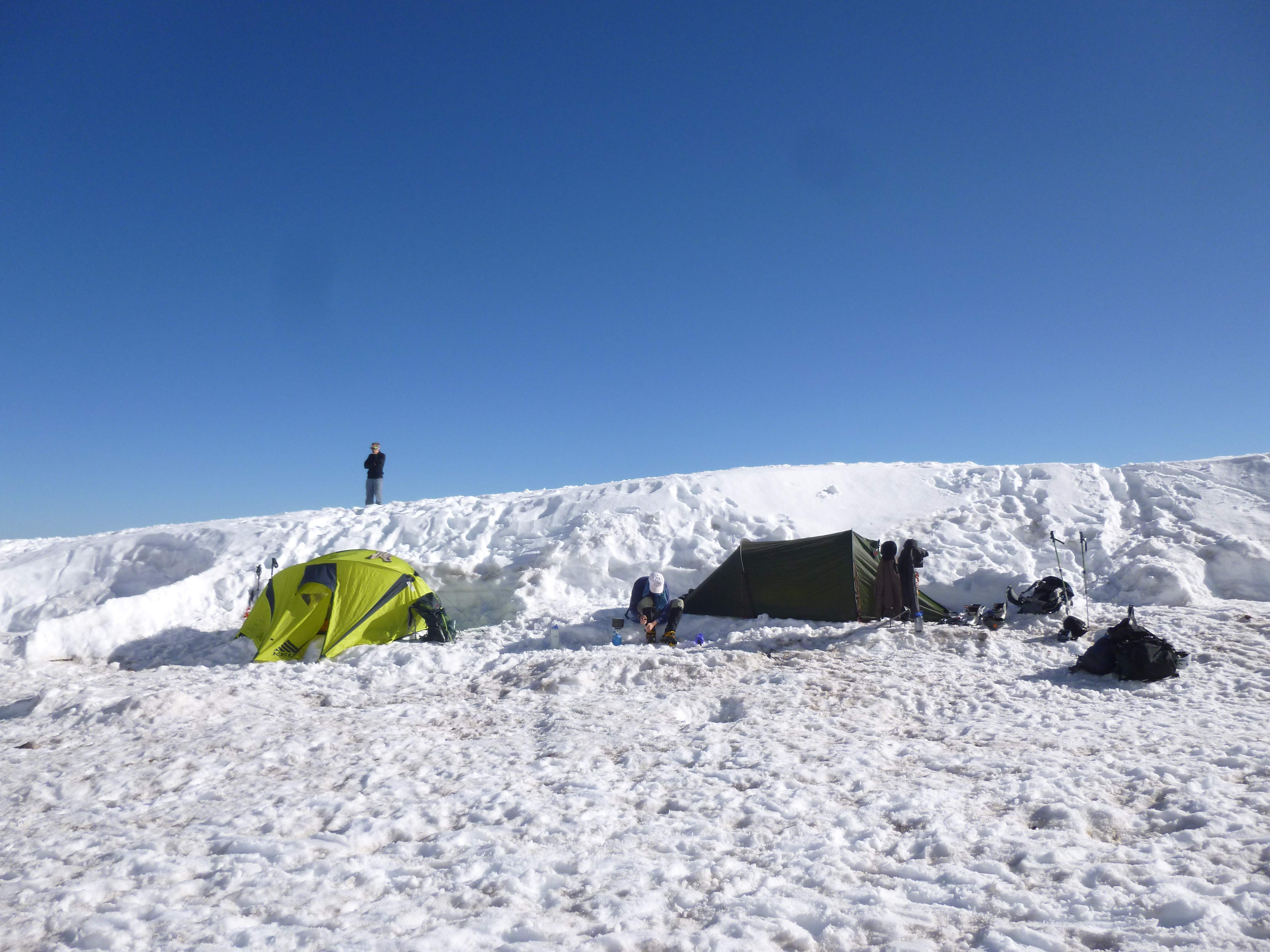
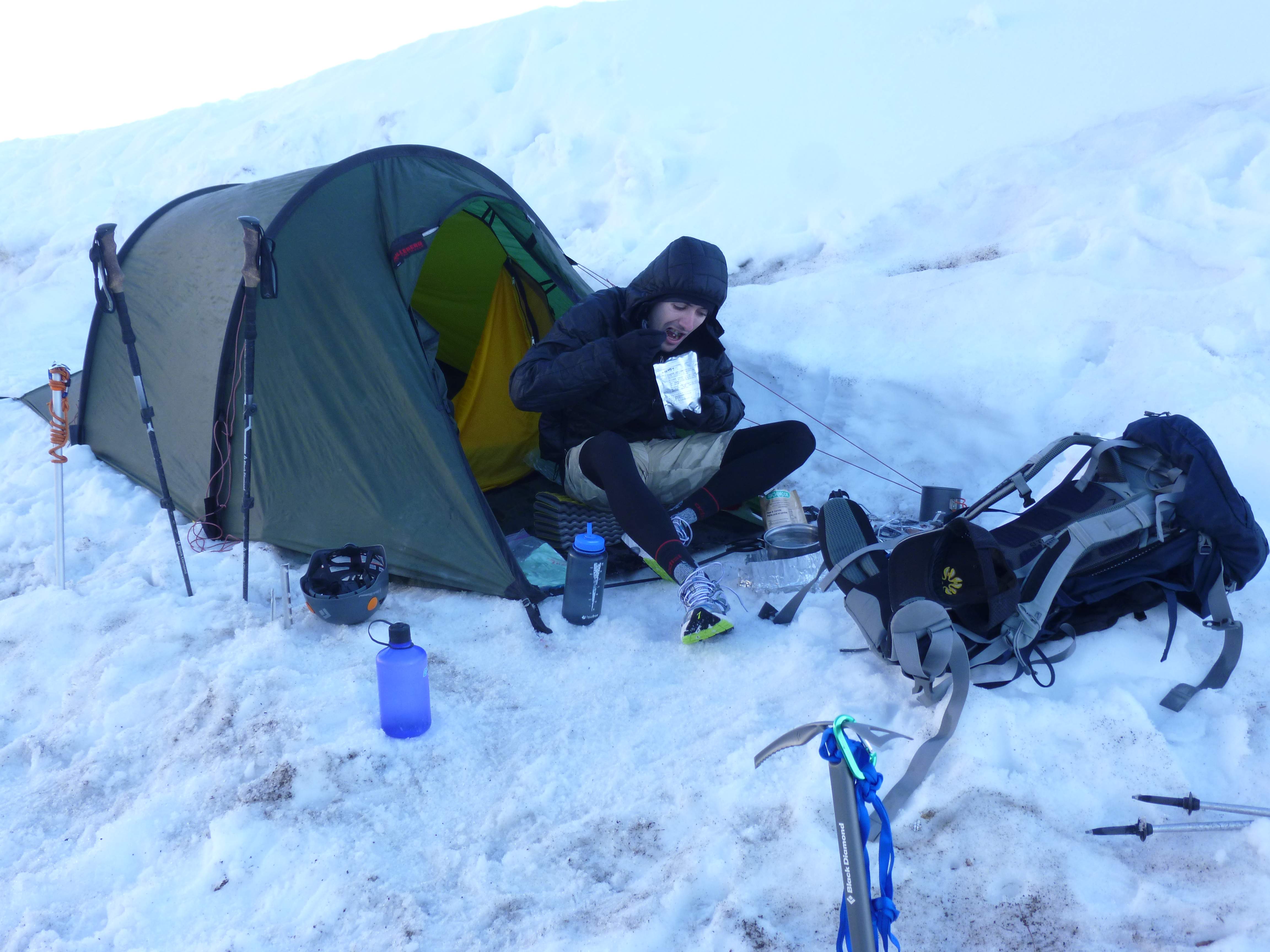
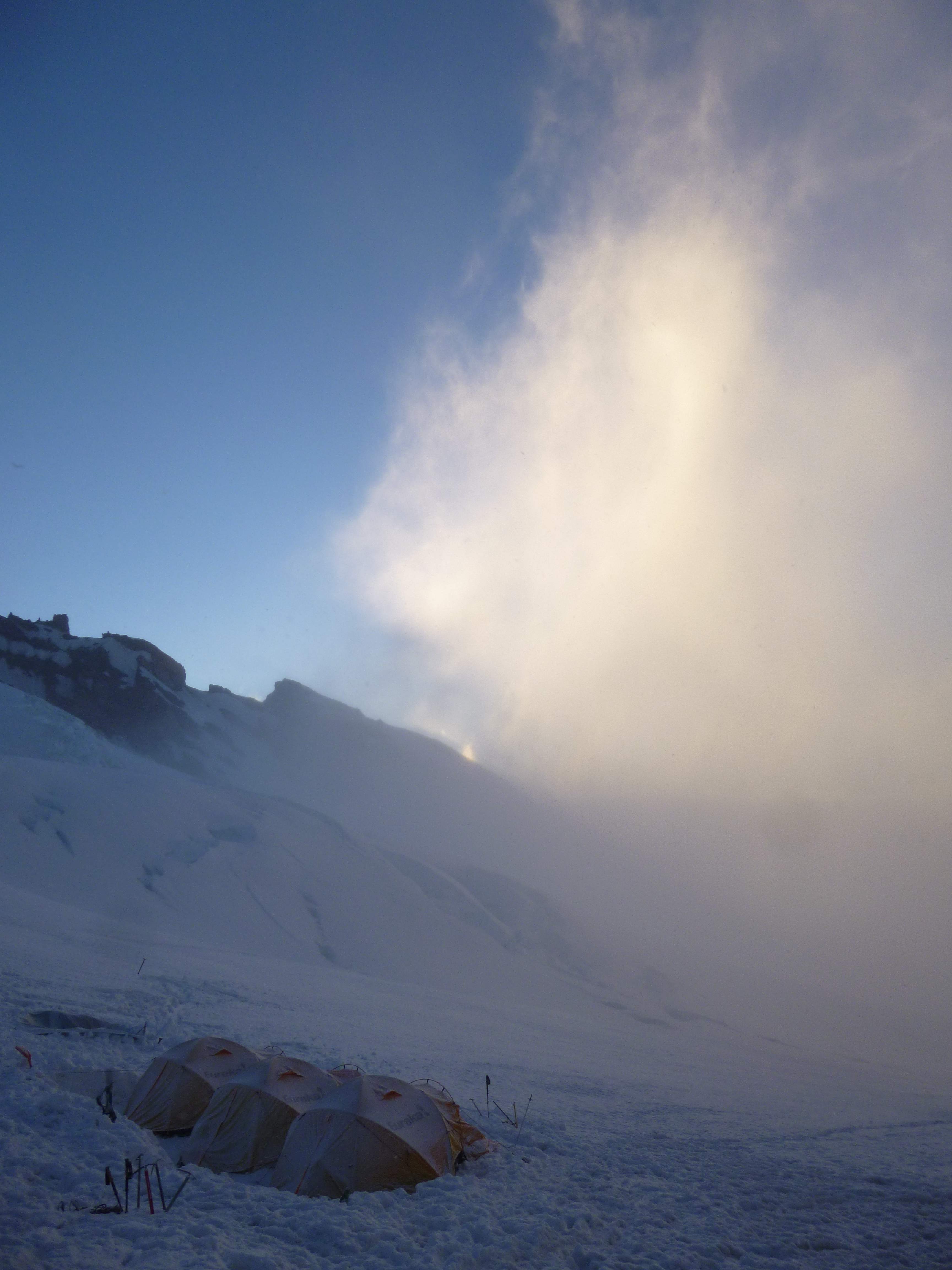
My campsite near the parking area.

Day 1:  My climbing partner, Ecuadorian mountain guide Pato, and I were camping at the base of Antisana, Ecuador’s fourth highest mountain.  We had arrived at Antisana the day before, with the intent of climbing it overnight.  Unfortunately the weather had conspired against us, and I had made the decision to bail.  With no sign of the weather improving we figured that it wasn’t worth sticking around and waiting for one more day, and I decided that instead of taking a day for rest, we may as well head straight to Chimborazo.

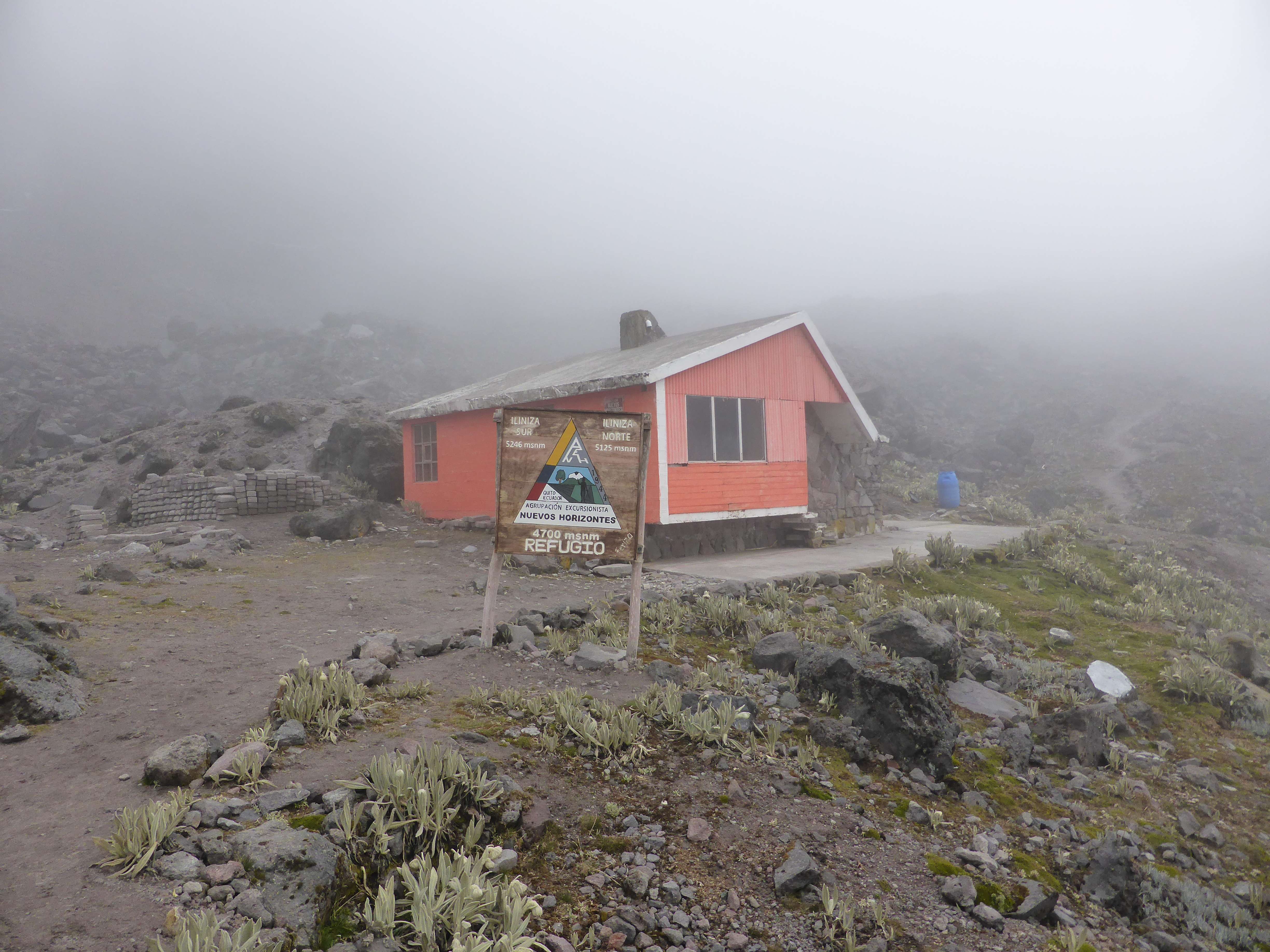
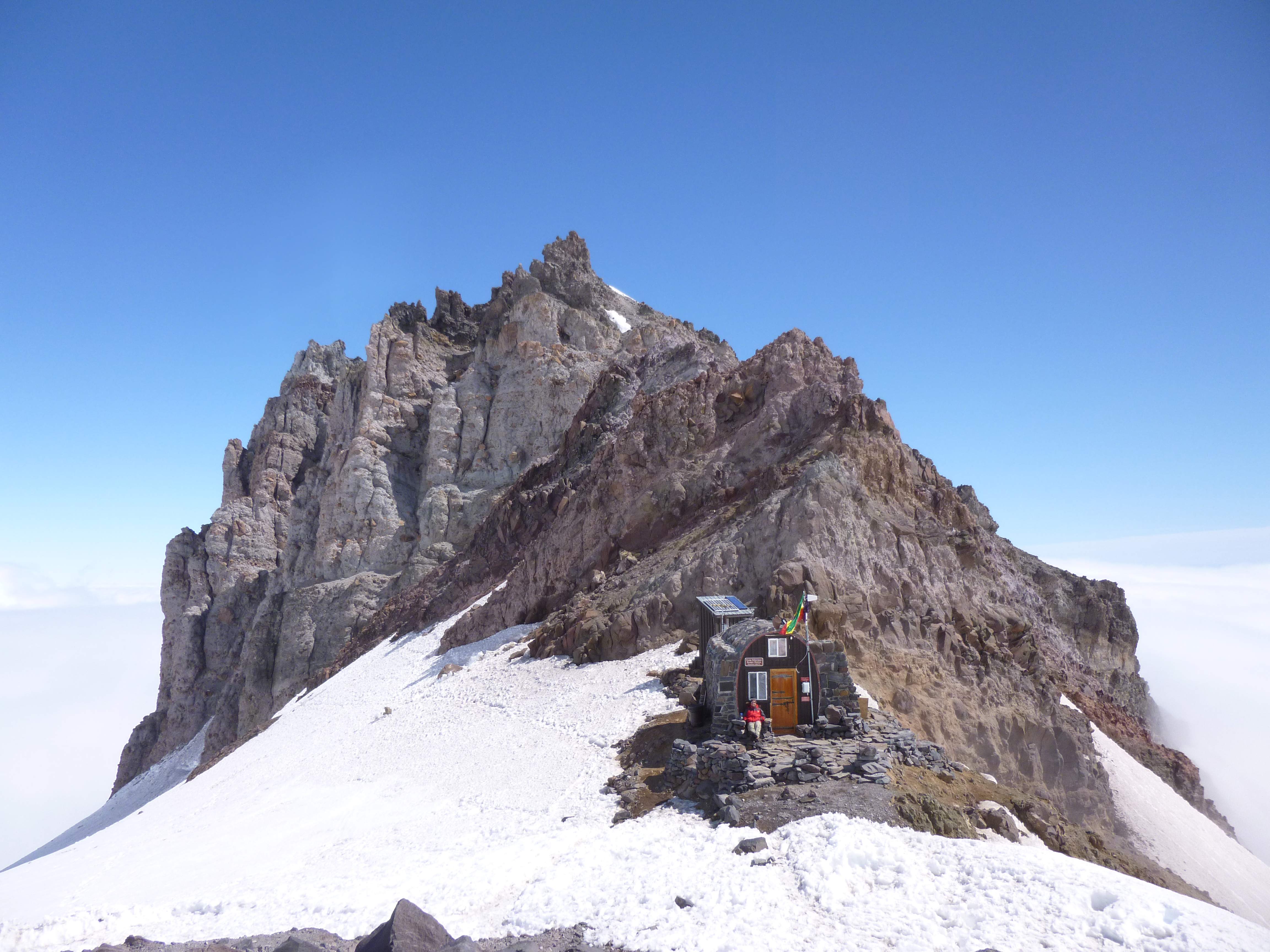
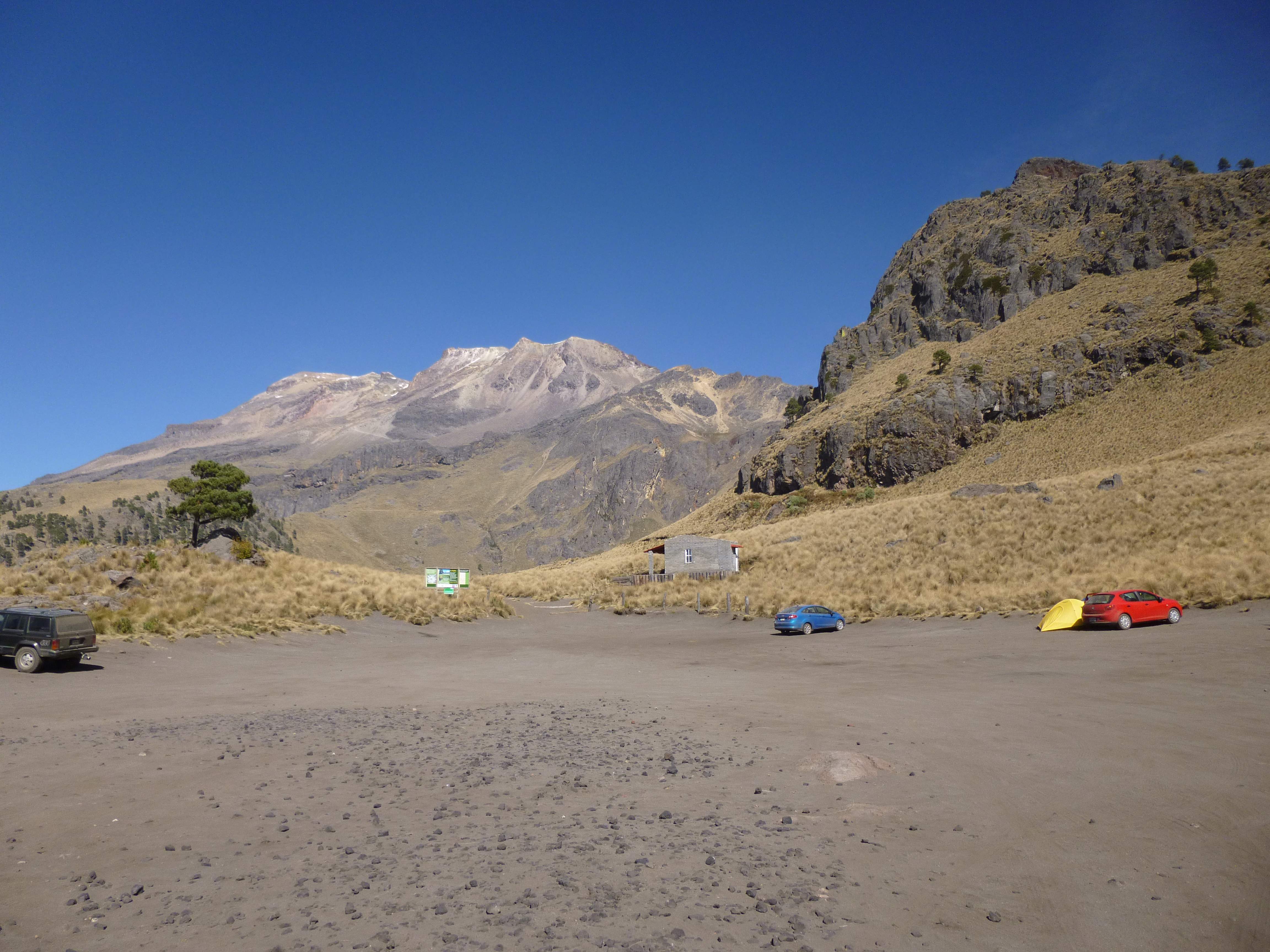
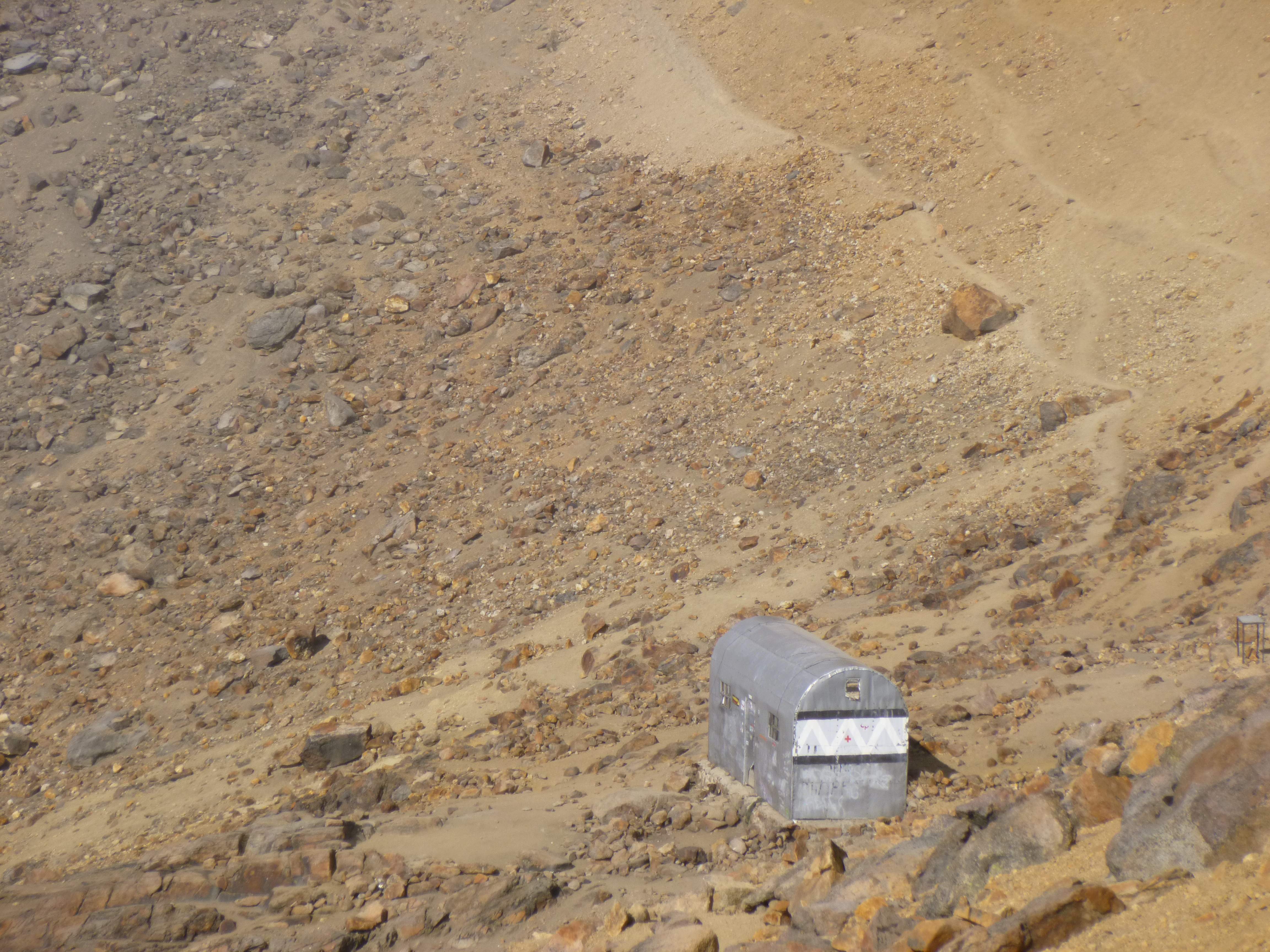
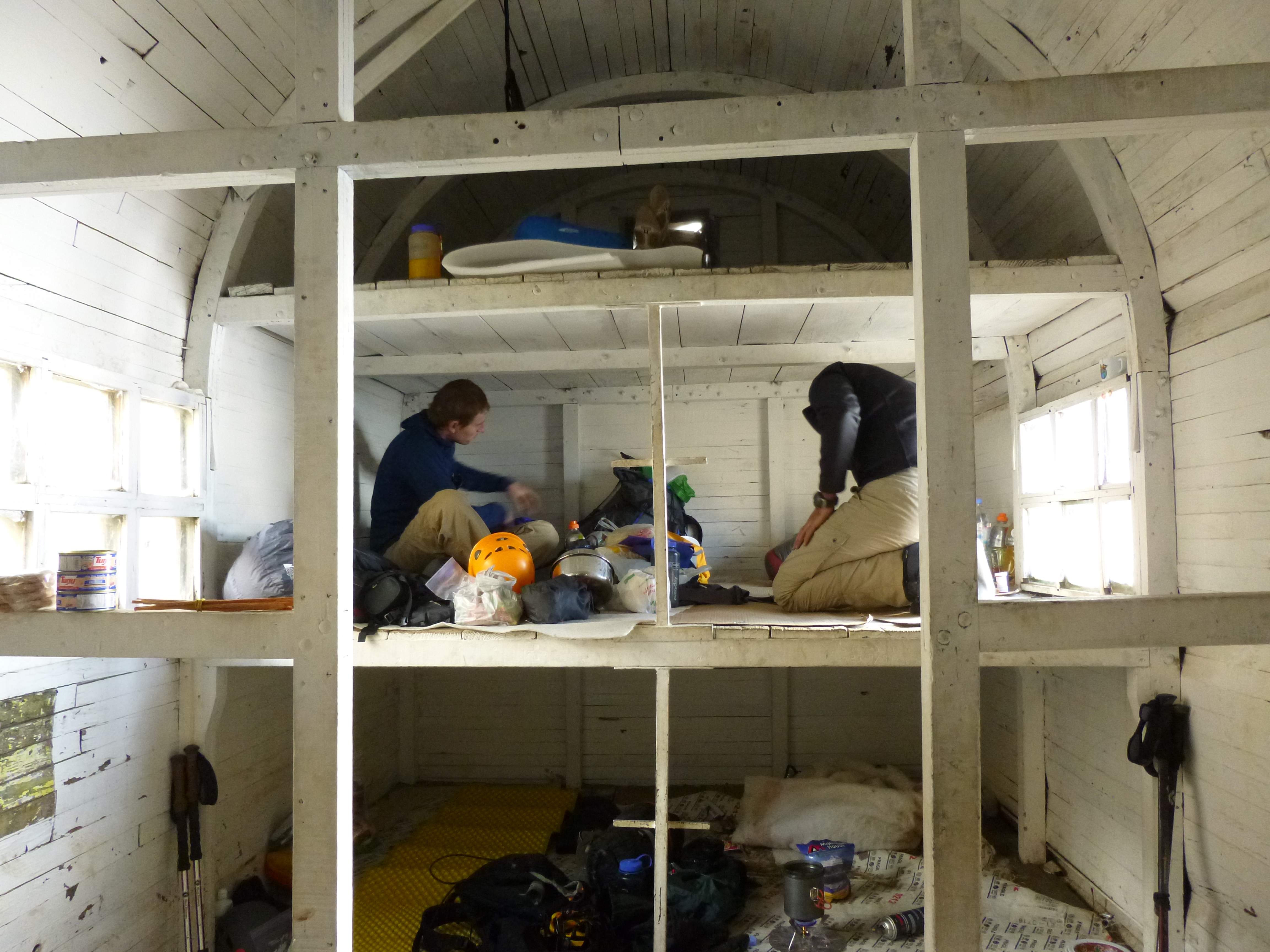
From the Reserva Ecologica Antisana we drove for almost six hours to the Reserva de Produccion Faunista Chimborazo, the nature reserve which contains Chimborazo.  Along the way we stopped in Ambato, Pato’s hometown, where we enjoyed a small feast at a local steakhouse.  After a fast check-in at the Chimborazo park gate we arrived at the ~4800m parking area near the base of the mountain, where everything was shrouded in thick afternoon fog.  Most of Ecuador’s more popular mountains are climbed from cabins, or refuges, but both of Chimborazo’s were closed at the time of my visit, so I pitched camp behind a makeshift cabin being used by the construction workers.  The lower Carrel refuge stood close to my campsite, while the higher Whymper refuge was some ~200m up the mountain.
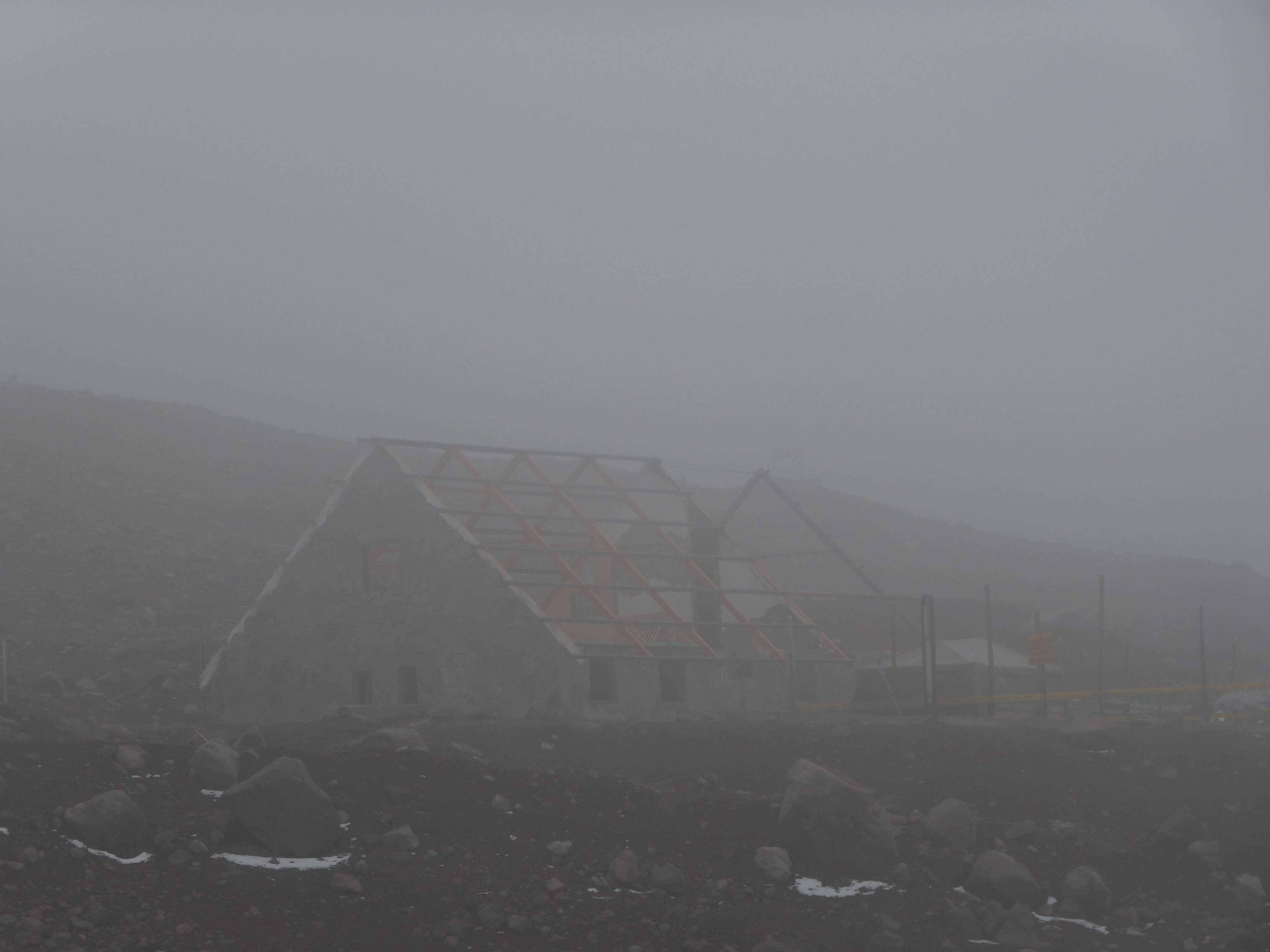
...

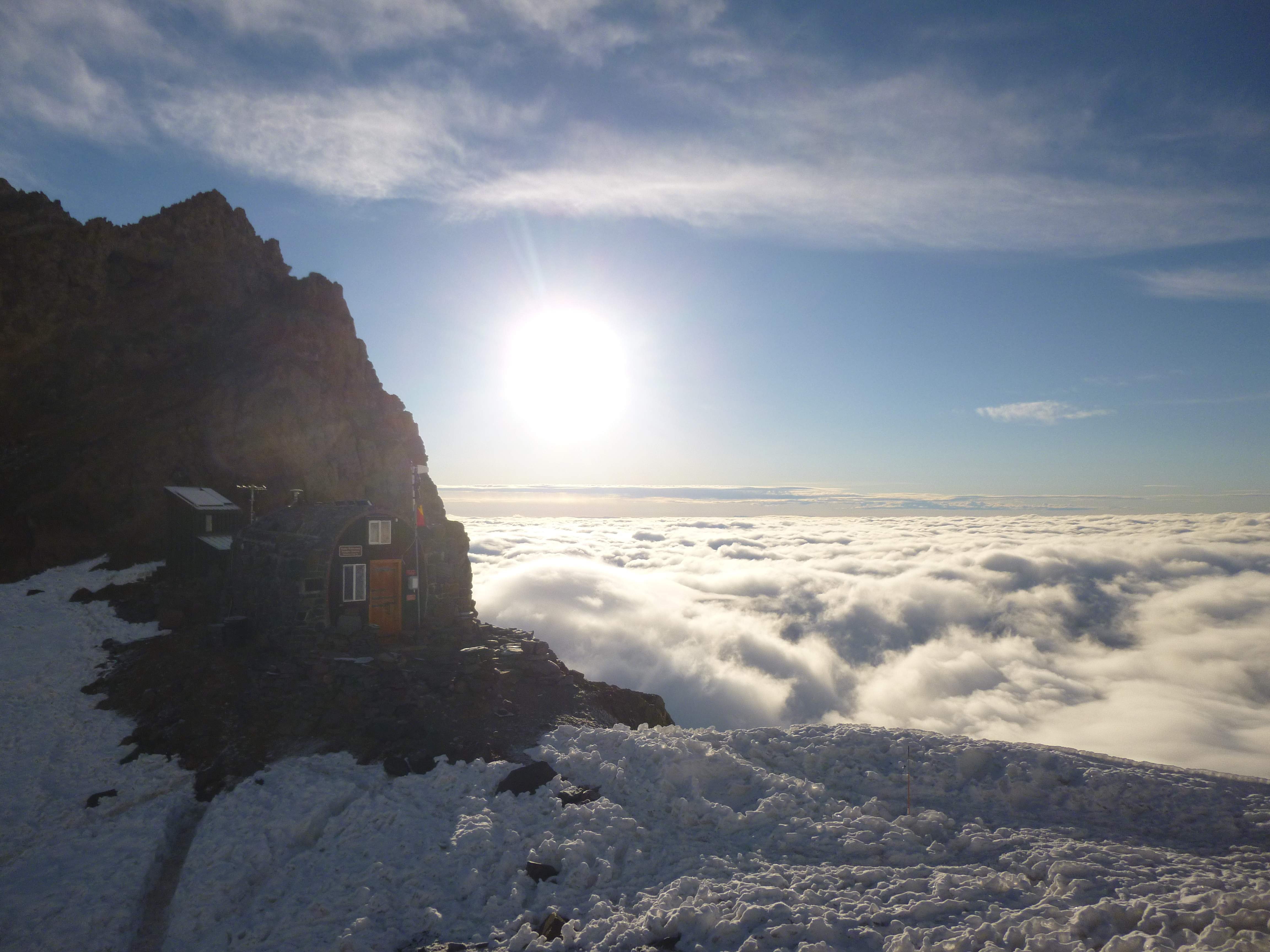
The incomplete Carrel refuge near my campsite.

I was feeling uncertain of the weather due to the amount of fog, but knew that we had a spare day if we needed it.  I ate a light dinner, filled my water bottles with hot water from the workers’ cabin, and went to sleep early.

Day 2: Awake around 10 p.m., I ate some snacks and began preparing my gear.  The fog had cleared overnight, and the sky shone with thousands of stars.  My stomach was feeling uncomfortable.  I suspect that this was due to the water which I had taken from the workers’ cabin.  This water had been boiled, but was sitting in a very large communal pot.  Not knowing how long the water had been boiled for, or how recently, or whether the water in the pot had ever been changed out, or whether it was clean from numerous groups using it, or even how long it had been sitting, I shouldn’t have taken any.  I had even brought my own water, a 6L bottle bought in the city!  These stomach issues, and by extension a lack of good nutrition prior to beginning, would later contribute to the climb’s difficulty.

We began hiking up the gentle slopes of the lower mountain at 11:00 p.m.  We passed the Whymper refuge around 30 minutes later and soon reached snow.

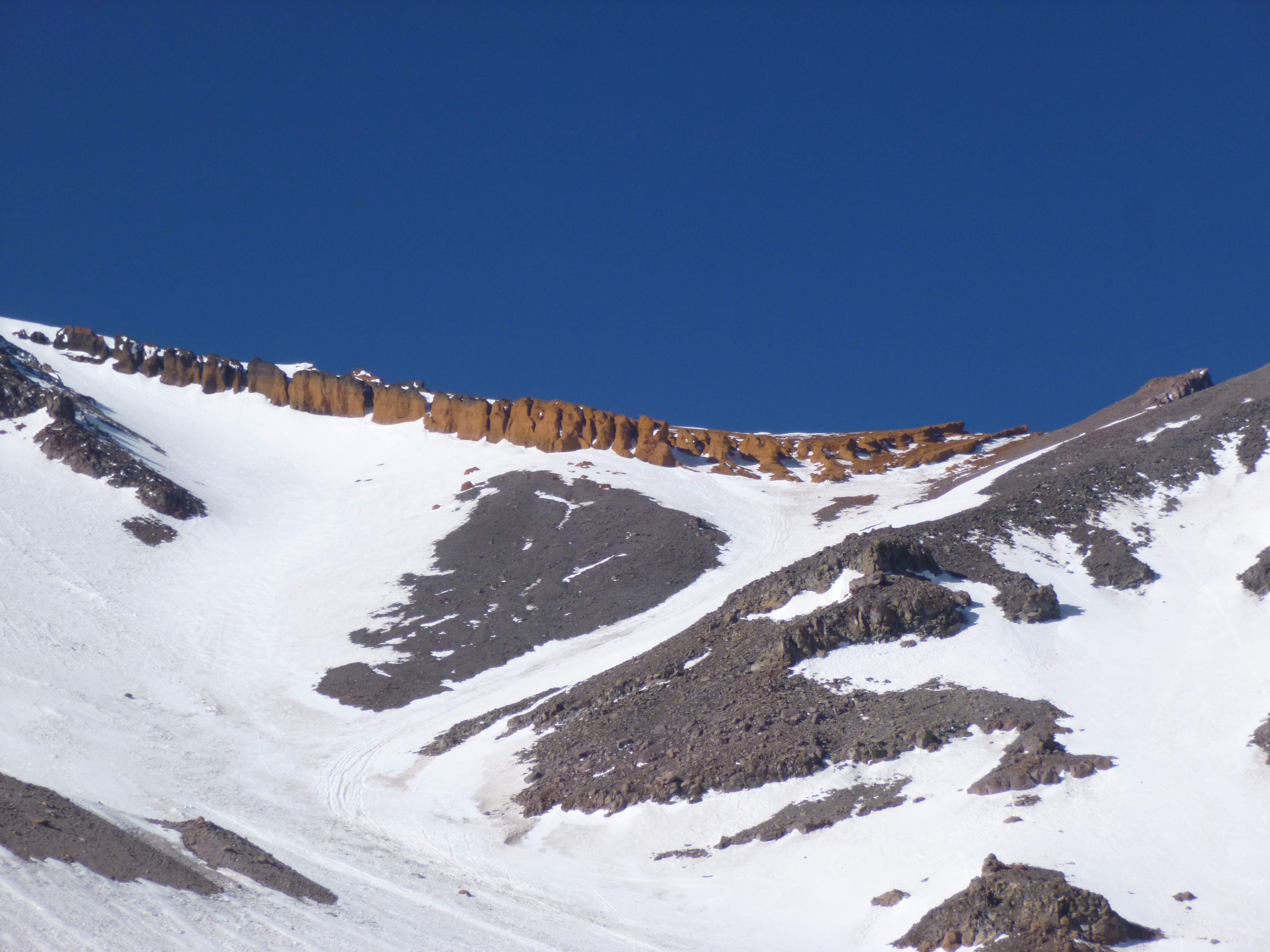
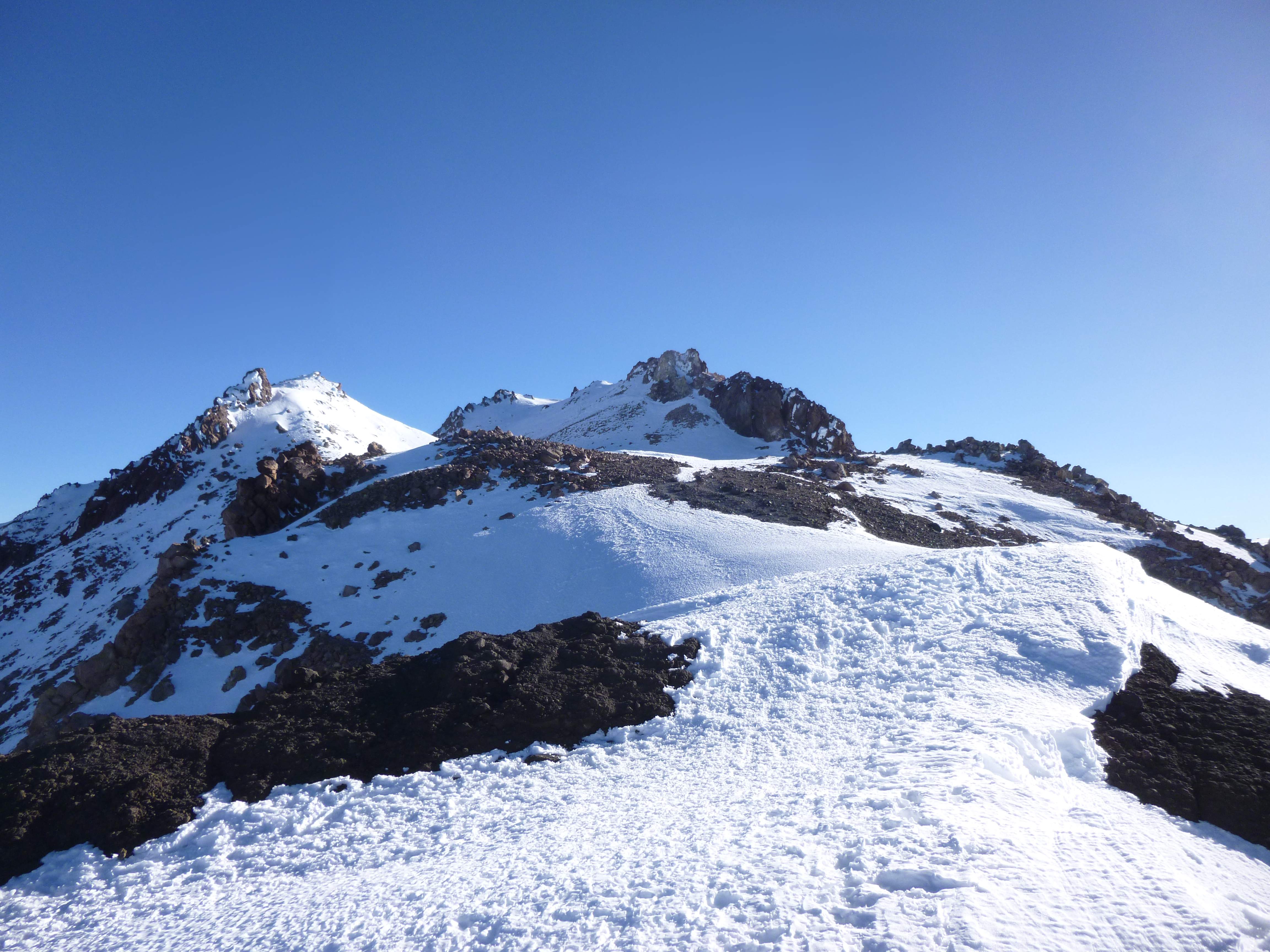
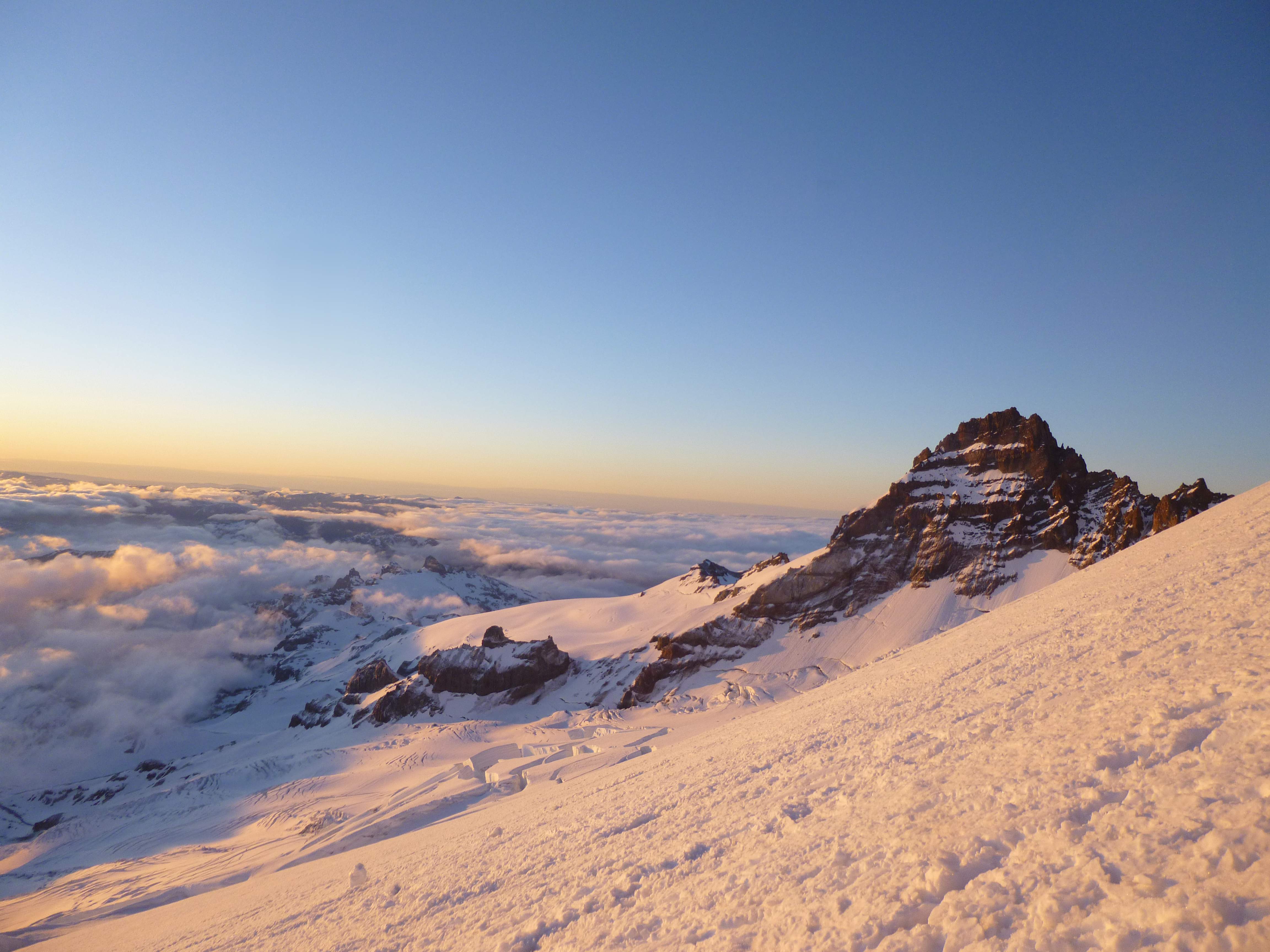
Below el Castillo, the Veintimilla summit ahead.

Below el Castillo, the Veintimilla summit above.

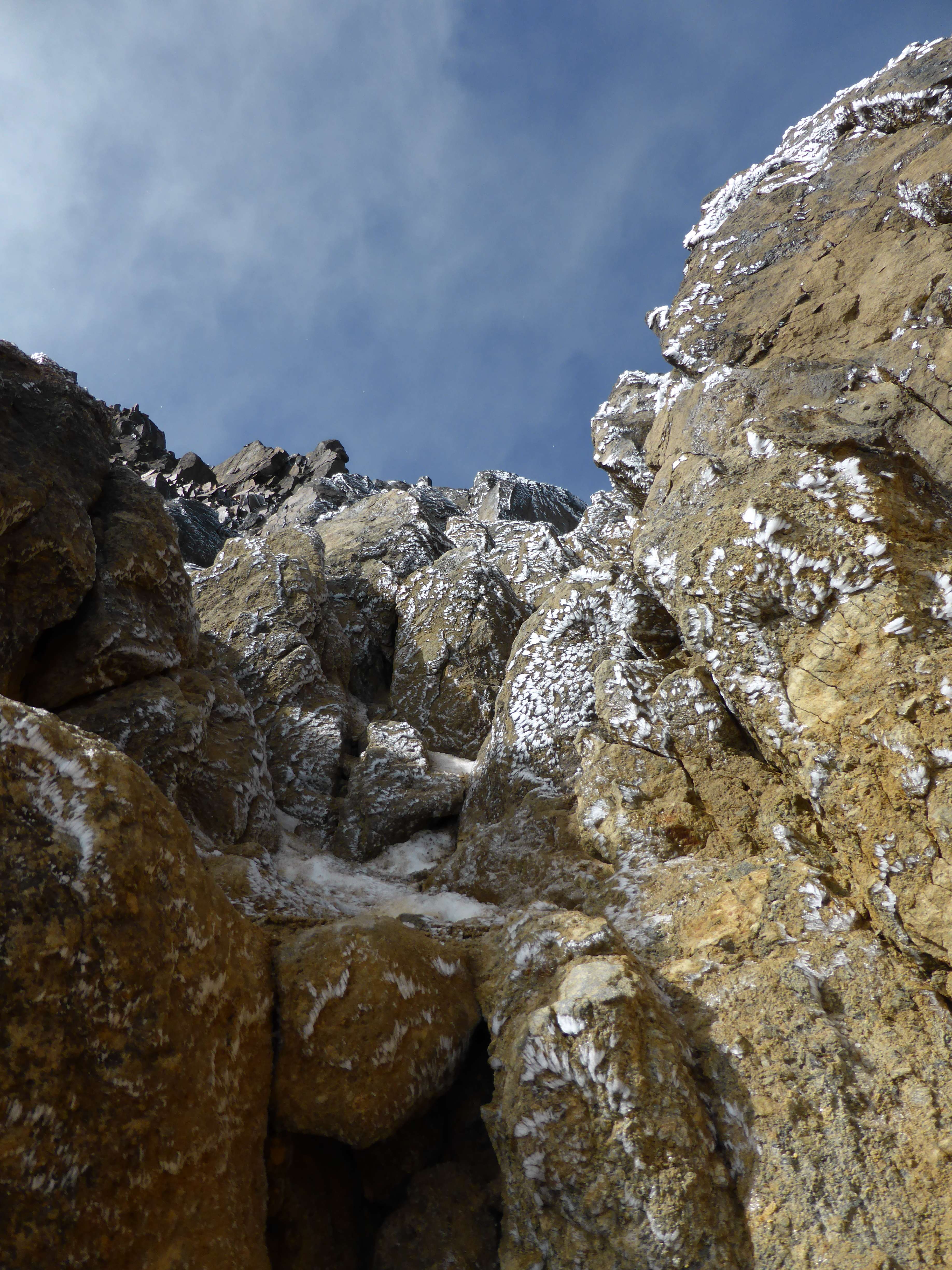
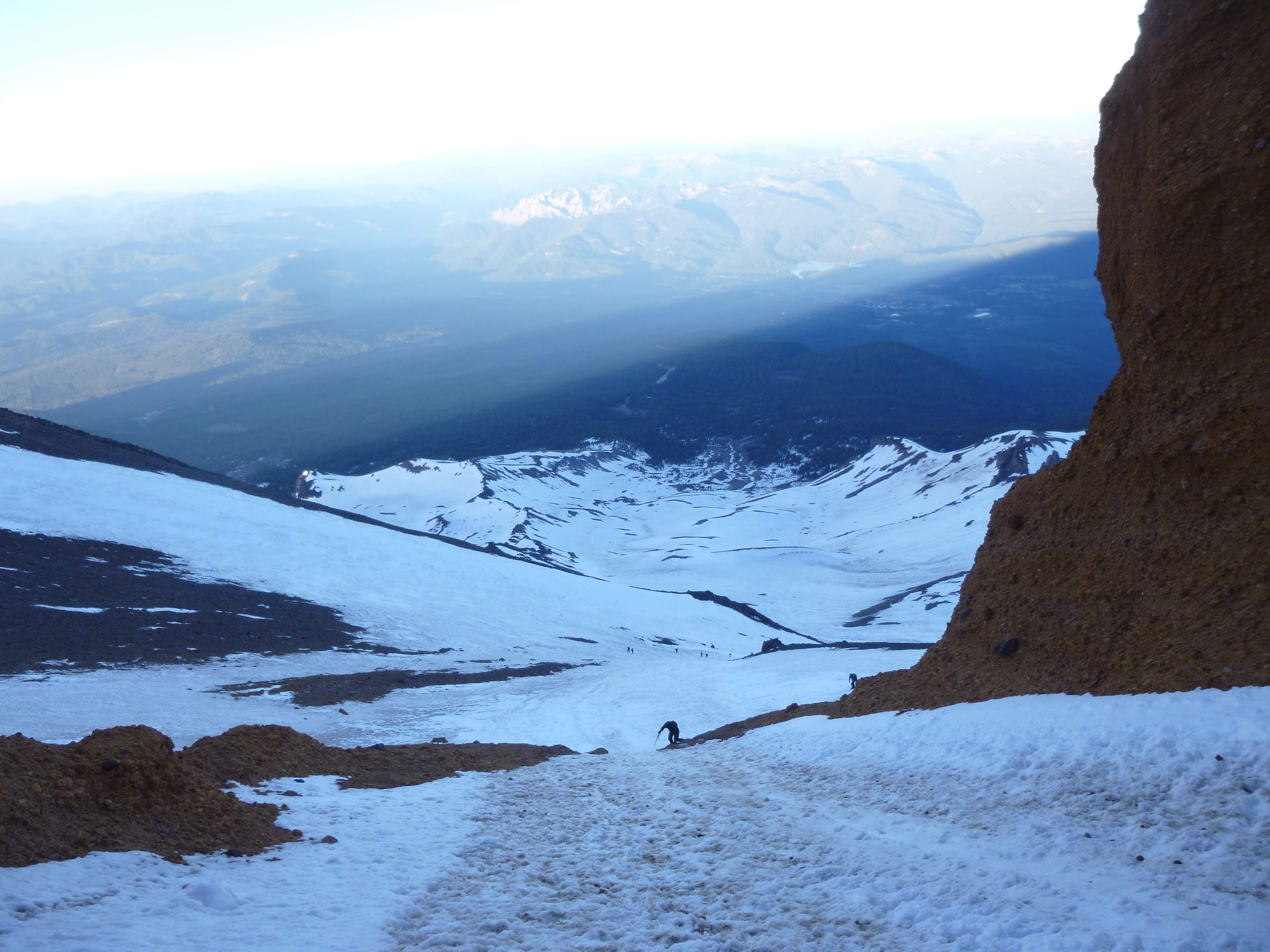
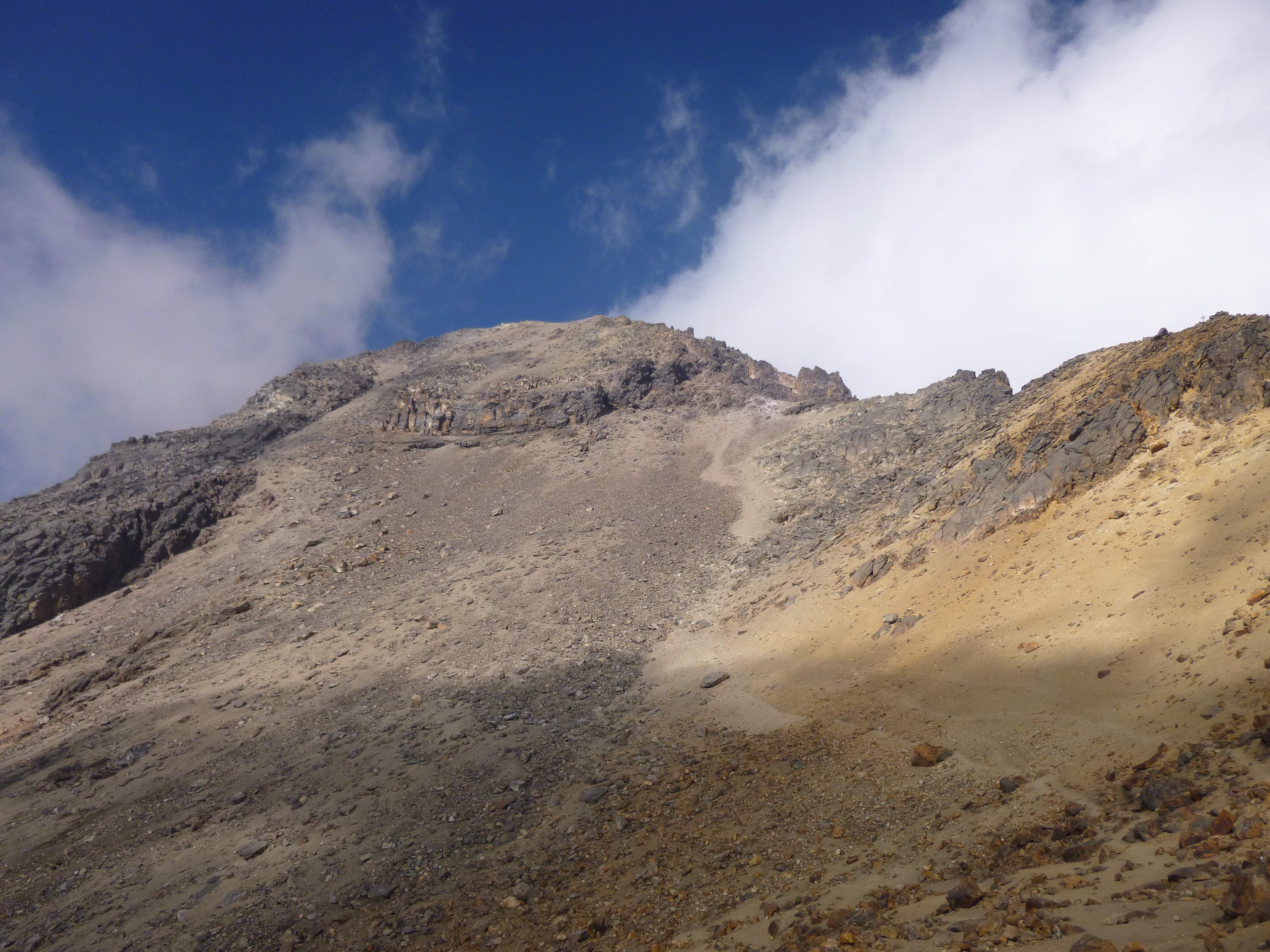
The lower section of Chimborazo’s standard route is known for rockfall hazard.  This area is only moderately steep, but climbs directly below numerous cliffs of loose rock, among them el Castillo, ‘the castle’, a large cliff / rock formation along the ridge above which frequently sheds boulders down the mountain.  There is only one clear way up past the cliffs, leading some to refer to this section as ‘the corridor’.
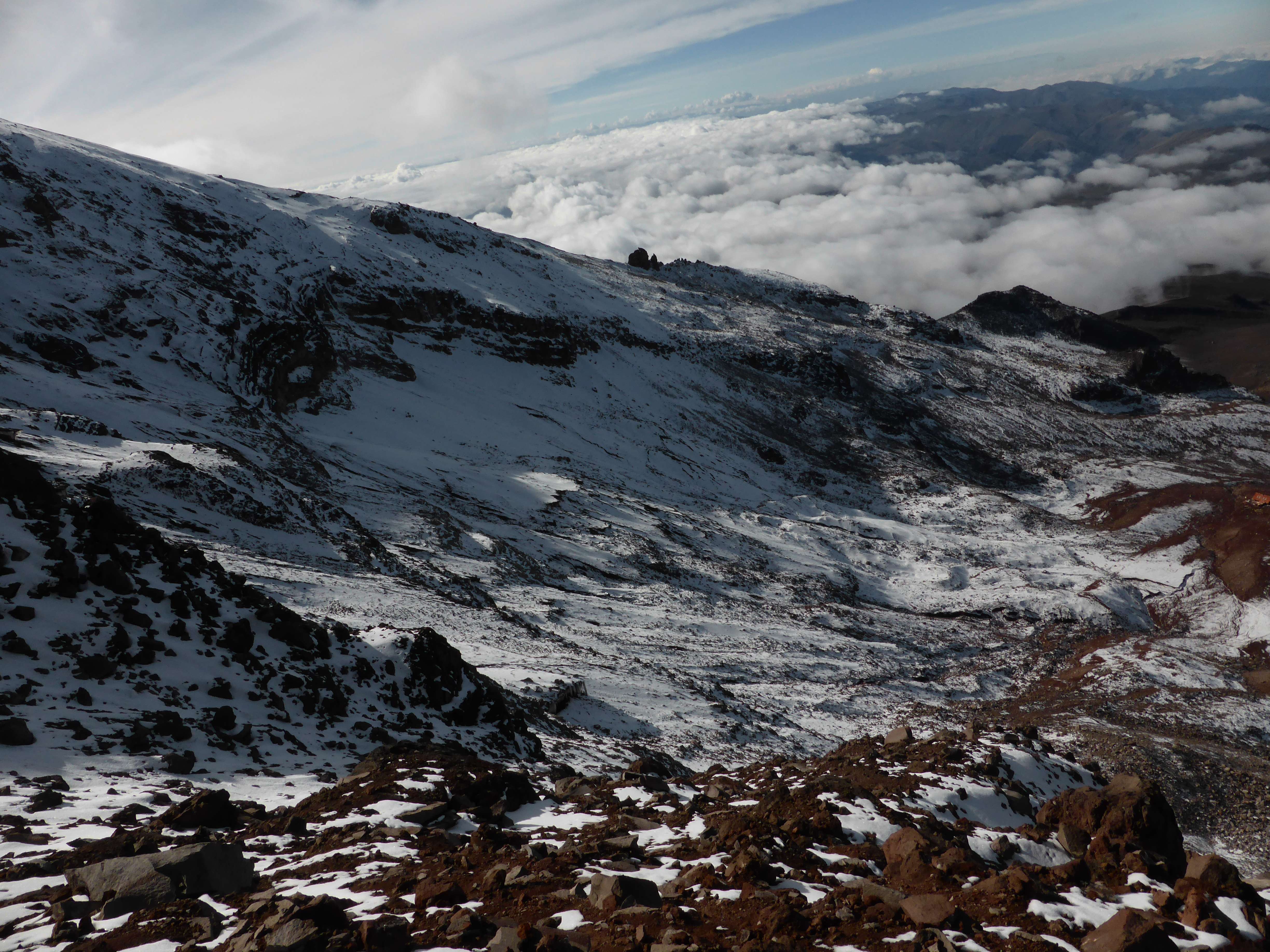
Chimborazo106

The slopes below el Castillo.

It was a clear but cold and windy night.  The low air temperature was likely to our benefit however, and we experienced no rockfall below el Castillo.  When everything is frozen solid, otherwise loose rocks tend to be stable.  I was soon climbing in my down parka, utilizing my full layering system to maintain a comfortable body temperature, and between my ski goggles and neck buff had my face completely covered.
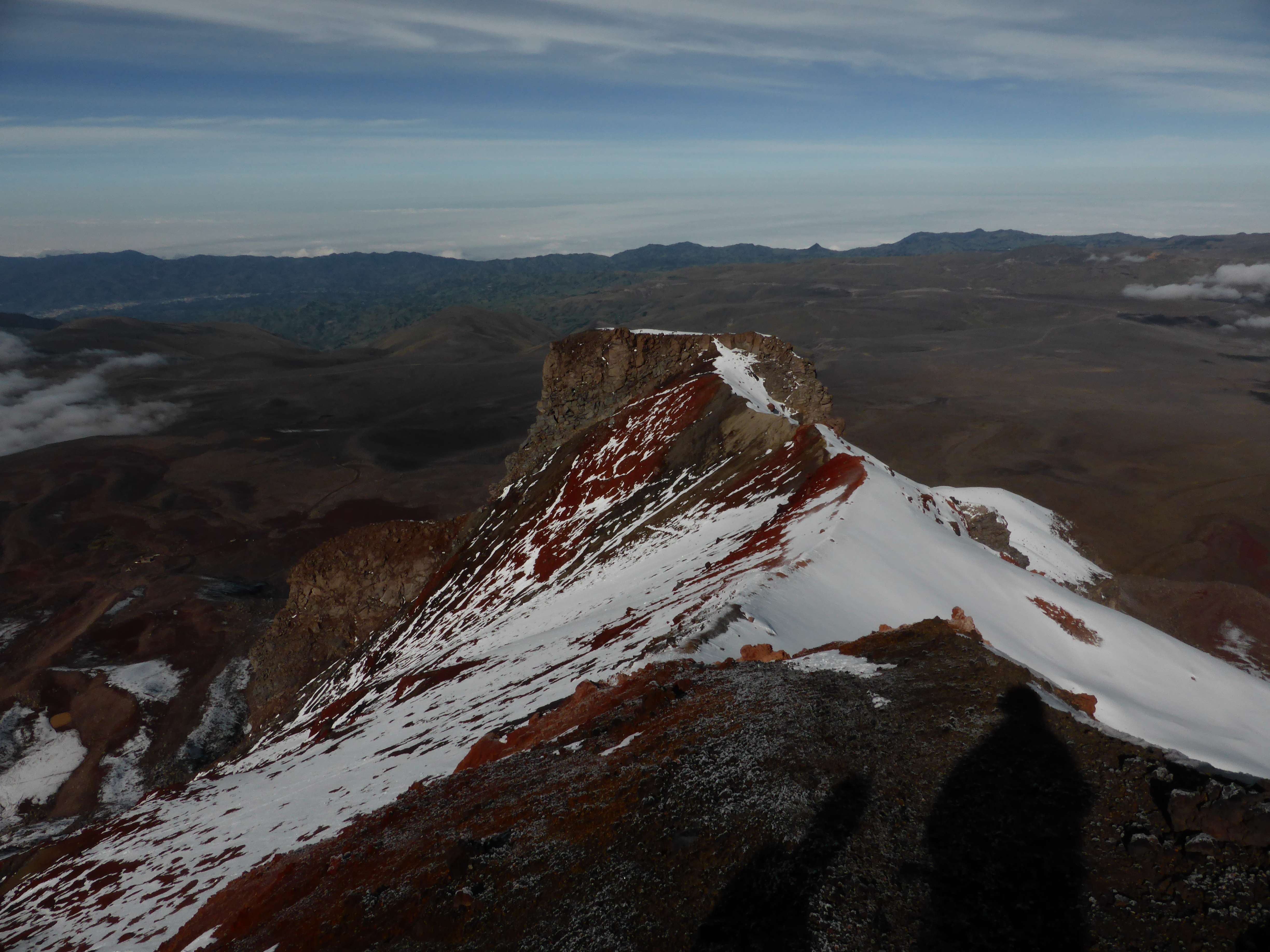
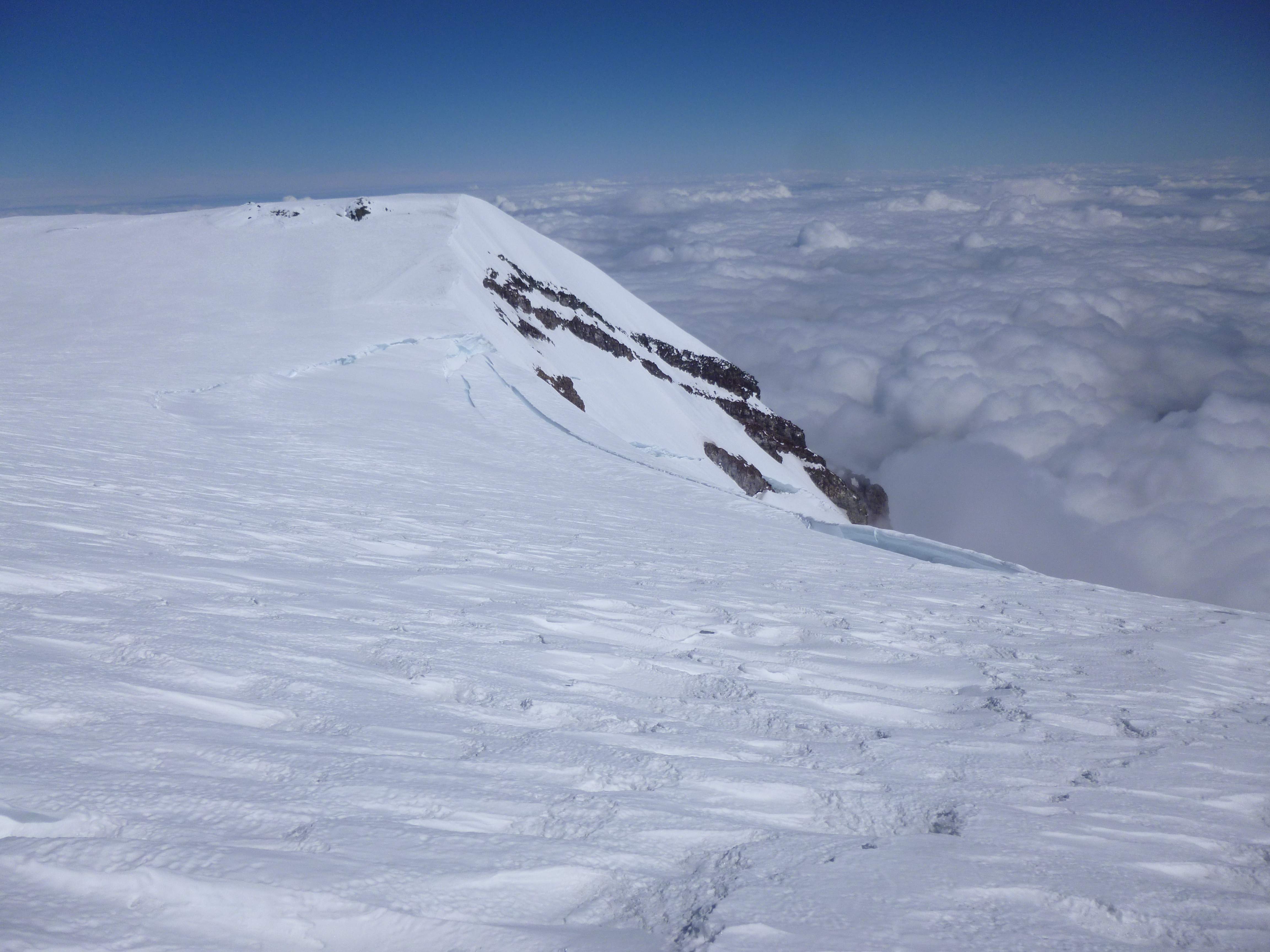
Looking down at el Castillo from the ridge above.

Looking down at el Castillo from the ridge above.

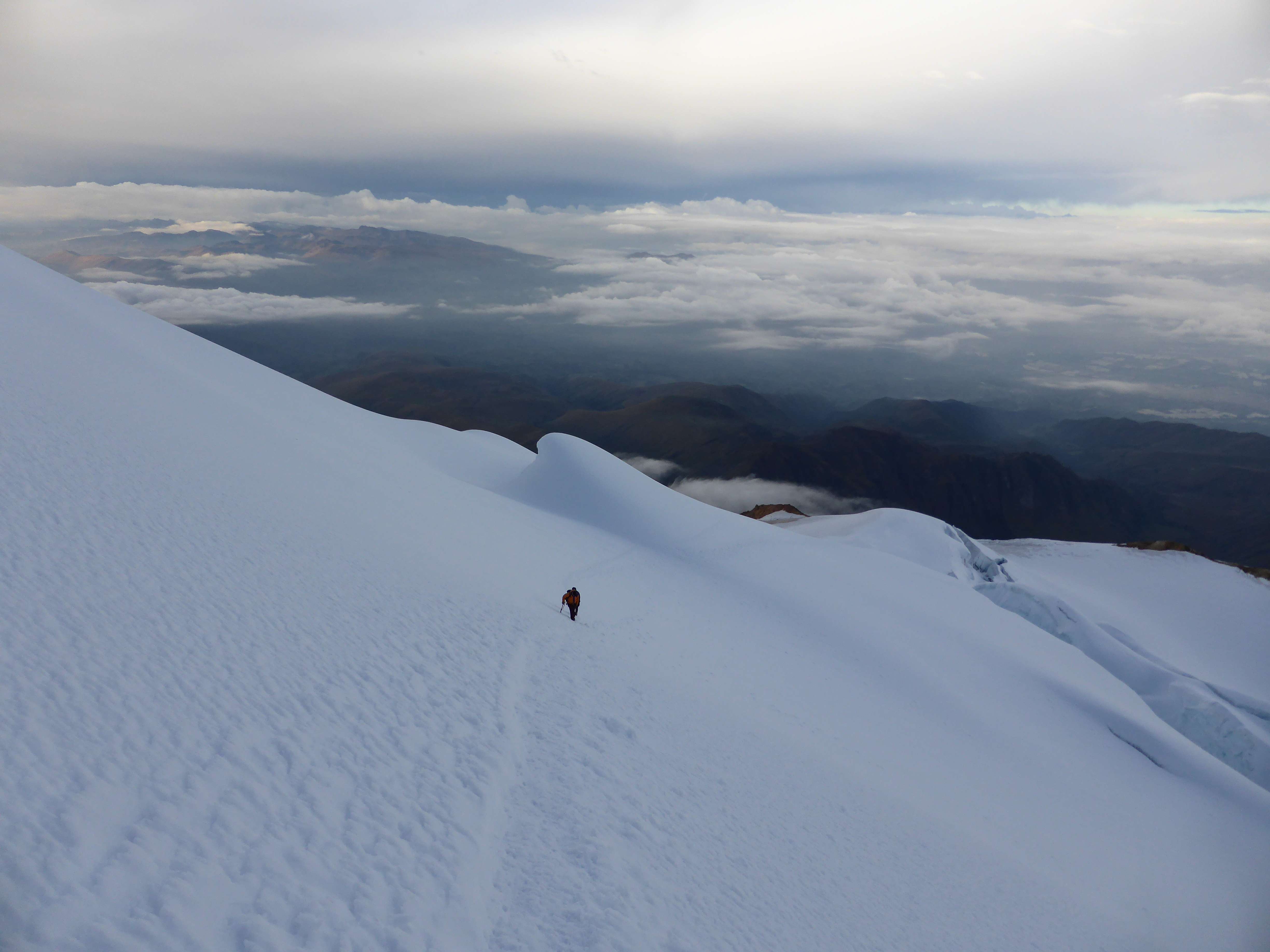
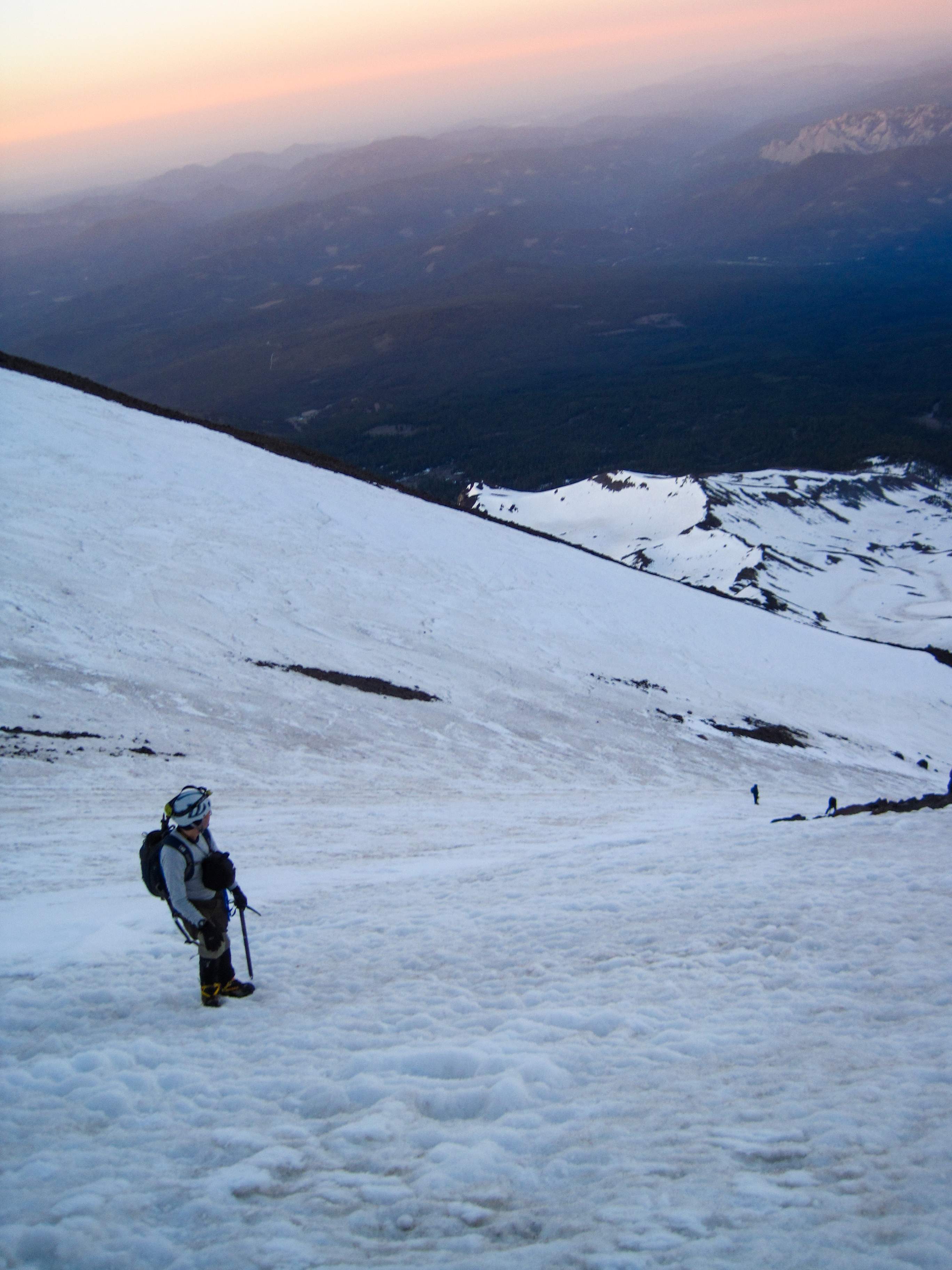
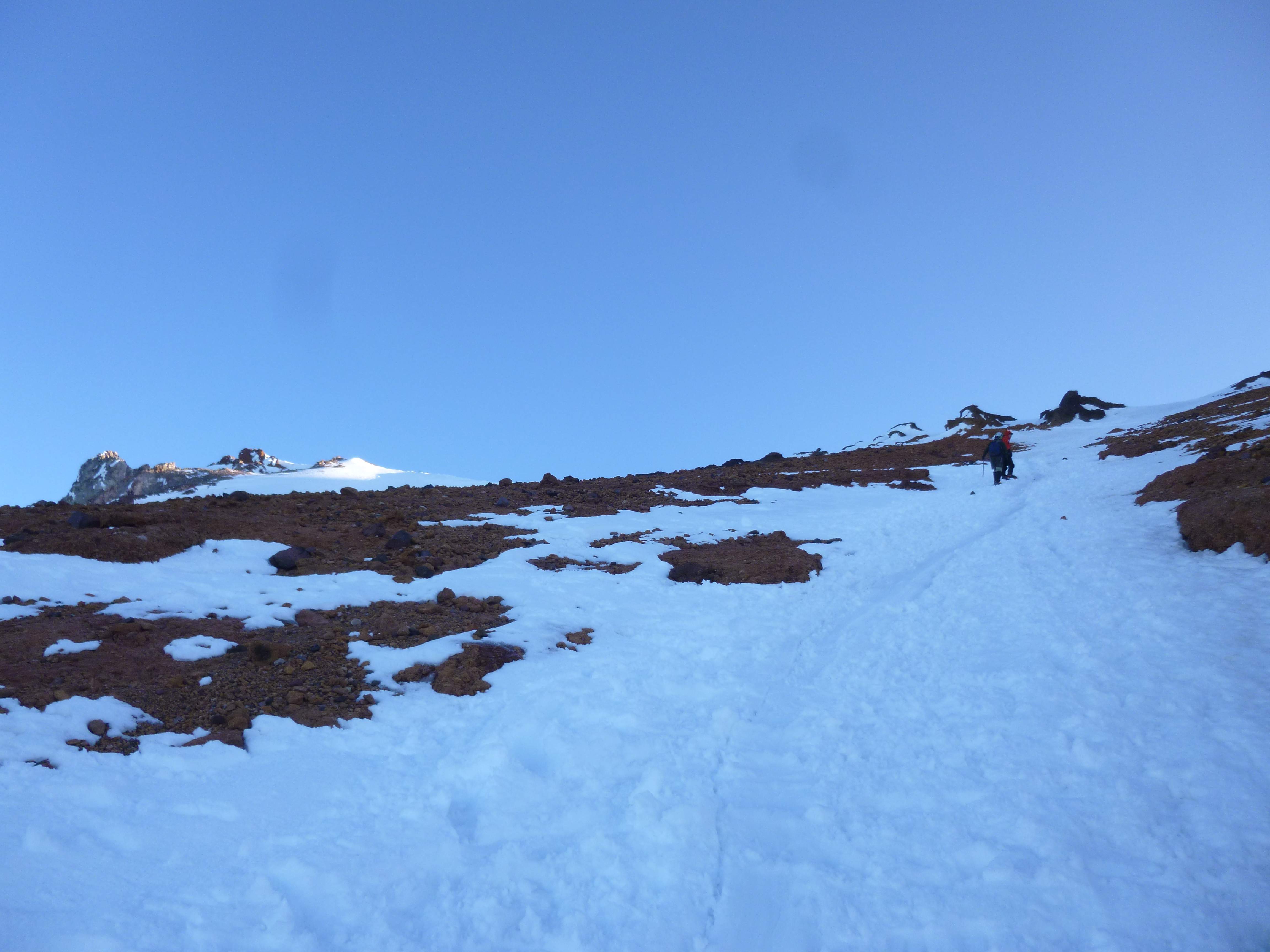
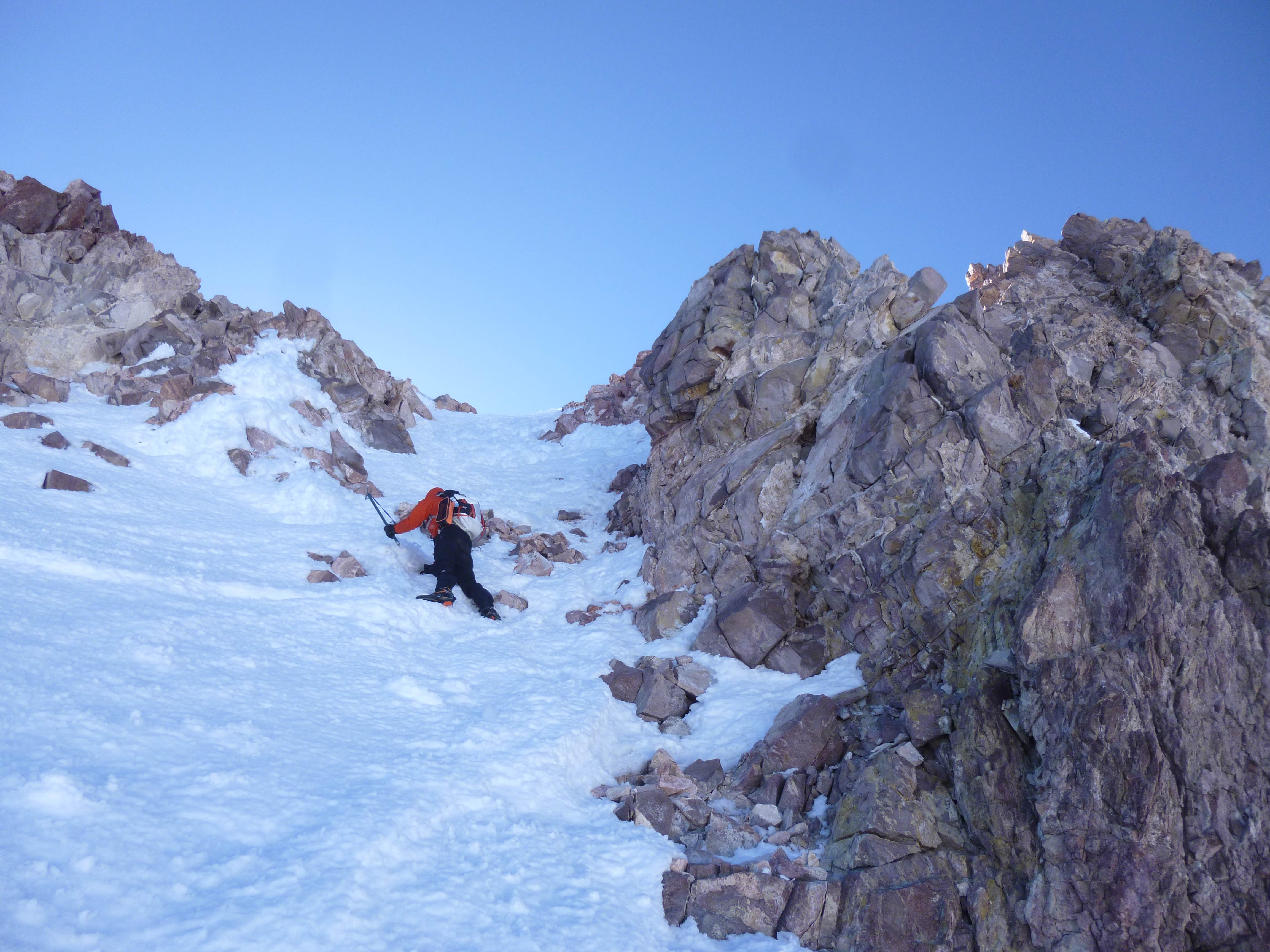
With no difficulties in route finding we quickly reached the ridgeline which connects el Castillo and Chimborazo’s Veintimilla summit.  We gained the ridge to the climber’s right of el Castillo, an obvious spot given the steeper terrain on either side of it.  Heading up the ridge we soon discovered that the snow on the ridge was soft and loose, impeding each step upwards with a half-step slide back down.  Several crevasses posed minor obstacles, but they were mostly off-route, easy to see and avoid.  Stretches of the ridge were moderately steep, around 45 degrees at steepest.  The loose snow made climbing physically strenuous, but as wind howled past us we continued upwards, one step at a time, focused.  In darkness and biting wind the soft snow of the ridge seemed to stretch on for an eternity, with Pato and I moving at what felt like a snail’s pace within the tiny spheres of light provided by our headlamps.
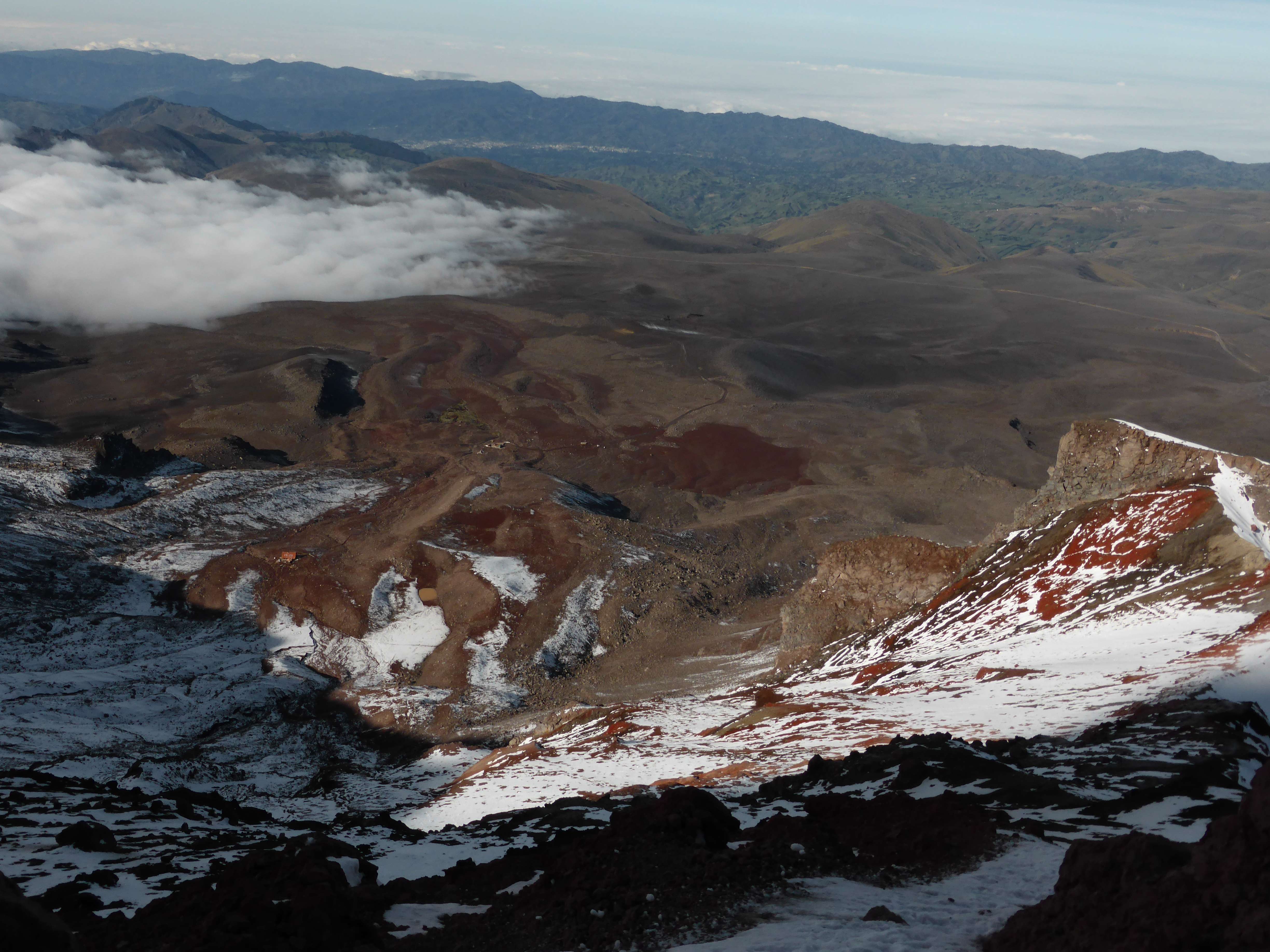
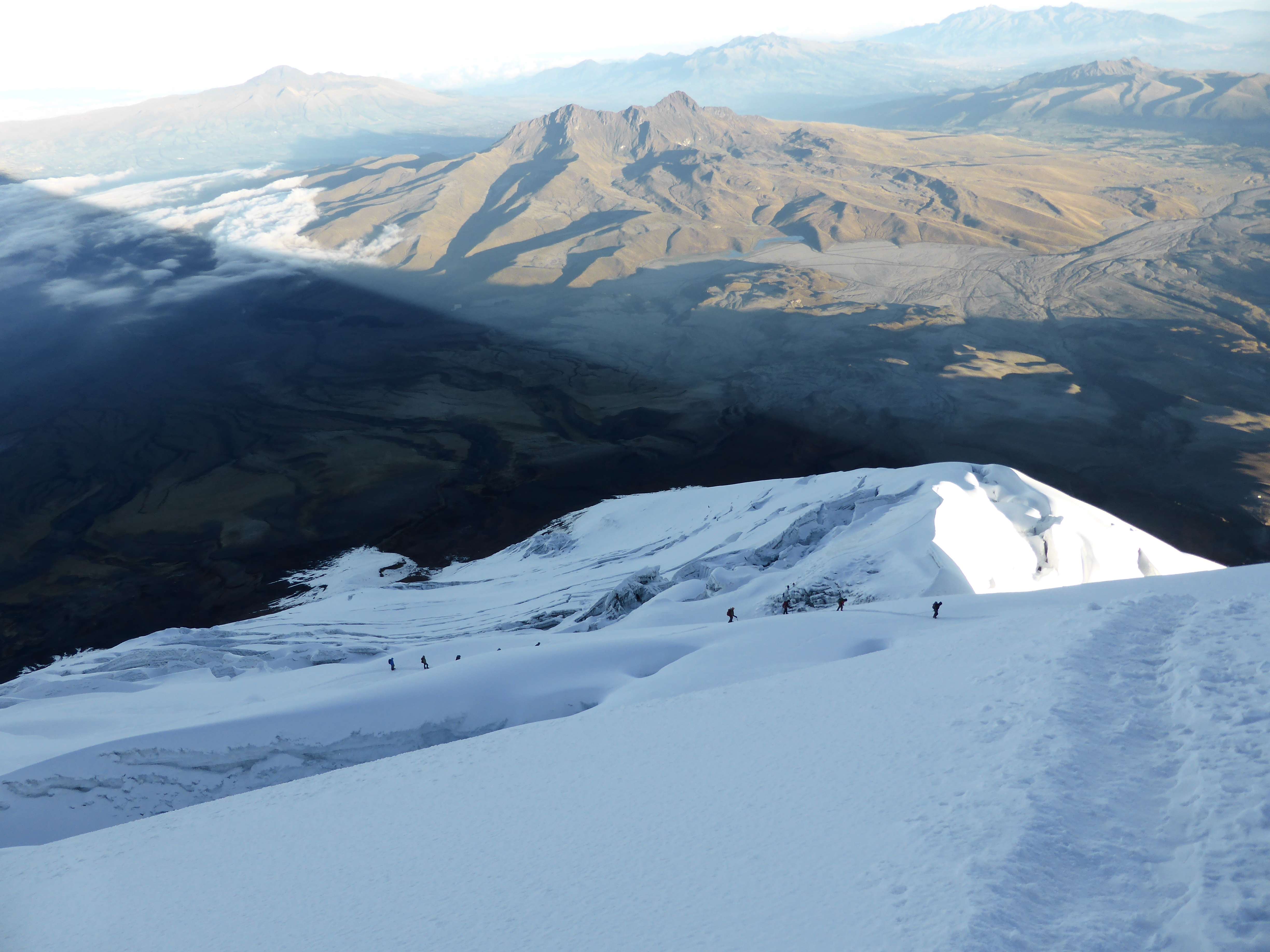
Moving up the ridge, the refuge far below.

Higher up the ridge, the refuges far below.

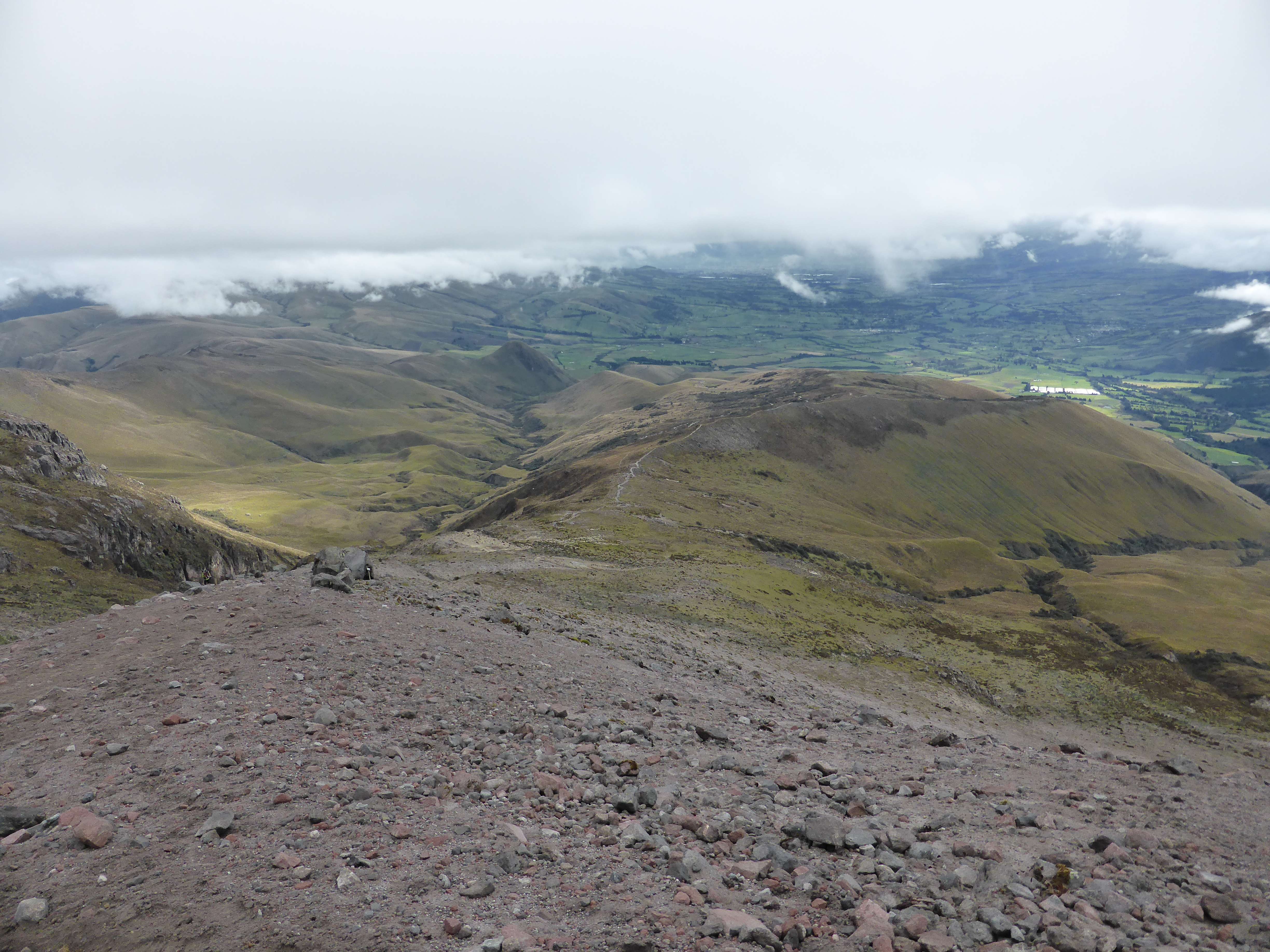
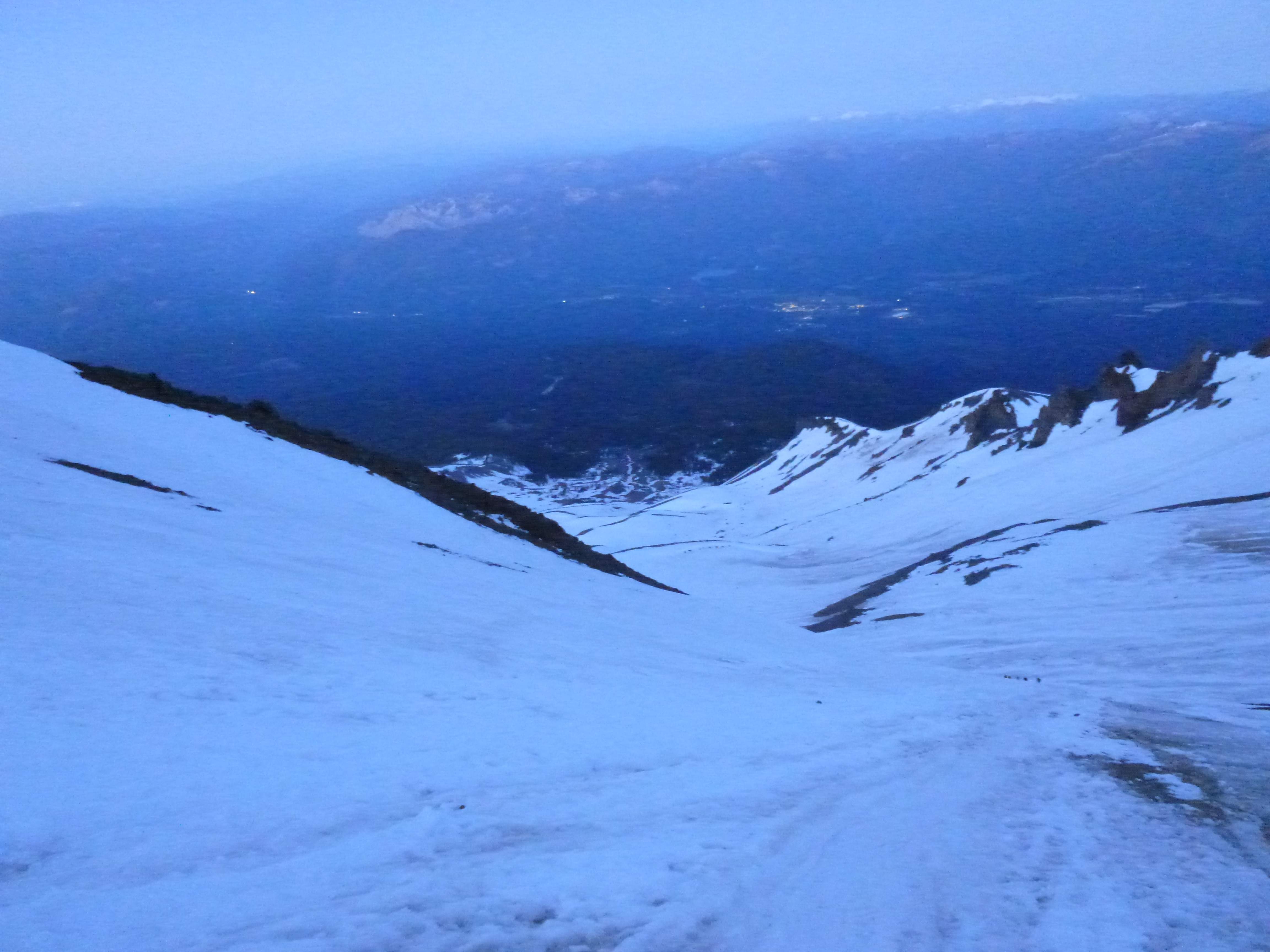
Looking down the ridge.

Looking down the ridge.

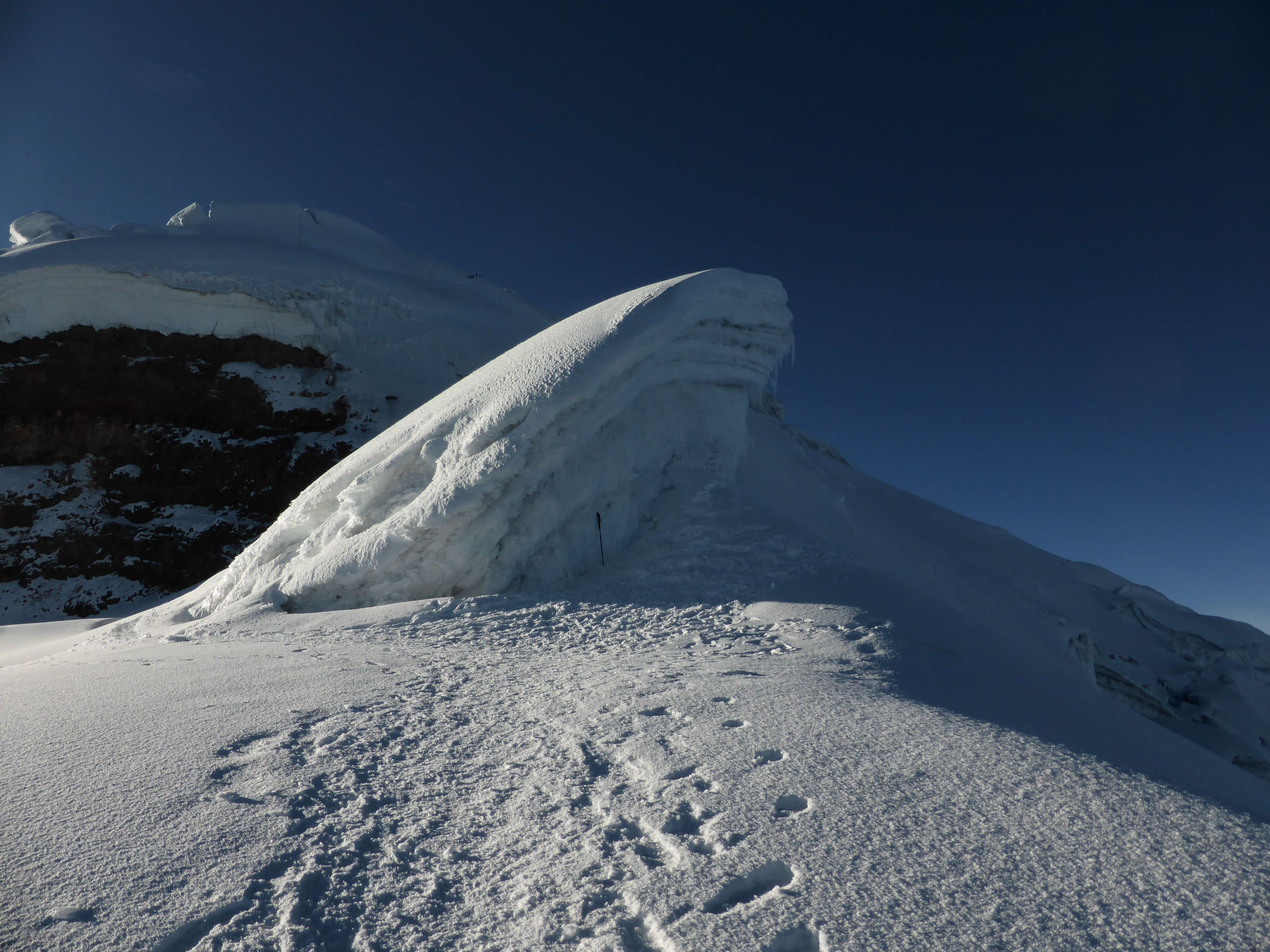
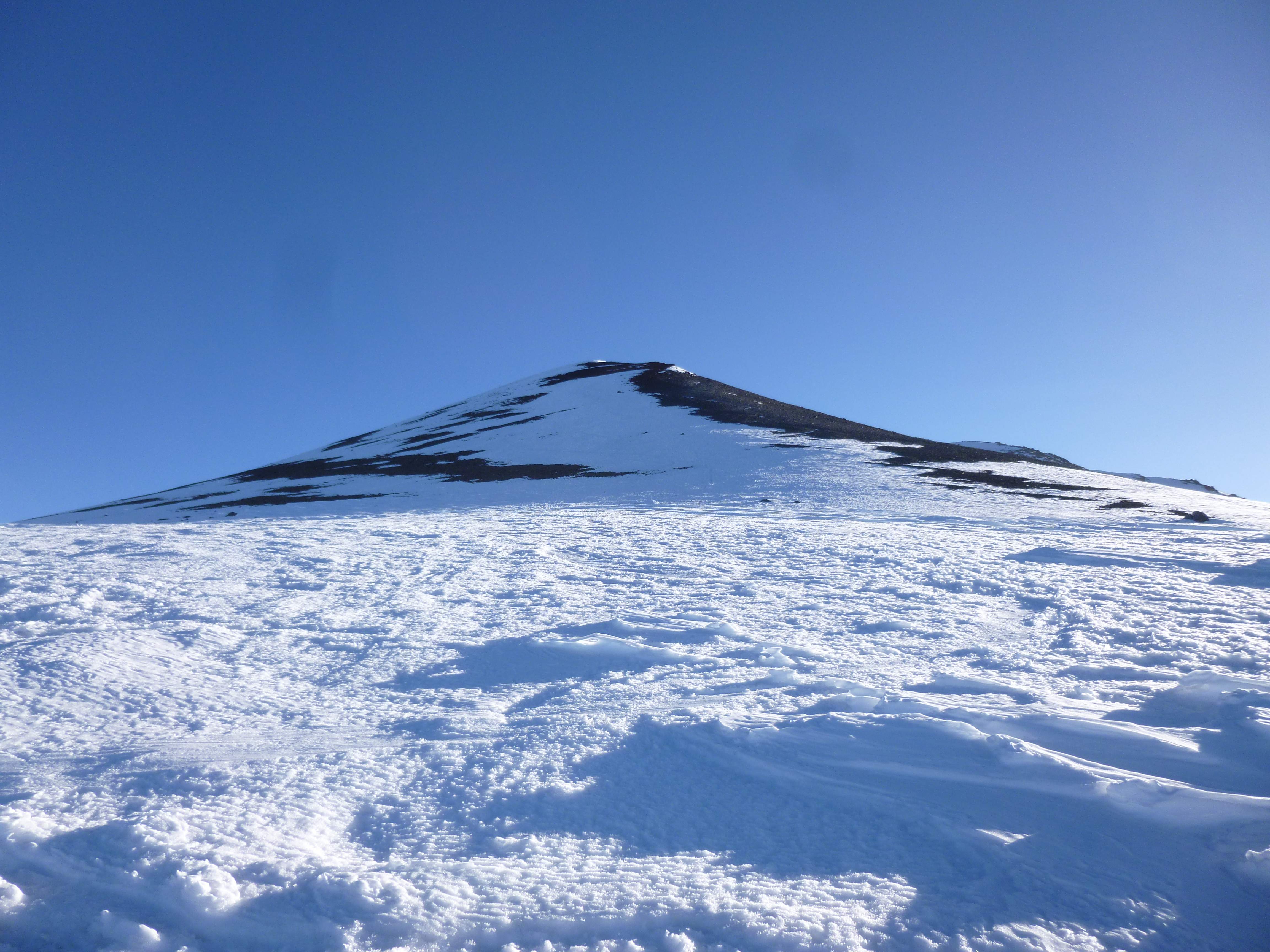
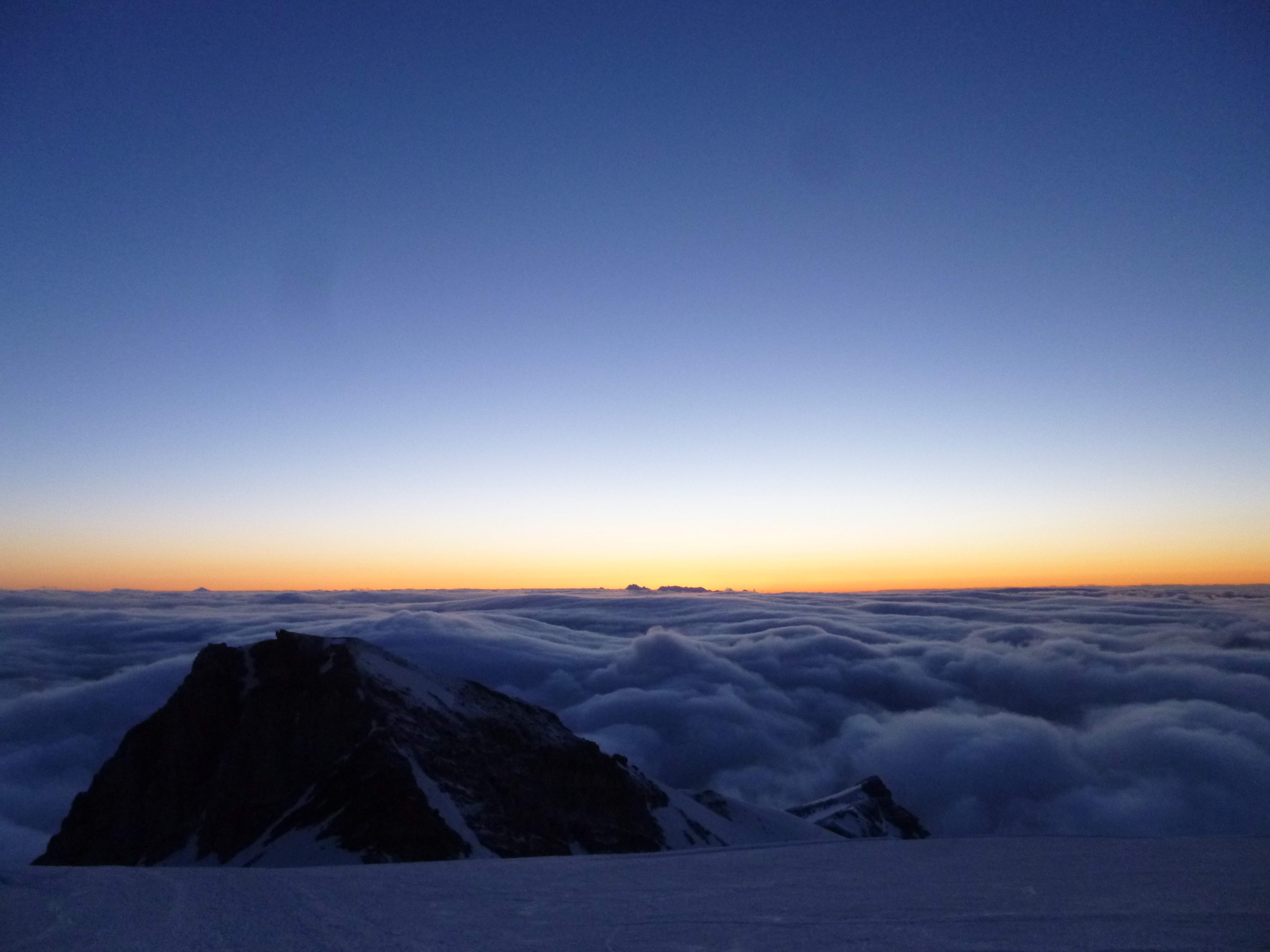
Around 5:30 a.m. we finally reached the Veintimilla summit, the first morning light just beginning to glow on the horizon.  Chimborazo has several summits, of which Veintimilla is the second highest.  Chimborazo’s true high-point, the Whymper summit, lies several hundred meters to the east of Veintimilla across a large, flat plateau.  Many climbers reach Veintimilla and stop, without enough time or energy to cross the plateau and attain the true summit just tens of meters higher.  I was well aware of this, and before even coming to Ecuador had been firm in my intent to make a full ascent of Chimborazo and stand upon the Whymper.

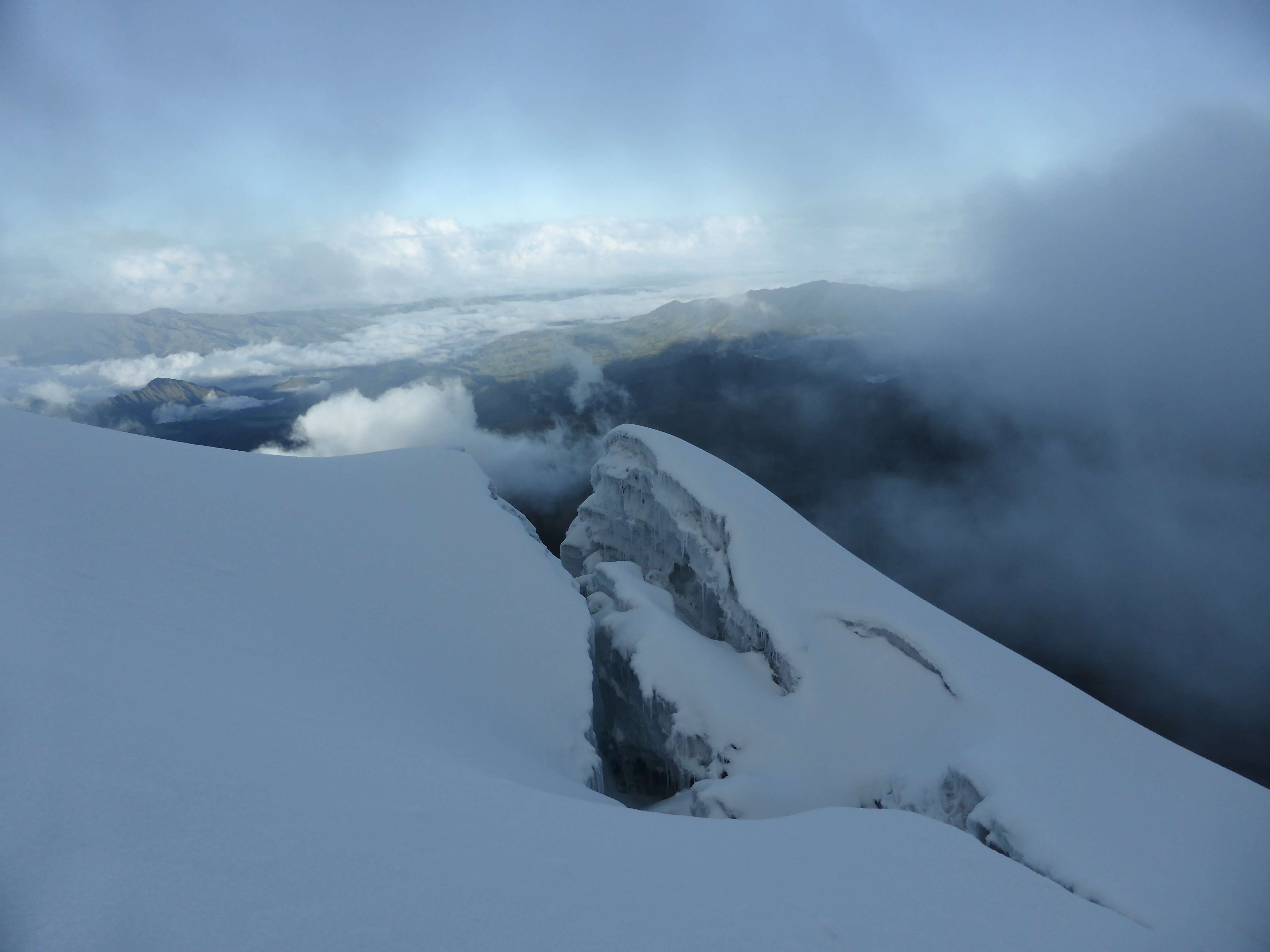
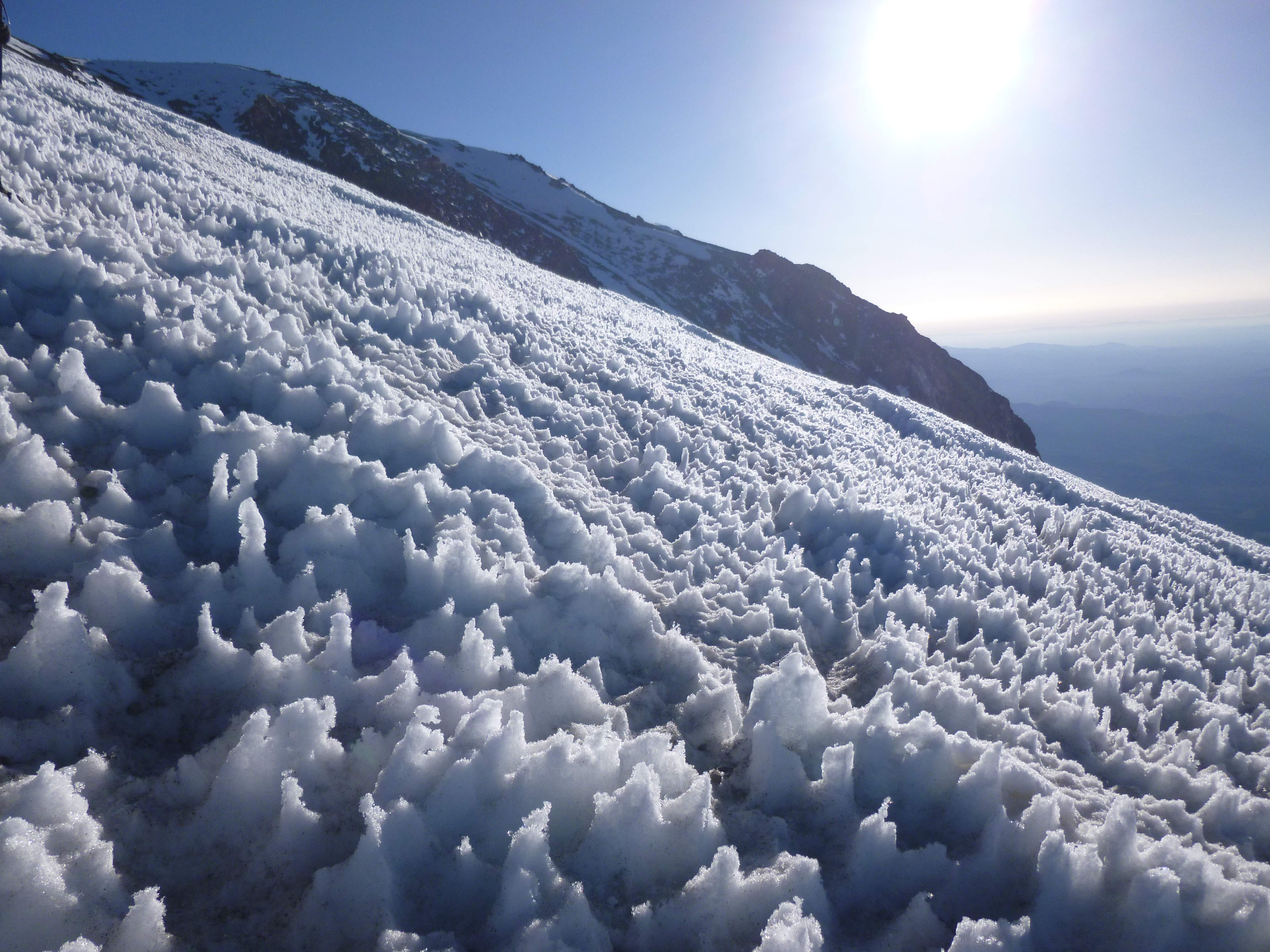
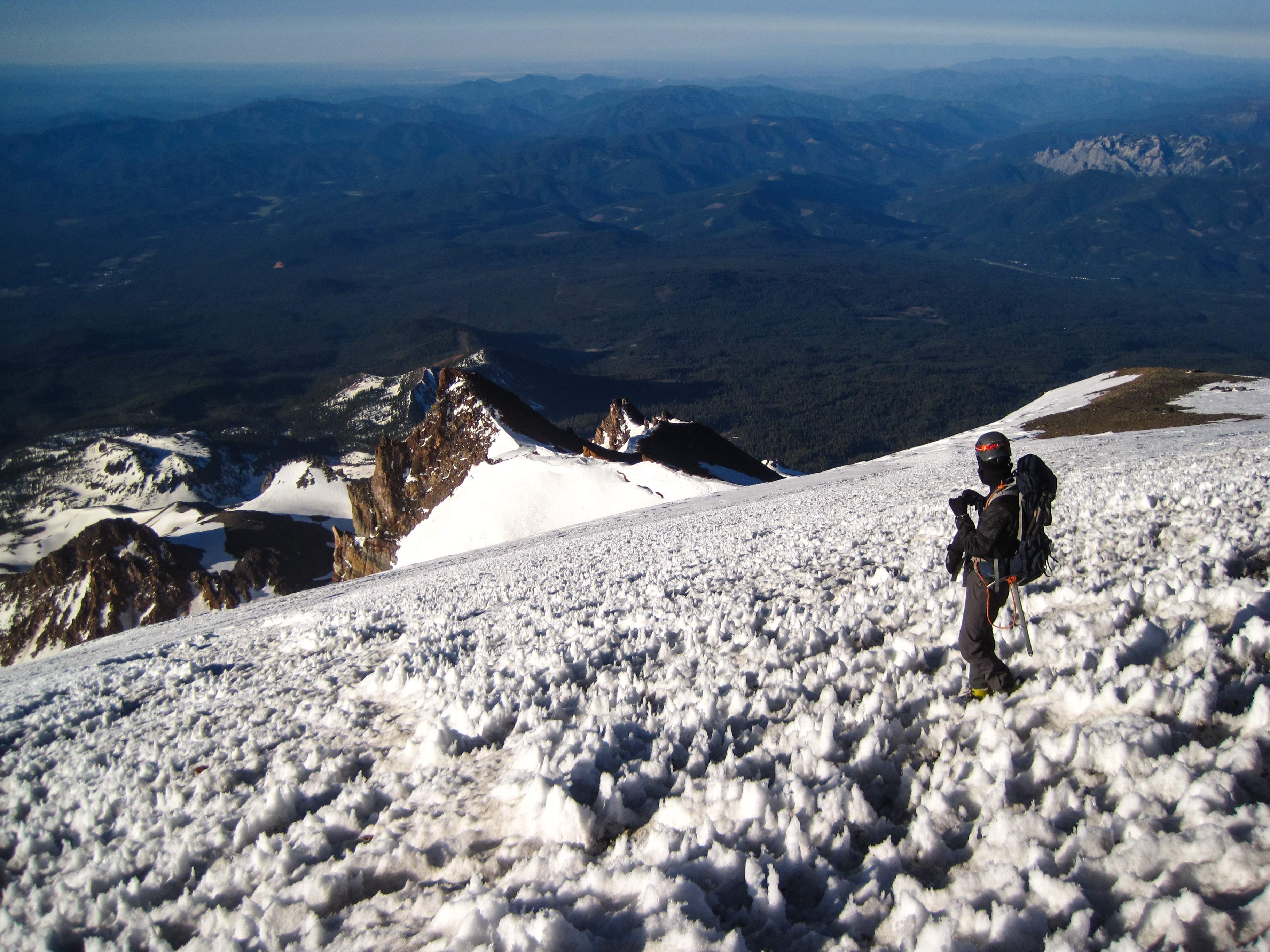
As we reached the end of the ridge and level terrain lay in front of us, I was amazed to see an enormous field of penitentes stretching across the summit plateau.  Penitentes are a high altitude snow formation found throughout the Andes, and while I knew that they were a common occurrence on Chimborazo it was a shock to see them in person.  Each around a meter high, they resembled the waves of a stormy ocean and looked daunting to cross.

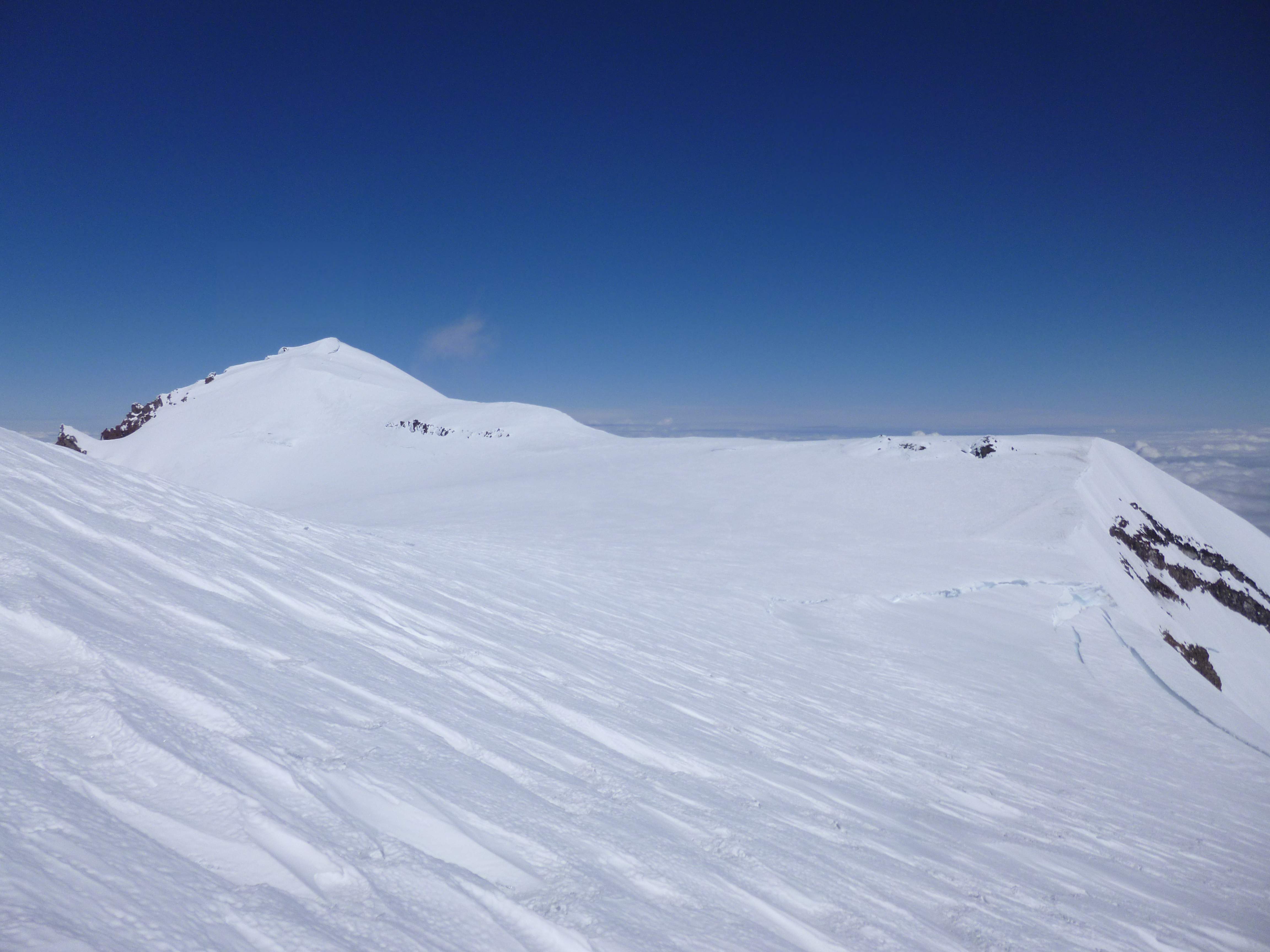
Looking back across the penitentes towards the Whymper summit.

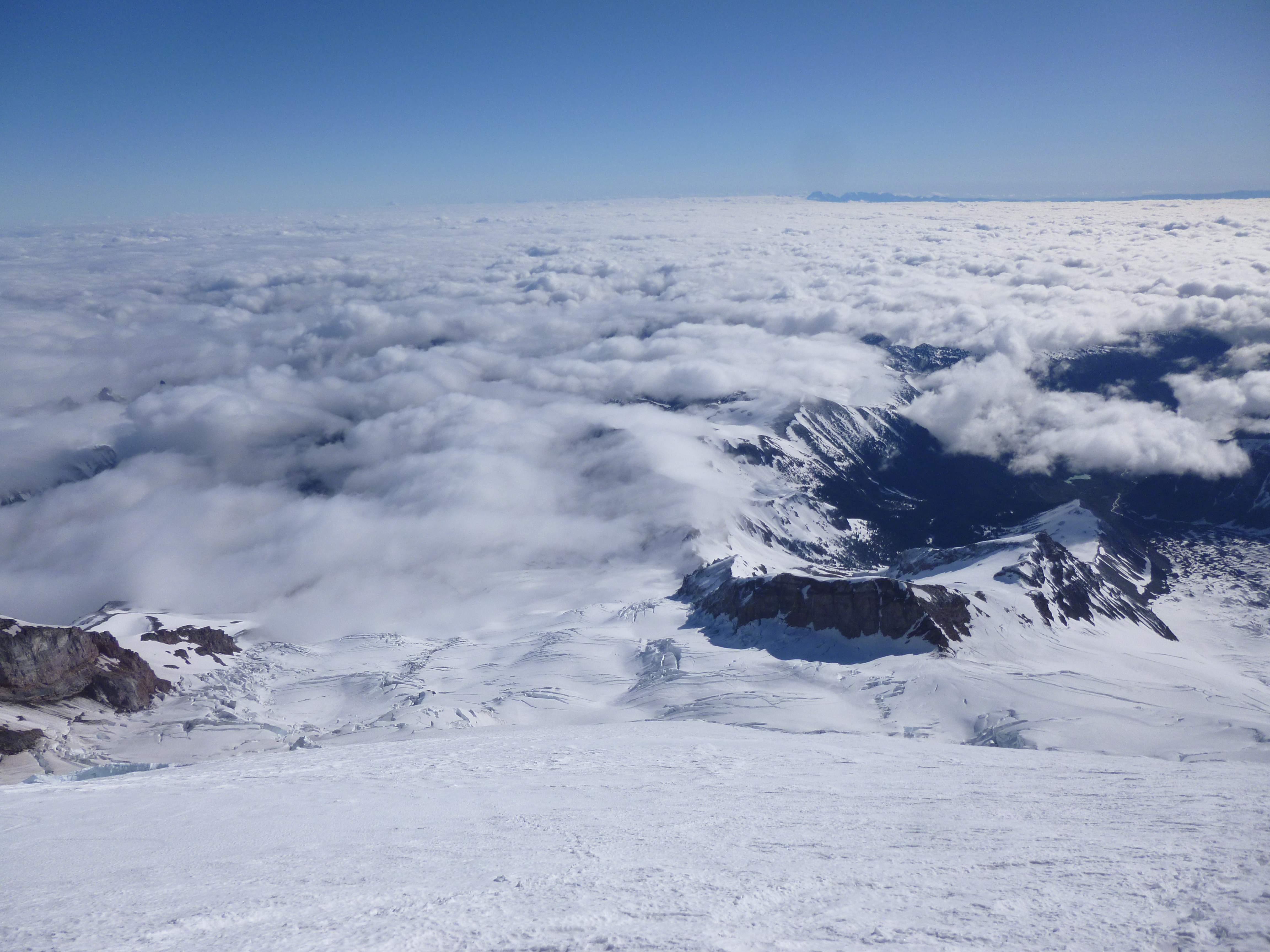
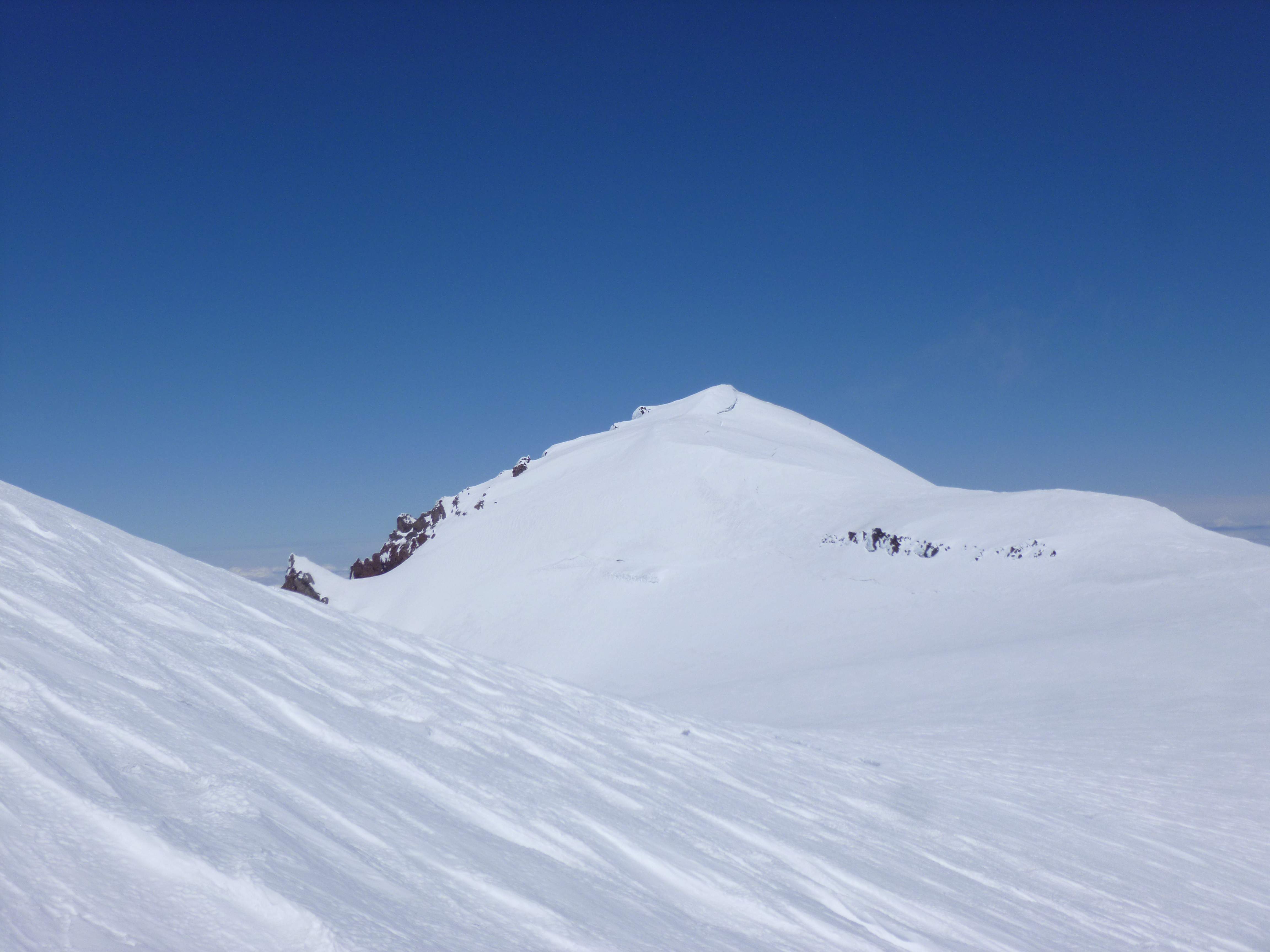
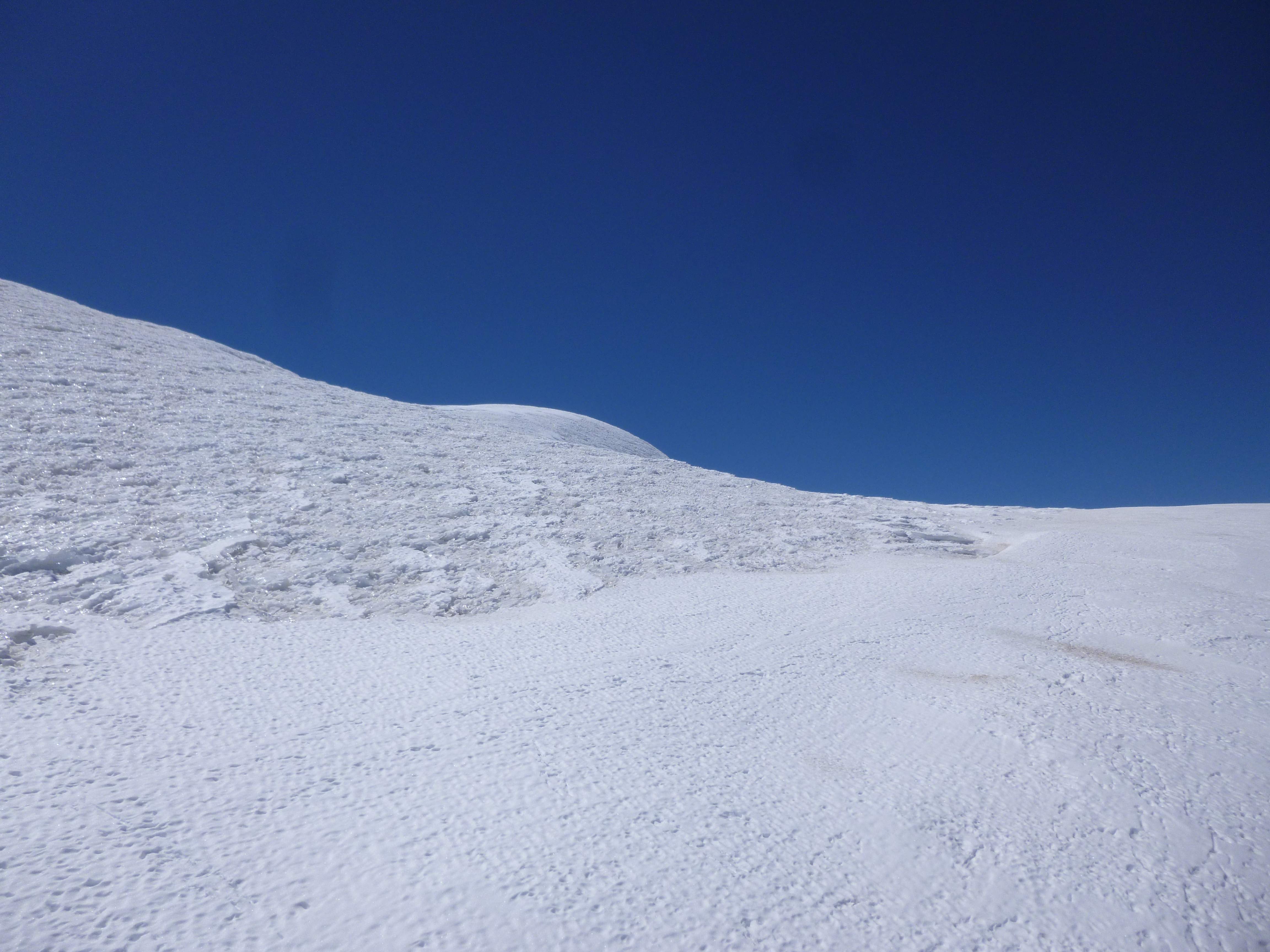
Penitentes above 6000m.

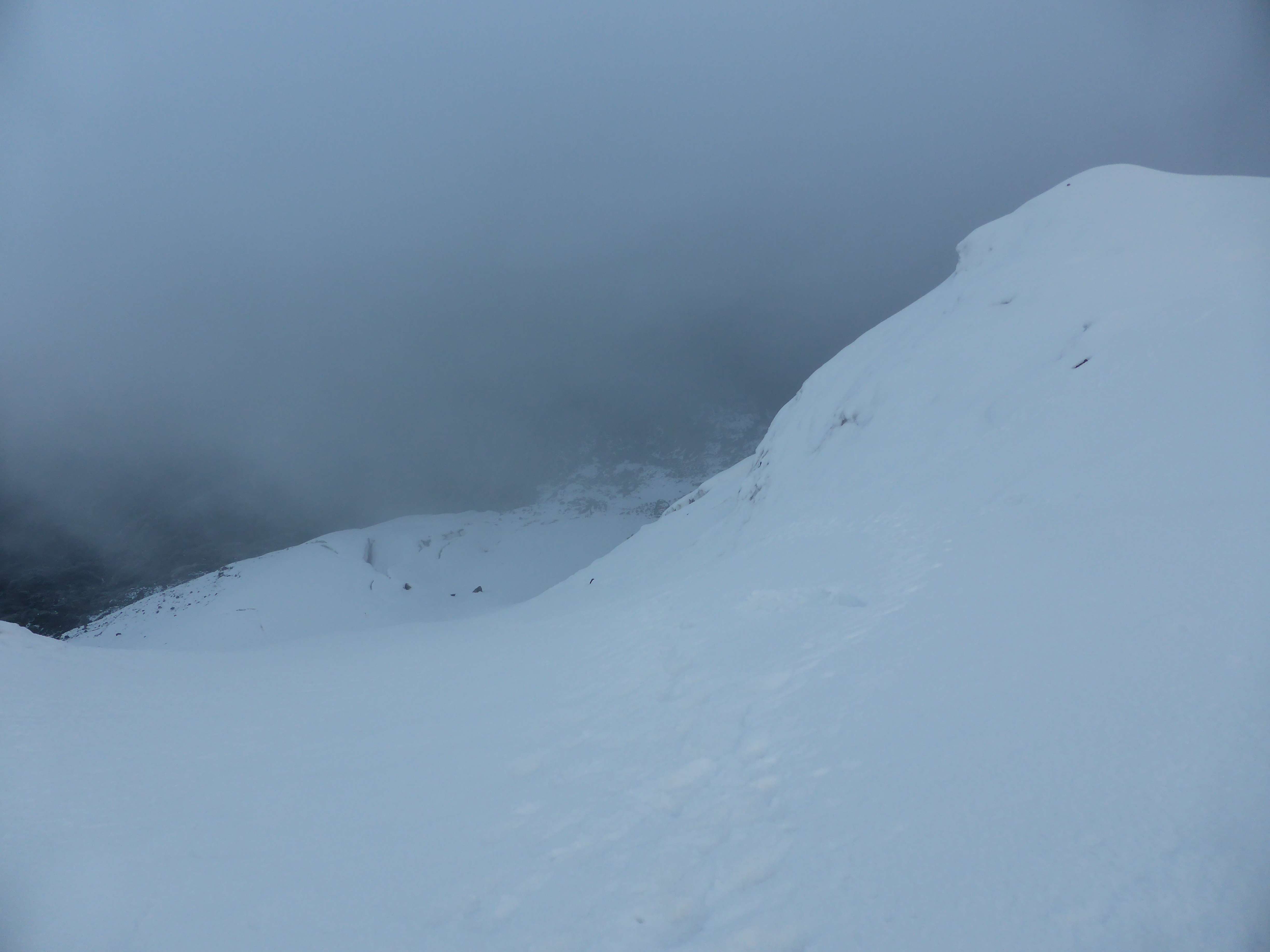
Standing in pre-dawn glow on the Veintimilla at some ~6270m, physically tired, this new obstacle sprawling before us looked imposing.  My thoughts were racing.  I had prepared hard for this trip.  Months spent training, days upon days climbing stairs, cycling, all of my research, carefully saving money, all for the dream of attaining this summit.  My goal was now visible just a few hundred meters away from me.

Pato, looking across the plateau, said “It’s complicated, it will be tiring.”  We looked at each other, and I started to say “We should give it a shot, let’s wait for the sun to rise.”  Maybe he saw it in my face, or perhaps he knew from climbing with me for the past two weeks; I was certain that I still had the endurance and the willpower to reach Whymper and descend safely.  Before I had finished speaking he said “O.K., let’s go!”
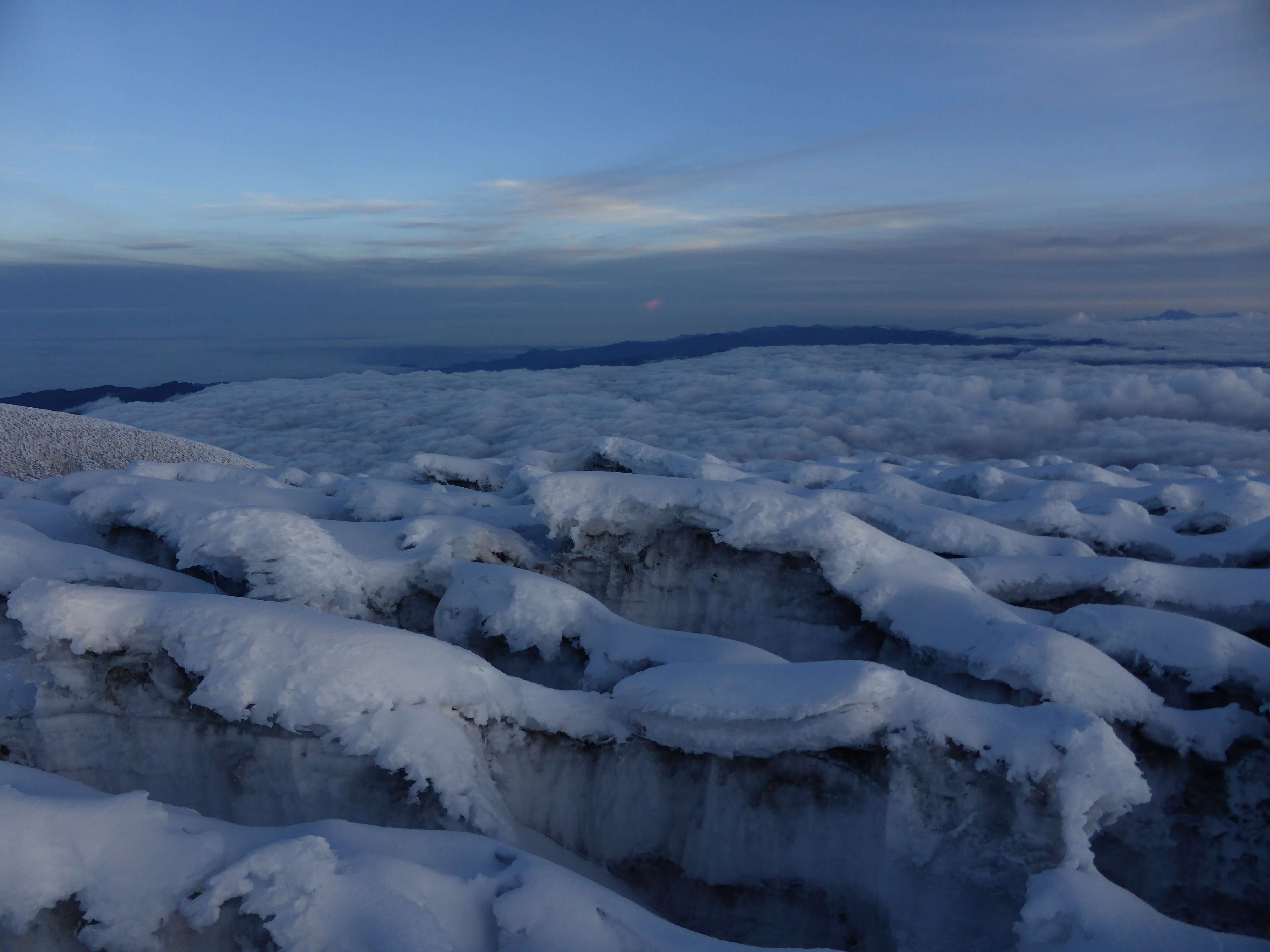
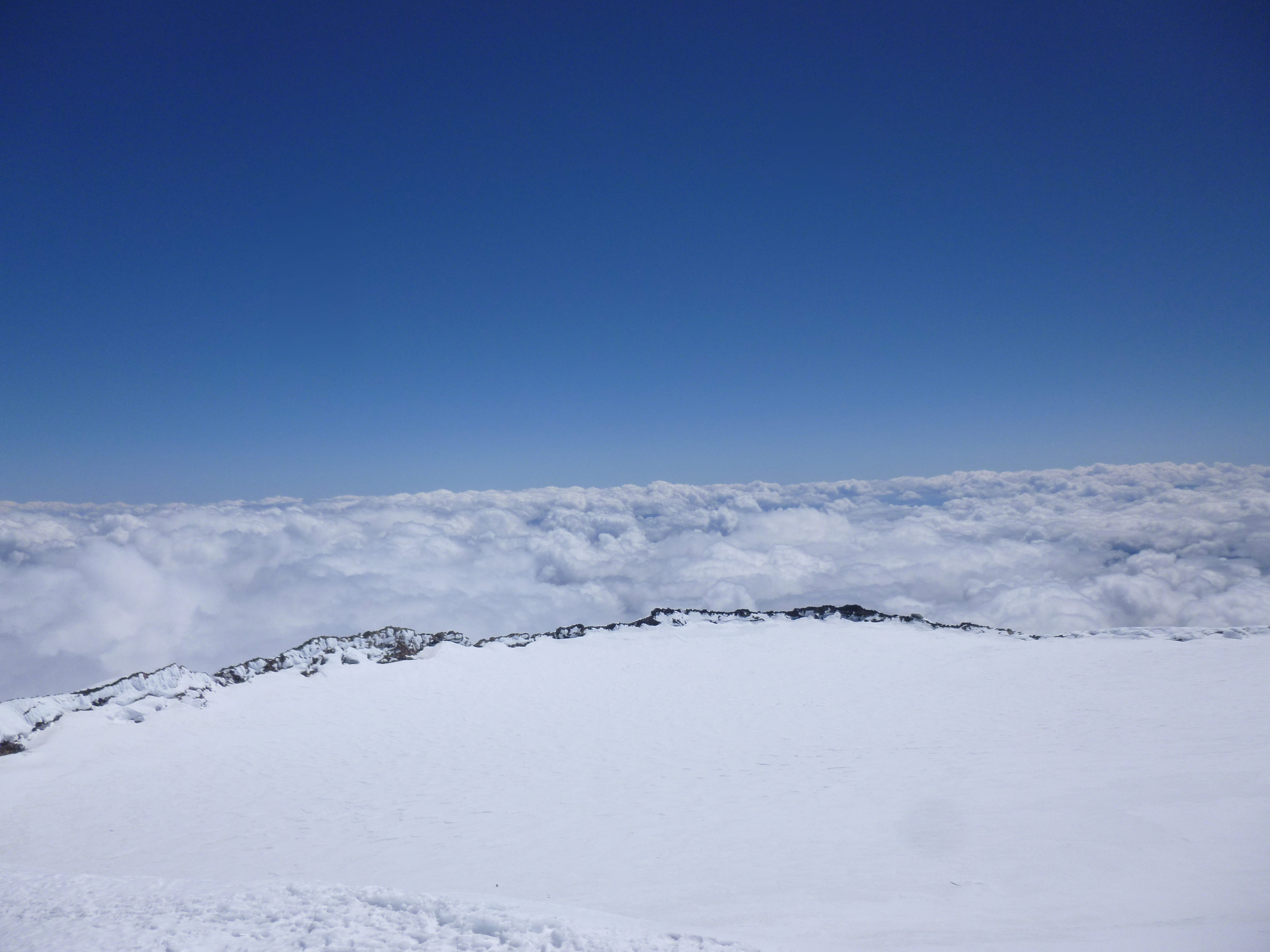
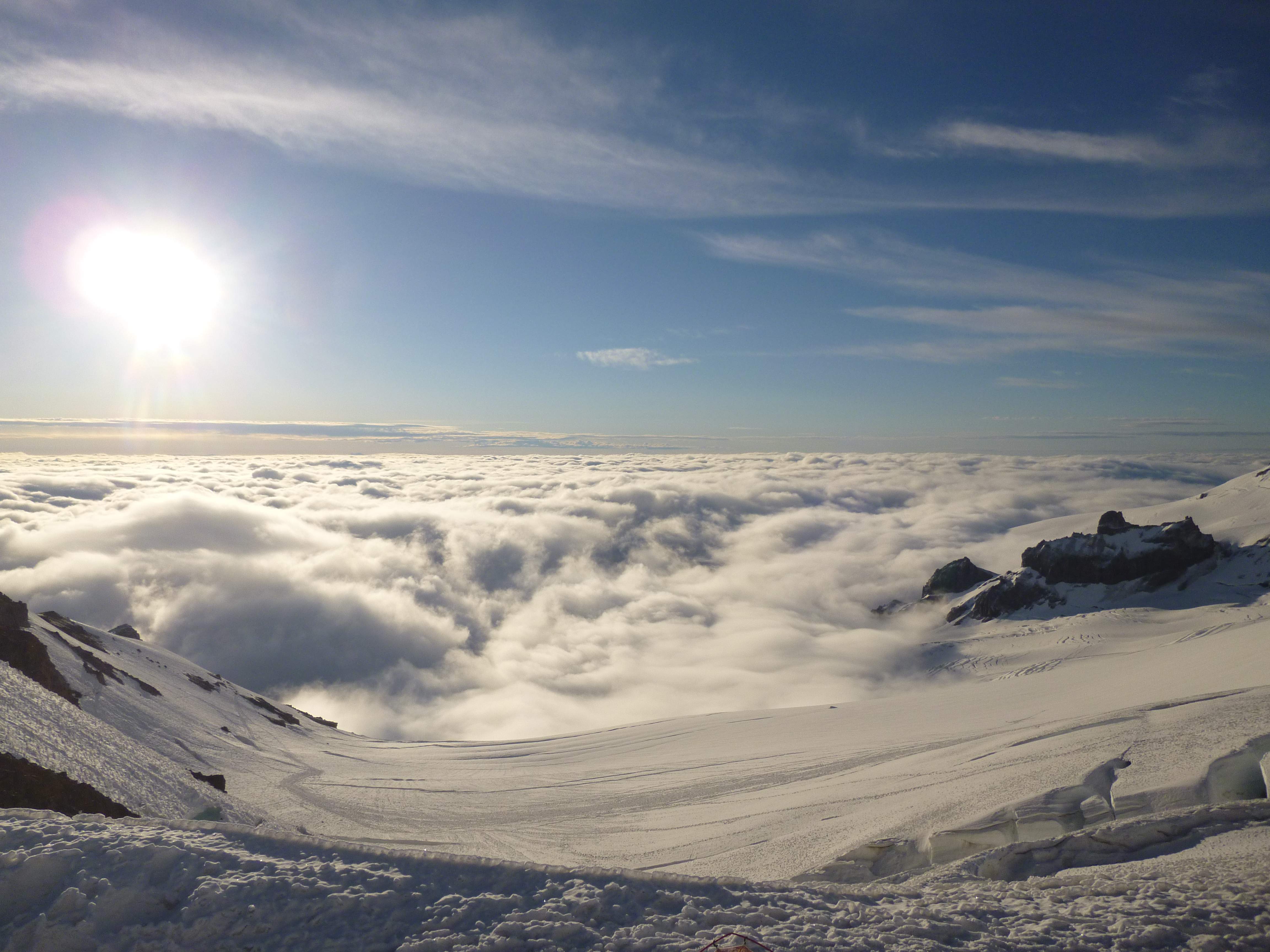
A sea of clouds below fields of penitentes.

A sea of clouds below fields of penitentes.

We started off over the plateau, first slightly downhill and then straight across.  The penitentes were covered in several inches of fresh snow, making them messy to navigate.  The troughs between penitentes made for anything but level terrain, and the crossing was an exhausting follow-up to the loose snow ridge we had ascended earlier.

Looking back at the Veintimilla summit from the Whymper summit.

Looking back at the Veintimilla summit from the Whymper summit.

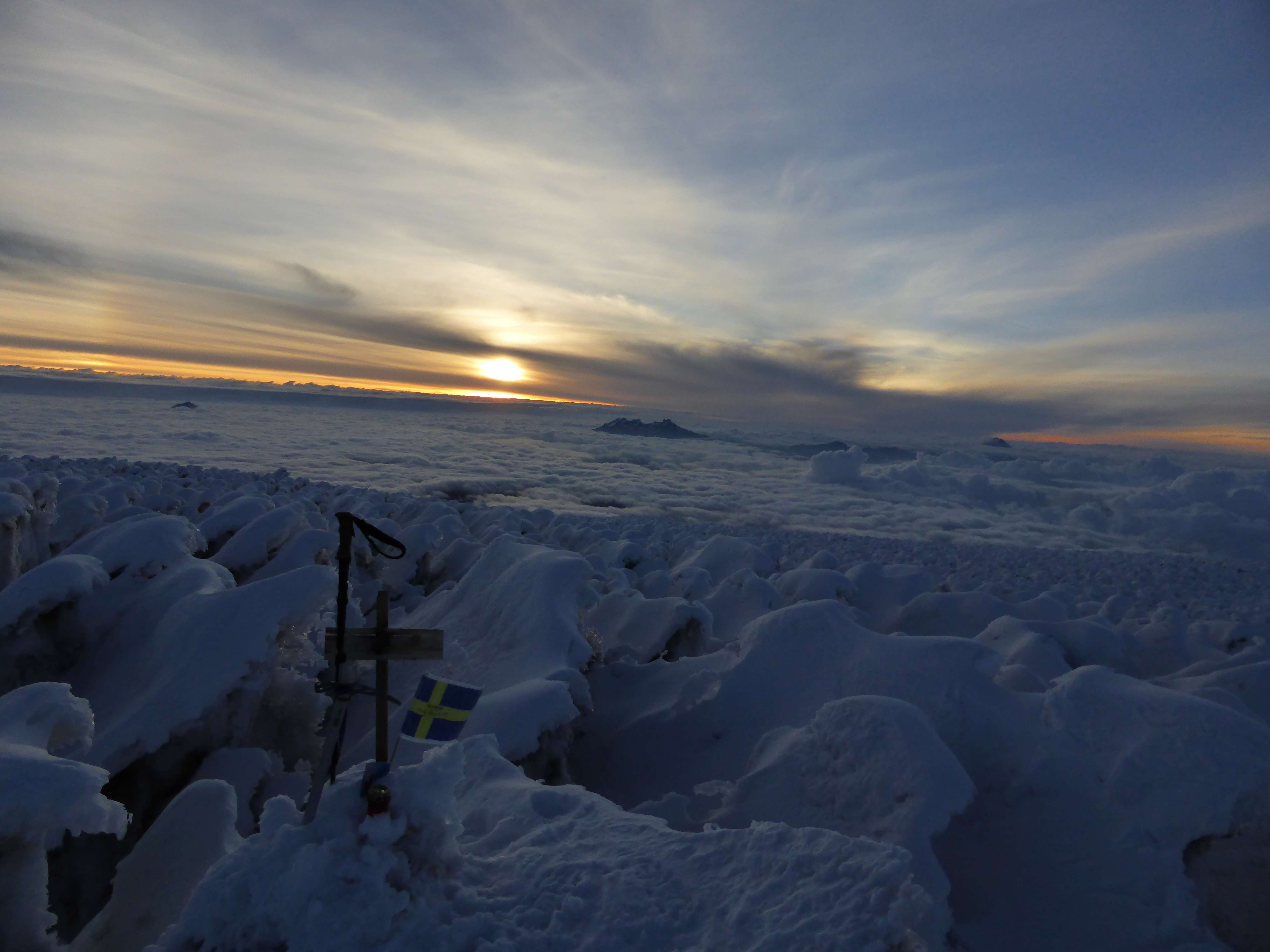
In spite of the terrain I was feeling fine with the altitude.  Clear headed if physically tired, my thorough acclimatization was paying off.  After some 45 long minutes we had finally crossed the plateau.  At 6:20 a.m. we found ourselves at the Whymper summit, marked with a small wooden sign and a Swedish flag left by other climbers.
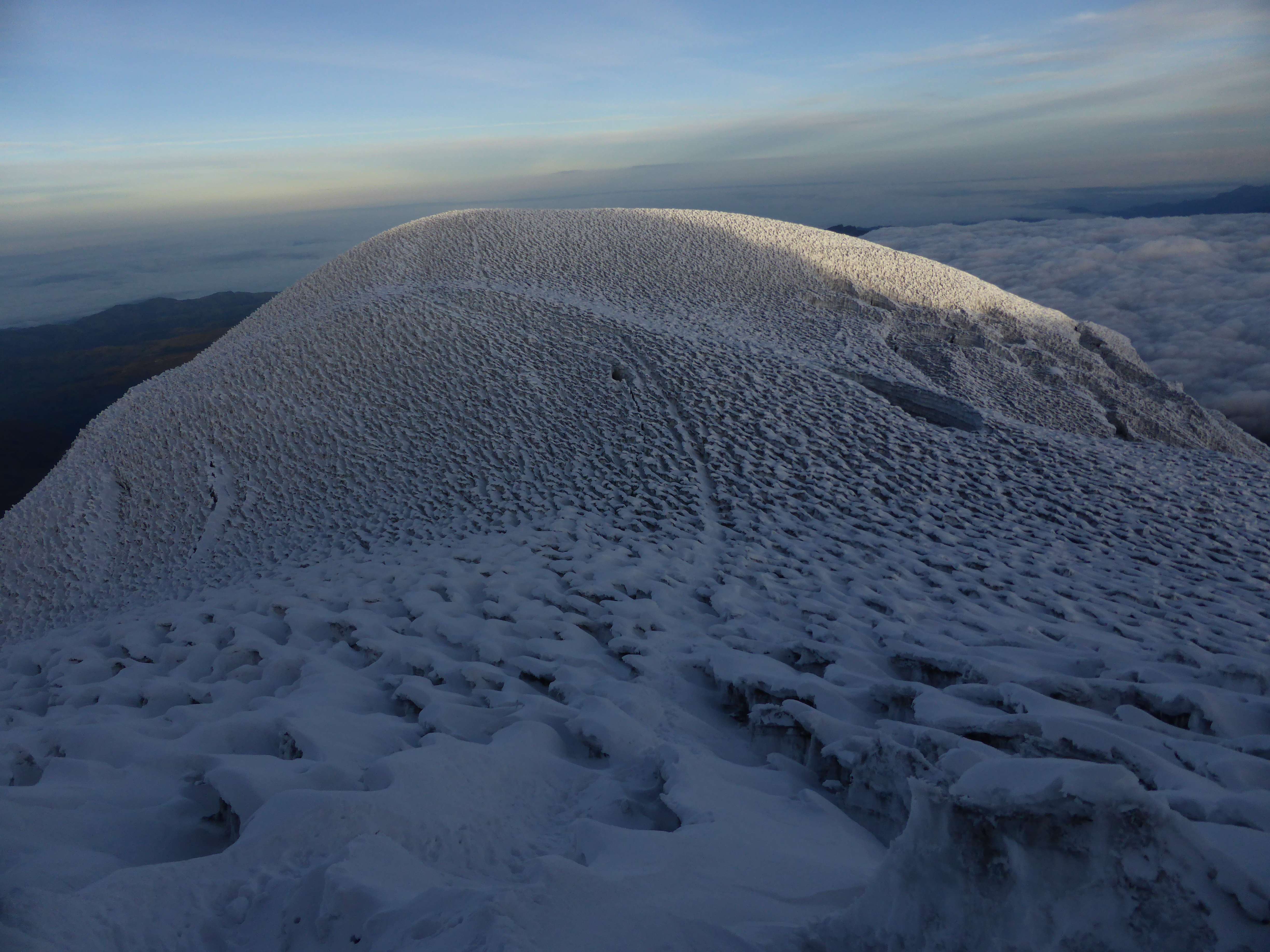
The penitente-covered plateau between the Veintimilla and Whymper summits.
The penitente-covered plateau between the Veintimilla and Whymper summits.

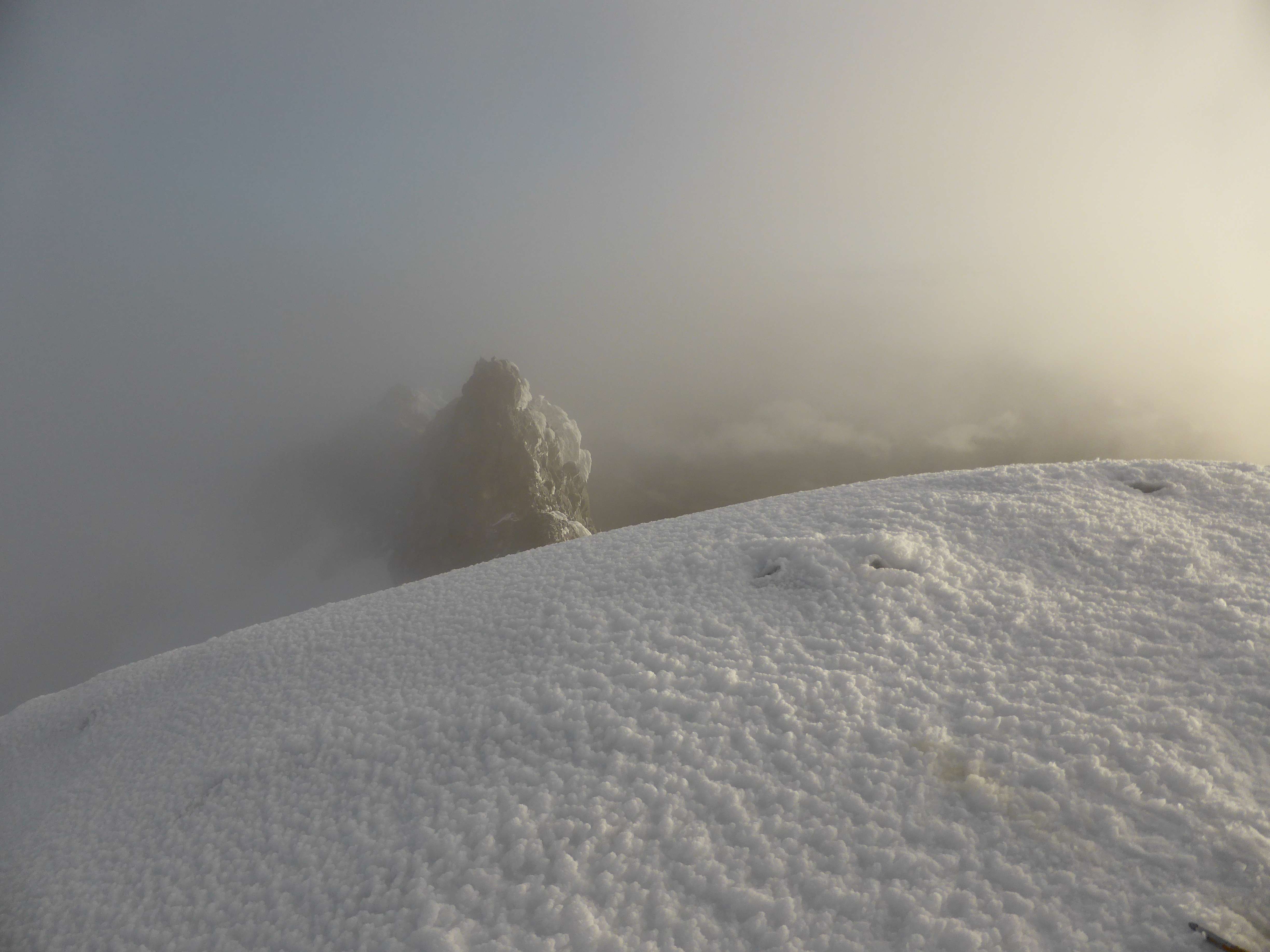
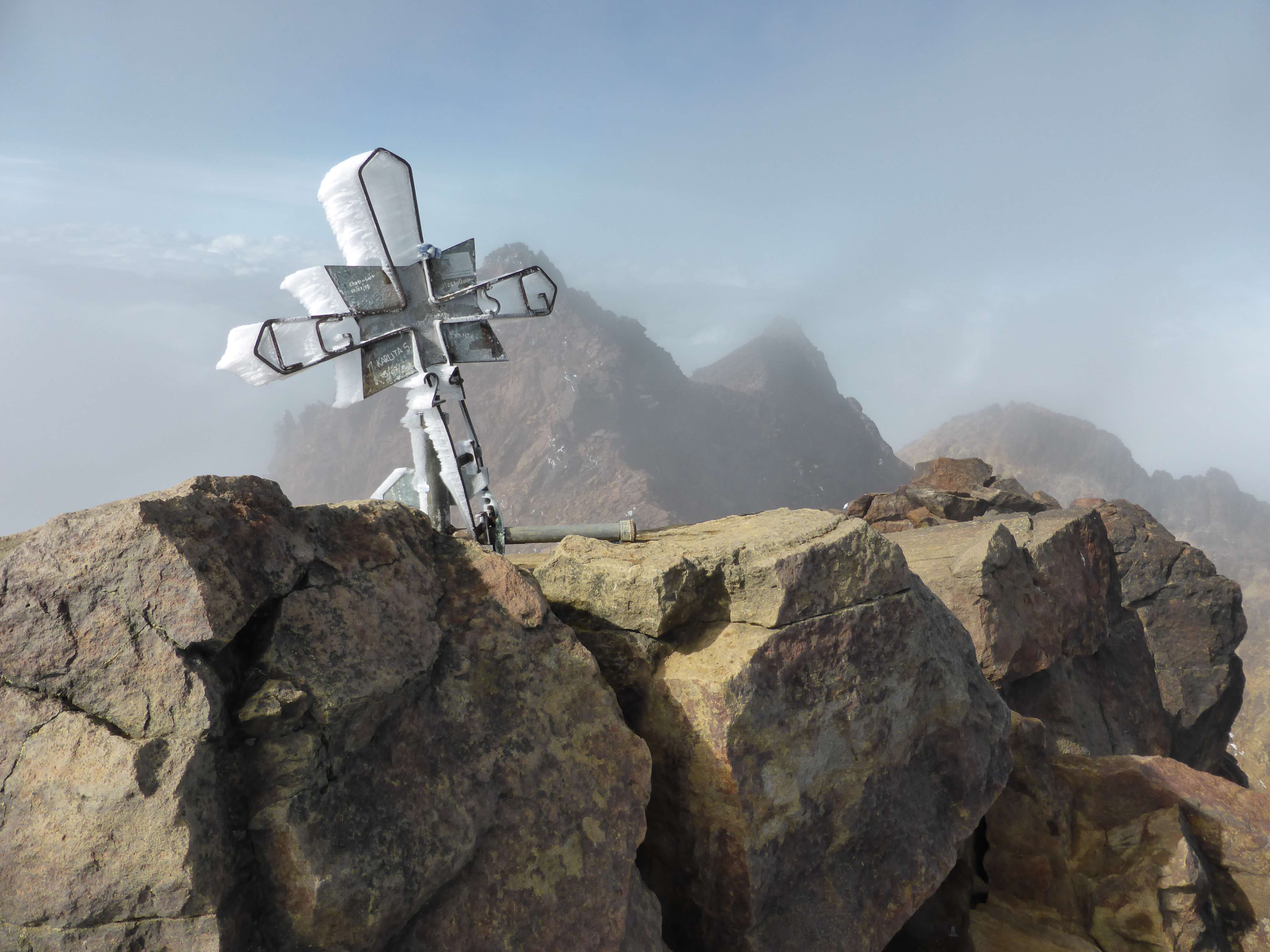
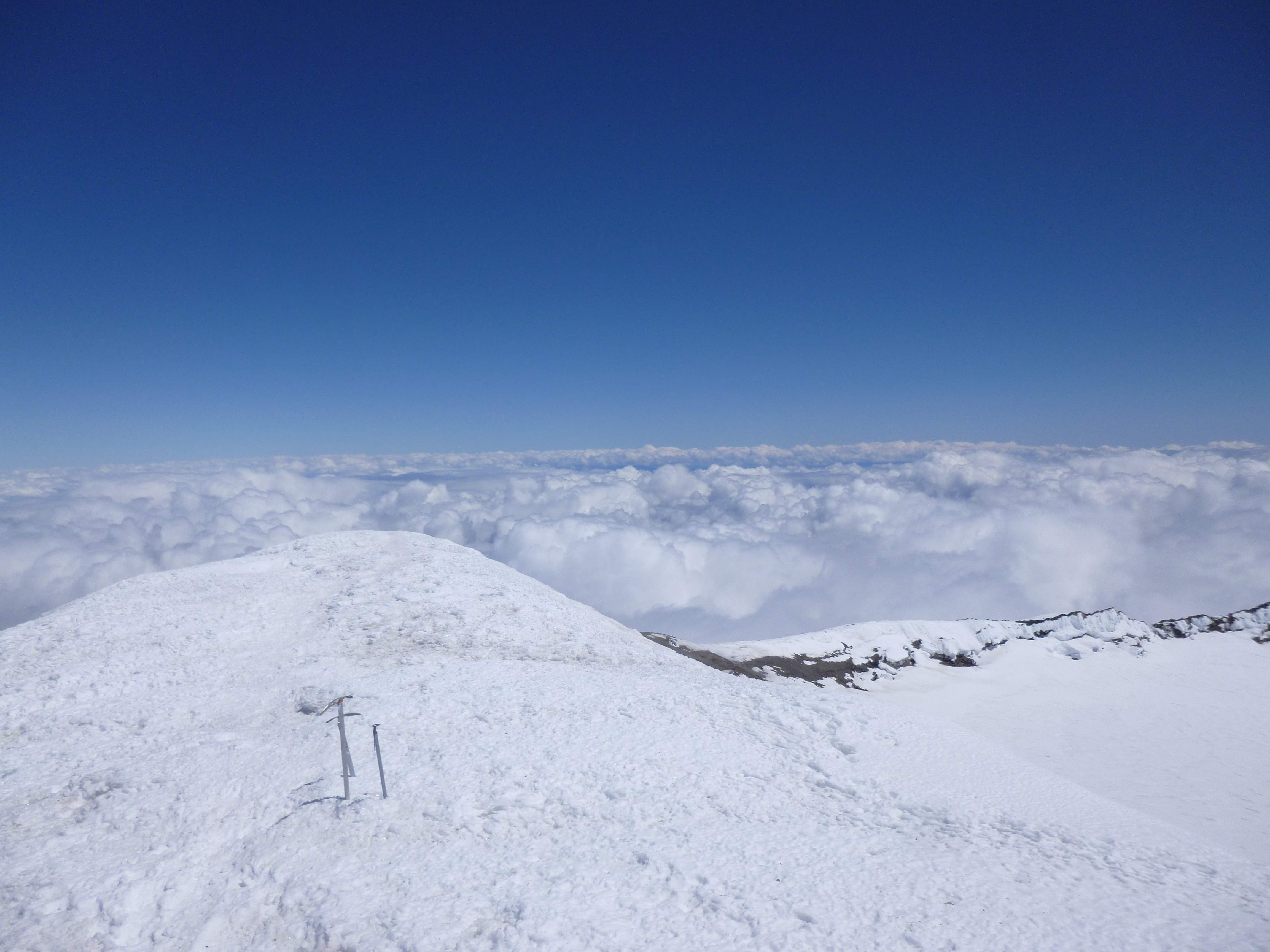
The Whymper summit.

The Whymper summit.

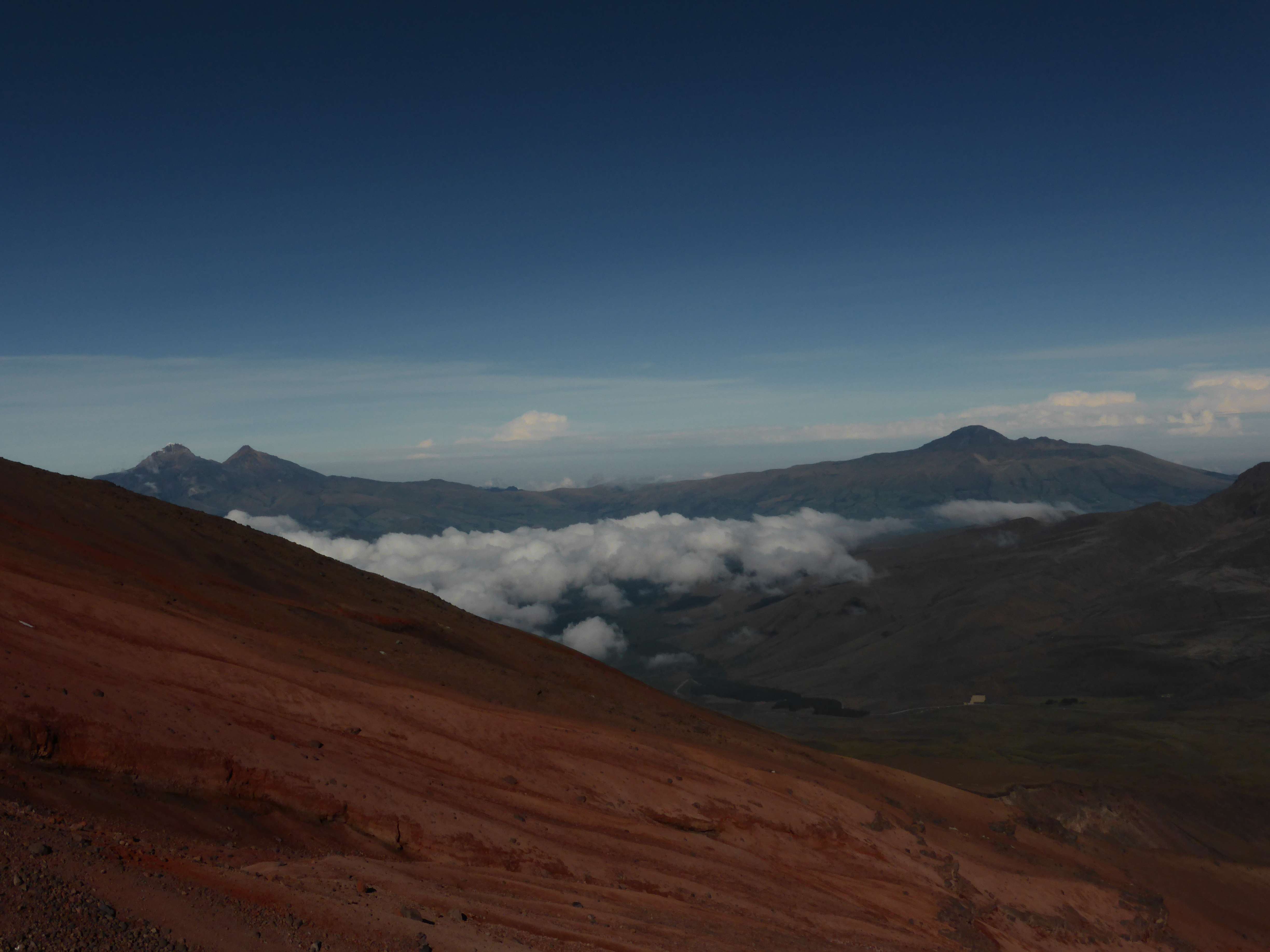
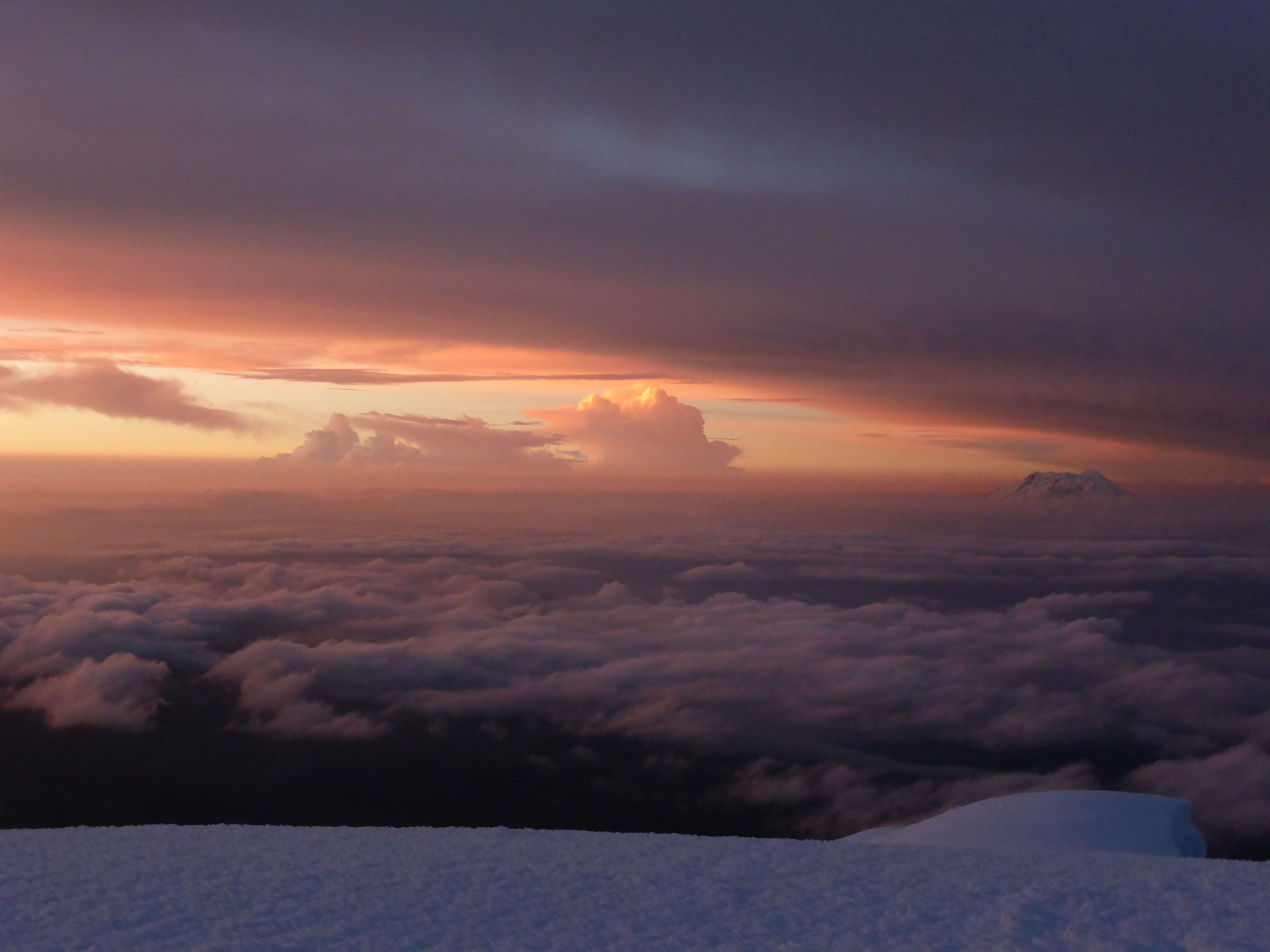
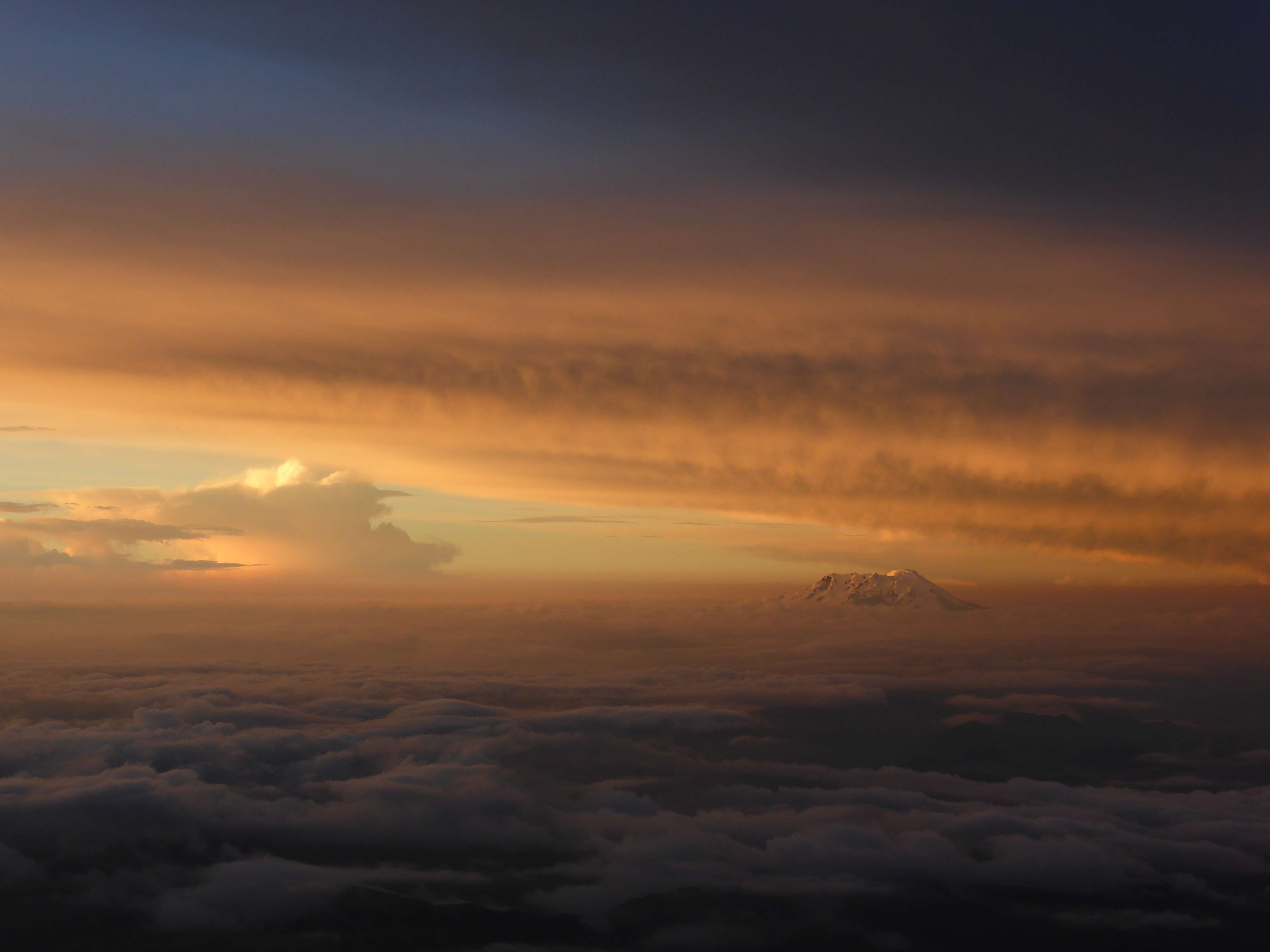
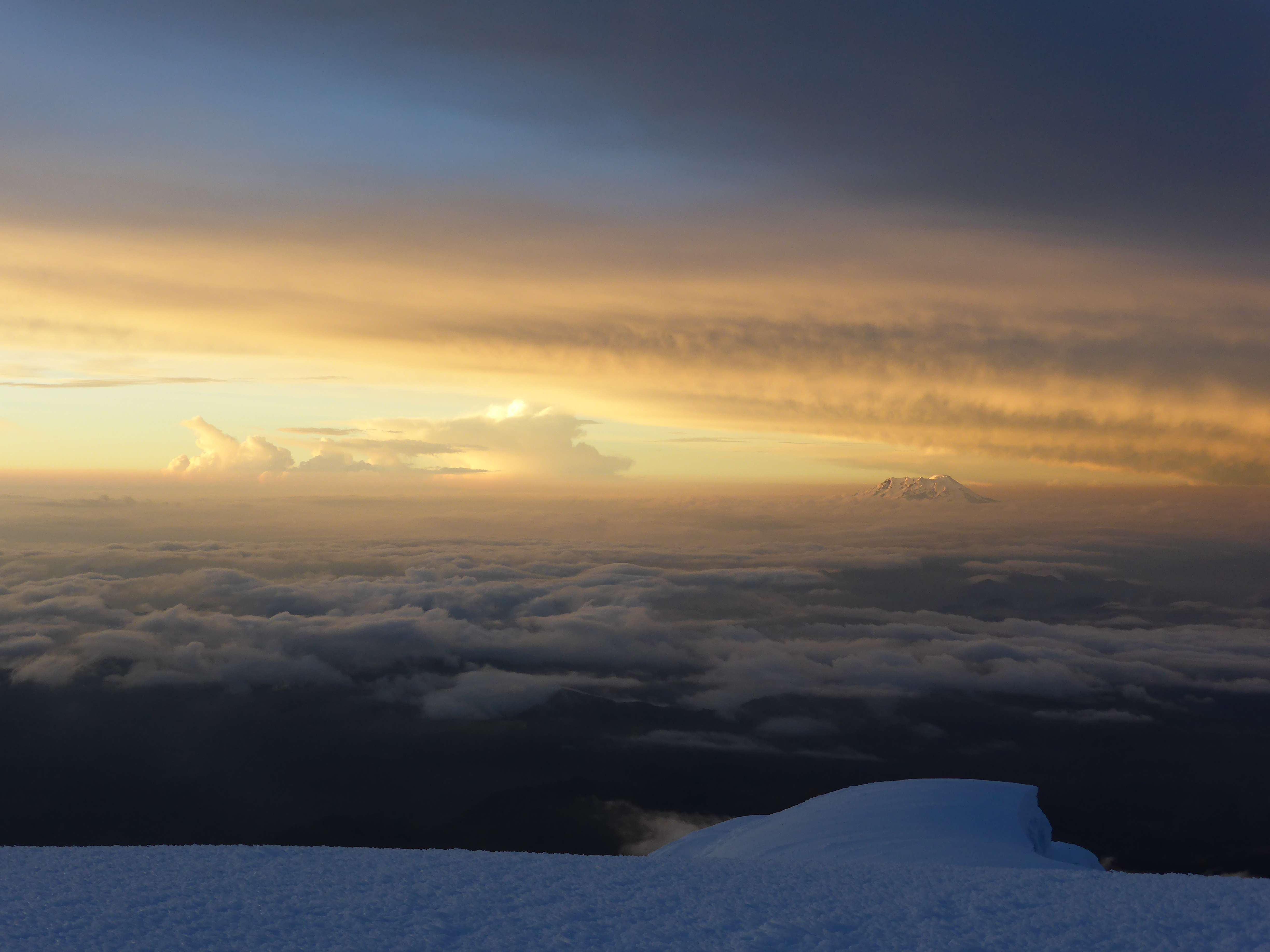
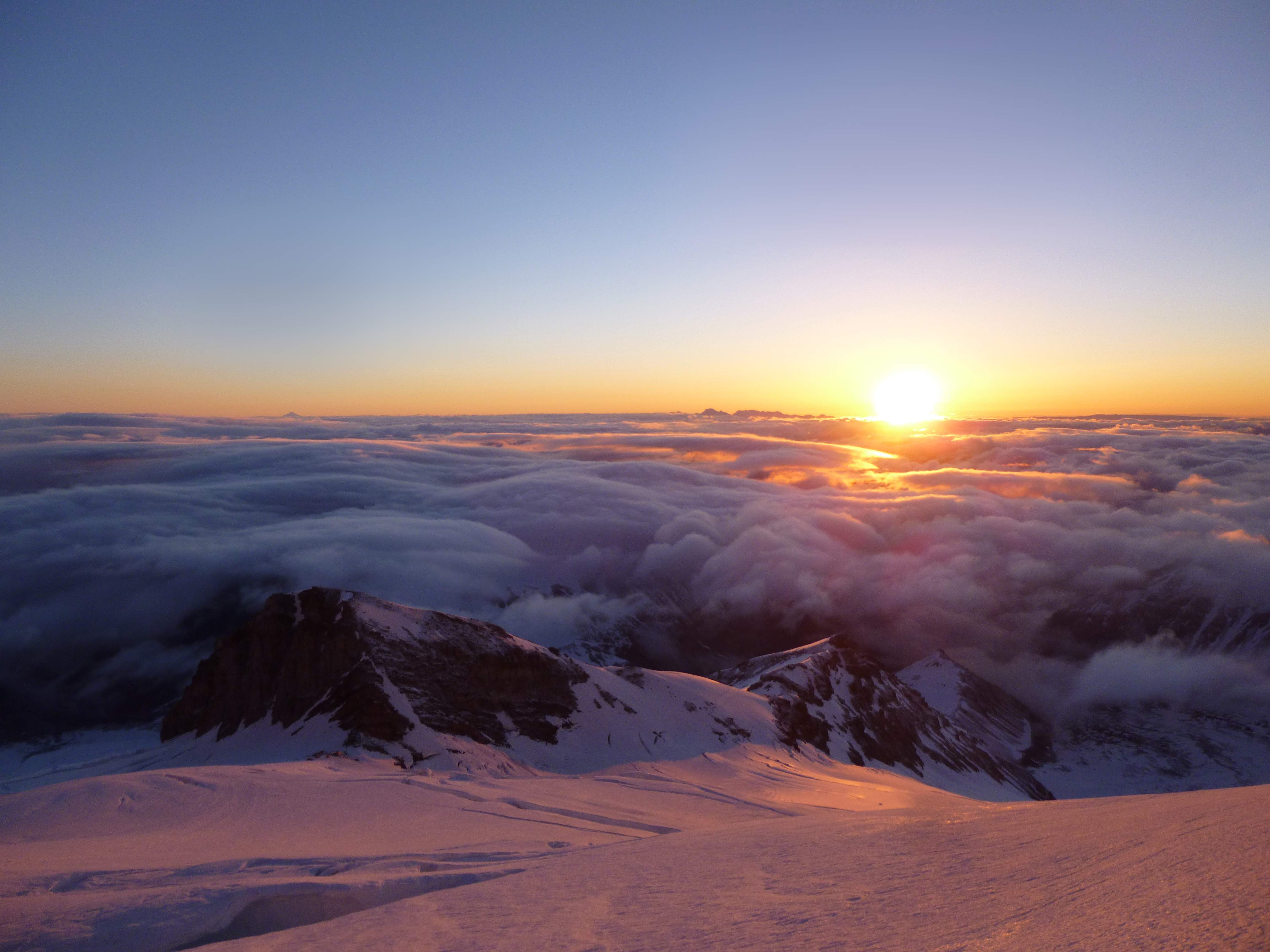
Far below us the sun rose behind Carihuairazo.  At 5018m Carihuairazo looked tiny in the distance.

Pato in the Penitentes on the summit.

Pato in the Penitentes on the summit.

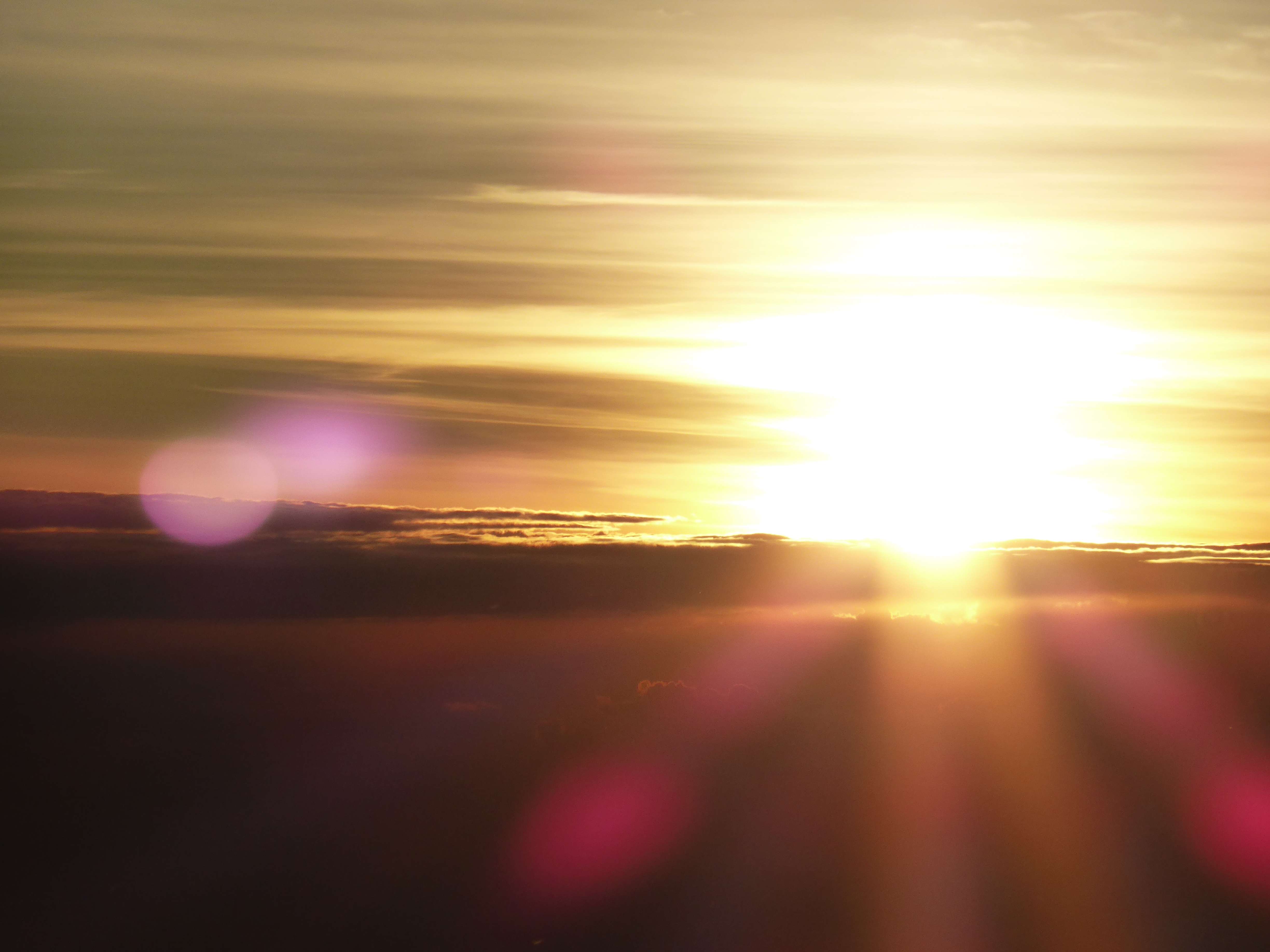
Sunrise over Cairhuairazo from the summit.

Sunrise over Carihuairazo from the summit.

We stayed on the summit for about twenty minutes, just enough time to hydrate and take some photographs.  It was early, but still important for us to descend quickly before the sun warmed the mountain and softened the snow.
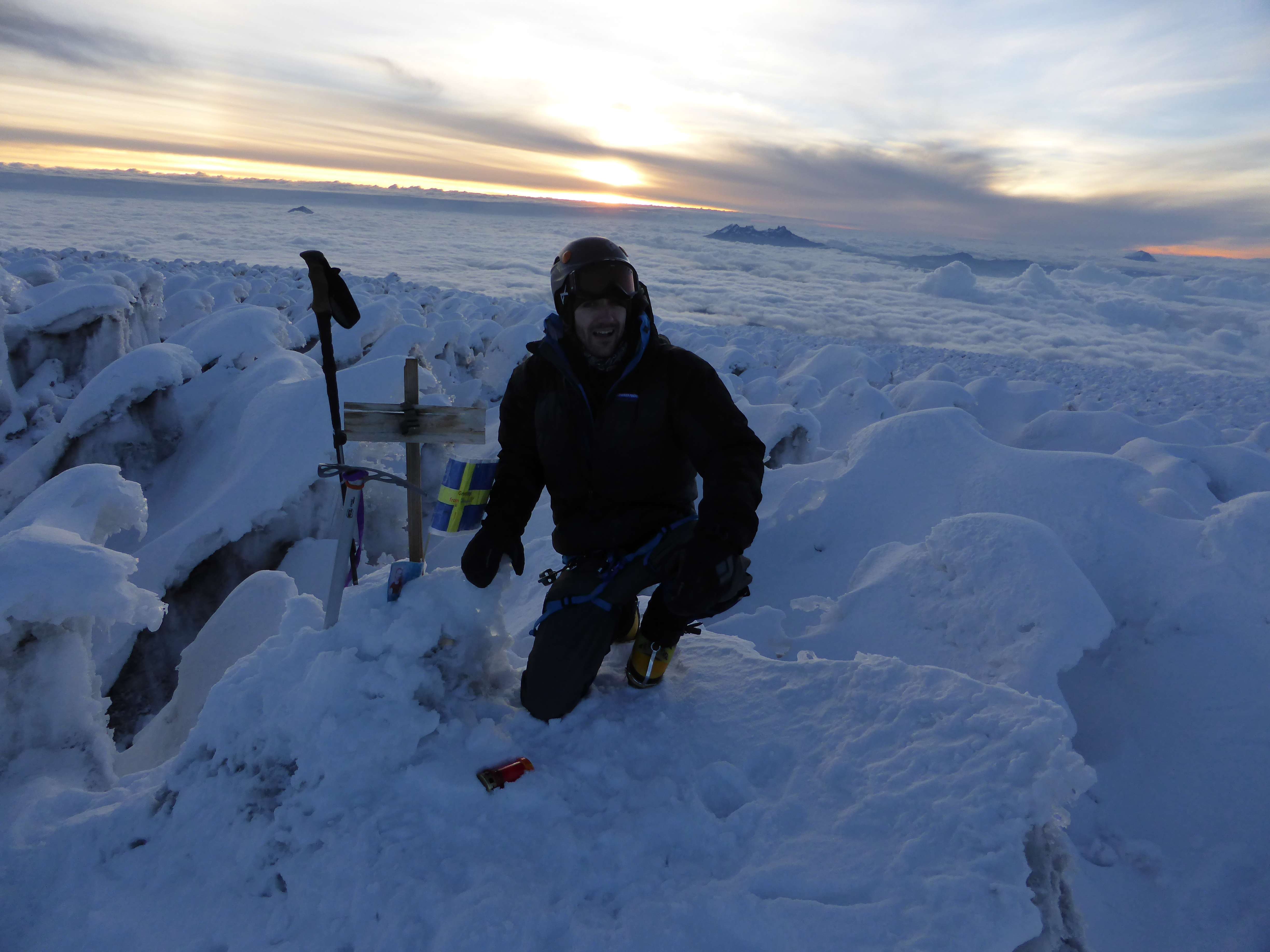
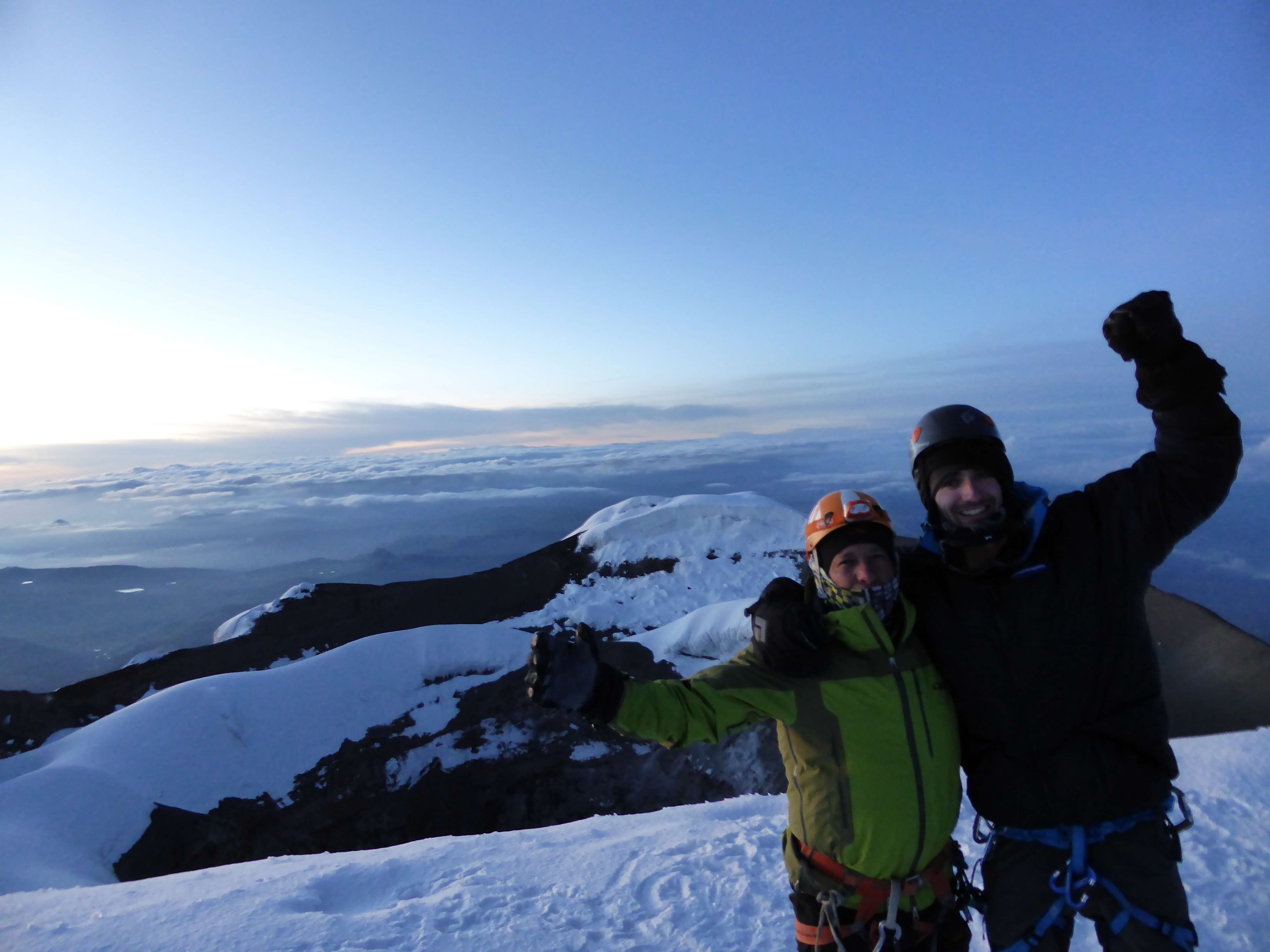
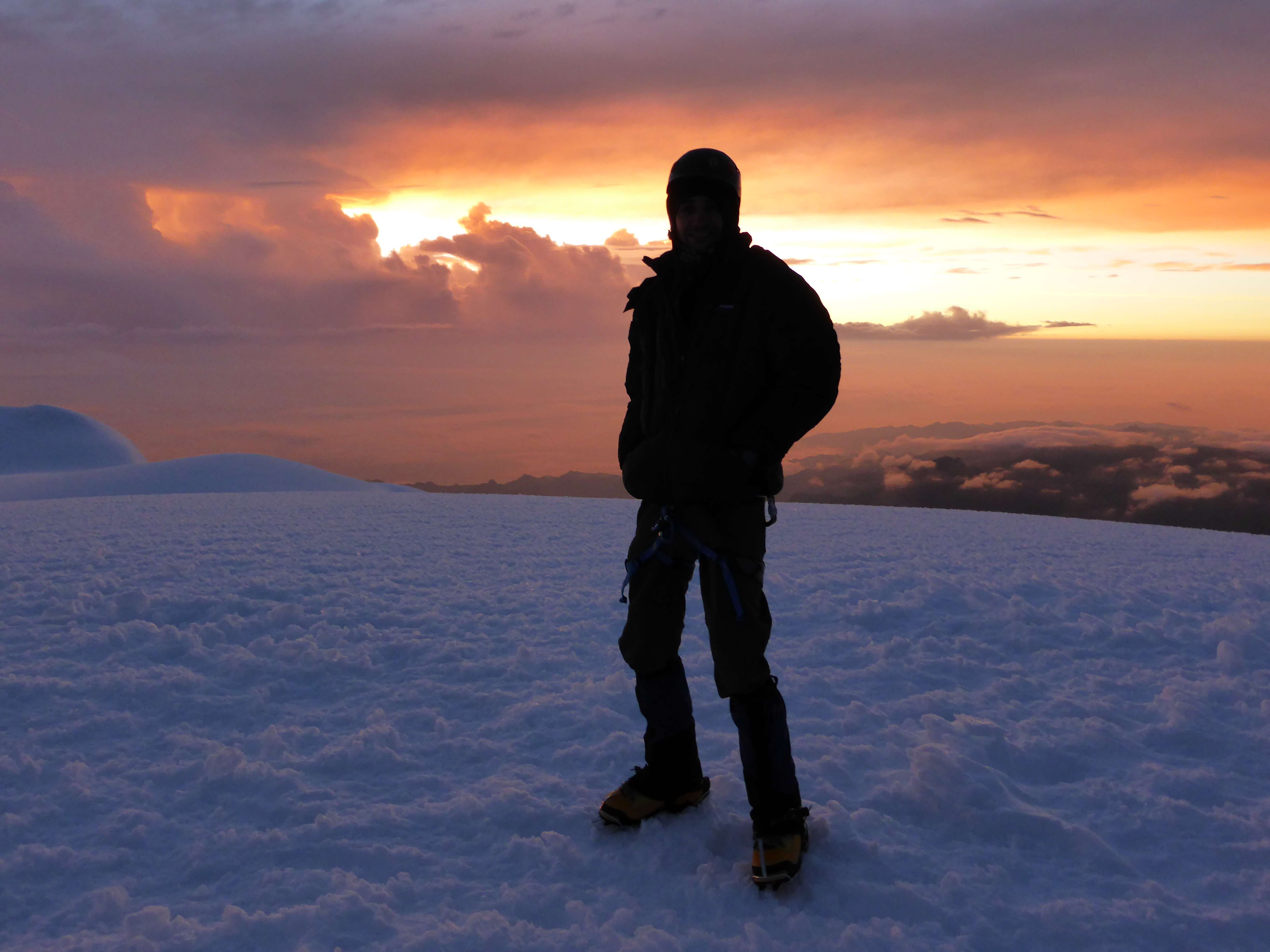
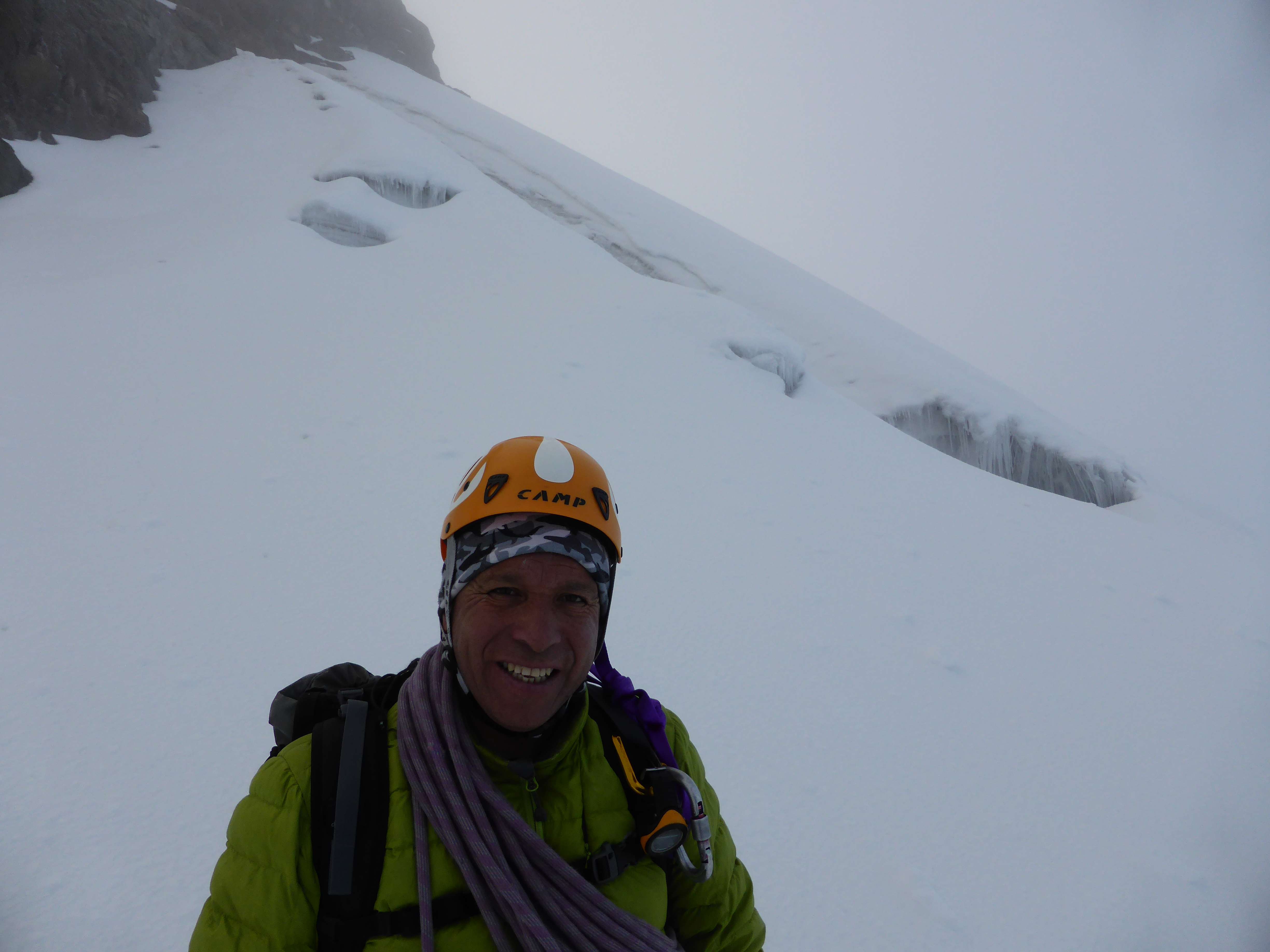
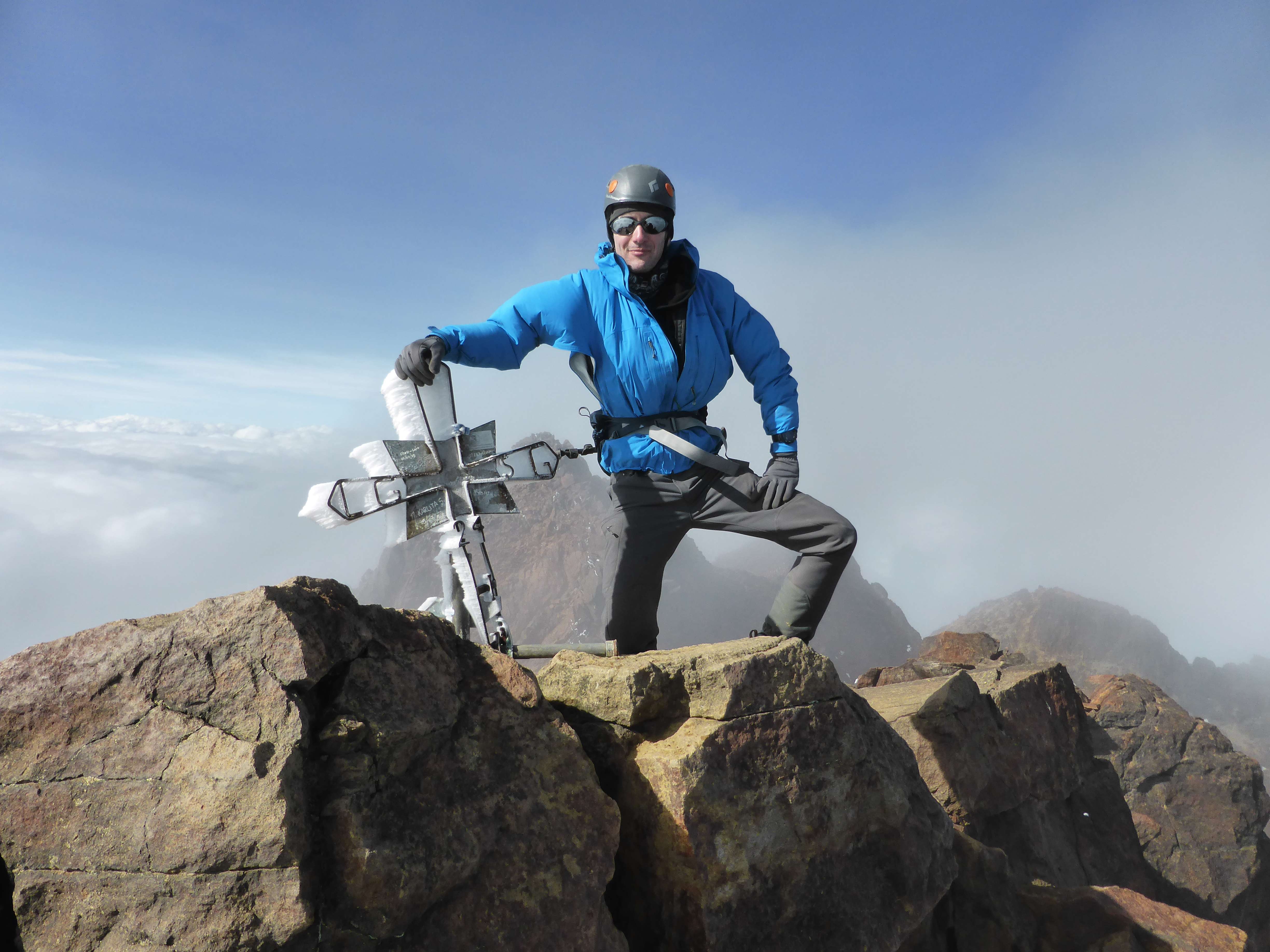
Tired and happy on the summit.

Tired and happy on the Whymper summit.

I had drunk about a liter of my water on the summit, and as we walked back across the plateau my stomach began to churn.  Alone throughout the entire climb thus far, as we regained the Veintimilla we met two other climbing teams still ascending the mountain.  Both would stop at Veintimilla, it being too late in the day to continue across and still safely descend on firm snow.

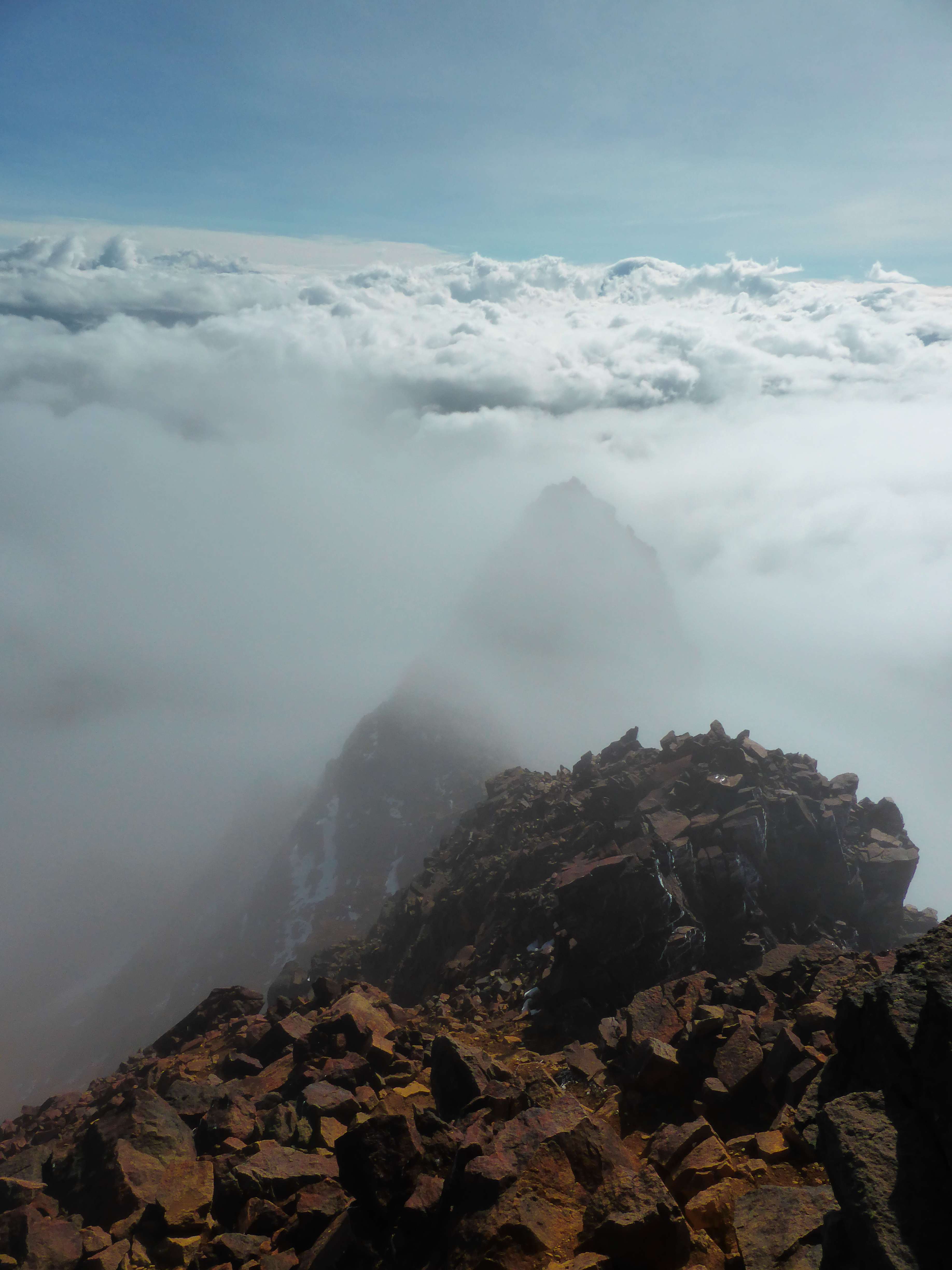
Looking back at the Whymper summit from Veintimilla.

Looking back at the Whymper summit from Veintimilla.

Another team approaching the Veintimilla summit.

Another team approaching the Veintimilla summit.

Below Veintimilla we reached the top of the ridge and began to climb down carefully, cautious of the loose snow underfoot.  By now my stomach was boiling, and I stopped to vomit.  This stomach discomfort persisting all the way back to basecamp and throughout the rest of the day.  I cannot be certain what caused my stomach issues, but I strongly suspect that the water I had taken was the culprit.  I considered whether I was suffering altitude sickness, but found it unlikely given my otherwise good condition.  I have experienced nearly debilitating altitude sickness in the past, but have never encountered nausea as a standalone symptom.  In my experience an onset of mountain sickness for me is always characterized first by ataxia, and then by headache – neither of which were present.
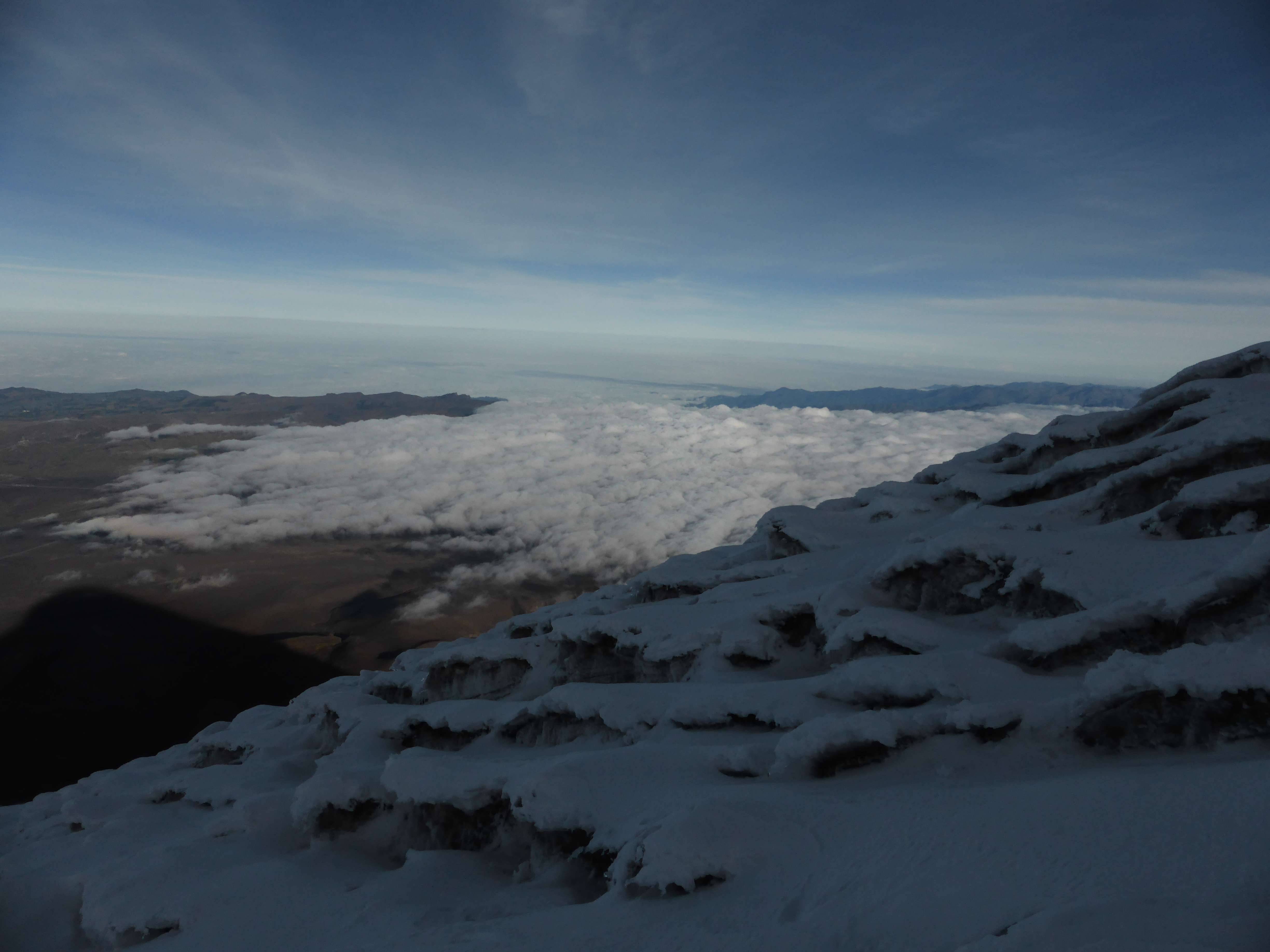
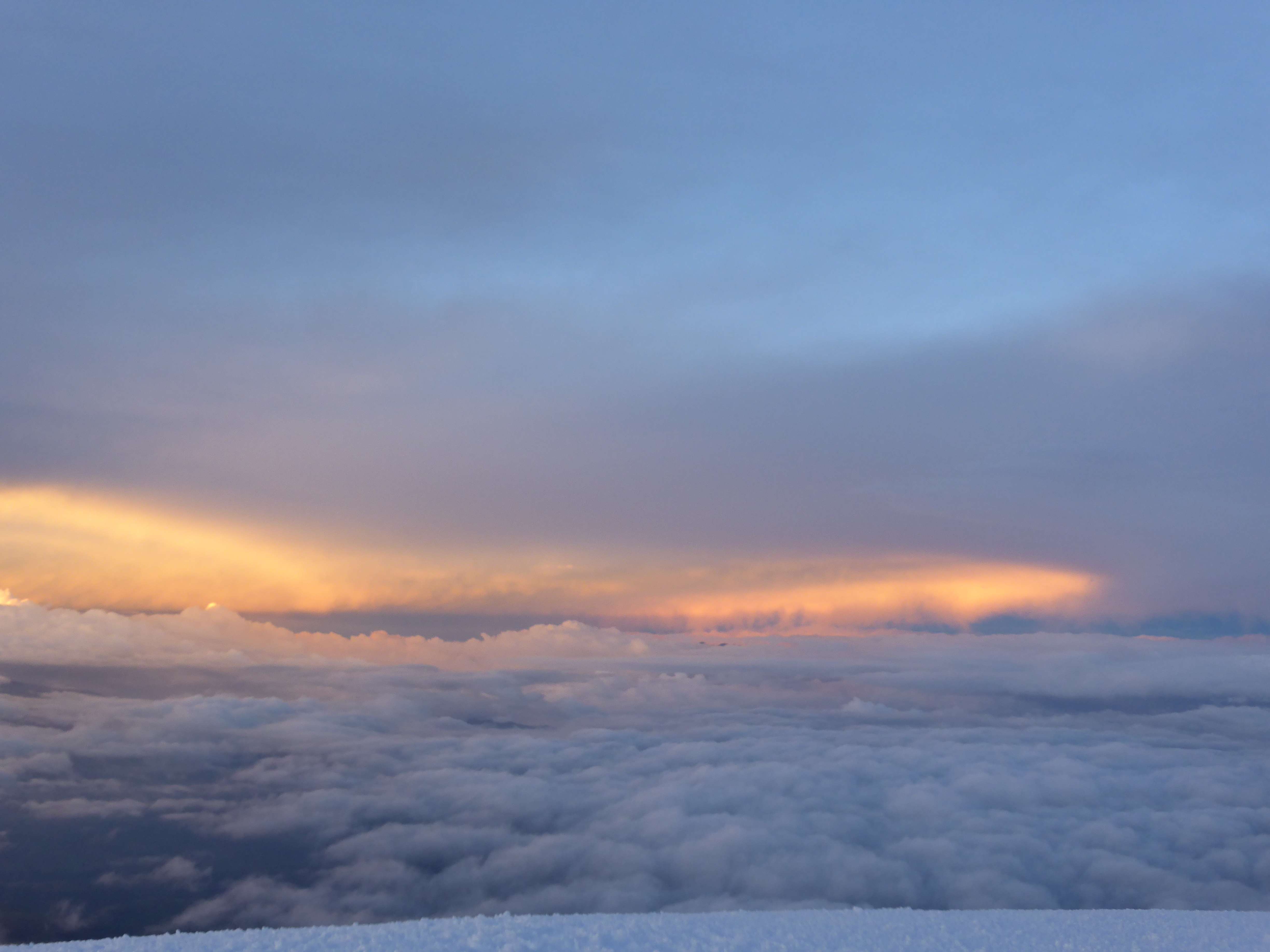
Clouds and penitentes.

Clouds and penitentes.

After being sick I immediately felt much better, but dehydrated.  Drinking more water, my stomach almost immediately began to complain again – it seemed that the descent would be an uncomfortable one.

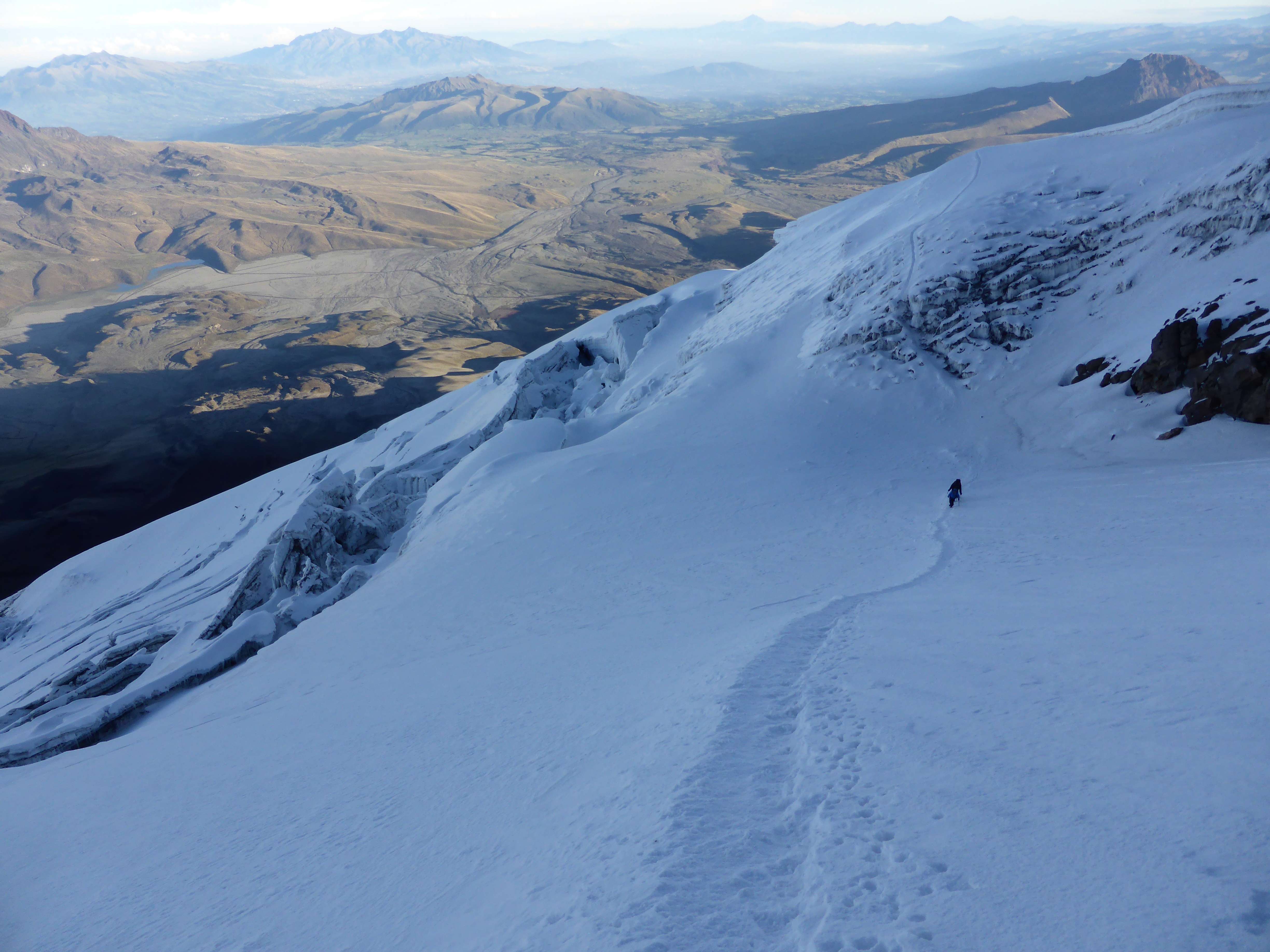
Looking back up the ridge towards the Veintimilla summit on descent.  Zoomed in, the other team can be seen descending near the middle of the ridge.

On descent, looking back up the ridge towards the Veintimilla summit. Zoomed in, another team can be seen descending near the middle of the ridge.

The sun warmed us up and the air temperature rose quickly.  Partway down the ridge I removed all of my warmth layers and continued in only a base layer and a fleece.  Far below us the two refuges and the workers’ cabin could be seen at the base of the mountain, my tent a tiny speck.
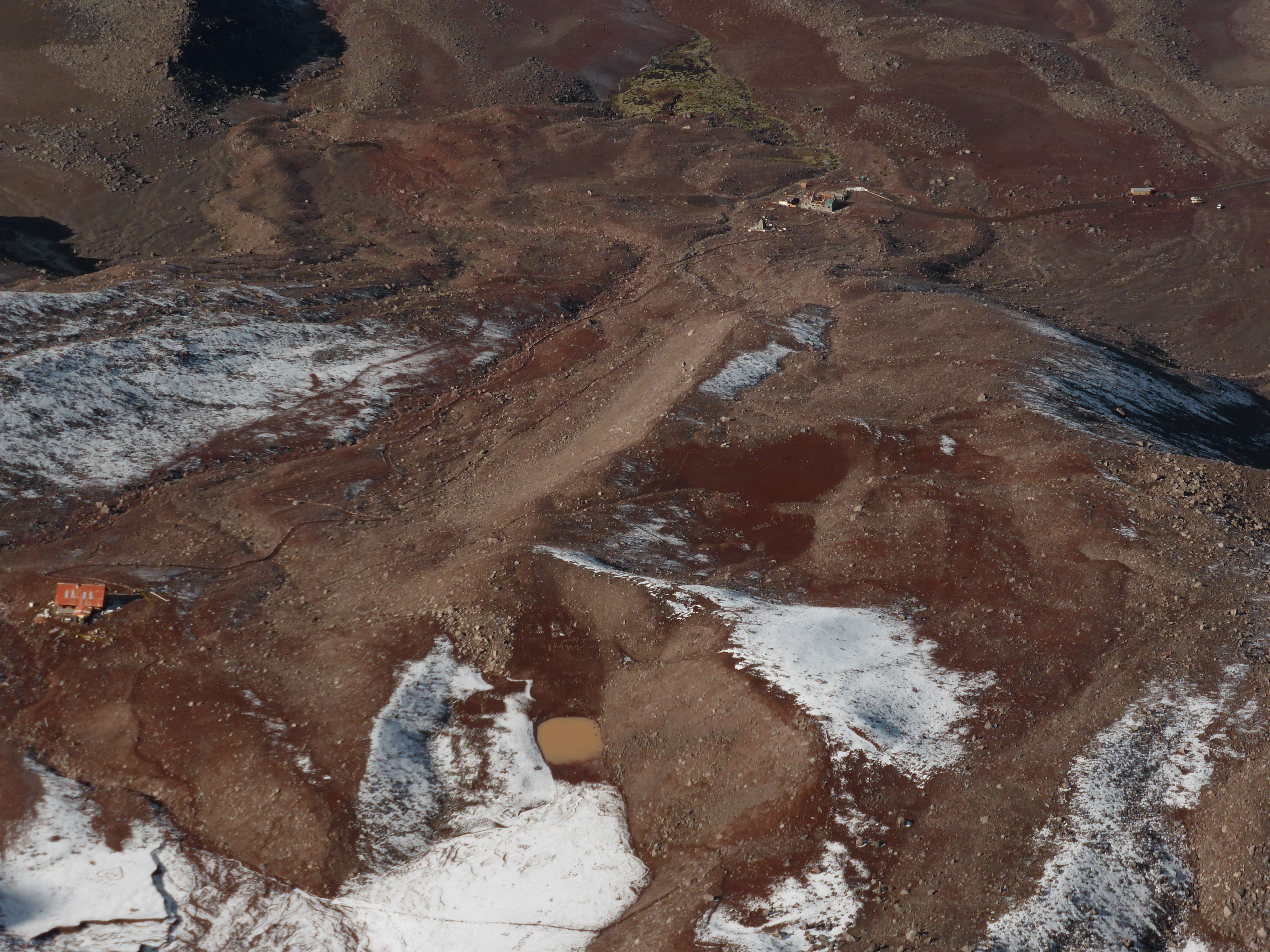
The workers' hut and my campsite are top right, near the cars.  The two refuges are center and left.

The workers’ hut and my campsite are top right, near the cars. The two refuges are center and left.

As we reached the bottom of the ridge we decided to descend via a longer variation, following the ridge below the base of el Castillo all the way down.  This would make the descent around 45 minutes longer, but much safer due to the softening snow and potential for rockfall on the slopes below el Castillo.  The ridge past el Castillo is very gently sloped, which also made this variation easier on the knees, and generally more comfortable after our tiring ascent.
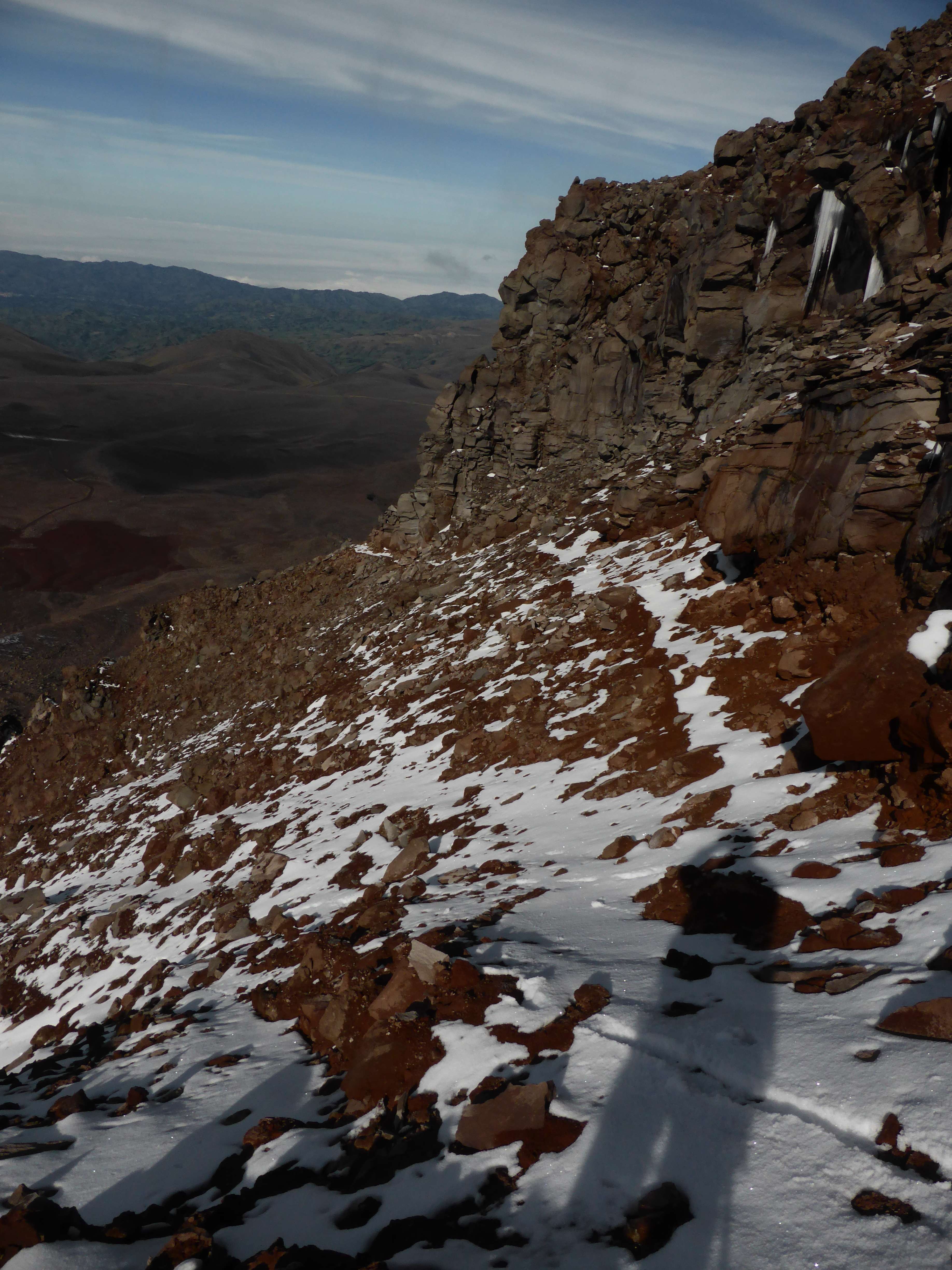
Following the ridge down, passing underneath el Castillo.

Following the ridge down, passing underneath el Castillo.

We returned to camp at 10:30 a.m., where I drank a litre of my bottled water, ate some bread, and took a 20 minute nap before packing up for the drive back to Machachi.  Chimborazo was a physically challenging climb, more than I had expected it to be. In particular the loose, soft snow on the ridgeline and the fields of penitentes on the summit plateau presented tests of endurance on less than ideal conditions.  With both refuges closed the climb was long, covering more than 1500m of gain.  At the end the challenge added to the reward; my preparation, training, and planning had been sufficient.  I was delighted to have realized my goal of reaching the Whymper summit, and very pleased to finish my climbing trip with a successful ascent of Ecuador’s highest.
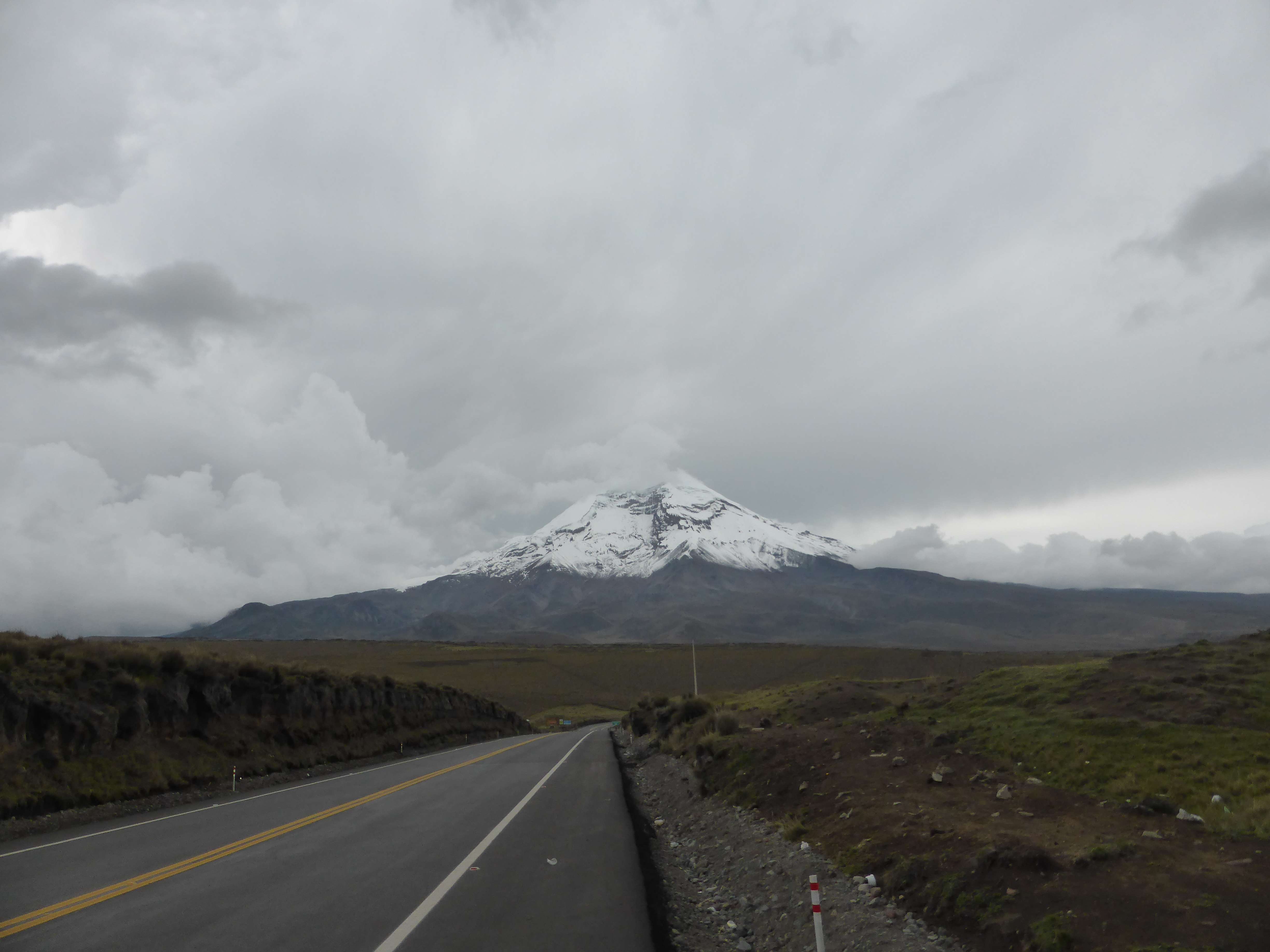
Driving towards Chimborazo.

Driving towards Chimborazo.

Accessibility

Chimborazo, aside from its variable conditions and high altitude, is one of Ecuador’s more accessible mountains.  Good nearby road infrastructure makes accessing the park and mountain relatively straightforward. The refuges, if open, would make overnighting at the base of the mountain relatively comfortable. Climbing Chimborazo involves glacier travel at high altitude, and good acclimatization is essential to a safe and successful climb.  The conditions on the normal route are known to be variable, and the potential for rockfall is definitely there.  Recent snowfall made the mountain safer during my ascent, but also contributed to the difficulty of the ridge and penitente fields.

While in Ecuador I stayed in the city of Machachi between climbs, which provided me convenient access to Corazon, Cotopaxi, and the Illinizas. The hostel I used in Machachi, the Puerta al Corazon, was comfortable, well managed, very clean, and had great food.  They can be contacted by email at info@puertaalcorazon.com

Ecuador’s high mountains can be climbed year round, but weather is often inclement with high winds and heavy precipitation. December, January, and February are considered the most stable months for climbing due to lower winds and relatively lower chances of rain and snow. I experienced cold, strong winds on Chimborazo.  The Ecuadorian climbers I met told me that June, July, and August are also popular climbing months, drier but even windier. During my trip fog and rain were common in the afternoons, while morning and night weather was typically clear but windy.

Since late 2012 the Ecuadorian government has mandated that all climbers use the services of a local mountain guide.  This policy was put into place in response to a fatal accident on Illiniza Sur.  While in Ecuador I met one unguided group who had managed to get past the park gate and onto the mountain, but this is strongly discouraged, and the national parks strictly enforce the policy by refusing entry to unguided climbers whom they catch.  I hired a 1:1 mountain guide and climbed with him throughout my trip.  We accessed all of the national parks via a 4×4 truck, which my guide drove and owned.  While organizing the logistics and guide for my trip I used the services of Diego Cumbajin Parra, the owner of www.andesclimbing.com, and I would strongly recommend him for his excellent communication, attention to detail, personal presence, and reasonable pricing.  My guide Pato was strong, very familiar with all of Ecuador’s mountains, and completely focused on climbing.

Ecuador Climbing Itinerary – January 2014

1/15  : Arrive in Quito (12:30 a.m.), rest, buy gas, to Machachi at ~3200m
1/16  : Buy food, Hike 4791m Corazon out of Machachi
1/17  : To Illiniza Hut at ~4700m
1/18  : Hike 5126m Illiniza Norte, rest in Illiniza Hut
1/19  : Climb 5263m Illiniza Sur, return to Machachi
1/20  : Rest Day in Machachi at ~3200m
1/21  : To Cayambe hut at ~4600m
1/22  : Climb 5790m Cayambe, return to Machachi
1/23  : To Cotopaxi parking lot at ~4600m
1/24  : Climb 5897m Cotopaxi, return to Machachi
1/25  : Rest day in Machachi at ~3200m
1/26  : To Antisana, retreat due to weather conditions
1/27  : To Chimborazo parking lot at ~4800m
1/28  : Climb 6310m Chimborazo, return to Machachi

Cotopaxi – January 2014

Cotopaxi from the road to basecamp.

Cotopaxi.

5897m Cotopaxi is an active stratovolcano and Ecuador’s second highest mountain.  Well known for its perfectly conical shape, Cotopaxi’s aesthetic appeal and ease of access contribute to making it Ecuador’s most popular climb.

Cotopaxi from near Machachi.

Cotopaxi, seen from near Machachi.

I climbed Cotopaxi on my tenth day in Ecuador, and having spent a good amount of time at altitude was thoroughly acclimatized before heading up the mountain.  Before Cotopaxi I hiked 4791m Corazon, climbed both of the 5000+m Illinizas, and climbed 5790m Cayambe.  My acclimatization and climbing itinerary can be seen here.

Driving towards the parking lot basecamp.

Driving towards Cotopaxi.

Day 1: In the early afternoon I met my climbing partner and mountain guide Pato at my hostel in the nearby city of Machachi.  Machachi is a popular area for climbers to base out of due to its proximity to both the Illiniza and Cotopaxi national parks, as well as numerous 4000+m hiking peaks.  From Machachi we drove to the Cotopaxi national park, where we followed a long dirt road to the parking area near the base of Cotopaxi at 4600m.  Cotopaxi is normally climbed from a mountain cabin ~200m higher, but during my visit the cabin was undergoing renovation and closed to visitors.

Camping at the base of Cotopaxi.

Camping at the base of Cotopaxi.

Arriving at the parking lot around 2:30, I set up a basic camp and got my gear organized for a midnight start up the mountain.  The weather was clear and cool, but windy.

The parking lot, which served as our basecamp.

The parking area, which served as our campsite.

With Pato sleeping in his 4×4 truck I had my tent to myself, and prepared to turn in and get some sleep during the afternoon.

Day 2: Awake at 11:00, we started hiking up towards the glacier in darkness at 11:40 p.m.  The trail was clear and easy to follow, and we reached the mountain refuge at 12:25.  From the refuge a further twenty minutes on dirt brought us to the first snowfields below the glacier.  After a brief stop to put on crampons we began following a boot-track upwards across the snow.

The Cotopaxi refuge under renovation.

The Cotopaxi refuge under renovation.

Cotopaxi is a very popular climb, and was somewhat crowded during my visit.  On the lower glacier Pato and I passed some seven or eight other climbing teams who had left earlier than us.  We soon found ourselves climbing alone, with only the starry night sky in front of us.  The air temperature wasn’t particularly cold, but despite clear skies a strong wind buffeted us on the exposed slope.  I was soon climbing in full layers and wearing my ski goggles to protect face and eyes from the blasting wind.  The route continuously curved around the mountain to the climber’s right, which became somewhat tedious for my left shoulder and leading leg.  The snow conditions however, were perfect, and under a night sky filled with thousands of glowing stars the climbing was enjoyable.  We stopped for a few short breaks behind large snow formations, which provided us some shelter from the relentless wind.

Snow formations like this one provided our only relief from the high winds.

Snow formations like this one provided our only relief from the high winds.

The route was easy to see and follow due to a well-trodden boot track produced by the hundreds of climbers who had ascended this way before us in the days or weeks since the last snowfall.  Unlike Cayambe two days prior there were no difficulties presented by route finding or crevasse navigation.  While numerous, enormous crevasses lurked off-route, none were open in our path.

Looking down the route, other climbers ascending.

Looking down the route during our descent, other climbers still ascending.

While the route was long, circuitous, and cold in the high wind, the climbing was not particularly strenuous or steep.  At its steepest the route got to be around 40 degrees, but for the most part was very moderate.  At 5:45 a.m. we reached the summit, roughly 6 hours after leaving the parking area.  The summit was very windy and freezing cold, so we took shelter behind a ridge in the snow to drink some hot tea and wait for sunrise.  As the sun began to climb in the distance the sky ignited with color.

Sunrise from Cotopaxi's summit.

Sunrise from Cotopaxi’s summit.

The view was absolutely perfect, with incredible visibility and almost no cloud cover.  All of Ecuador’s major peaks could be seen, from Illiniza Norte and Illiniza Sur nearby to Chimborazo in the far distance.  Cayambe and Antisana were free of clouds, and shone in the sunlight.

CayambeORange

Cayambe under a color changing sky.

Cayambe under a color-changing sky.

Cayambe under a color-changing sky.

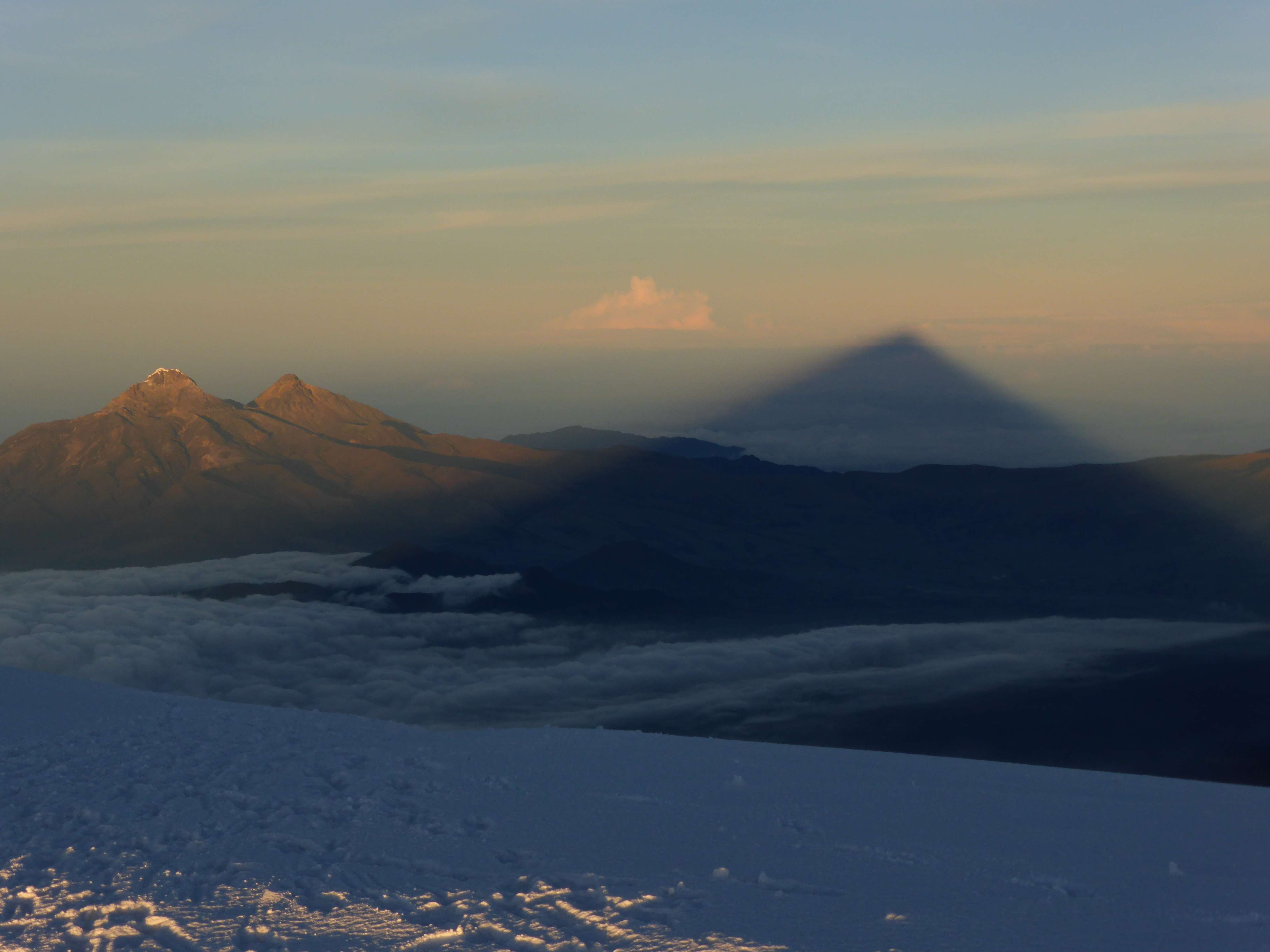
The shadow of Cotopaxi and the two Illinizas.

The shadow of Cotopaxi falling past the two Illinizas.

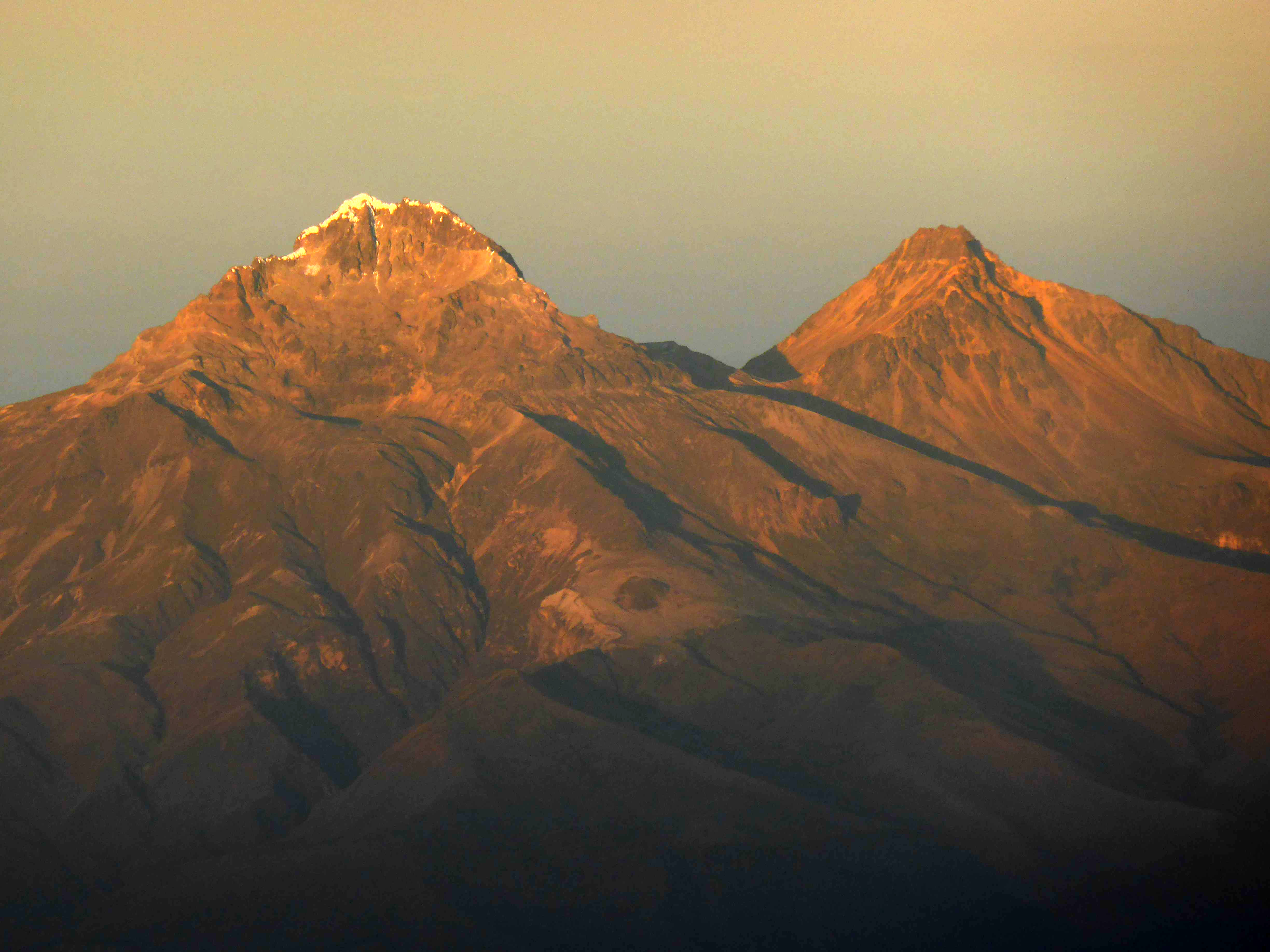
Illiniza Sur, left, and Illiniza Norte, right, from the summit of Cotopaxi at sunrise.

Illiniza Sur, left, and Illiniza Norte, right.

It felt incredible seeing these peaks so clearly and in such radiant light, knowing that I had stood upon them just days before, or would be attempting to climb them within the next week.

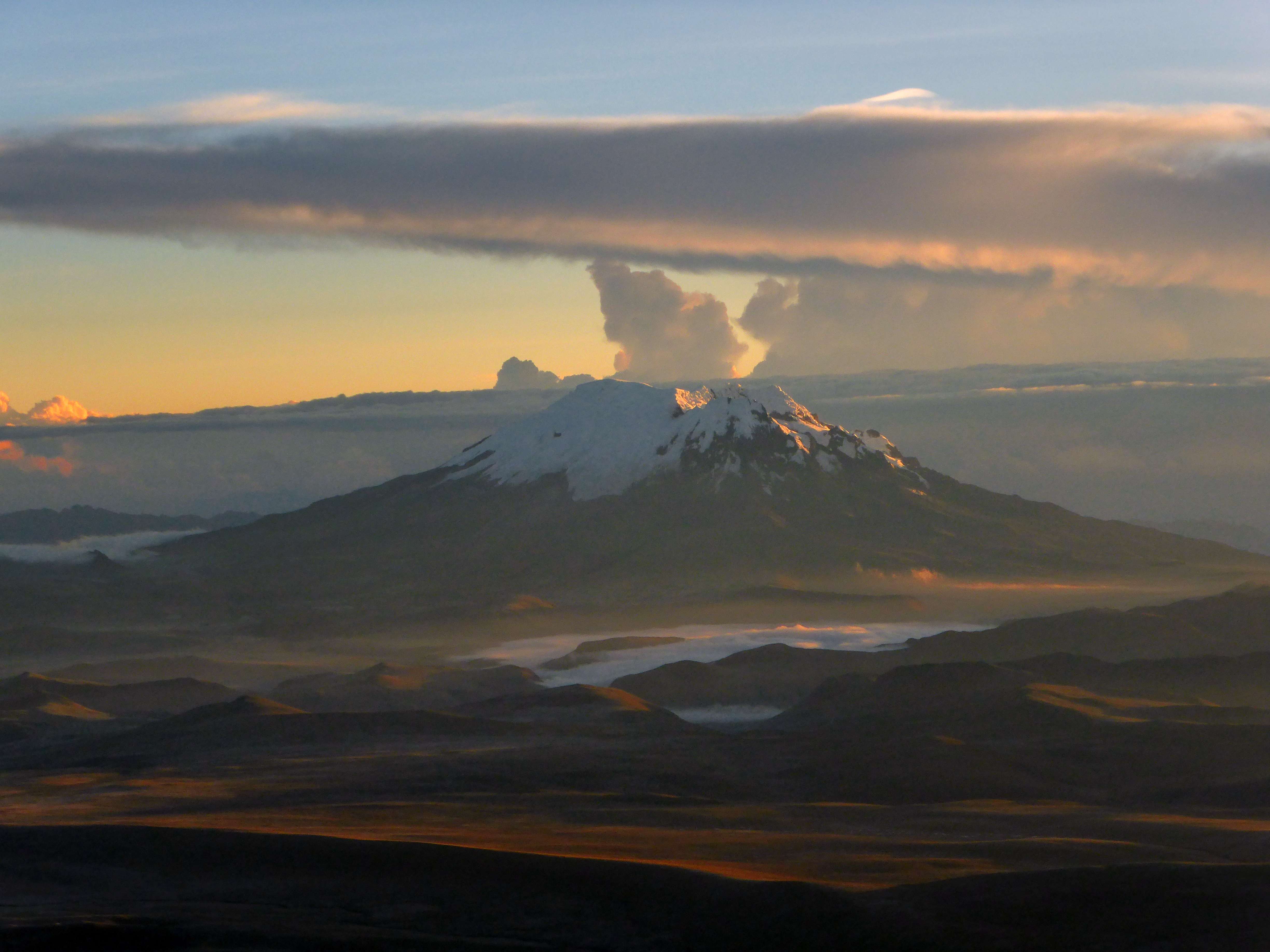
Antisana.

Antisana.

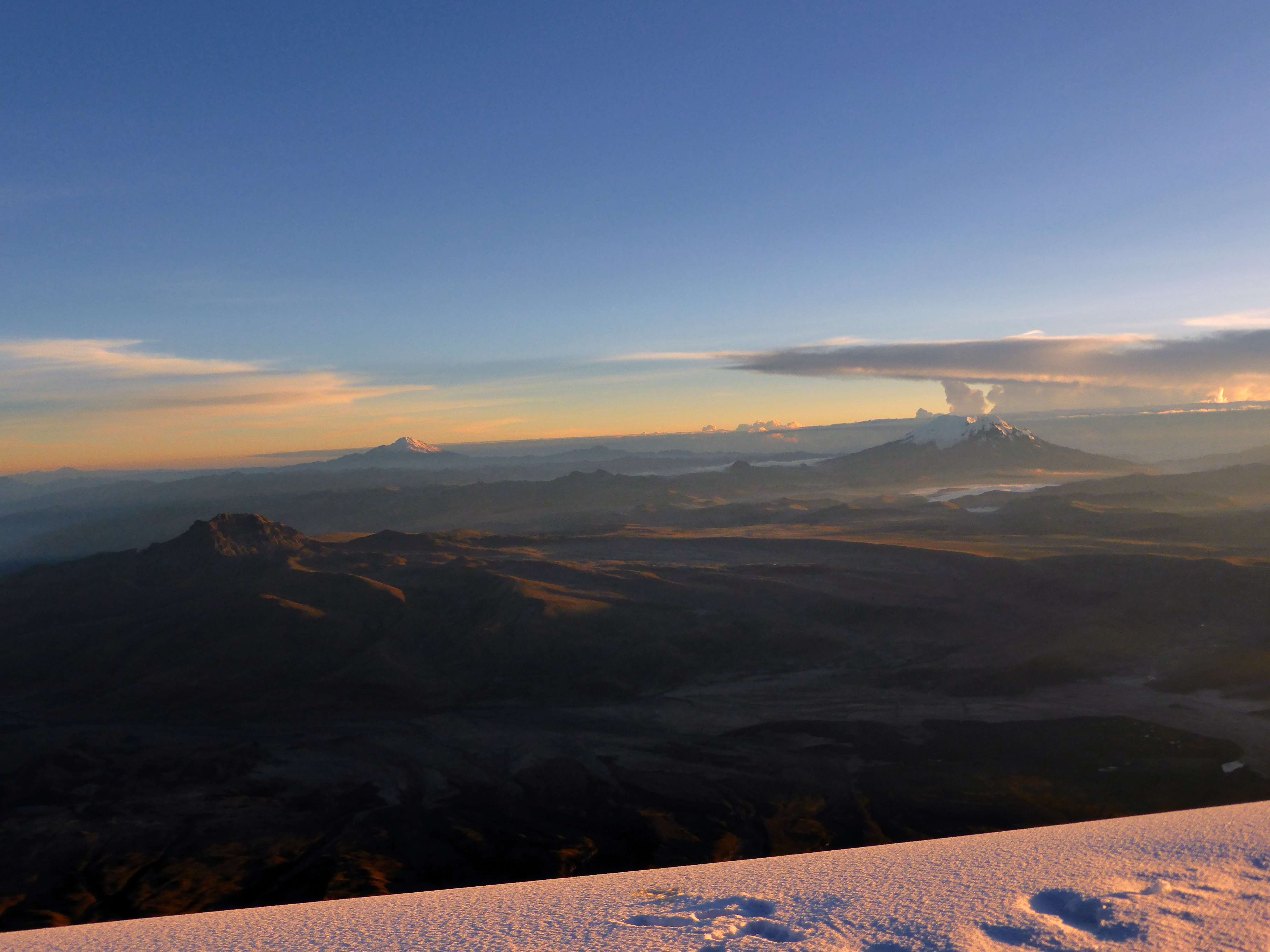
A landscape of volcanoes, Cayambe center, Antisana right.

A landscape of volcanoes, Cayambe center, Antisana right.

Far across the landscape 6310m Chimborazo lay upon a blanket of clouds, Ecuador’s highest mountain.

Chimborazo.

Chimborazo.

Cotopaxi’s summit is a high-point along the mountain’s volcanic crater rim, and has excellent views into the crater itself.

Cotopaxi's crater.

Cotopaxi’s crater.

During sunrise a team of four friendly Belgians arrived to join us on the summit.  We had chatted briefly on the way up, and learned that one of them was celebrating his birthday with their climb.  We helped each other take photos, enjoying the beautiful summit and sunrise.

The Belgian team taking shelter from the wind.

The Belgian team taking shelter from the wind.

On the summit of Cotopaxi.

On the summit of Cotopaxi.

On the summit with Pato.

On the summit with Pato.

After spending some thirty minutes taking in the scenery and persevering through the bitter wind, we were too cold to continue standing around and decided to begin descending.

Descending from the summit, a sea of clouds below us.

Descending from the summit with clouds far below us.

On the way down we passed numerous other teams still ascending.  In daylight the crevasse riddled off-route glacier could be seen.

As we descended we met other teams still climbing up.

As we descended we met other teams still climbing up.

The glacier was heavily crevassed off route.

The glacier, heavily crevassed off-route.

Ice walls and hidden crevasses.

Ice walls stood along the upper mountain.

We passed Yanasacha, a prominent rock band near Cotopaxi’s summit, and stopped to absorb the scale of the mountain.  Yanasacha is easily seen from a distance, and looks small atop Cotopaxi’s bulk, but up close it stood tall and massive.

Yanasacha at sunrise.

Yanasacha in the morning sun.

Looking back up the route I could see other teams ascending and the Belgian team coming down, like lines of ants in the snow.

The top and crux of the route.  This image provides a good sense of scale to the sheer size of Cotopaxi.  Yanasacha is at center left.  Zoom into this photo to see the Belgian team of four descending, and four other teams still ascending.

The top of the route. This image provides a good sense of scale as to the size of Cotopaxi. Yanasacha is at center left. When this photo is enlarged one can see the Belgian team of four descending, and another four separate teams still ascending.

Cotopaxi - Yanasacha is the prominent rock band near the summit.

Cotopaxi – Yanasacha is the  black rock band near the summit.

We made good time descending, and were off of the glacier before the morning sun began to melt and soften the snow.  Near the refuge we followed the dirt trail downwards, towards the parking area still far below us.

View from near the refuge.  The Illinizas to the left, Corazon to the right.

View from above the refuge. The Illinizas to the left, Corazon to the right.

View from above the refuge.  The parking lot center, the refuge bottom right.

View from above the refuge. The parking area center, the refuge bottom right.

We made it back to our campsite by 9:00 a.m., where we quickly ate some snacks before packing up our equipment and driving back to Machachi for a day of rest.  Cotopaxi was a straightforward climb and an enjoyable experience.  Clear skies and perfect snow made frigid winds more tolerable, and the extraordinary views from the summit were both breathtaking and rewarding.  Well acclimatized, I felt great throughout the climb, and didn’t encounter any altitude related difficulties.

Accessibility

Cotopaxi is perhaps Ecuador’s most accessible mountain, due to its proximity to Quito, good nearby road infrastructure, and enormous tourist popularity. Climbing Cotopaxi involves glacier travel – the route was simple during my visit, but I was told that it varies somewhat in difficulty as conditions on the glacier change year-by-year.

While in Ecuador I stayed in the city of Machachi between climbs, which provided me convenient access to Corazon, Cotopaxi, and the Illinizas.  The hostel I used in Machachi, the Puerta al Corazon, was comfortable, well managed, very clean, and had great food.  They can be contacted by email at info@puertaalcorazon.com

Ecuador’s high mountains can be climbed year round, but weather is often inclement with high winds and heavy precipitation. December, January, and February are considered the most stable months for climbing due to lower winds and relatively lower chances of rain and snow. That said, I experienced relentlessly high winds on Cotopaxi, which made for a cold hike.  The Ecuadorian climbers I met told me that June, July, and August are also popular climbing months, drier but even windier. During my trip fog and rain were common in the afternoons, while morning and night weather was typically clear but windy.

Since late 2012 the Ecuadorian government has mandated that all climbers use the services of a local mountain guide.  This policy was put into place in response to a fatal accident on Illiniza Sur.  While in Ecuador I met one unguided group – the four Belgians on Cotopaxi – who had managed to get past the park gate and onto the mountain, but this is strongly discouraged, and the national parks strictly enforce the policy by refusing entry to unguided climbers whom they catch.  I hired a 1:1 mountain guide and climbed with him throughout my trip.  We accessed all of the national parks via a 4×4 truck, which my guide drove and owned.  While organizing the logistics and guide for my trip I used the services of Diego Cumbajin Parra, the owner of www.andesclimbing.com, and I would strongly recommend him for his excellent communication, attention to detail, personal presence, and reasonable pricing.  My guide Pato was strong, very familiar with all of Ecuador’s mountains, and completely focused on climbing.
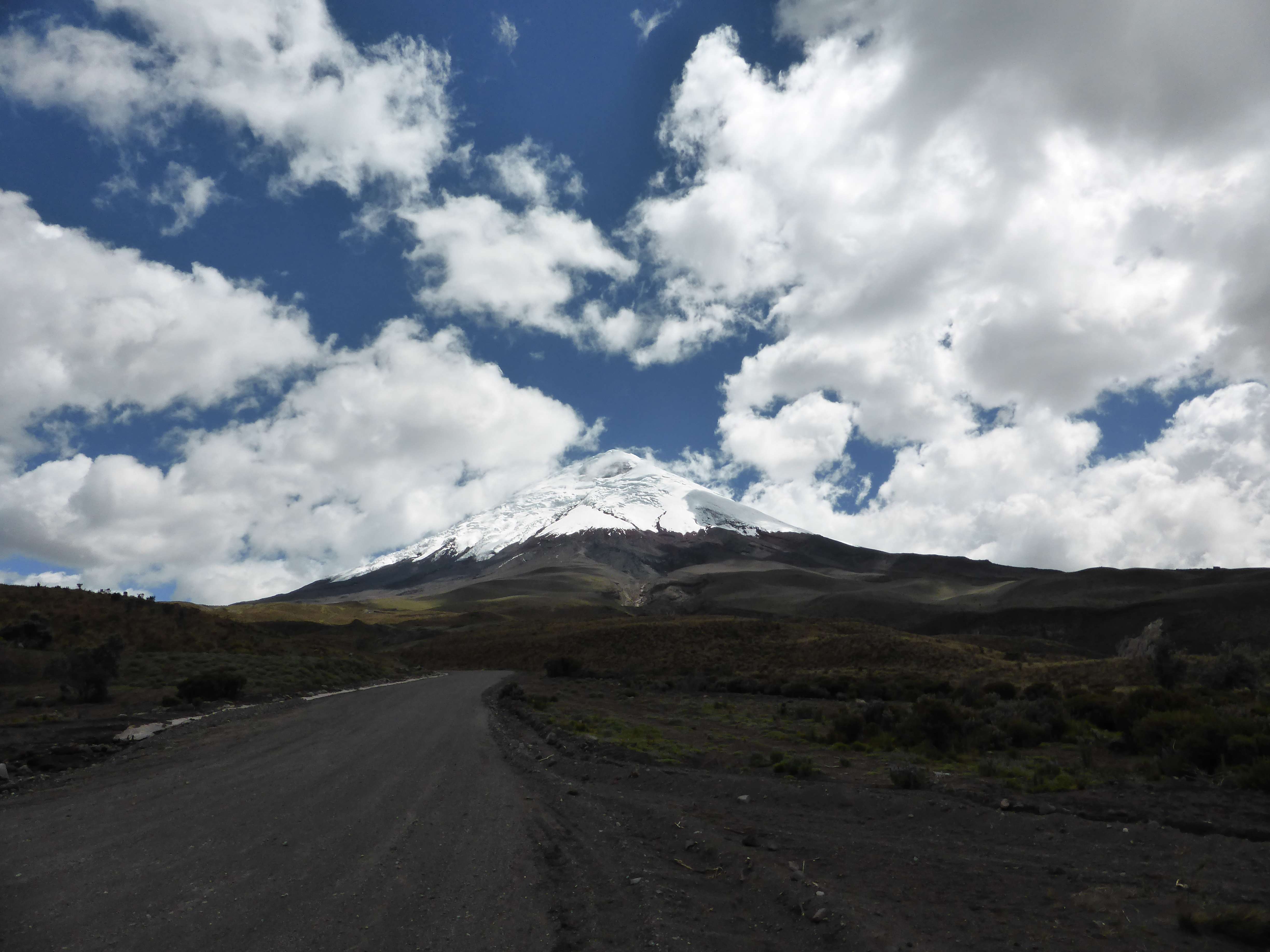
Cayambe – January 2014

...

Cayambe, seen from the summit of Cotopaxi at sunrise.

5790m Cayambe is Ecuador’s 3rd highest mountain.  A massive extinct volcano, Cayambe is known for its active glacier and inclement, windy weather.  Interestingly, part of Cayambe is located on the earth’s equator, making it the highest point through which the equator directly passes.  The eruptions of Reventador, a nearby volcano with high activity, and the subsequent ashfall onto Cayambe’s glacier, have given Cayambe a reputation for being icy and out of condition.

...

Cayambe, from near the refuge.

I climbed Cayambe on my eighth day in Ecuador.  Prior to climbing Cayambe I had hiked 4791m Corazon, climbed both of the 5000+m Illiniza volcanoes, and spent several nights sleeping at 4700m.  A week spent hiking at altitude before visiting Cayambe made for great acclimatization, no altitude-related issues, and a far more enjoyable climb.  My acclimatization and climbing itinerary can be seen here.

...

Ash on the lower glacier.

Day 1: The climb began at my hostel in Machachi, where my Ecuadorian climbing partner and mountain guide Pato picked me up in his 4×4 truck.  While Machachi is not particularly close to Cayambe, I was very pleased with the hostel there and had opted to stay rather than move for one night.  Machachi’s proximity to the Illiniza and Cotopaxi national parks makes it a popular base area for visiting climbers, and its location is close enough to all of Ecuador’s major peaks for one to stay there prior to other climbs.  From Machachi we drove for roughly two hours to the town of Cayambe, stopping for food and drinks along the way.  From the town of Cayambe we drove east, towards the Cayambe Coca Ecological Reserve which contains the mountain.  From town the road followed rolling hills alongside deep valleys, brimming with trees and plant life.  The area near the reserve is very rural, and we passed many farms and pastures built along the valley walls.

...

Driving to the base of Cayambe, through the rural area east of the town of Cayambe.

At the end of a rough road we arrived at the base of Cayambe and parked by the mountain cabin, or refuge, where we would spend the night.  At an elevation of 4600m the refuge is a convenient resting place to base a climb out of.  The main refuge building was under construction, but a smaller building to the right of it was open. It cost around $20 for the two of us to stay for the night.

...

The Cayambe refuge.  The larger building to the left was being renovated, but we were able to stay inside the smaller building beside it.

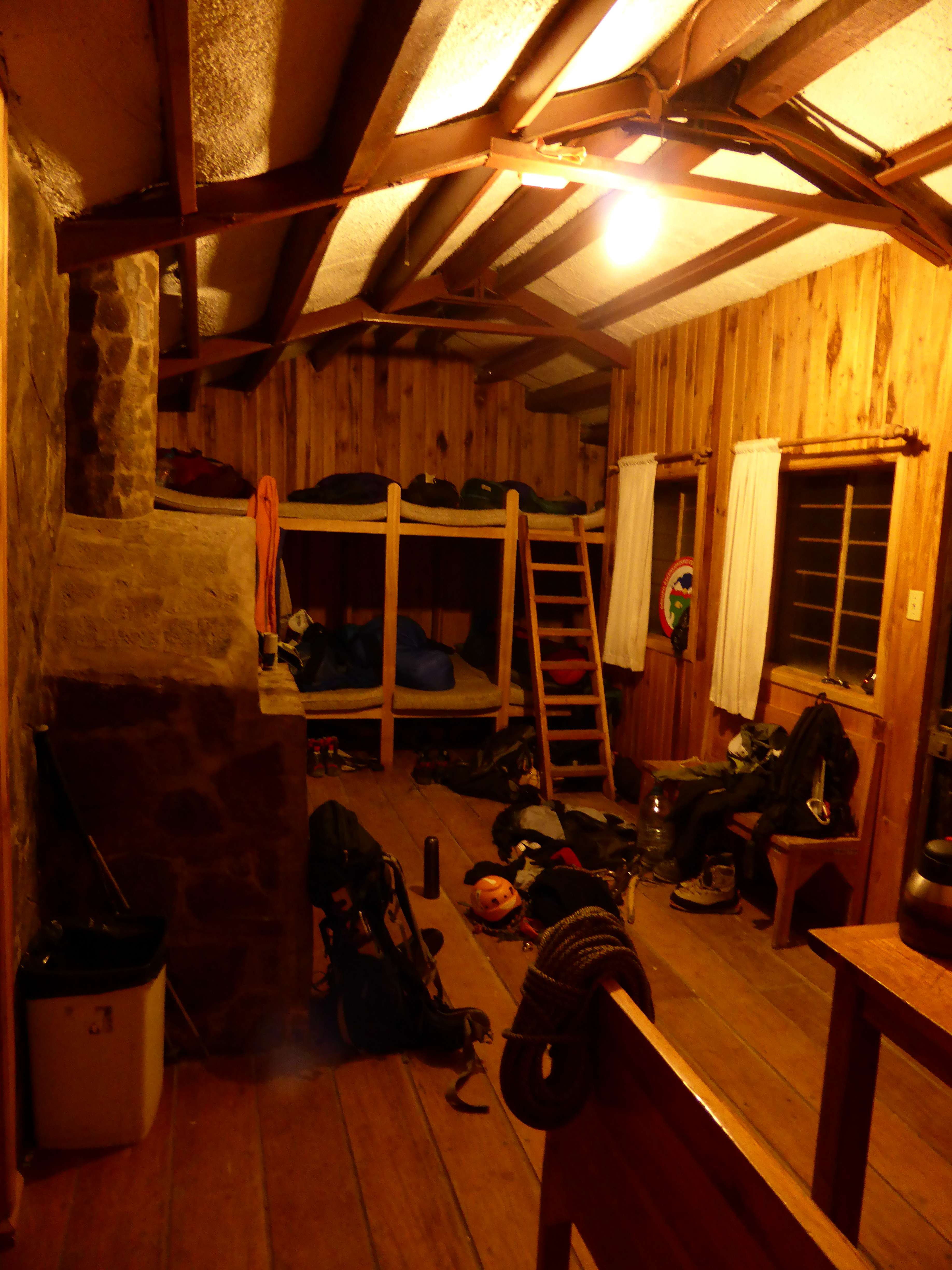
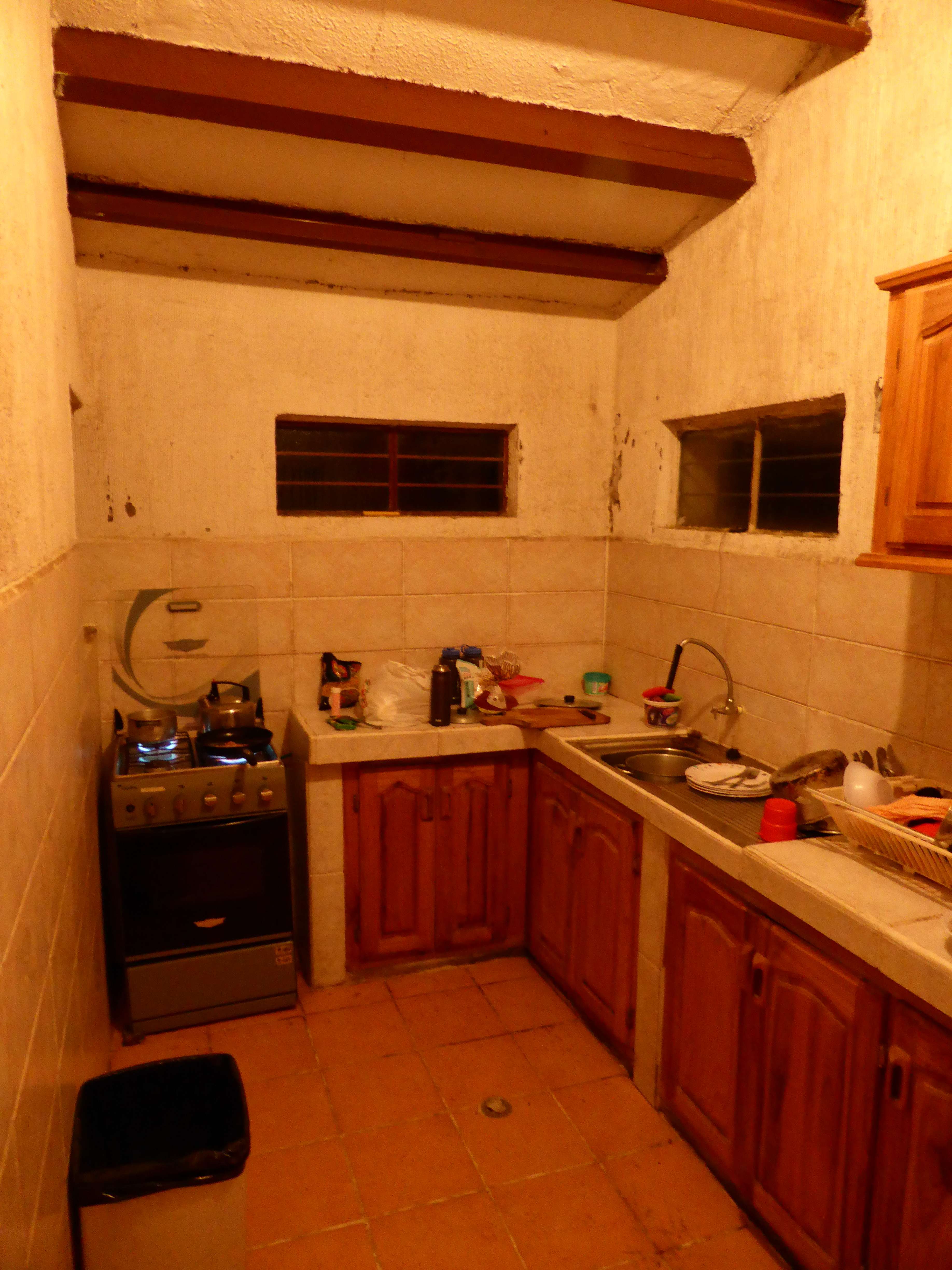
The refuge was small but comfortable, with a kitchen, running water, a little gas stove and padded bunks.  Luxurious compared to camping!  A pair of Austrian climbers and their guides had descended earlier in the day, but had opted to spend another night sleeping here for acclimatization.  They shared good news, and told us that the glacier was in great condition.

...

Inside the Cayambe refuge.

After cooking some food and organizing gear for the next day, we went to sleep early.

....

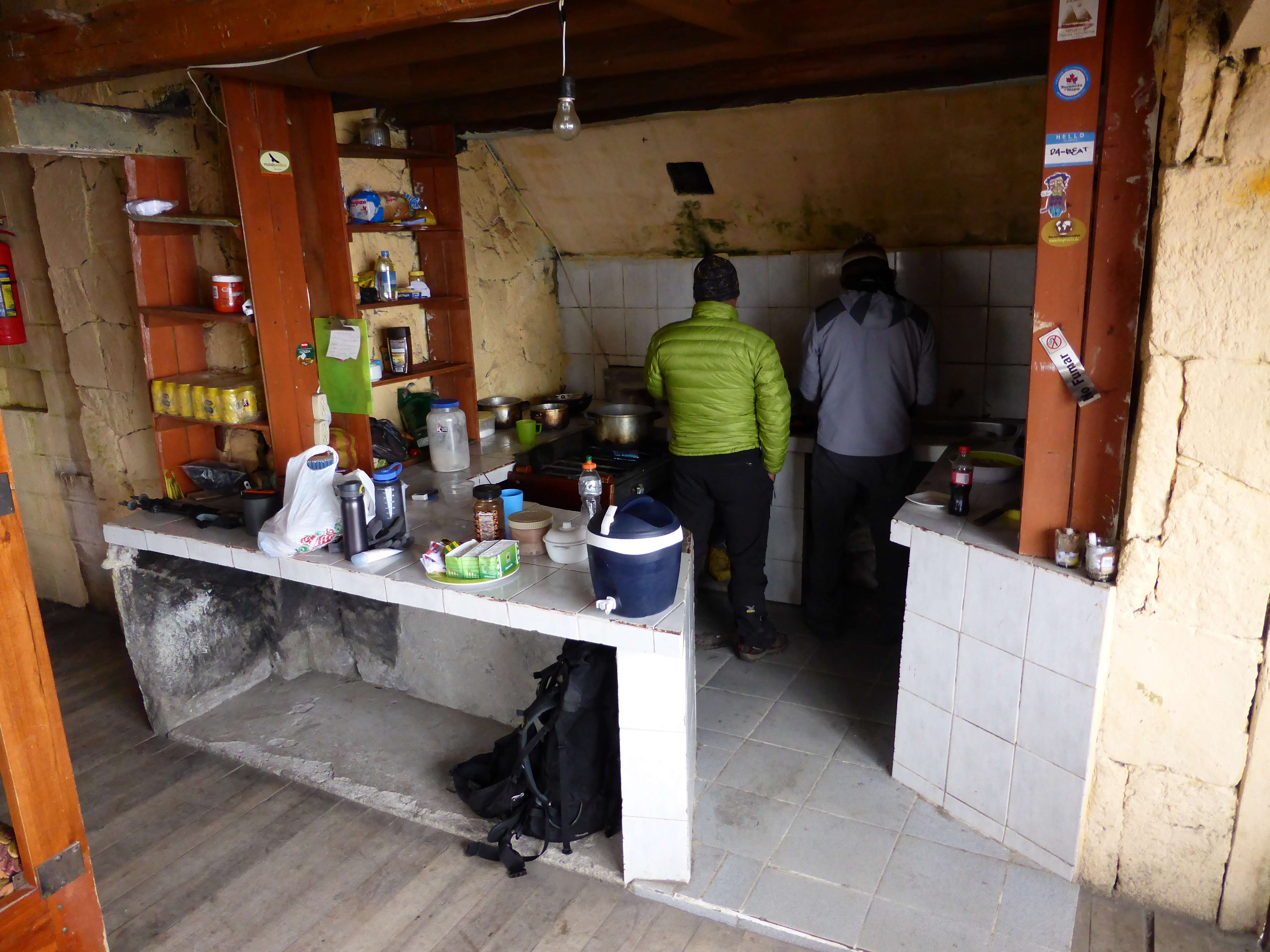
The refuge’s kitchen.

Day 2: Awake around midnight, we began hiking in the dark at one o’clock a.m.  The sky was clear of clouds, and stars glowed brightly above us.  The standard route on Cayambe begins by following a ridge of dry rock located to the left of the refuge when facing the mountain.  This ridge leads up, around, and onto the glacier, bypassing the complicated icefall of the lower mountain.

....

Descending back along the rock ridge used to reach the glacier.

From the top of the ridge the glacier was level with the rock and easily accessed.  Once we reached the lower glacier we began to navigate upwards, crossing several crevasses and avoiding others, towards a rocky outcrop called Picos Jarrin.  The lowest portion of the glacier was covered in debris, and was riddled with shallow half-meter deep cracks.

Our route past the rocky ridge, climbing to the left of Picos Jarrin to avoid crevasses.

Our route above the ridge, climbing to the left of Picos Jarrin to avoid crevasses.

...

The glacier near the ridge was covered in rock debris and shallow crevasses.

Above Picos Jarrin a series of snow ramps wound past vertical ice cliffs towards the summit, keeping to the climber’s right of a large, prominent rock cliff.

...

Looking up Cayambe during our descent in daylight.  The prominent rock cliff in the top left corner serves as a useful  landmark, as the route ascends just to the climber’s right of it.

...

The rock cliff off route.

The climbing was physical and sustained, but enjoyable under a clear sky and on perfect snow.  Aside from two short traverses the ramps on the upper glacier were roughly 40 degrees at minimum. At its steepest the route sharpened to around 60 degrees for a few stretches of 10-15 meters, requiring front pointing and careful ax placement.  Because of the snow conditions we did not place any pickets for fall protection, although the final ramps to the summit were not without objective hazard due to the enormous ice walls hanging above them.

...

Huge ice walls loomed above the upper route.

...

One of two level traverses below the ice cliffs.

As we approached the top the sun began to rise.  Our timing had been perfect, and we gained the summit at exactly six o’clock a.m., five hours after leaving the refuge.  Cayambe’s summit is a large flat dome and was exposed, windy, and bitterly cold.  In the distant east an enormous thunderstorm flashed with lightning, the sun rising behind it painting the sky to create a surreal, awe-inspiring view.

...

Sunrise on the summit of Cayambe.

...

Thunderclouds to the east.

...

Standing on the summit of Cayambe.

Antisana, Ecuador’s fourth highest, rose above the clouds and glowed purple in the rising sun.

...

Antisana, from the summit of Cayambe at sunrise.

As the sun rose above the thunderclouds the colors shifted from shades of purple, to orange, to a familiar yellow glow.

...

Sunrise on the summit of Cayambe.

...

Sunrise on the summit of Cayambe.

...

Sunrise on the summit of Cayambe.

As the sun finally broke above the clouds, soft pastel colors glowed throughout the cloud ocean stretching below us.

...

Sunrise on the summit of Cayambe.

...

Sunrise on the summit of Cayambe.

...

Sunrise on the summit of Cayambe.

After almost forty minutes on the summit, we began to descend.  We were lucky to enjoy perfect, firm snow, allowing us to move quickly and without difficulty.  On the way down we encountered a team of two other climbers who were still heading up.

...

Looking down Cayambe.  As we descended another team was climbing upwards.

The below image depicts the crux of the route, the top section below the summit, as seen during our descent in daylight. When the photograph is enlarged the other climbing team can be seen ascending, giving a sense of scale to the terrain.

...

Looking back up the route. Several massive ice walls stand above the steep ramps which lead to the summit. The other climbing team is still ascending, giving scale to the terrain when the image is enlarged.

...

Looking down the glacier.

The temperature rapidly warmed up as we descended, and we stopped several times to shed layers.

...

Looking across the lower glacier.

Finally we reached the base of the glacier, where we regained the rock ridge which we had hiked in the dark.  In daylight the lower glacier was particularly impressive, with layers of volcanic ash visible where the glacier had cleaved.

...

The snout of the glacier, layers of ash visible in the ice.

A level area near a small lake on the top of the ridge would have made an excellent location for camping.

...

A small lake on top of the ridge.

After an easy descent we reached the refuge at around nine o’clock, where we had a quick snack before packing up our equipment and driving back to Machachi.  Our plan for the next day involved driving to Cotopaxi National Park where we would begin an attempt on Cotopaxi at around midnight, so we were both eager to get some rest!

CayambeORange

Cayambe under a color changing sky.

Cayambe was an interesting and rewarding climb.  The terrain higher up the glacier felt steeper, physically more rigorous, and much more sustained than that of Cotopaxi a few days later.  The sunrise on the summit was a rare, unforgettably beautiful event.  Cayambe’s glacier is known for its activity and the numerous crevasses on route.  Navigating the lower glacier in the dark with my climbing partner and mountain guide Pato was good practice and a great experience.  If I were to return to Ecuador, I would absolutely make a point of revisiting Cayambe.

Accessibility

Cayambe is fairly accessible, although slightly less so than Ecuador’s more popular mountains. The town of Cayambe is only an hour’s drive from Quito, but the mountain refuge must be accessed via a rough road requiring the use of a 4×4 truck. Climbing Cayambe involves moderate glacier travel, and thus some prior experience with cramponing and ice ax self-arrest.

While in Ecuador I stayed in the city of Machachi between climbs, which provided me convenient access to Corazon, Cotopaxi, and the Illinizas.  Machachi is not really an ideal spot for access to Cayambe, as it is further south and adds an hour to the drive over Quito, but since we planned to climb Cotopaxi after Cayambe, storing extra luggage and food in Machachi made logistical sense. The hostel I used in Machachi, the Puerta al Corazon, was comfortable, well managed, very clean, and had great food – well worth the extra hour’s drive.  They can be contacted by email at info@puertaalcorazon.com

Ecuador’s high mountains can be climbed year round, but weather is often inclement with high winds and heavy precipitation. December, January, and February are considered the most stable months for climbing due to lower winds and relatively lower chances of rain and snow. The Ecuadorian climbers I met told me that June, July, and August are also popular climbing months, drier but very windy. During my trip fog and rain were common in the afternoons, while morning and night weather was typically clear but windy.

Since late 2012 the Ecuadorian government has mandated that all climbers use the services of a local mountain guide.  This policy was put into place in response to a fatal accident on Illiniza Sur.  While in Ecuador I met one unguided group who had snuck onto the mountain, but this is discouraged, and the national parks enforce the policy by refusing entry to unguided climbers.  I hired a 1:1 mountain guide and climbed with him throughout my trip.  We accessed all of the national parks via a 4×4 truck, which my guide drove and owned.  While organizing the logistics and guide for my trip I used the services of Diego Cumbajin Parra, the owner of www.andesclimbing.com, and I would strongly recommend him for his excellent communication, attention to detail, personal presence, and reasonable pricing.  My guide Pato was strong, very familiar with all of Ecuador’s mountains, and completely focused on climbing.
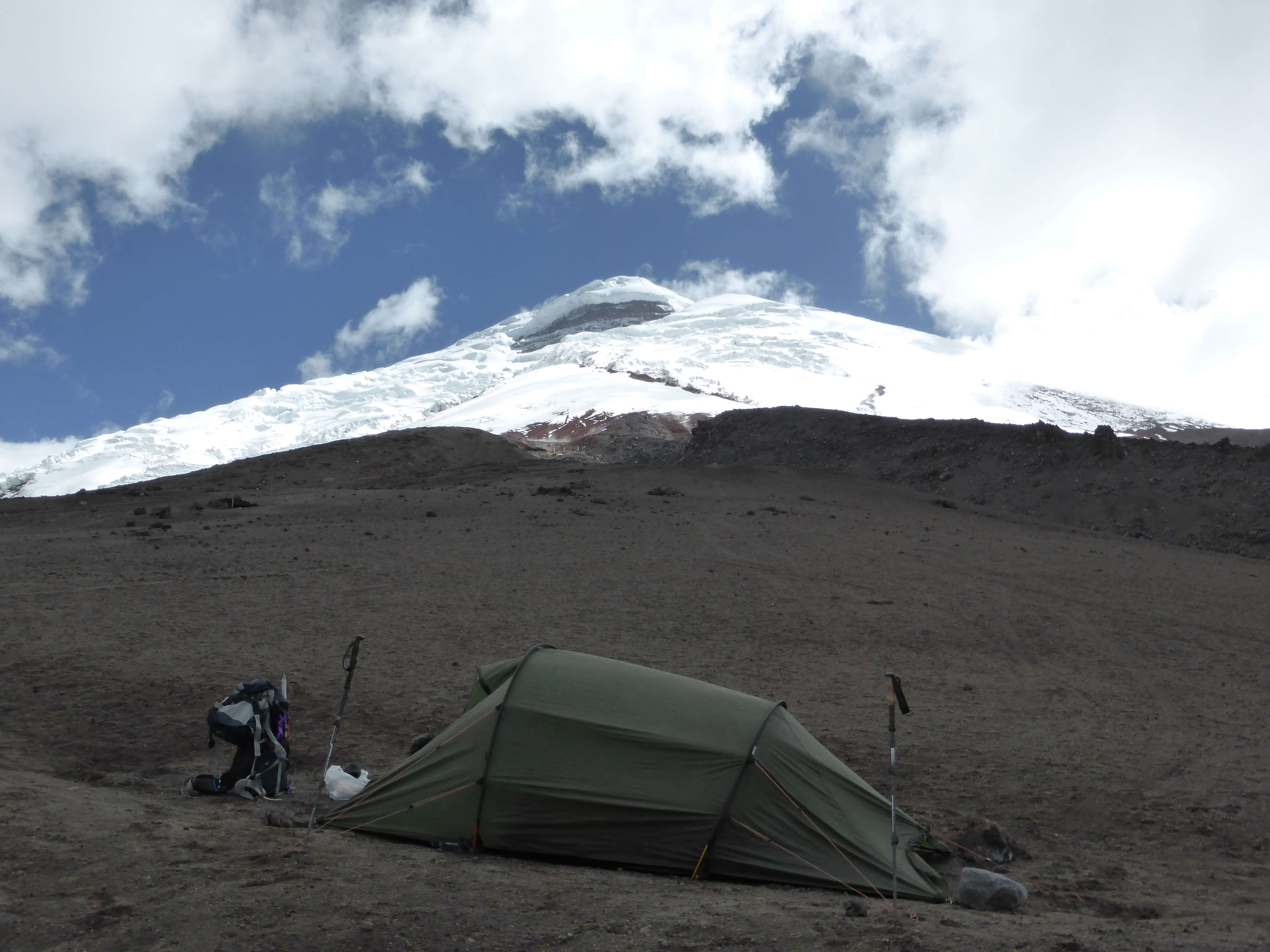
Illiniza Sur – January 2014

Illiniza Sur, left, and Illiniza Norte, right, as seen from near the summit of Corazon.

Illiniza Sur, left, and Illiniza Norte, right, as seen from near the summit of Corazon.

5263m Illiniza Sur is Ecuador’s 6th highest peak, and considered one of its more technically challenging.  Illiniza Sur is so named as the southern of the two Illinizas, a pair of volcanic mountains located in the Reserva ecologica Los Ilinizas national park south-west of Quito near the city of Machachi. Unlike its northern counterpart Illiniza Norte which can be climbed via a ridge scramble, Illiniza Sur is glaciated and a technical, if relatively straightforward, climb.  For its steep and direct route Illiniza Sur was one of my two main climbing goals in Ecuador, the other being 6310m Chimborazo.

Illiniza Sur, left, and Illiniza Norte, right, from the summit of Cotopaxi at sunrise.

Illiniza Sur, left, and Illiniza Norte, right, from the summit of Cotopaxi at sunrise.

I climbed Illiniza Sur on my 5th day in Ecuador after spending several days acclimatizing.  I had hiked 4791m Corazon two days prior, climbed 5126m Illiniza Norte the day before, and had spent two nights sleeping in the Illiniza mountain refuge at ~4700m before my climb.   I was fairly well acclimatized by the start of the climb, but having arrived in Ecuador from near sea level was still feeling the weight of altitude. My acclimatization and climbing itinerary can be seen here.

...

The Illiniza refuge.

My climb began from the Illiniza refuge, a mountain hut located at 4700m near the saddle between Illiniza Norte and Illiniza Sur.  The refuge is reached via a straightforward and moderately sloped hike, and its presence makes accessing the Illinizas incredibly convenient.  The hut is managed by a permanent guardian who watches climber’s gear, provides hot water, and prepares hot food for a moderate fee.  Staying in the hut for three days and two nights cost my guide and I around $70 USD, including food.  The hut’s altitude and accessibility contribute to the popularity of the Illinizas as preparatory acclimatization climbs for Ecuador’s higher mountains.

My Ecuadorian climbing partner and mountain guide Pato and I left the hut and began hiking across the saddle at 4:00 a.m, each carrying two snow pickets and a pair of ice axes in addition to our light summit packs.  We were the only two climbers on the Illinizas this day.  The weather was wet and cold, lightly raining and windy.  Roughly 40 minutes after leaving the cabin, we reached the base of the steep rock gulley used to access the glacier and the normal climbing route.  The hike to the gully was cairned, and relatively worn from use, but high humidity made visibility low.  The gully itself was steep, iced over in areas, and slippery wet from the humidity.  The hike to the bottom of the gully and the gully itself represent the only real route finding on Illiniza Sur’s normal route, as the remaining climbing directly follows the line of the glacier.  As we reached the top of the gully the rain stopped, and the clouds slowly began to thin.

Past the gully we gained the glacier and the route upwards.  The normal route follows a direct series of snow ramps, the lowest of which we immediately began climbing.  The snow was in superb condition; not in the slightest bit icy, but firm, crisp, and supportive.  The lower quarter of the glacier was moderately sloped, but quickly became steep as we ascended.  As we climbed the cloud cover began to clear in patches, giving us a better look at the route ahead and the terrain around us.

After some twenty minutes of cramponing the snow became steep enough to place our first picket.  I climbed the next three pitches on Pato’s belay, a series of ramps taking us across a pair of well covered and easily avoided crevasses.  The snow quality made climbing feel secure on the steep ramps, which were never less than 45 degrees and around 65 degrees at their sharpest.  An unprotected fall higher up on Illiniza Sur would be a frightening prospect, with no terrain features to prevent a slide all the way to the glacier’s base.  Despite trying to pace carefully, the altitude and steep grade combined made the climbing feel very tiring.

.....

Looking down the steep ramps.

With the angle tapering off slightly near the top, Pato and I simultaneously climbed the final two pitches to the summit. Curving left around a rock outcropping, we continued to rely on snow pickets for fall protection.  We reached the summit at 6:30 a.m., two and a half hours after leaving the refuge.

...

Looking back up the final, less sharply angled pitches near the summit.

...

The summit of Illiniza Sur.

Happy to be at the top, we took a break to rest and rehydrate.  As the sun rose behind us, a beautiful ‘Buddha’s Halo’ rainbow circled our shadows in the clouds.

...

Buddha’s Halo in the clouds.

...

Pato on the summit of Illiniza Sur.

...

On the summit of Illiniza Sur.

After a good fifteen minute break, and no sign of the clouds clearing to give us any real views, we began to descend.  With such fantastic snow conditions we didn’t need to face into the mountain and downclimb, allowing us to make good time.

...

Crossing the second crevasse.  The two crevasses on route were well filled in with snow.

...

Looking across the glacier.

My climbing partner and mountain guide Pato.

My climbing partner and mountain guide Pato.

As clouds blew past us, Illiniza Norte occasionally appeared across the saddle.

IllinizaSur03

Illiniza Norte across the saddle.

...

Occasional views through the clouds.

.....

The first, and largest, of the crevasses on the glacier.

When we reached the rock gully I rappelled down off of an old piece of thick webbing tied around a boulder, avoiding the slippery rock.  Aside from this the descent was fast and clean on such firm snow, with no need to rappel even the steepest of the pitches on the glacier.  The hike across the saddle went quickly, and we made it back to the refuge at 8:00 a.m. We quickly ate a hot breakfast in the cabin before packing up our equipment and hiking down the trail to the parking lot.

While a short climb, Illiniza Sur felt challenging and rewarding, with steep snow at altitude posing a good physical test.  The climb was very easy to access due to the mountain cabin, and my three days spent on the Illinizas served as superb acclimatization preparation for climbing more of Ecuador’s higher altitude volcanos.

Accessibility

Illiniza Sur is very accessible, but does involve steep glacier travel requiring prior experience with technical equipment and technique.  A more thorough explanation of the route, with diagrams, can be found on Summitpost: http://www.summitpost.org/illiniza-sur-iliniza-sur/151054.

The Reserva ecologica Los Ilinizas park is within reasonable driving range from Quito, and the mountain cabin makes overnighting comfortable and simple.  Like many climbers choose to do, I stayed in Machachi between climbs, providing me convenient access to Corazon and Cotopaxi in addition to the Illinizas.  The hostel I used in Machachi, the Puerta al Corazon, was comfortable, well managed, very clean, and had great food.  They can be contacted by email at info@puertaalcorazon.com

Ecuador’s high mountains can be climbed year round, but weather is often inclement with high winds and heavy precipitation. December, January, and February are considered the most stable months for climbing due to lower winds and relatively lower chances of rain and snow. The Ecuadorian climbers I met told me that June, July, and August are also popular climbing months, drier but very windy. During my trip fog and rain were common in the afternoons, while morning and night weather was typically clear but windy.

Since late 2012 the Ecuadorian government has mandated that all climbers use the services of a local mountain guide.  This policy was put into place in response to a fatal accident on Illiniza Sur.  While in Ecuador I met one unguided group who had snuck onto the mountain, but this is discouraged, and the national parks enforce the policy by refusing entry to unguided climbers.  I hired a 1:1 mountain guide and climbed with him throughout my trip.  We accessed all of the national parks via a 4×4 truck, which my guide drove and owned.  While organizing the logistics and guide for my trip I used the services of Diego Cumbajin Parra, the owner of www.andesclimbing.com, and I would strongly recommend him for his excellent communication, attention to detail, personal presence, and reasonable pricing.  My guide Pato was strong, very familiar with all of Ecuador’s mountains, and completely focused on climbing.
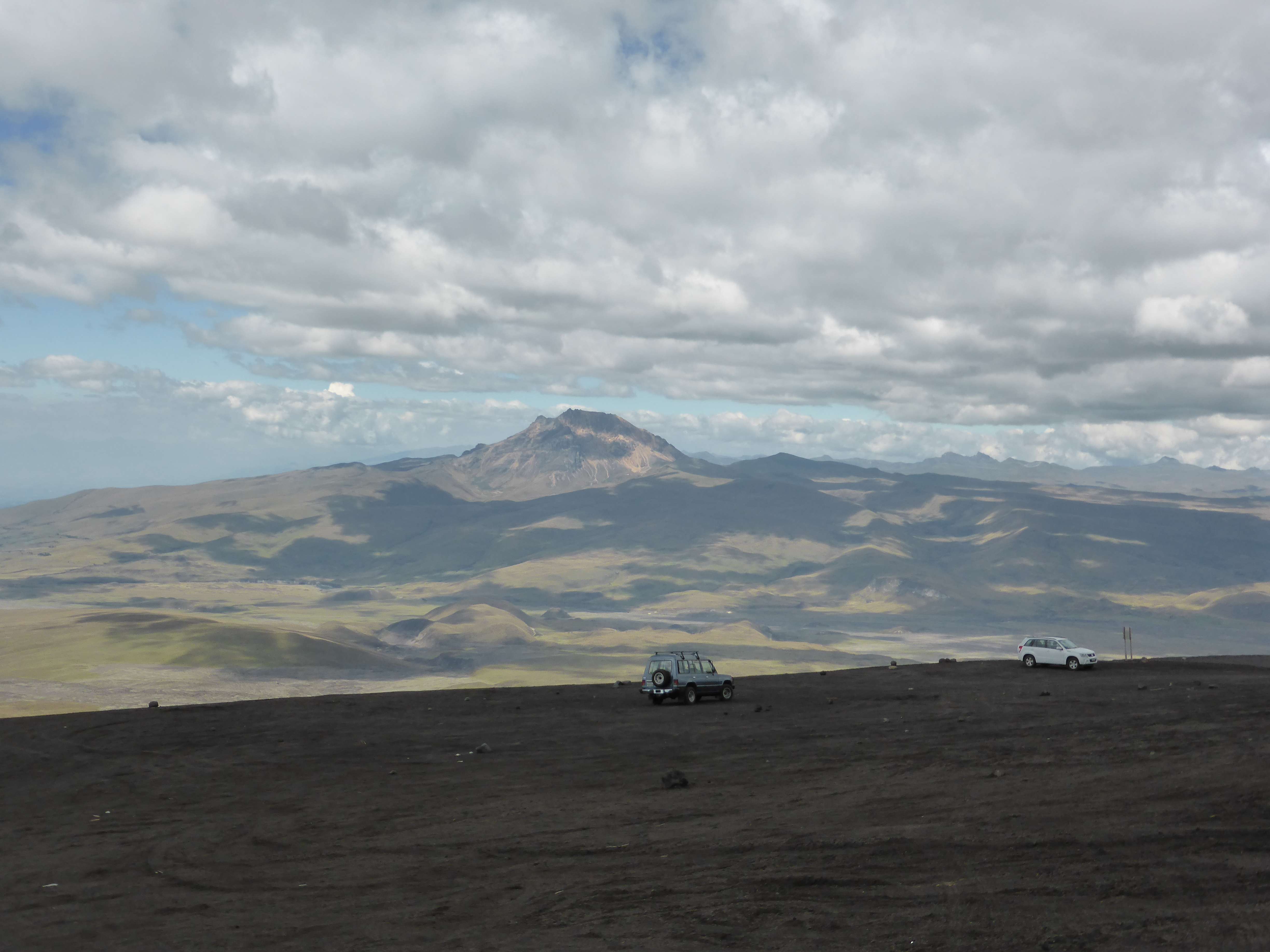
Illiniza Norte – January 2014

...

Illiniza Norte, from the refuge cabin.

5126m Illiniza Norte, the northern of the two Illiniza peaks, is Ecuador’s 8th highest mountain and a popular acclimatization hike.  An extinct volcano, the two Illinizas were once connected, but have long since become separate peaks with distinct characteristics.

...

Illiniza Sur, left, and Illiniza Norte, right, as seen from near the summit of Corazon.

I visited the Illinizas on my third day in Ecuador, one day after hiking the nearby 4791m Corazon volcano.  My acclimatization and climbing itinerary can be seen here. 5263m Illiniza Sur, the slightly higher southern mountain, was one of my main climbing objectives in Ecuador, and Illiniza Norte presented a convenient acclimatization opportunity.  Illiniza Norte turned out to be a thoroughly enjoyable hike in its own right, and well worth the day of travel time which I budgeted for climbing it.

IllinizaNorte035PS

Illiniza Sur, left, and Illiniza Norte, right, from the summit of Cotopaxi at sunrise.

Day 1:  My climb of the Illinizas started at my hostel near the city of Machachi, south of Quito – a popular area for climbers to base out of due to its proximity to numerous 4000+m hiking peaks, as well as both the Cotopaxi and Illiniza national parks.  A short drive from the hostel brought us to the Reserva Ecologica Los Ilinizas national park, where my mountain guide and I registered our names.  We continued from the gate over a rough road to the climber’s parking lot.

...

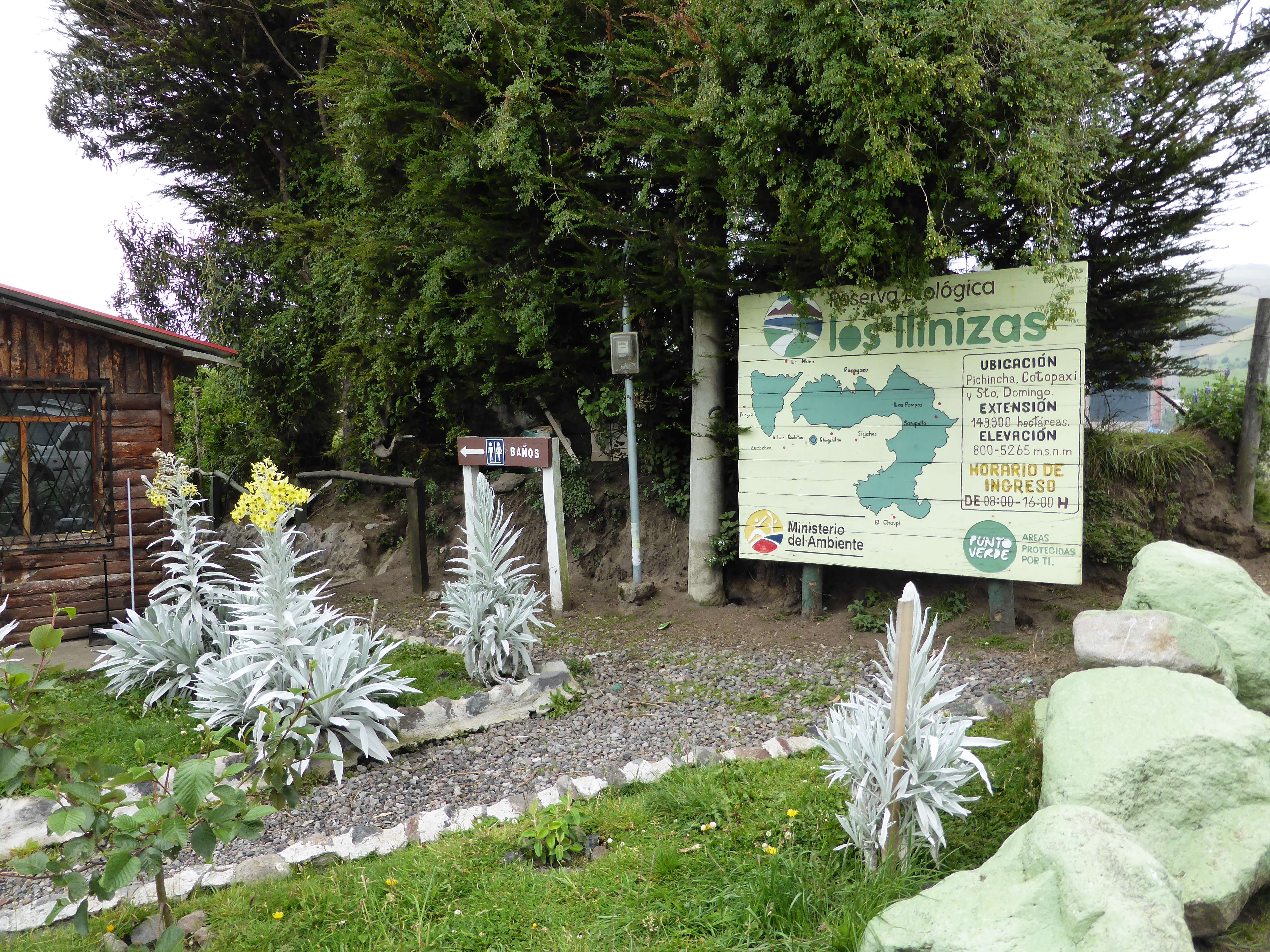
The Reserva ecologica Los Ilinizas park entrance.

Ecuador’s volcanoes are fantastic in their accessibility, and many can be climbed from mountain cabins.  During my visit to Ecuador the cabins at the base of Cotopaxi and Chimborazo were closed for construction, but the cabin, or refuge, situated near the saddle between Illiniza Norte and Illiniza Sur was open for business.

...

The climber’s parking lot and access point for the Illinizas.

The Illiniza refuge can be reached via a clearly signposted and moderately sloped hiking trail from the parking lot at 3950m.  Loaded up with climbing equipment for Illiniza Sur, sleeping gear, food and snacks for three days in the refuge, and carrying my heavy double boots inside of my pack, we began hiking up the trail around noon.  Having recently come from near sea level I found maintaining steady output at 4000m to be quite taxing, so I focused on breathing slowly and steadily while forcing myself to move at a very conservative pace.  The effects of altitude were pronounced, and I could feel quite clearly that I was not yet properly acclimatized.

Looking down the trail towards the parking lot, roughly halfway to the refuge.

Looking down the trail towards the parking lot, roughly halfway to the refuge.

As we moved upwards the weather turned, and blue skies were replaced by clouds and a light rain.  Higher still, cold fog engulfed everything and obscured our views.  This would become a consistent and predictable pattern throughout my stay in Ecuador – clear mornings with weather quickly deteriorating in the early afternoon.  After roughly three hours of hiking we reached the refuge at 4700m.

...

The mountain cabin, just below the saddle between the two Illinizas.

The refuge was basic but comfortable enough, and definitely preferable to camping in the cold humidity waiting outdoors.  Sturdy wooden bunks accommodate climbers and their gear, and thick mattresses provide a soft bed.  The guardian of the refuge, a young man named Freddy who resides there permanently during the climbing season, kept hot water boiling, cooked hot food at mealtimes, and watched everyone’s gear for a nominal fee.  The cost for my mountain guide and I to stay in the refuge for three days ended up being around $70 USD, including food.  Constant access to boiling water compounded the convenience of the cabin, and its location at 4700m makes it an excellent spot for acclimatizing.

...

Inside the Iliniza refuge.

My mountain guide Pato and Fredy the refuge guardian in the cabin's kitchen.

My mountain guide Pato with Freddy the refuge guardian in the cabin’s kitchen.

As evening approached the cloud cover descended and opened up views of Illiniza Norte.  A large group of Polish climbers arrived later in the evening, and would depart again very early the next morning.  Still feeling the effects of altitude, I went to sleep early after some extra hydration, hoping that I would feel better in the morning.

...

Sunset from the Illiniza refuge.

...

Illiniza Norte at sunset.

Day 2: We were up early and on the trail at 7:45.  The beginning of the route was straightforward hiking, first from the refuge, crossing the saddle to the base of the mountain’s southeast ridge, and then following the ridge itself directly upwards.  The large Polish group had left many hours earlier than us, and we wouldn’t encounter them again on the mountain; we had the route all to ourselves.

...

The beginning of the southeast ridge.

Higher up the ridge became steeper, and the route began to involve some exposed scrambling over rough volcanic rock.  Hand and footholds were secure and abundant, making the climbing very enjoyable.

...

Looking across the clouds from Illiniza Norte’s southeast ridge.

I was feeling fantastic in the fresh morning air, and despite a light breeze and some light cloud cover moving past us with the wind, the weather was clear and promising.  The altitude-induced lethargy of the previous day appeared to have lifted, and I was filled with energy.  Climbing unroped we quickly progressed upwards, and scrambling over the rocks with all four hands and feet felt crisp and free.

...

Snow on the ridge.

In two locations the route moved off of the ridge and cut to the climber’s right, down and around a pair of false summits.  These two sections were fairly easy to spot even without my mountain guide Pato’s indication – although the route ahead appeared to continue over the false summits, the turns off of the ridge were worn from usage.  The false summits appeared very climbable, but would have involved a lot more exposure than the normal route which bypasses them.  I have tried to indicate these two sections below.  Stopping only for a short break we made great speed, and soon found ourselves below the final leg of the route, an icy gully leading straight to the summit.

A rough diagram of the route near the top of Illiniza Norte - down and around the two false summits, descending via scree on the mountain's northern slopes.

A rough diagram of the route near the top of Illiniza Norte – ascent down and around two false summits, descent via scree on the mountain’s northern slopes.  Zoomed in, the gullies which one ascends/descends are visible amidst the rock by the dotted lines.

....

Taking a break above the clouds.

...

Looking up the final gully to the main summit.

Past the final gully we reached the top at 8:55 a.m., one hour and ten minutes after leaving the refuge.  The summit, marked by a frozen cross, was windy and cold.

....

The summit cross of Illiniza Norte.

....

On the summit of Illiniza Norte.

Fog blew past us, and periodic windows of clear sky opened to the sea of clouds below us.

...

View from near the summit of Illiniza Norte.

From the summit we descended straight down the north face of the mountain, a steep slope of loose scree.  Descending on the scree was fast and comfortable, and with little route finding involved we found ourselves back at the Illiniza refuge by 9:30 a.m.  The rest of the day was spent resting, eating, and hydrating in preparation for our planned attempt of Illiniza Sur the next morning.

....

Illiniza Norte, from Illiniza Sur at sunrise.

Illiniza Norte was a short but very enjoyable hike.  The scrambling on route was solid and a lot of fun.  Fall exposure in some areas was considerable, but with an abundance of great holds the terrain felt easy enough to climb fast and unroped.  The hike was straightforward to access due to the mountain cabin, which also makes the Illinizas a superb area for acclimatization.

Accessibility

Illiniza Norte is very accessible.  The Reserva Ecologica Los Ilinizas park is within reasonable driving range from Quito, and the mountain cabin makes overnighting comfortable and simple.  Like many climbers choose to do, I stayed in Machachi the night before heading to the refuge, which made the drive much shorter and would later provide convenient access to Corazon and Cotopaxi.  The hostel I used in Machachi, the Puerta al Corazon, was comfortable, well managed, very clean, and had great food.  They can be contacted by email at info@puertaalcorazon.com

Ecuador’s high mountains can be climbed year round, but weather is often inclement with high winds and heavy precipitation. December, January, and February are considered the most stable months for climbing due to lower winds and relatively lower chances of rain and snow. The Ecuadorian climbers I met told me that June, July, and August are also popular climbing months, drier but very windy. During my trip fog and rain were common in the afternoons, while morning and night weather was typically clear but windy.

Since late 2012 the Ecuadorian government has mandated that all climbers use the services of a local mountain guide.  This policy was put into place in response to a fatal accident on Illiniza Sur.  While in Ecuador I met one unguided group who had snuck onto the mountain, but this is discouraged, and the national parks enforce the policy by refusing entry to unguided climbers.  I hired a 1:1 mountain guide and climbed with him throughout my trip.  We accessed all of the national parks via a 4×4 truck, which my guide drove and owned.  While organizing the logistics and guide for my trip I used the services of Diego Cumbajin Parra, the owner of www.andesclimbing.com, and I would strongly recommend him for his excellent communication, attention to detail, personal presence, and reasonable pricing.  My guide Pato was strong, very familiar with all of Ecuador’s mountains, and completely focused on climbing.

Mount Goode – June 2013

...

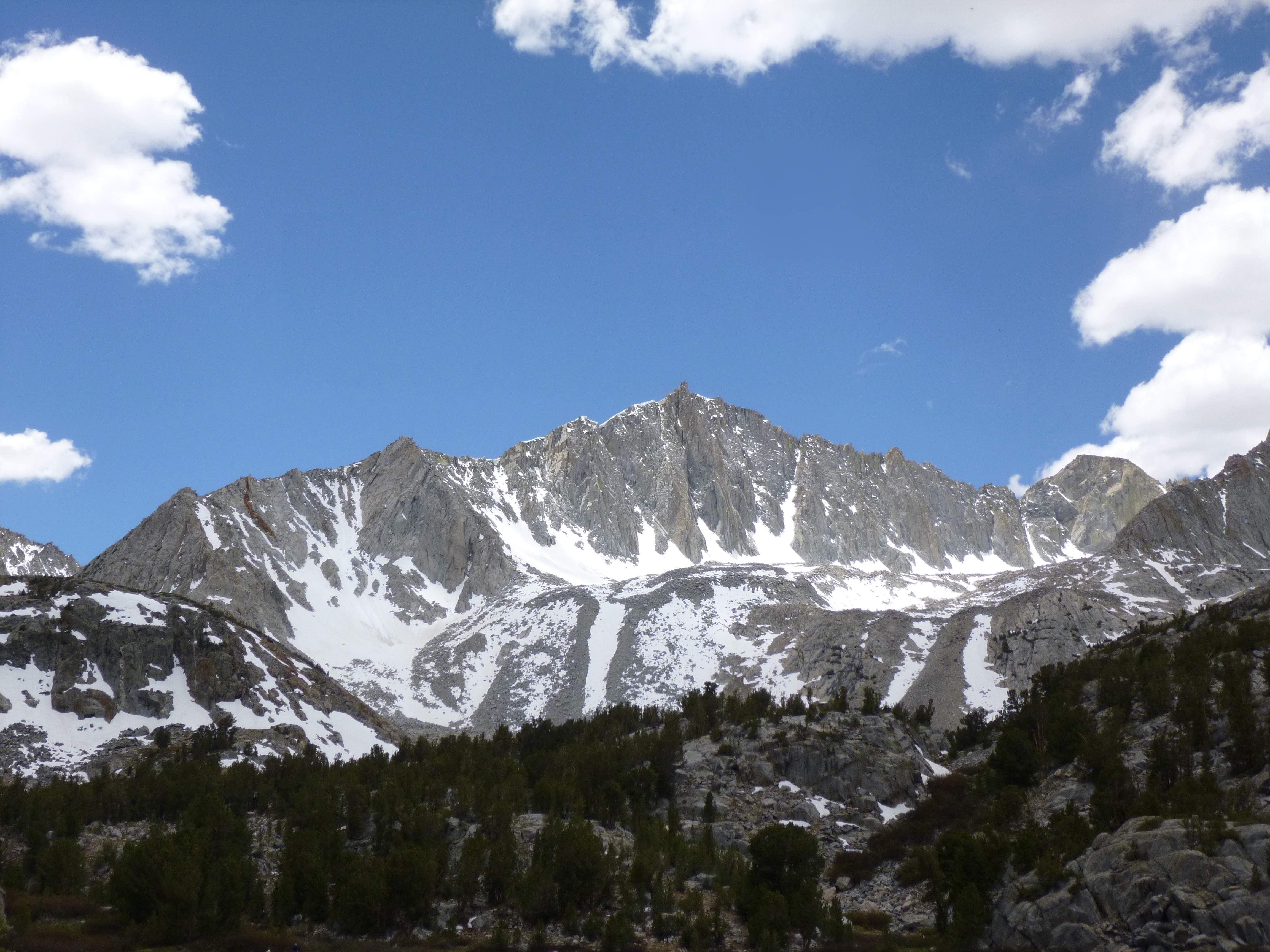
Mount Goode, from near Long Lake.

Keen to enjoy some hiking and camping in California’s Sierra Nevada, our trip began at the White Mountain Ranger Station in the town of Bishop, where my friend Don and I stopped to pick up our overnight permits and rent a bear canister.  The rangers in Bishop told us that the trail was in great condition, with all of the lakes at least partially thawed.

...

The White Mountain Ranger Station in Bishop.

Having already acquired a map at the REI in Sacramento, and with the promise of good early summer weather, we left the ranger station promptly and began driving to the South Lake trailhead.  We had a rough plan to try and hike two or three 13,000 foot peaks in the Bishop Pass area, but ended up just hiking one, 13085 foot / 3988 meter Mount Goode.

...

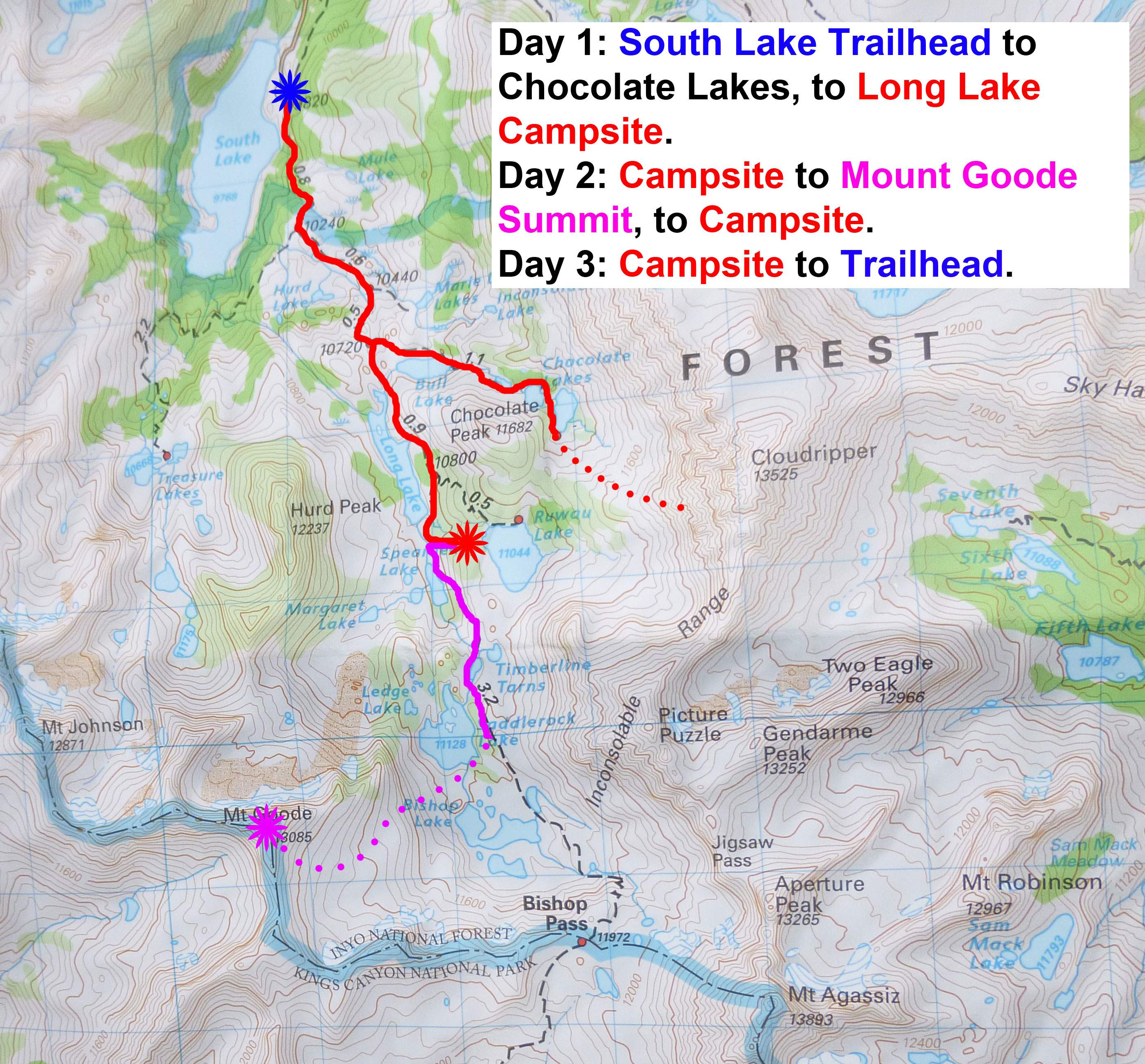
A map of our three day hiking trip.

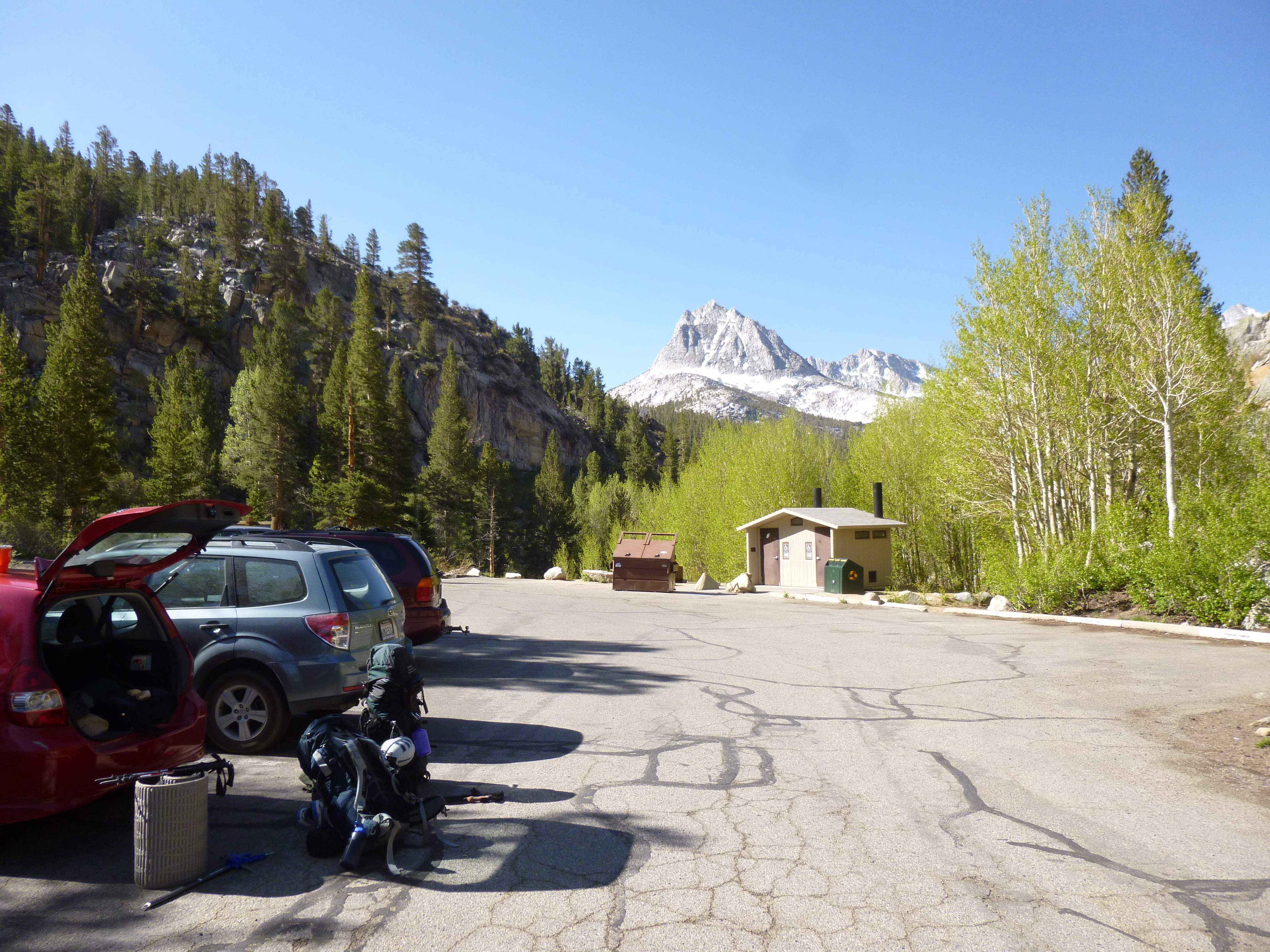
Day 1: On arrival at the South Lake trailhead a short drive later, we were greeted with distant views of Hurd Peak, the first of many impressive granite mountains on our route.

...

The South Lake parking lot, Hurd Peak in the distance.

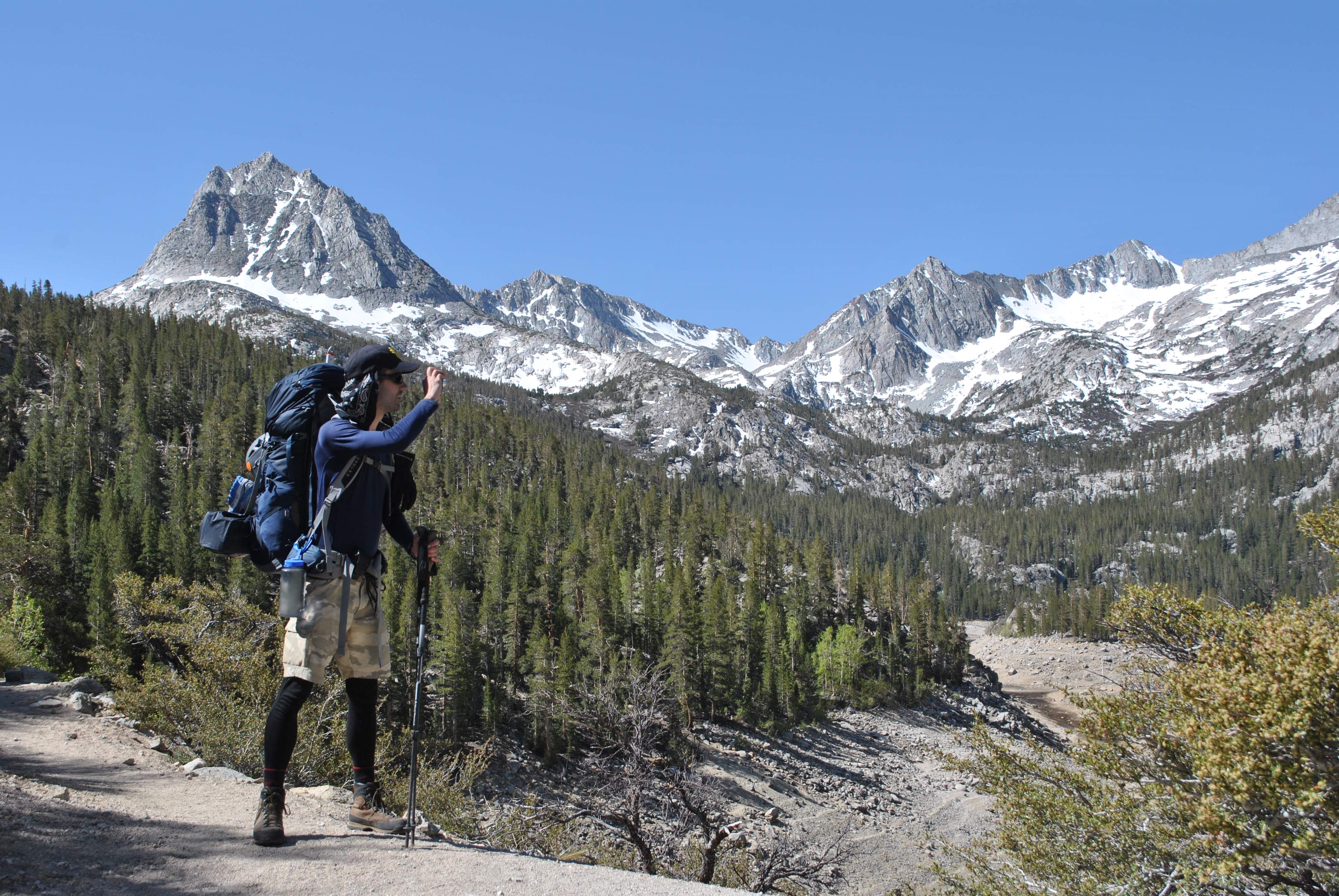
After getting our bags ready and bear-boxing spare food, we began heading down the trail towards Bishop Pass.  The trail is well maintained and easy to follow, with signposts marking the way.  Near the trailhead we encountered a few people out fishing for the day, looking relaxed in the lovely weather and fantastic scenery.

...

South Lake.

Past South Lake the trail moved through forest.

...

The Bishop Pass trail.

Once above the trees the views were fantastic, and we couldn’t help but take our time stopping for photographs and enjoying the weather.

...

On the the Bishop Pass trail.  Hurd Peak in the background.

We reached a fork in the path, splitting east to Chocolate Lakes and south to Bishop Pass.  We decided to stash our camping gear, switch to light packs, and head in towards Chocolate Lakes.  To the east waited 13525 foot Cloudripper, one of the peaks we intended to take a shot at.  In front of us, appropriately named Chocolate Peak reflected off of Bull Lake below it.

...

Chocolate Peak and Bull Lake.

Further in, Cloudripper stood above us.  We could not make out the straightforward hiking/scrambling route which our guidebook described, so we chose to try ascending near the wide scree slope located just to the right of the peak in the below picture, with no idea whether or not it would offer us a way up.

...

Cloudripper, from Chocolate Lakes.

We began climbing over the big rocks and talus beside the scree slope, enjoying the scrambling upwards.  Soon we were above Chocolate Peak, and had some great views of nearby lakes and mountains.

...

Looking down on Chocolate Peak.

As we climbed higher route finding became more involved.  Equipped with only our hiking poles, we stuck to moderately sloped scrambling as much as possible.

Climbing up the rock and talus on Cloudripper.

Hiking up the rock and talus on Cloudripper.

Soon we were above the talus and scree and found ourselves faced with big granite slabs.  Climbing past two fairly straightforward but hazardously exposed pitches it became evident that the terrain above only became more difficult and dangerous.  We realized that the route we had chosen would probably not yield us an accessible way up.

The scrambling quickly transitioned into exposed climbing.
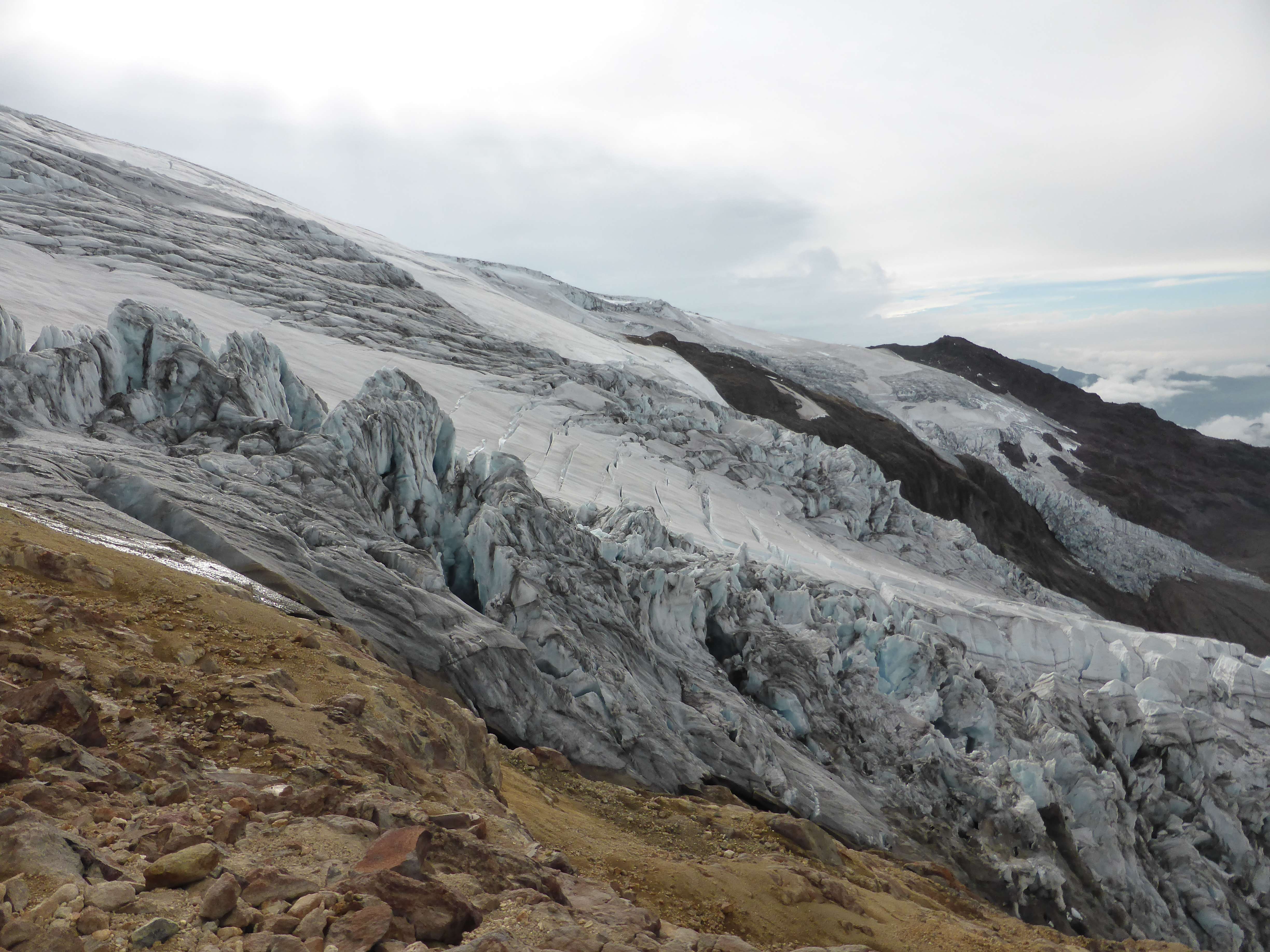
The scrambling transitioned into exposed climbing.

Faced with considerable exposure to serious fall on nearly vertical rock, equipped with no rope, and knowing we would have to down-climb any further progress to return to our bags, we decided to descend.

...

Trying to find a route up.

As we turned around a light snow began.  We felt disappointed, but grounded in the reality that we were unprepared to safely continue.  Later we found pictures better illustrating the standard route up the west side of Cloudripper, which follows a chute to the left of the peak – next time!  As consolation we enjoyed great views of the whole area below us, including the north and east slopes of the next day’s objective, Mount Goode.

...

Looking down from high on Cloudripper, Mount Goode is the highest peak in the top left corner.  Mount Goode’s south-east slope, used for hiking ascent, is to the left of the peak.

Once off of Cloudripper we slowed down to enjoy the easy hike back through the Chocolate lakes area, reuniting with our heavy overnight packs and continuing south towards Long Lake.  Soon Mount Goode stood in front of us, a commanding, aesthetically pleasing fortress of granite.

...

Mount Goode in the distance.

Slightly south of Long Lake we turned off of the trail and pitched camp in a sheltered, quiet little area at the top of a small hill.

...

Our campsite near Long Lake.

We enjoyed a fiery sunset as we cooked dinner and drank Californian IPA beer.

...

First night’s sunset.

Day 2: Up before the sun, we began hiking south towards Bishop Pass, and the southeast slope of Mount Goode.

...

Mount Goode’s north side.

Once we reached Saddlerock Lake we cut west, off of the trail and overland between Saddlerock Lake and Bishop Lake.  The terrain here was pretty, with lots of rolling granite, shrubs, and snow banks.

...

Looking up Mount Goode’s southeast slope.

To the southwest, Mount Aggassiz stood mirrored by Bishop Lake below it.

...

Mount Agassiz and Bishop Lake.

...

Looking back at Saddlerock Lake and Bishop Lake from the southeast slope.

Initially the route took us over rock and brush, but soon changed to sand and scree.

...

The sandy lower slope.

Not too bothersome due to the gentle angle, we were soon through the worst of the sand and moving over big rocks.

...

Looking up the southeast slope, almost above the sand.

We chose a direct route straight up over the rocks and enjoyed some scrambling as we reached the top, where we were met with a sharp drop off down Goode’s north face.  We were west of the summit, and could see the highpoint jutting out from the ridge.

...

Looking east along Mount Goode’s north face, the summit ahead of us.

...

West of the summit, looking west.

...

Looking East, towards Mount Agassiz and Thunderbolt Peak (right).  Bishop Pass is below Mount Agassiz.

We climbed east, moving along the edge, passing over snow and big rocks to what appeared to be the very top, where we stopped to snap some photographs and take in the views.  This area was surprisingly large and flat.  This was unexpected, as viewing the mountain from the north we had earlier marveled at the narrow, jutting apex of the north buttress.

...

The summit of Mount Goode.

...

Looking down the north face.

Far below we could see the winding trail and many lakes we had passed earlier.

...

Looking down at the Bishop Pass trail.

After spending a good 40 minutes on the top, we quickly descended and began hiking north, back to our campsite.  The afternoon weather held for us, and we enjoyed a lovely blue sky.

...

Melt water rivers.

....

Looking back at Mount Goode.

At camp we celebrated a fantastic hike with a final pair of beers and a big dinner.  We were treated to another wonderful sunset, and turned in for the night.

Day 3: After sleeping in we packed up camp and enjoyed an uneventful hike out to the South Lake trailhead, arriving before lunch time.

...

Second night’s sunset.

The Sierra Nevada is a beautiful wilderness, and it was wonderful to experience it firsthand.  The hiking was scenic and covered some very enjoyable terrain, with plenty of opportunity for engaging scrambling.  The Bishop Pass trail offers fantastic, compelling views of granite mountains the entire way in.  I left with a strong desire to return, and definitely shall!

Accessiblity:

The Bishop Pass trail is accessible year round, although full winter weather mandates the use of snowshoes or skis due to heavy snow coverage.  We brought ice axes and crampons, given our early season hiking, but had no need for them.

California’s permitting process is developed and very user-friendly – permits can be applied for in advance or on the spot, and are picked up at several different ranger stations and visitor centers.  The website for Inyo National Forest camping permits is here: http://www.fs.usda.gov/detail/inyo/passes-permits/recreation/?cid=stelprdb5144746

Mount Shasta – June 2013

.

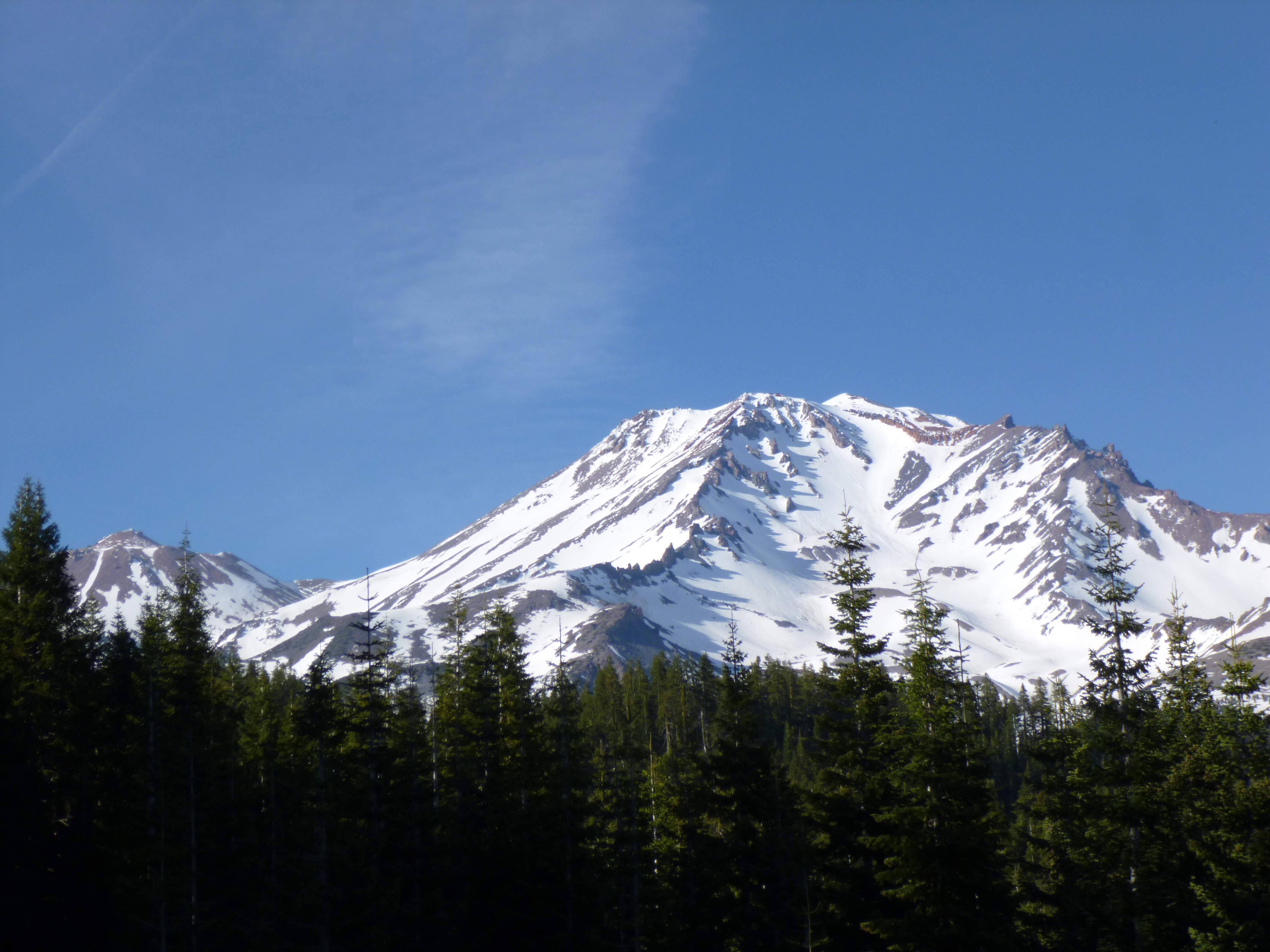
Mount Shasta from the south.

Standing alone in northern California, 4322m Mount Shasta is the state’s fifth highest mountain and the second highest of the Cascade Range.  As Mount Shasta is isolated, it has considerable prominence over surrounding terrain.  An active volcano, near the summit the smell of sulfur is noticeable, and areas with steam vents have historically been used for warmth and emergency shelter by early climbers.

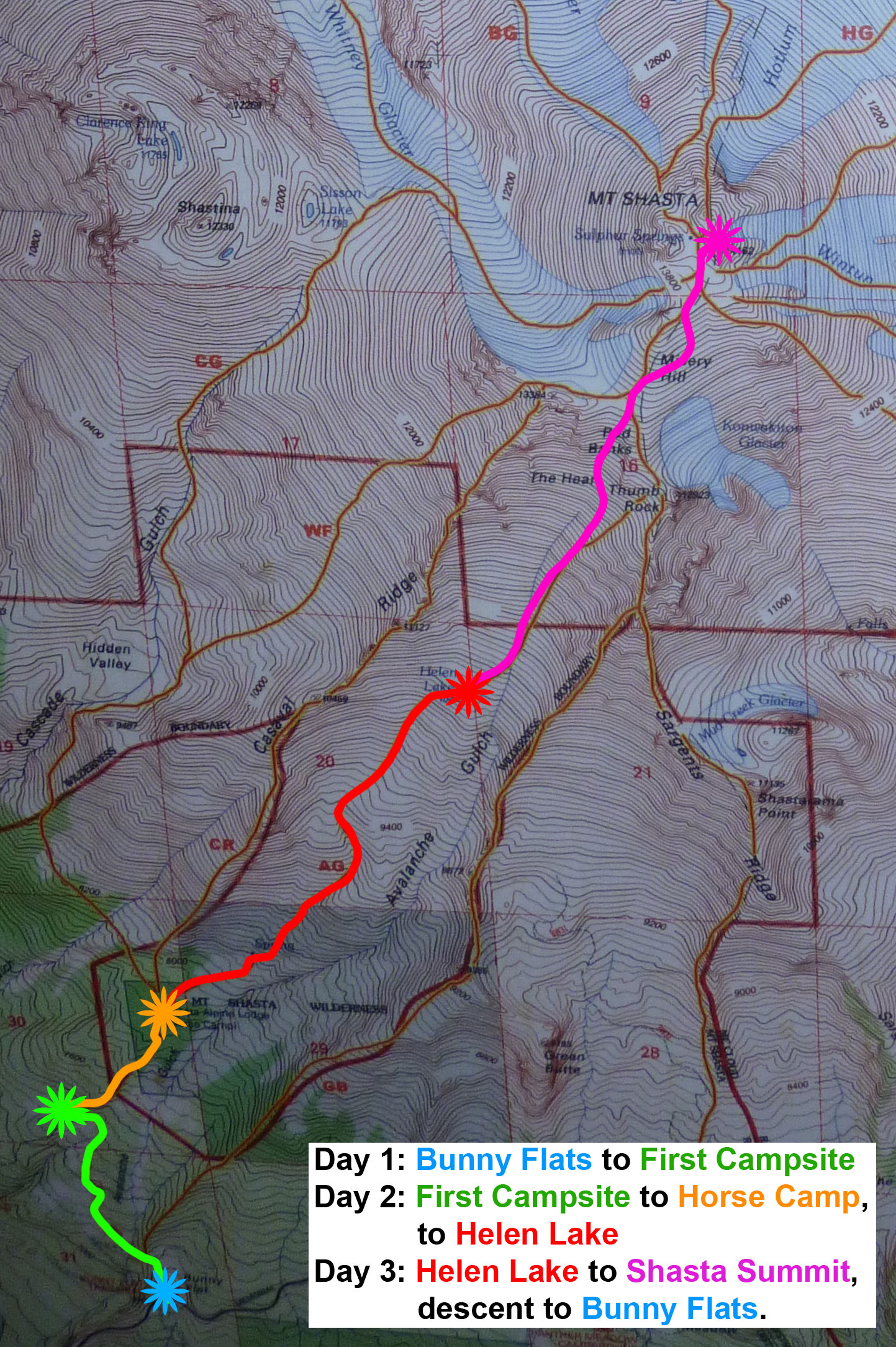
I climbed Mount Shasta by the standard Avalanche Gulch route, using a high camp at Helen Lake.  Avalanche Gulch, so named for the frequent winter avalanches which occur, covers 2200m of elevation gain over 17.7km.  The below map outlines our route.

A map of our itinerary up Avalanche Gulch.

A map of our itinerary up Avalanche Gulch.

Avalanche Gulch.

Avalanche Gulch.

Day 1: After getting out of the airport and meeting my climbing partners – my friend Don, whom I’d met in Taiwan, and one new friend, his colleague – we took a short trip to the local REI to pick up some last minute food supplies and a few bits of gear.  It was hard to believe we’d be sleeping on snow the next day, as Sacramento was seeing temperatures in the high 30s.  Yet snow was our destination, and I was very keen to attempt Mount Shasta after discussing trip ideas for months, deciding upon Shasta as an attainable goal, and finally having the opportunity to visit California and see the state’s famous mountains.

From REI we had a long drive ahead of us.  ~275km north from Sacramento along Interstate #5 took us into the aptly named City of Shasta Lake, near the base of the mountain and our trailhead at Bunny Flats.  In Shasta Lake we visited a local outdoor equipment shop called The Fifth Season in order to check up on the weather and recent snow conditions, then grabbed some food and continued our drive up to the trailhead parking lot.

.

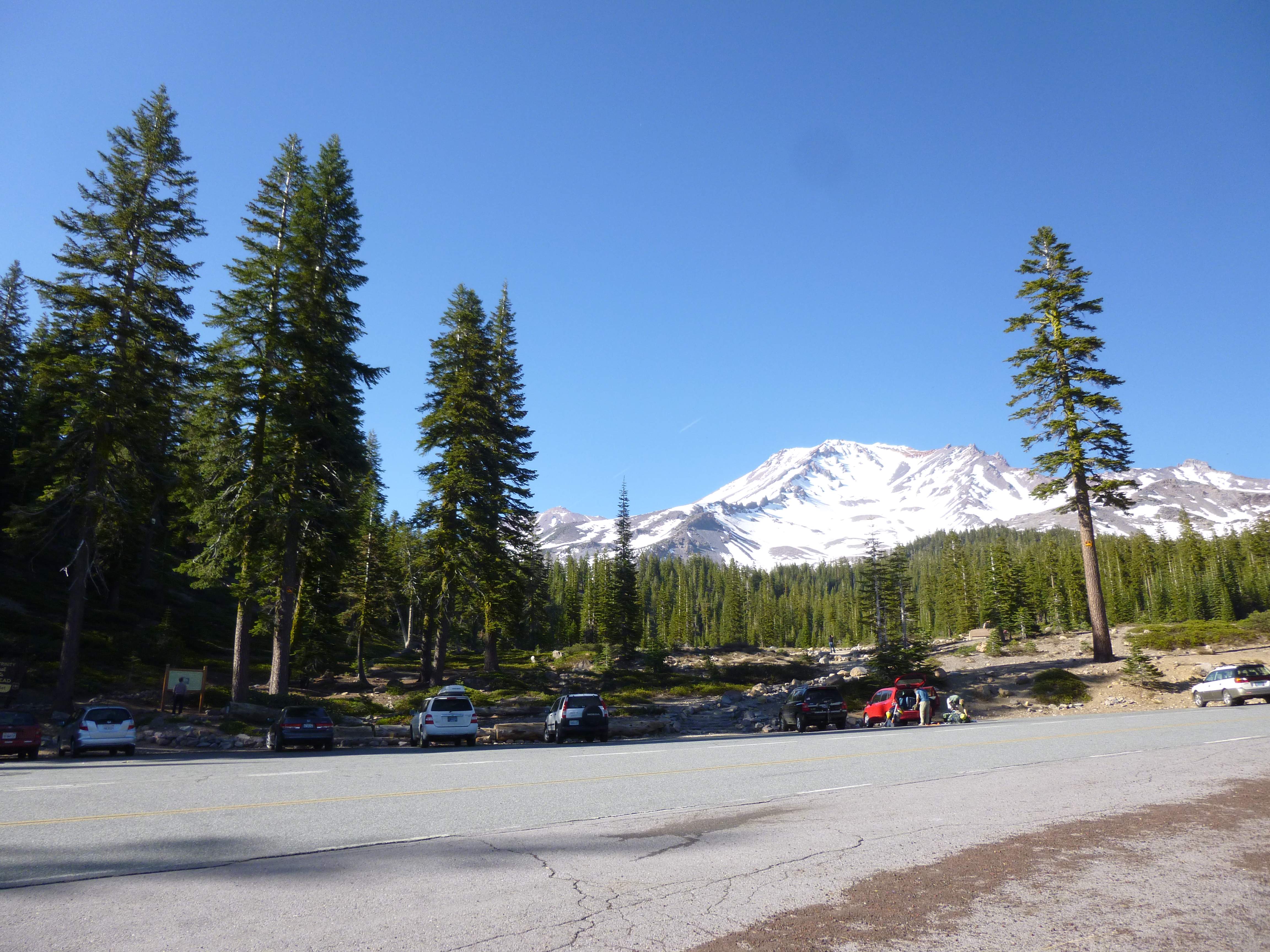
The Bunny Flats trailhead.

At Bunny Flats, 2120m, we discovered the parking lot filled nearly to capacity.  As we were arriving on a Saturday evening, a large number of climbers were already on the mountain.  Our initial plan had been to spend the night camped in the parking lot, as a night here would serve as an excellent acclimatization interval for the next day. However, by the time we arrived we still had several hours of daylight remaining, and decided it would be much more comfortable to head a few kilometers up the trail and camp somewhere quiet.  The trail begins ambling up through lovely forest over a wide, well-maintained path.

.

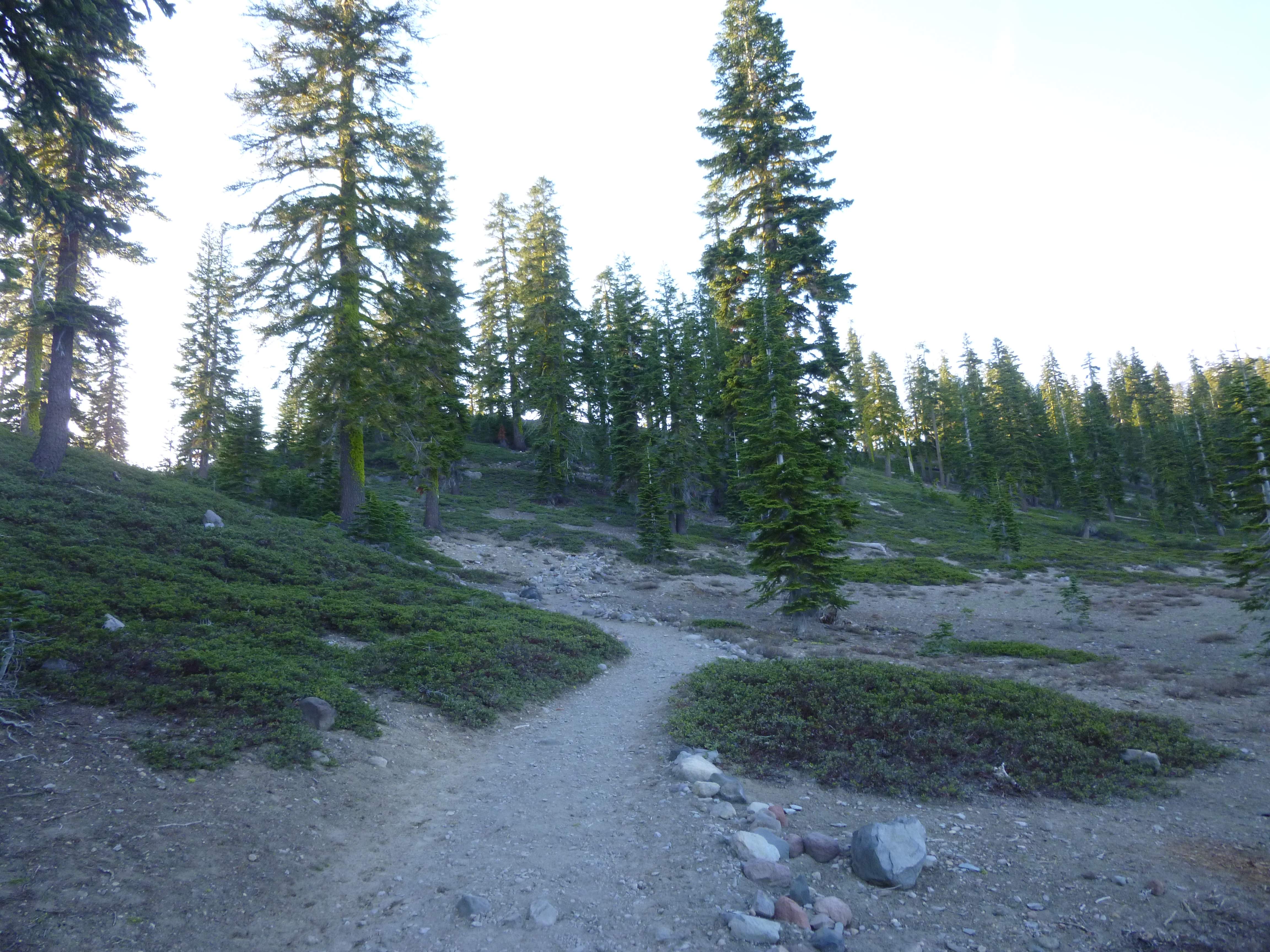
The beginning of the trail from Bunny Flats.

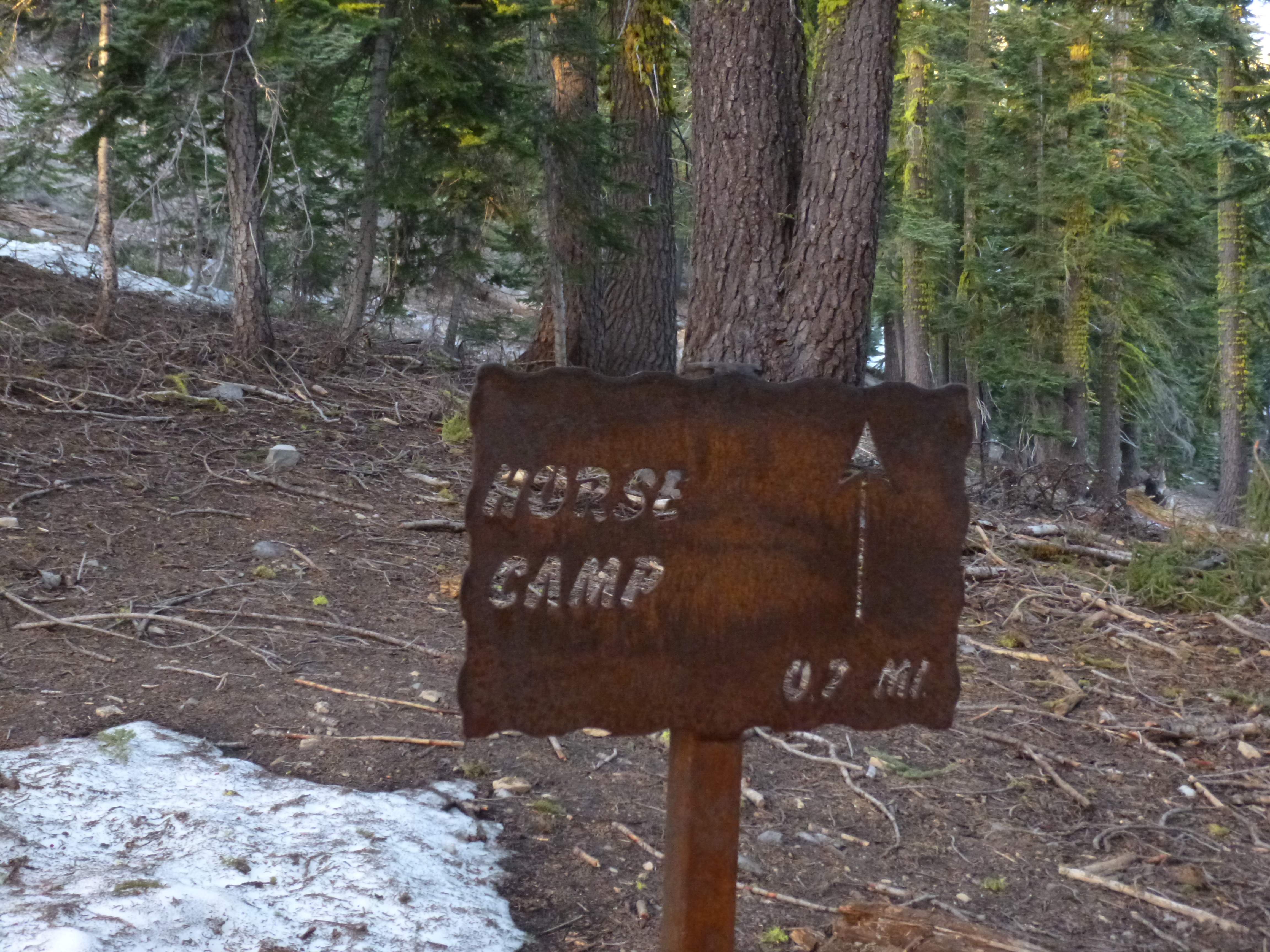
About an hour in, at a relaxed pace, we decided to start looking for a suitable campsite. A nearby sign indicated we were 0.7 miles / 1.1 km from Horse Camp, commonly used as a starting camp and first overnight.

.

The forest here was beautiful, tall evergreens ringed with moss.

.

Rings of bright moss covered the trees.

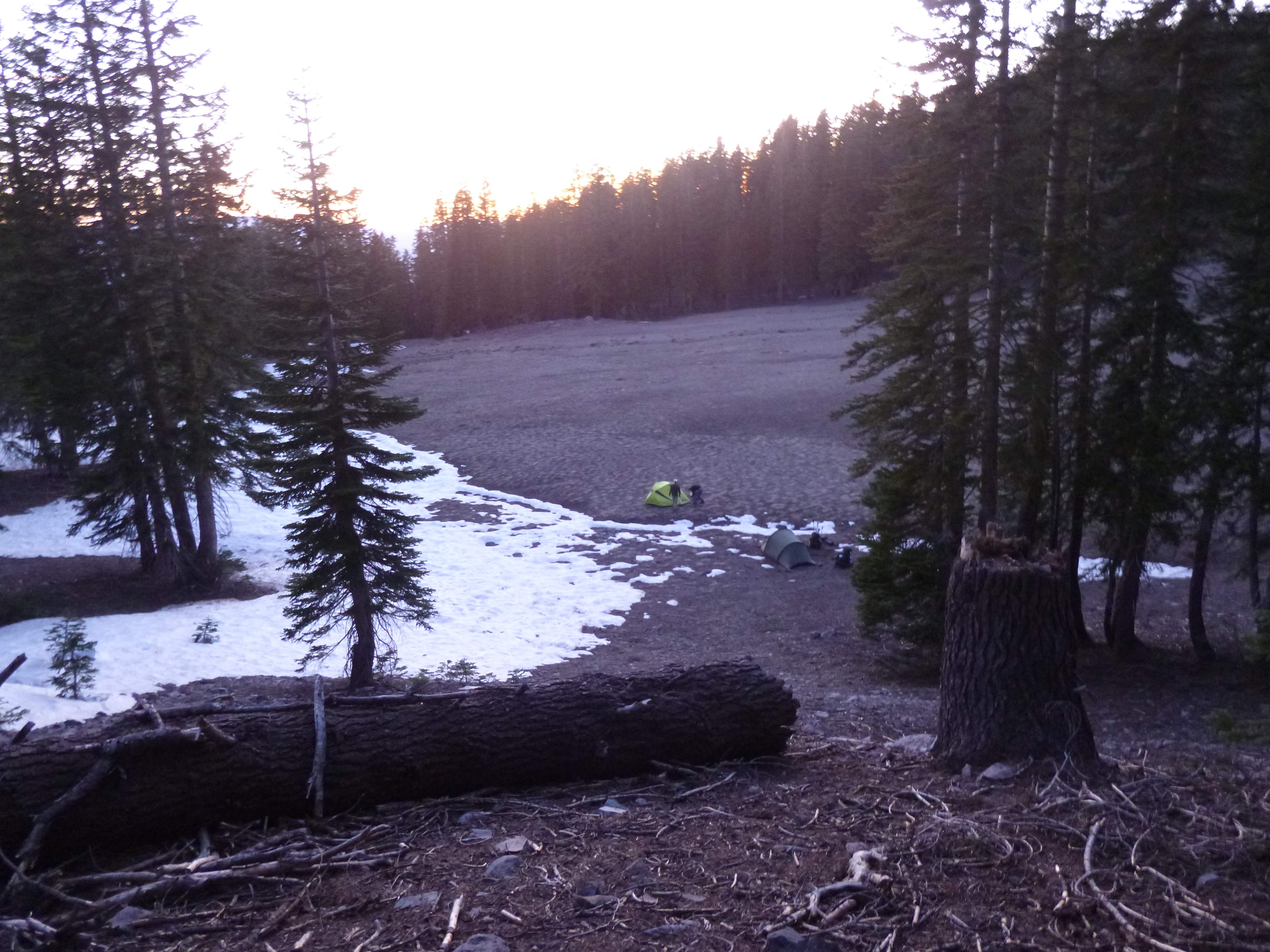
We decided to use a flat, open clearing about 100m off the path.

.

Our first night’s campsite.

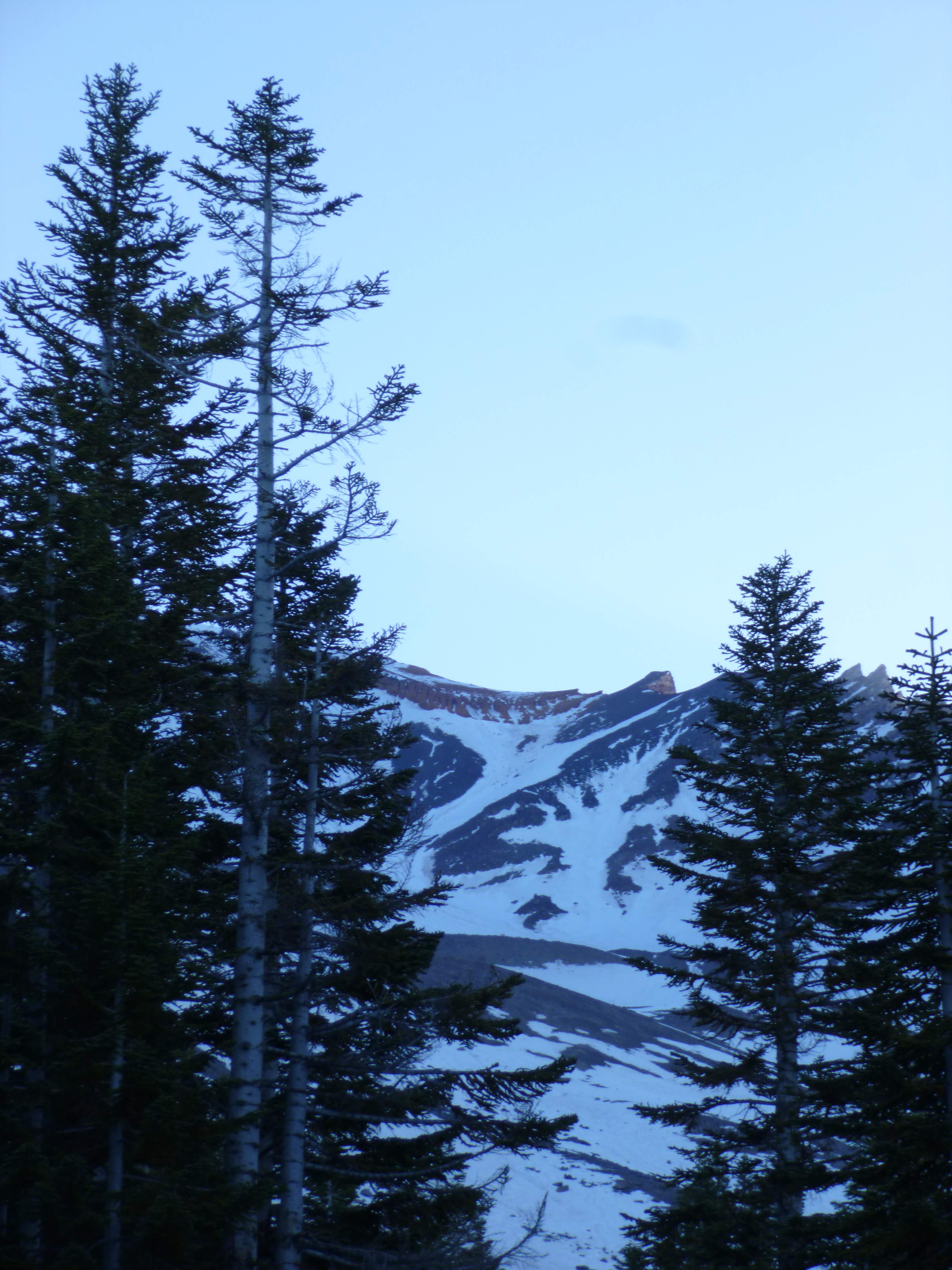
Day 2: Awake early, we packed up camp, cooked breakfast, and continued upwards.  Through the trees we began to catch views of Shasta and the route we planned to ascend.

.

Shasta from below Horse Camp.  Thumb rock, a landmark of the Avalanche Gulch route, protrudes from the ridge.

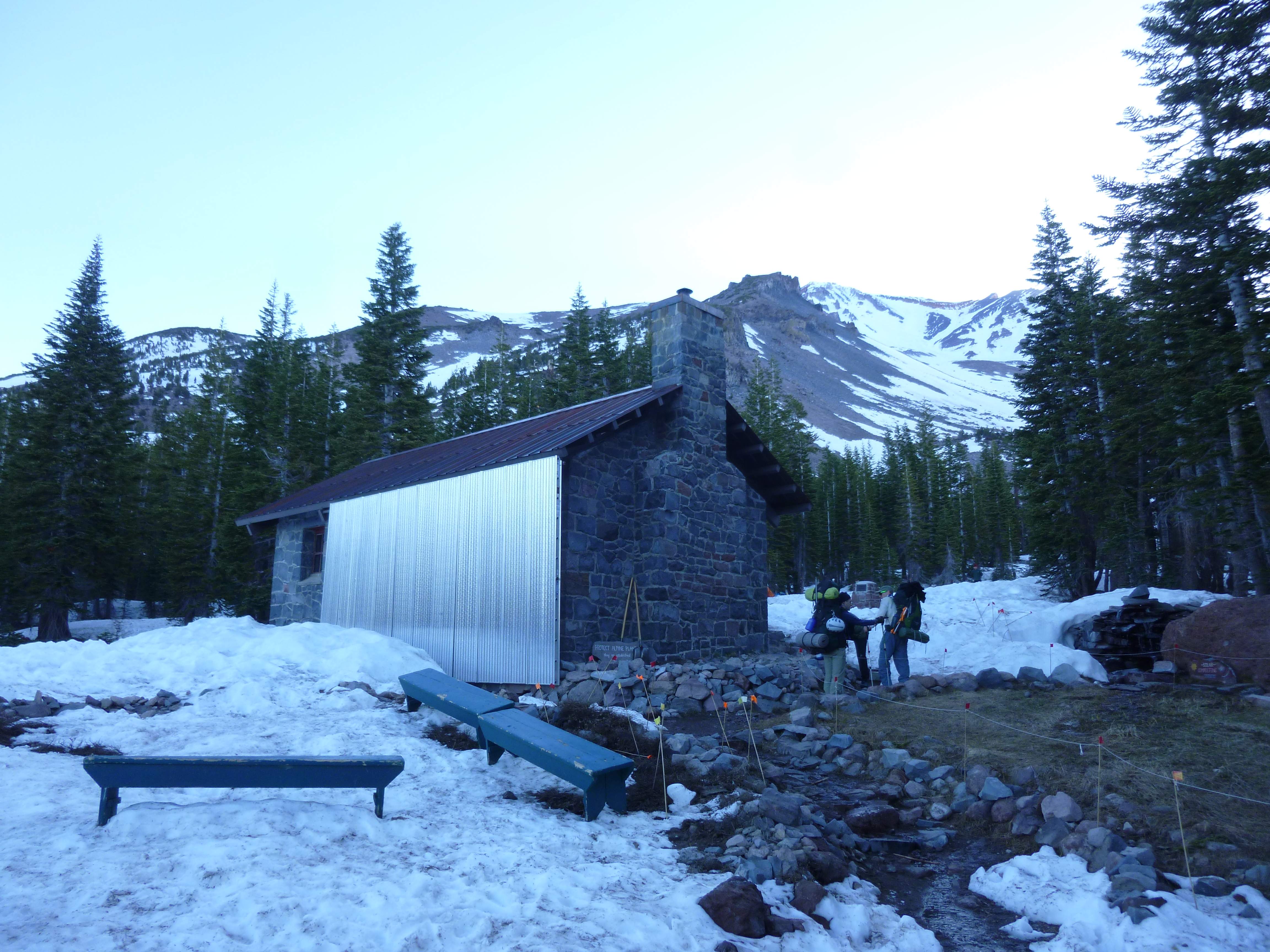
Ahead, Horse Camp came into view. Situated 3.2km from the Bunny Flats trailhead at 2420m, Horse Camp serves as a base camp and emergency shelter for climbers approaching Shasta from the south.  Horse Camp provides climbers with several resources including a sturdy ranger hut, an accessible runoff water source, several campsites, and most importantly a well-maintained solar toilet.

.

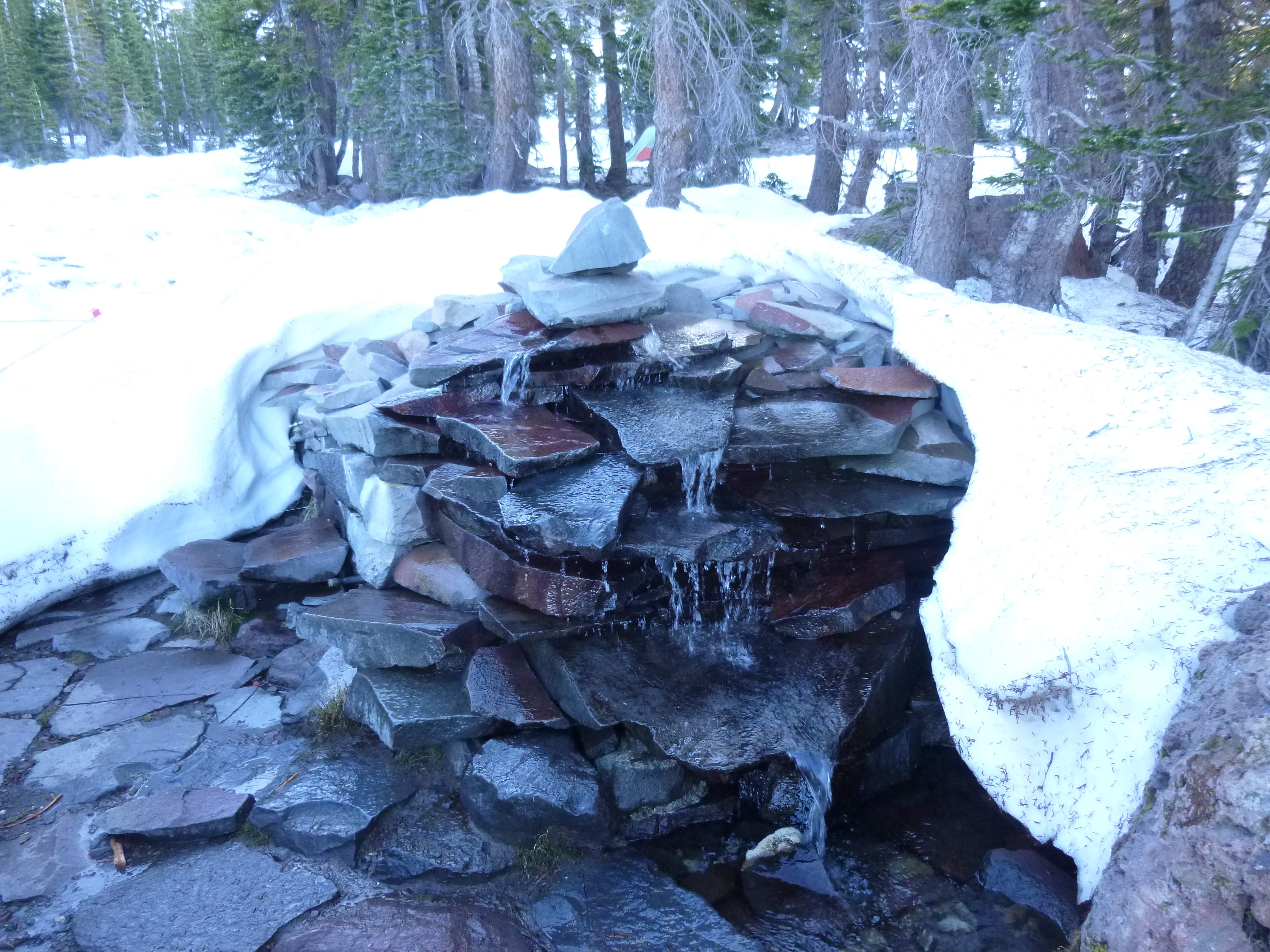
Horse Camp.

.

The runoff stream close to the Horse Camp cabin.

At Horse Camp we filled up on water and continued towards the base of Avalanche Gulch through increasingly sparse trees.

.

Approaching Avalanche Gulch above Horse Camp.

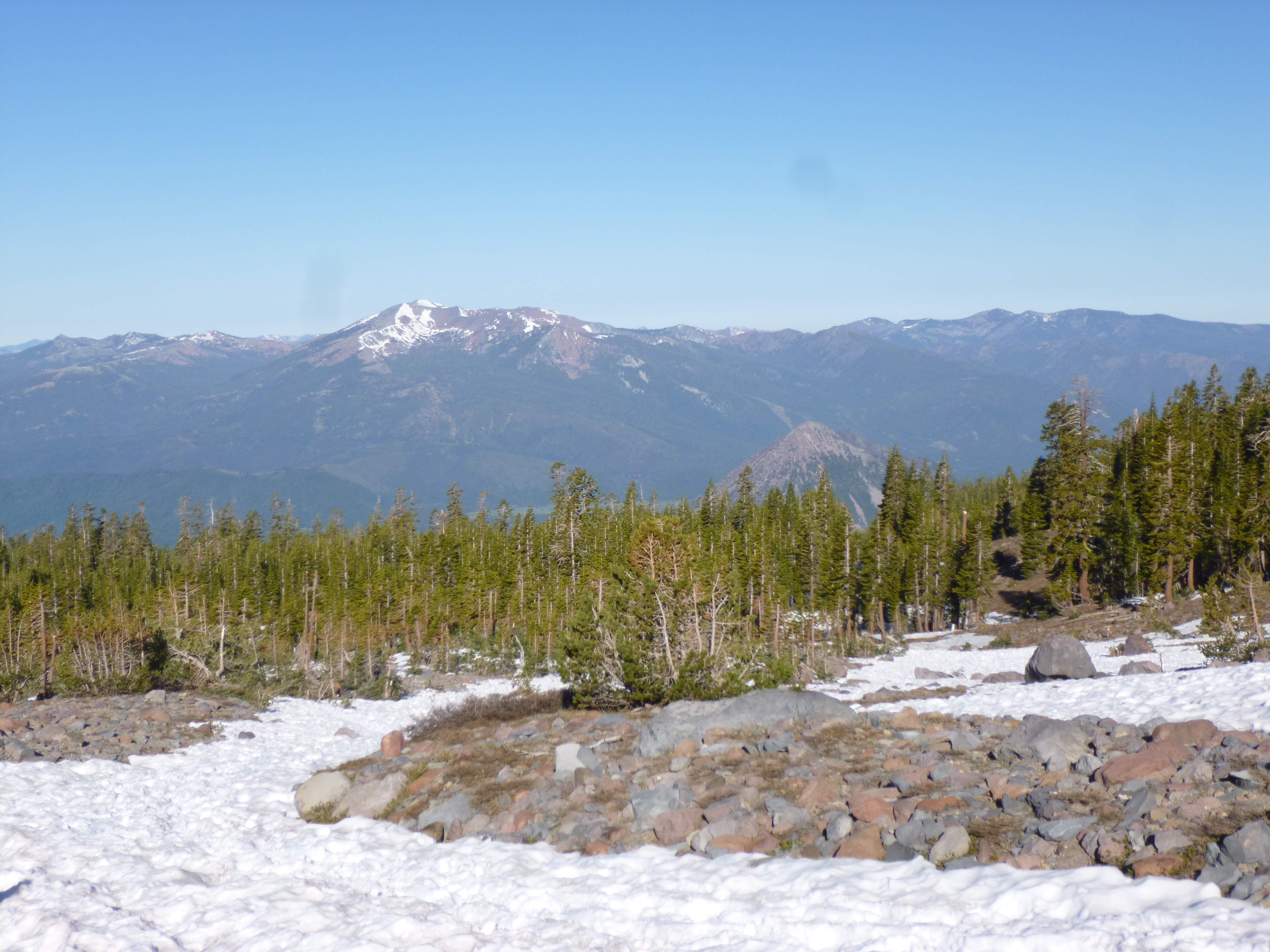
We had gained a bit of elevation above the treeline and enjoyed a nice view over the forest behind us.

.

Looking back towards Horse Camp.

It was unpleasantly hot here with the sun reflecting off of the snow, and no clouds or cover providing shade.  Helen Lake isn’t visible during this section, which makes each little hill somewhat deceptive – we kept thinking that we’d spot it just over the next ridge, only to find yet another hill awaiting us!

.

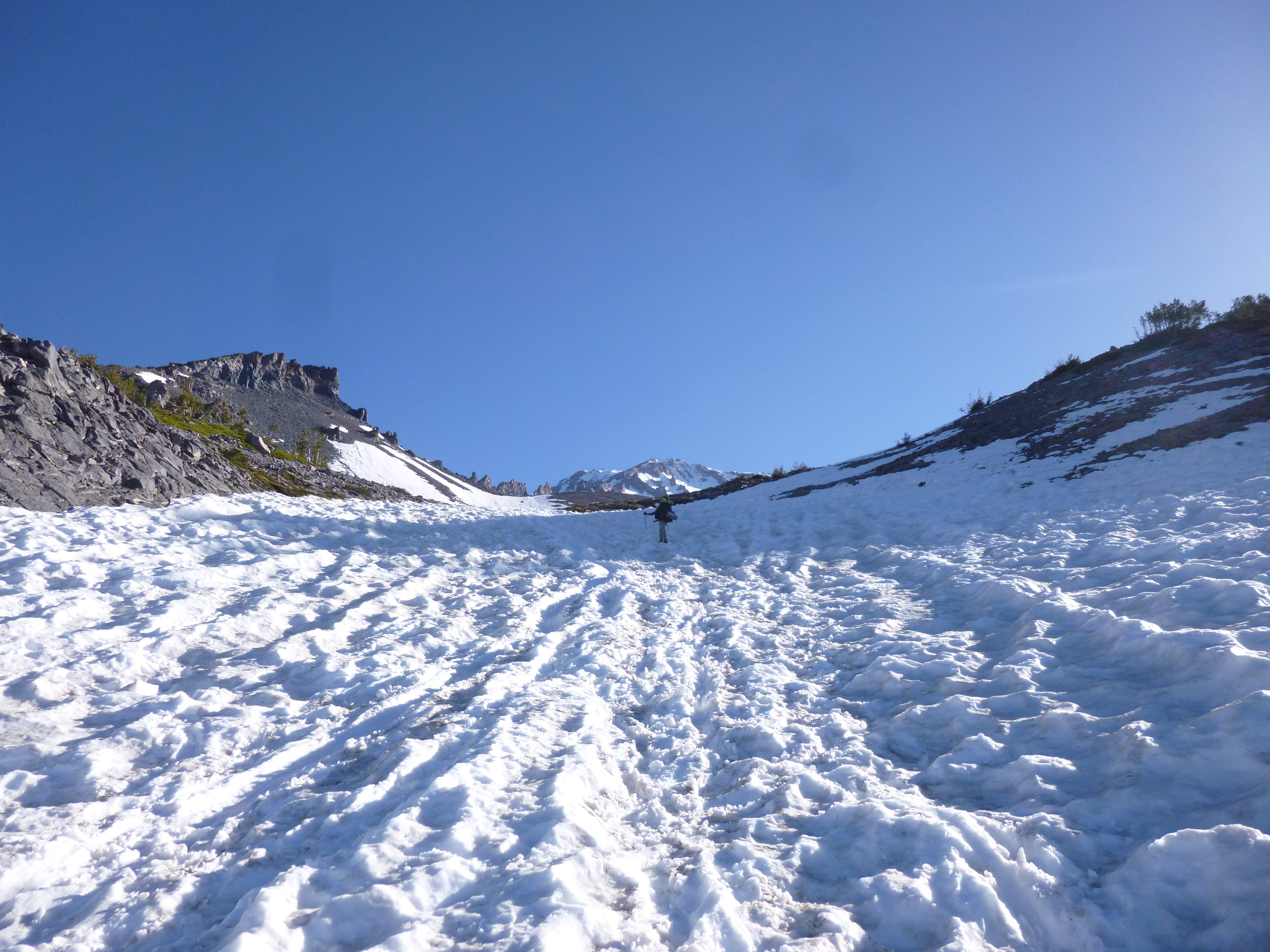
Looking up the route.

.

While our route of ascent could be seen, Helen Lake was still not visible.

.

Looking down.

Still well below Helen Lake, we began to pass the first campsites.  Many skiers and snowboarders climb Shasta, and prefer to camp low for an easier descent.

.

Low campsites below Helen Lake.

Finally we crested a hill and saw Helen Lake ahead of us.

.

Helen Lake, the highest, wide hill in the middle of the picture.

Helen Lake is frozen over and snow covered most of the year, and provides no water source (aside from snow!).  The area is mostly flat and a nice snow ridge serves as excellent wind protection.  When we arrived there were at least two dozen tents, and a large number of climbers were visible descending the route.  The crowd were headed off of the mountain however, leaving us our choice of camping spots.

.

A crowded high camp at Helen Lake.

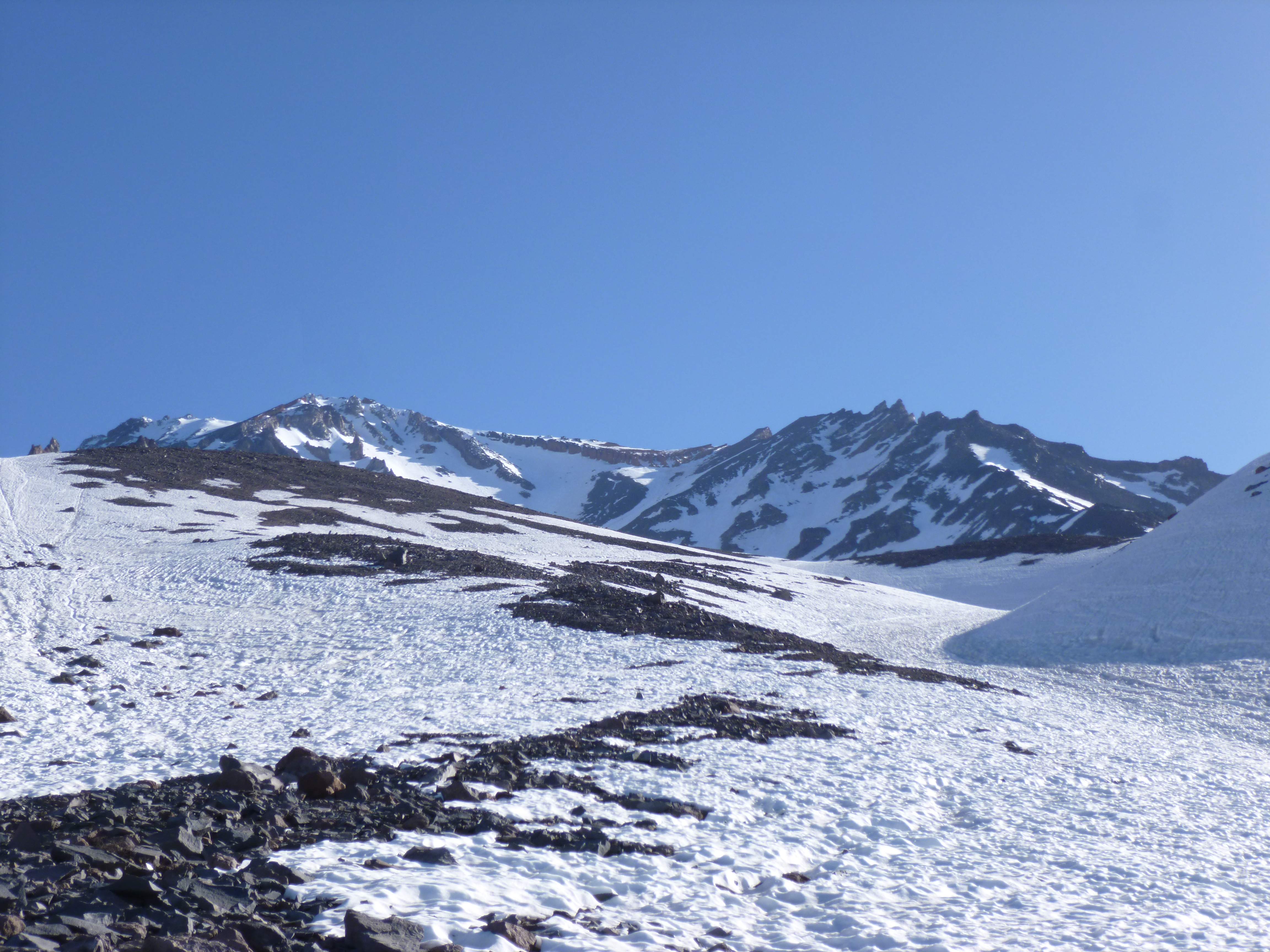
Above us the route to the summit was clear, and appeared to be in decent condition.  Others in camp told us that the snow was firm and reliable early in the day, if somewhat boot-tracked due to a lack of recent snowfall.

.

Above Helen Lake.

.

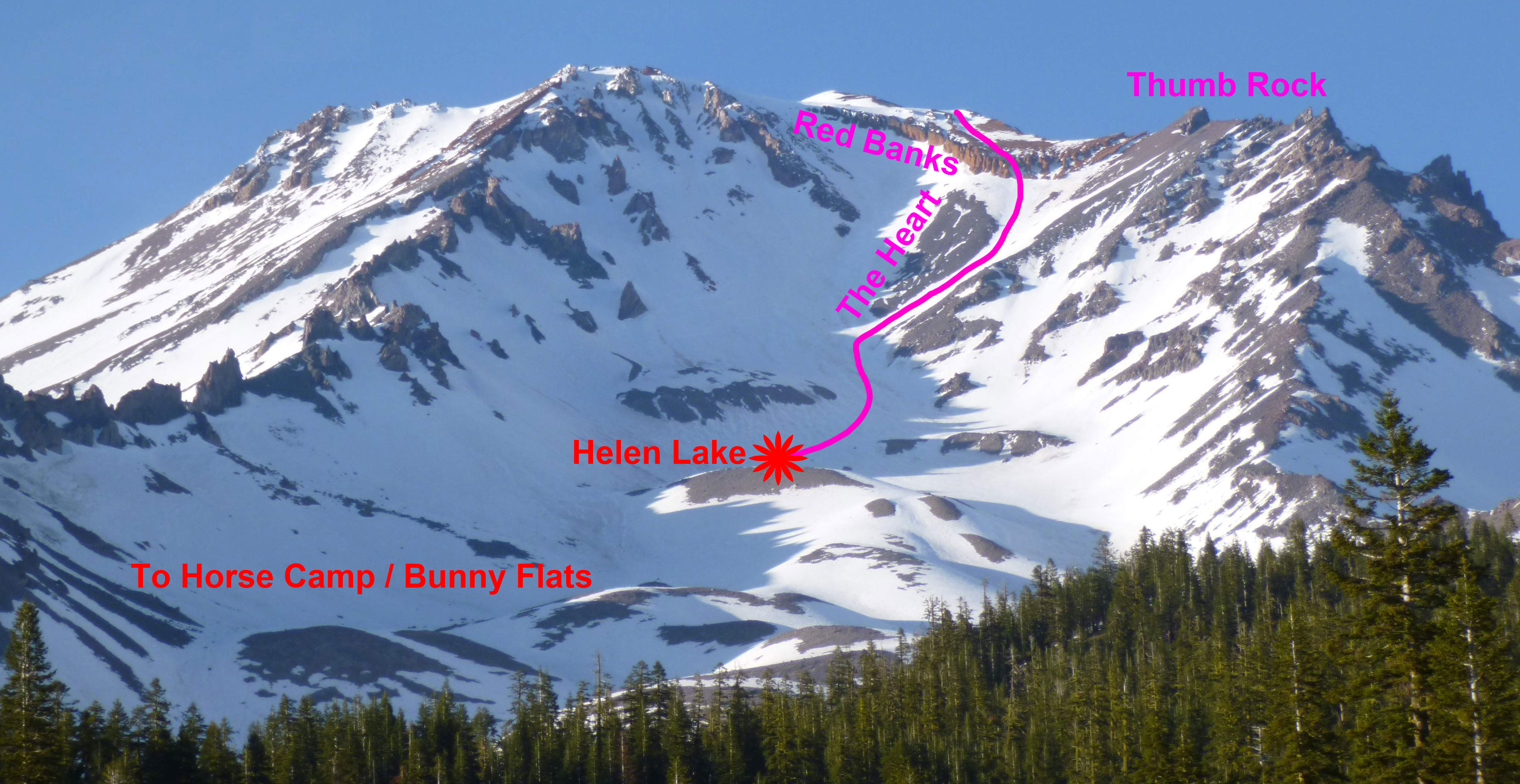
Our route to the top – Red Banks, The Heart, and Thumb Rock.

We pitched one of our tents and lounged with the doors open in the intense heat, waiting until other climbers finished packing up and began to descend.   Once the others had departed we found a good spot for our tents and set up camp, carefully anchoring our tents in case of strong winds overnight.  We were almost alone, with only a few other teams arriving later in the day.

.

Our campsite at Helen Lake.

.

Freeze dried dinner at Helen Lake.

After getting our tents up we  kept busy melting snow for water.   We went to sleep early, planning for an early departure to ensure firm snow conditions.

Day 3: Awake at 2:30 a.m., we made a fast breakfast and began heading up at 3:35 a.m.  There was no wind, and the temperature felt like it was hovering around 0 Celsius.  Shortly after leaving camp my new friend decided to turn around – he was experiencing bad stomach cramps and wisely decided that he shouldn’t continue upwards.

.

Looking down at Helen Lake.

.

The moon was still visible in the morning sky.

Far below, we could make out our tents at Helen Lake.

.

Helen Lake, our two tents to the far left of the row of tents.

We made steady progress upwards, and were near the bottom of The Heart when the sun began to rise.  We struck up conversation with another climber whose partner had decided to turn around and descend to camp and continued on with him, making us a trio once again.

.

Near the bottom of The Heart.

Mount Shasta cast a huge shadow below us.

.

Mount Shasta’s enormous shadow.

Above us, the Red Banks came into clear view.  This wall of loose, red colored volcanic rock poses a climbing obstacle and is an objective hazard due to high rockfall potential.  Without heavy snow coverage, the route gains the top of the Red Banks by ascending a notch through the rock.  With more snow cover climbers can circumnavigate these rocks by climbing up between Thumb Rock and Red Banks.  Due to recent warm weather this latter option was undesirable for us, due to the melted-out bergshrund which forms at the top of the Konwakiton Glacier on the north side of Thumb Rock.

.

Red Banks above us.

Approaching Red Banks we quickly found the correct notch to ascend.  Viewed from below, we took the third notch from the right.  It offered a direct route through Red Banks via a narrow gully of snow.

.

The notch in Red Banks.

This was the steepest section of the climb.  The rock here is very loose and crumbles away if touched, so we climbed carefully to avoid sending rocks down on those below us.  The day before, several climbers at Helen Lake had been complaining about heavy rockfall during their ascent, a result of the large crowd following the route.

.

Looking down from the Red Banks.

.

The narrow gully of snow leading through Red Banks.

Once past the Red Banks, a gently angled slope continues upwards through more exposed volcanic rock.

.

Above Red Banks.

.

Above Red Banks.

Ahead, Misery Hill posed the last terrain feature to be passed before the summit block.  Misery Hill is a gentle slope and easy hike, but is so named because many climbers find themselves somewhat exhausted upon reaching it.

.

Misery Hill.

Rather than follow the usage track directly over Misery Hill, we opted instead to go around the side.  Here we discovered some lovely suncupped snow.

.

Suncupped snow on Misery Hill.

We had a good view of Thumb Rock and the Konwakiton Glacier.

.

View from Misery Hill.  Thumb Rock is below, to my left in the photo.  The Konwakiton Glacier is directly below Thumb Rock.

Once past Misery Hill the summit block came into view, with only gently sloped hills between us.

.

Shasta’s summit, center of the picture.

The standard route circles around the summit block and ascends via a moderate slope from the west.  Approaching the base of the summit we discovered a more direct route through a gully of ice and snow.

.

Looking towards the summit, the gully we took to the top in the middle of the picture.

A short but very fun climb through the gully deposited us on top of the summit block, with the true summit just a few meters away.

Heading up the gully, our final push to the top.

Heading up the gully, our final push to the top.

The time was 8:30 a.m., the ascent taking us just shy of five hours.  We appeared to be the first ones up the mountain for the day, and had the summit area all to ourselves.  We all felt strong and very happy; it was incredibly rewarding to successfully reach the top.

.

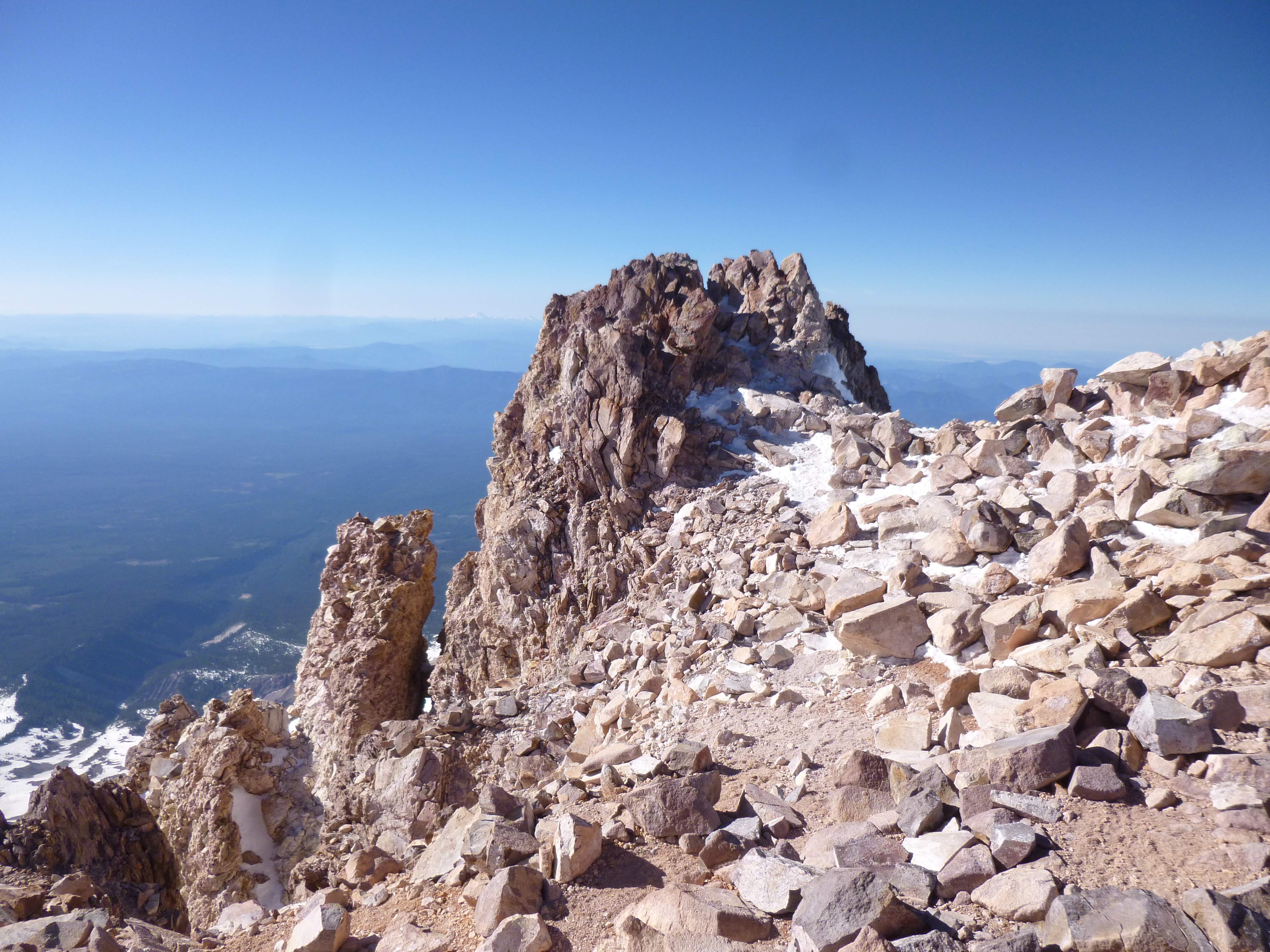
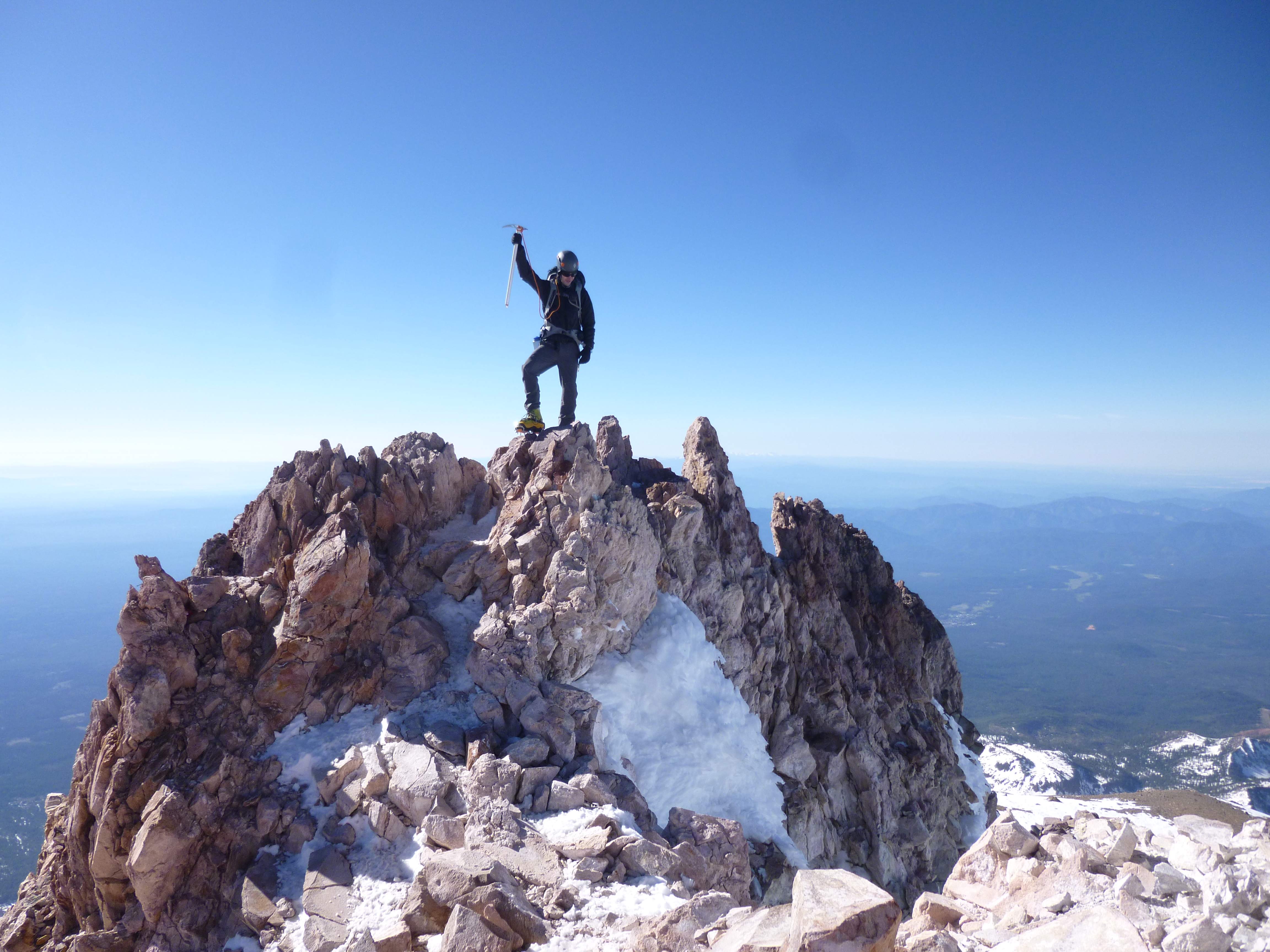
Shasta’s true summit, an exposed pillar of rock protruding from the summit block.

.

Another team approaching the summit, middle of the picture.

.

On the summit of Mount Shasta.

We enjoyed a clear view underneath a cloudless blue sky.  We spent a good ~45 minutes on the summit eating snacks, drinking water, taking photographs, and absorbing the views.  With nothing much around Shasta approaching its elevation, we could see far over northern California.

.

View from near the summit.

.

Taking a break on the summit.

More climbers began to arrive, and after signing the climbing register we decided to begin heading down.

.

Looking back at the summit.

As we descended, an extraordinary thing happened.  Somewhere around the top of Misery Hill, I managed to lose my camera.  We were in good spirits and busy talking, and as I did not feel the need to take any pictures I didn’t notice that it was gone until we reached the top of Red Banks.  It was still quite early in the day, and we had plenty of time to descend before the snow became uncomfortably soft, so I dropped my pack, grabbed some water and my ice ax, and headed back up to look for it.  I retraced our steps up to where I last remembered using it, but to no avail – it was nowhere to be found.  With my hopes of getting it back quickly sinking, I told every climber I encountered that I’d lost it, described the camera and gave them the location of my tent.

My exhilaration and joy with the beautiful, thus far successful climb was overcast – we had a hike planned to begin in two days, and I was due to head to Washington state for an attempt of Mount Rainier the next week.  Buying a new camera on short notice would be inconvenient and expensive – and worse, I’d lose all of my photographs.

Back at Helen Lake, things turned around quickly.  Someone came by my tent, and asked if anyone had lost a camera.  While this person’s team was descending the summit, behind my group, another group ascending had found a camera in the snow, and asked them if it was theirs.  I realized that when I had retraced back up to the top of Misery Hill, the party who found the camera would have been near or on the summit.  Sure enough, an hour and a half later this group returned to Helen Lake, and told me that the other climbers whom I had spoken with when retracing the route had already told them all about the guy who lost his camera.  I was blown away, both by the friendly, helpful disposition of Californians, and the pragmatic communication of the other climbers, strangers who went out of their way to spread the word and help me out.

In a great mood once more, we packed up our camp and headed down.  The section from Helen Lake to the treeline was a slog through deep, slushy snow heated up by the mid-day sun.  As during the ascent of this section, the descent was remarkably hot.

.

Returning to the treeline above Horse Camp.

Finally we entered the forest, the shade providing relief from the glaring sun.  At Horse Camp we stopped to use the washroom, hydrate, and take a 20 minute nap before continuing onward.

.

Descending onto dirt trail below the snow line.

Below the snowline the forest was lovely in the sun.

.

The forest above Bunny Flats.

.

The forest above Bunny Flats.

At Bunny Flats we changed into clean clothing, packed our gear into the car, and took off for the City of Lake Shasta.  

Looking back at Mount Shasta from the Bunny Flats trailhead.

Looking back at Mount Shasta from the Bunny Flats trailhead.

In Lake Shasta we stopped for an enormous meal of American diner food (huge portions, and very rich!) to celebrate our climb.

.

Shasta steak sauce complemented an enormous meal at a diner in the city of Shasta Lake.

Climbing Mount Shasta was an excellent experience, and particularly rewarding.  Planning and executing a trip like this is a large part of the enjoyment, and we felt quite accomplished on the summit when everything worked out as we’d intended.  My friend who turned back was not disappointed – he had already climbed to the summit of Shasta twice, and had also made the decision to turn around on Shasta once before.  Shasta is a beautiful mountain, and one I would definitely revisit if given the opportunity.  I left the mountain feeling very pleased with the climb.

Accessibility

Mount Shasta is highly accessible, with parking lots at the popular trailheads, although access to the upper mountain is dependent upon seasonal weather.  In the winter Mount Shasta frequently experiences fast changing, inclement weather, and heavy snowfall can create high avalanche risk.  Despite this, Shasta remains a popular winter climb during weather windows.  Route conditions begin to deteriorate by mid summer, as the snow will often melt out and create higher rockfall hazard around the middle of July through beginning of August.  This varies year to year, and in 2013 the route was reported as being very dry by the beginning of July.  Shasta can experience high winds and stormy weather, making the upper mountain dangerous or inaccessible, at any time of year; monitoring of weather reports and good contingency planning is imperative to climbing safely.

The permitting process for Mount Shasta is easy and well maintained.  Self-issued wilderness permit applications are present at the major trailheads, along with drop-boxes for payment.  If climbing above 10,000 feet / 3050m one needs a summit pass in addition to a wilderness permit.  Fees are reasonable: $20 for a three day summit pass, $30 for a year-long pass.  Permits can also be obtained at the Sacramento REI, and at The Fifth Season outdoor equipment shop in the City of Shasta Lake.  The Fifth Season is also a superb place to visit to check up on recent conditions right before climbing.  Their website is here: http://www.thefifthseason.com/
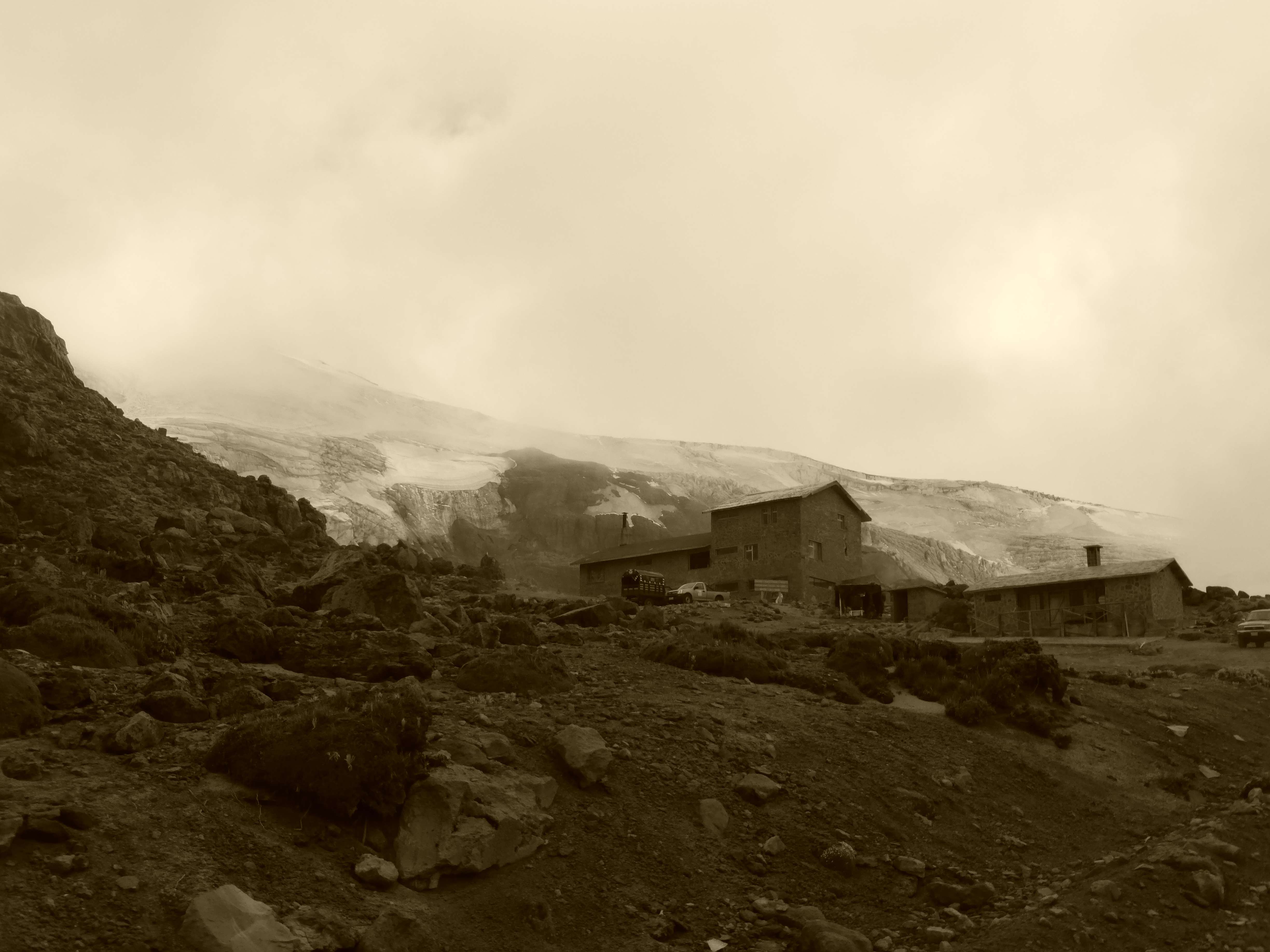
The Mount Shasta Avalanche Center maintains an excellent resource for climbers with route conditions, weather reports, and avalanche risk assessment.  It can be found here: http://www.shastaavalanche.org/

The Shasta-Trinity National Forest website is another good resource, with information both general and specific regarding the mountain and surrounding area.  It can be found here: http://www.fs.usda.gov/stnf/

Mount Rainier – June 2013

RainierJune11

Mount Rainier, seen from the airplane on the way into Seattle.

4392m Mount Rainier, an active stratovolcano, is the most prominent mountain in the lower 48 United States and the highest mountain of the Cascade range.  Rainier is heavily glaciated – the most heavily glaciated mountain in the lower 48 states – and also hosts the largest glacier in the lower United States, the Emmons Glacier.  Due to Rainier’s prominence and extensive glacial coverage, and because of the pacific-northwest’s tendency for unpredictable, inclement weather, climbing Rainier is as much an endurance climb as it is dependent upon weather and conditions.

Alt111

Mount Rainier, seen from the airplane on the way into Seattle.

There are numerous routes up Rainier, some highly technical.  I decided to climb Rainier via the relatively straightforward Emmons-Winthrop route.  With a maximum pitch of ~40 degrees, and low objective hazard besides crevasse presence and the potential for avalanche following heavy snowfall, the Emmons presents one of the more accessible routes up Rainier.

For my climb I joined a team guided by IMG, and climbed between June 10th-13th.  The IMG guides set the route and itinerary, provided transportation to and from the mountain, handled food, managed ropes and protection, and led each rope team.  As a result, the trip was very structured; carrying personal/group gear and managing personal equipment were the only things left entirely to me.

Rainier Beer was on tap in Ashford.

Rainier Beer on tap in Ashford.

The Mount Rainier National Park maintains detailed climbing statistics, with route usage rates and success (climbers reaching the summit) percentages.  A look at these numbers reveals that climbers on Rainier have had roughly a ~50% success rate since the mid 1970s.  In 2012 the National Park reports that 70.32% of climbers ascended the Disappointment Cleaver route, 14.12% the Emmons-Winthrop, 3.73% the Kautz Glacier, and 3.17% the Ingraham Direct, the remainder following other routes.  The year 2012 saw unguided climbing make up ~55% of activity on Rainier, while guided climbing contributed ~45%, the ‘guided’ numbers including both guides and clients.

The Mount Rainier National Park reports and statistics page can be found here: http://www.nps.gov/mora/planyourvisit/annual-mountaineering-reports.htm

Rainier on the horizon, past the Sea-Tac Airport in Seattle.

Rainier on the horizon, past the Sea-Tac Airport in Seattle.

Day 0: Our team met near Mount Rainier National Park in the town of Ashford, got organized, and drove into the Crystal Mountain ski resort to overnight before the climb.  This put us conveniently close to the White River trailhead we would use the next day, and gave teammates time to begin getting to know each other.

Day 1: After a short drive from the Crystal Mountain lodge, we arrived at the White River  trailhead, starting point for the Emmons-Winthrop route.  The trailhead sits at around ~1350m above sea level and leads onto the Inter Glacier via the Glacier Basin trail.  The below map outlines camp locations and gives a rough idea of the route we took up the mountain.

A map of our campsites.

A map of our campsites.

...

The White River trailhead and Glacier Basin trail.

The trail began moderately, following a well maintained path through forest, heading towards the base of Rainier’s Inter Glacier.

...

Following the forest path in sunshine.

With ~25kg packs, the level slope and wide path made progress quick.  I was told that previously this approach had led through dense forest, and that a lot of work has gone into maintaining and clearing the access route.  Along the way we crossed numerous glacial runoff streams.

...

A runoff stream on the approach.

Further ahead landslides and avalanche detritus created gaps in the trees, and we got our first close-up views of Mount Rainier.  The clear, glowing snow of the mountain stood in contrast to the trees on the approach path.  Little Tahoma peak, a sharp and rocky sub-peak of Rainier left over from long-term erosion, was framed through the trees.

...

Little Tahoma Peak in the distance.

Further along we had good views of the heavily crevassed lower Emmons glacier.

...

Crevasse fields on the lower Emmons Glacier.

The weather was perfect and the sky was clear of clouds.  Rainier is famous for its quick-changing, inclement weather, and we were very fortunate to have unobstructed views of the mountain.

...

Rainier in the distance.

Higher up, the maintained trail disappeared under increasingly heavy snow cover.  We continued following a route through the trees marked off by national park wands.

...

Continuing through the trees over snow.

Finally we broke the treeline, and the Inter Glacier came into view above us.  The Inter Glacier was covered in ski and snowboard tracks, and we saw a few skiers descending.  In such great weather I found myself wishing I had my snowboard with me!  Our itinerary for the first day was relaxed, and the plan was to pitch a short-camp near the top of the Inter Glacier.
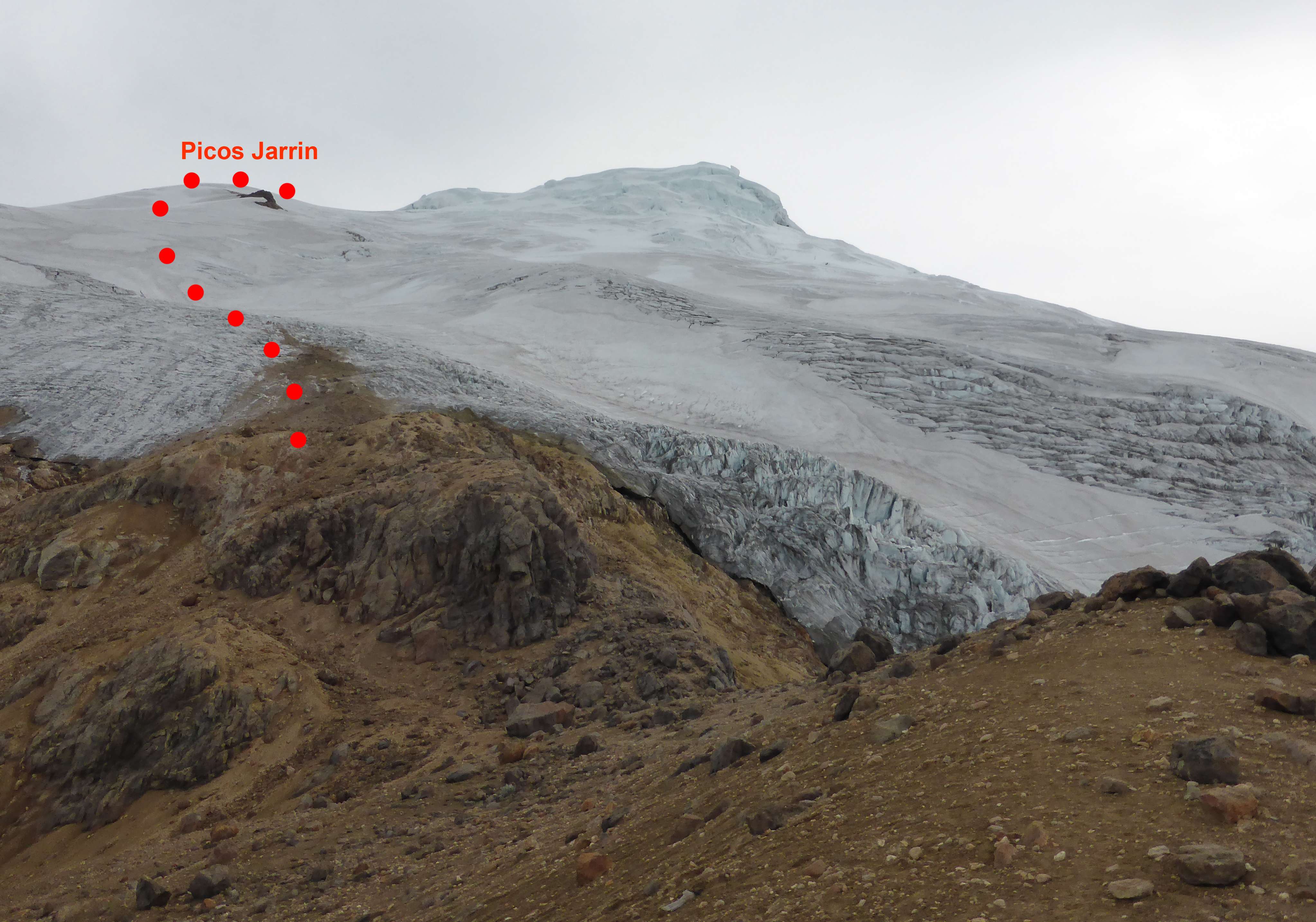
...

The Inter Glacier, covered in ski tracks.  We would pitch our first day’s camp near the highest rocks in the middle of this picture.

After gaining some elevation we arrived at our campsite – a tent platform at around ~2450m which IMG had dug on another climb a few days prior.  After fifteen minutes of chopping and digging to enlarge the platform and smooth it out, we began to unload group gear and pitch our camp.

...

Our first campsite, a nice tent platform.

Our camp was fairly large; four tents for twelve people.  We staked everything down carefully in case of high winds overnight and worked together to get everything up quickly.  

...

Pitching camp.

Below, we had a great view across the Inter Glacier.

Our view from camp.

Our view from camp.

To the northwest, heavy clouds hovered along the ridge.  These would sit across the ridge and below our camp for several hours, until at dusk they began to spill over and engulf us.

...

Clouds to the northwest, slowed by the ridge line.

As the clouds poured over the ridge the sun set, and we turned in for the night.

...

Sunset on the Inter Glacier.

Day 2: Awake with the sunrise, after a quick breakfast we packed up camp.  Today’s itinerary involved a short climb off of the Inter Glacier, across the southeast ridge south of Camp Curtis and above the lower Emmons Glacier to our second overnight at 2883m Camp Schurman.  Here we would prepare for an overnight ascent to Rainier’s summit.  As we left camp we broke into three-person rope teams for crevasse protection.  Passing above the lower Emmons Glacier we had awesome views of enormous crevasses and of Little Tahoma Peak.

...

The Emmons Glacier below us.  Some of these crevasses could easily swallow cars.

The clouds were thick today, but remained well below us all the way to Camp Schurman.

...

Little Tahoma Peak across the Emmons Glacier.

Above us the Emmons and Winthrop glaciers were clear in the sun, and presented us with the route we would take straight to the summit.  To the top we would ascend the rough middle of the northeast mountain face, aptly named ‘the corridor’.  This is more or less a midpoint between the two glaciers, trending left onto the Emmons.

...

The Emmons and Winthrop glaciers, our route to the top of Rainier.

Below Camp Schurman several large crevasses needed to be bypassed or carefully crossed.

...

A large crevasse just below Camp Schurman.

Above, the ranger hut at Camp Schurman was visible.  The hut is constructed on the tip of Steamboat Prow, a boat-wake-shaped pair of ridges which separate the lower Winthrop and Emmons glaciers.  Camp Schurman hosts two permanent structures, a sturdy ranger’s hut and a washroom.  The washroom is primitive – a barrel underneath a toilet seat – but more comfortable than alternatives.

...

The ranger hut and washroom at Camp Schurman.

Steamboat Prow and Camp Schurman represent a safe area for camping on an otherwise thoroughly unstable part of the mountain.  The ridge is free of moving glacial ice and thus free of crevasse hazard, and has enough relatively flat, clear space for several campsites.

...

Camp Schurman and Steamboat Prow.

Camp Schurman.

Camp Schurman.

A plaque on the hut bears an engraved poem, by Camp Schurman's namesake.

A plaque on the hut bears a poem.

Camp Schurman is ringed with numerous crevasses, many partially hidden beneath the snow, making it unsafe to stray far from the ridge alone.

...

Crevasses outside Camp Schurman.

After arriving, we cleared a platform for our tents and got to work assembling a sturdy camp.  Our plan was to leave for the summit early the next morning, climbing overnight to the top.  The weather forecast for the next day was poor, calling for cloud cover and snow, but only moderate winds.  Weather is an unpredictable variable on Mount Rainier and it is not uncommon for teams to be weathered off due to high winds or escalated avalanche risk following heavy snowfall.  Due to the mountain’s prominence, isolation, and location in the pacific northwest, the upper mountain often experiences its own weather, which can change rapidly and unexpectedly.

Looking up the Winthrop Glacier from near our campsite.

Looking up the Glacier from near our campsite.

Soon after pitching camp clouds began to rise and roll past us, and light snow began to fall.  As clouds moved by visibility became variable, with windows of blue sky opening and then closing, taking with them our views of the upper mountain.

......

Looking up Rainier.

As on the day before, as the sun set the clouds ascended in force.

Sunset over our tents at Camp Schurman.

Sunset over our tents as clouds roll in.

Day 3: We began preparing for our climb to the summit at 3 a.m., a relatively late start.  By the time we began getting ready the sky had completely cleared, the stars were out, and wind was very low.  A thick layer of clouds hung below us, but the upper mountain looked promising.  After a fast breakfast and a hot drink, we roped up and began heading out of Camp Schurman at around 4:30 a.m.  We were the only team ascending today, and had the route entirely to ourselves.
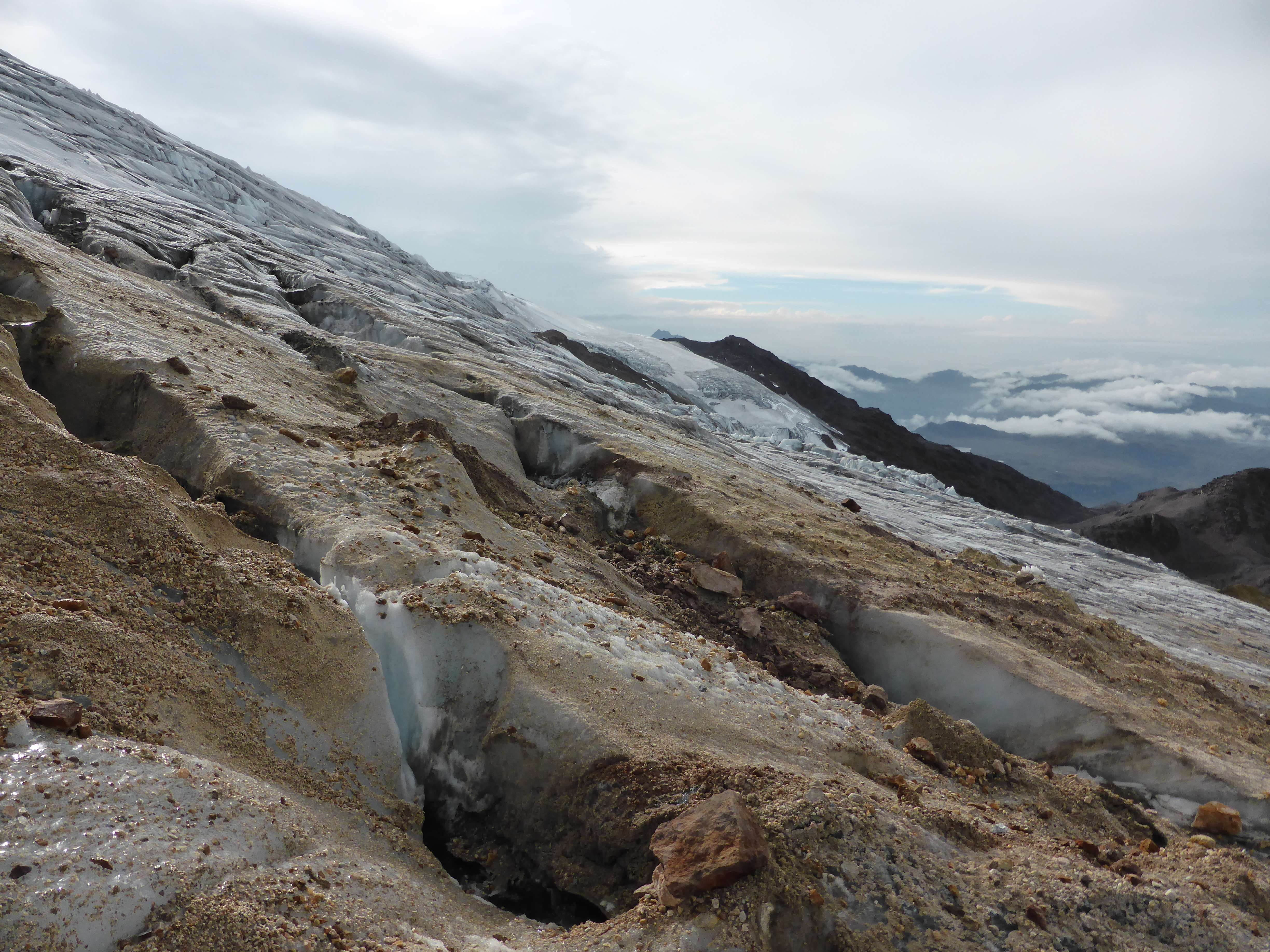
...

Getting ready to head up.

As we headed upwards on the Emmons, the sun began to rise over the clouds below us.

...

The beginning of sunrise.

...

Sunrise on the Emmons.

Sunrise on the Emmons.

Sunrise on the Emmons.

...

Little Tahoma Peak in the sunrise.

...

Sunrise on the Emmons.

...

Camp Schurman, surrounded by crevasses.

...

The Emmons below us.

We followed the corridor upwards at a steady but moderate pace, crossing and bypassing several crevasses.

...

Crevasses off route.

As we gained elevation, the pitch grew steeper.  Higher up, interesting snow formations stood like sculptures.  Off route, overhanging walls of ice and snow.
48458456845683

Overhanging walls.

Wind carved walls.

...

The upper glacier shone, contrasted against the dark blue sky.

...

The Winthrop Glacier.

The weather was perfect; low wind, crisp snow, and warm sunshine.

...

Looking down the Glacier.

Below us a thick cloud ocean was slowly growing larger.

The cloud ocean.

Clouds boiled and rose below us.

Looking east.

Looking east.

...

Steamboat Prow bottom right.

Our lead guide placed pickets for several minor obstacles, and we used three more for a short section with a steep, icy drop-off and some decent exposure.  We navigated across and around more crevasses, our guides wanding them for descent as we went.  As we approached the top of the Emmons/Winthrop, we found ourselves at the bottom of the glaciers’ bergshrund, a large crevasse formed where moving glacial ice meets static rock.  We began traversing to the west, where others in camp had told us a safe and easy crossing could be found.

...

Curtis Ridge and Russell Cliff to the west, near our crossing point.

We reached our crossing and stepped over the bergshrund.  Above, the slope began leveling off.

...

Looking back at the bergshrund, it is visible as a long crack along the length of the right-hand ridge.

To the west Liberty cap marked our progress, and although it was not yet visible, we were only a short distance from Columbia Crest, Rainier’s high-point and true summit.

...

Liberty Cap to the west.

...

Liberty Cap.

The weather was still excellent.  We were extraordinarily fortunate, encountering very low wind and clear views the entire way up.  The clouds began to rise quickly as we approached the top, and Columbia Crest came into view above us.

...

Columbia Crest, Rainier’s summit, above us.

The crater rim came into view, devoid of snow.

The crater rim.

The crater rim.

We gained the top of Columbia Crest at 11:30 a.m – 7 hours from Camp Schurman at a very moderate pace.  Wind gusted hard at the top, and despite the sun it was very cold.

...

Columbia Crest, Rainier’s high point.

It felt great to reach the top under a blue sky – everyone in our group was strong at the top, and it was fantastic to share the summit together.

...

On the summit of Mount Rainier.

Our team on the summit.

Our team on the summit.

In the distance, Mount Adams loomed out of the clouds.

...

Mount Adams, from Columbia Crest.

After roughly 45 minutes on the summit, we began to descend.  Below us the cloud ocean continued to rise, and as we descended it enveloped us.  The rest of the descent would be through variable visibility, with occasional patches of blue sky appearing as clouds rolled over us.  We followed our ascent route downwards, using the wands placed earlier to guide us through the cloud cover.

...

Looking across the Emmons in a brief patch of blue sky.  Visibility was very poor for most of our descent.

The rolling clouds gave the glacier an otherworldly, alien appearance.  We made good speed descending, slowing down only for tricky crevasse crossings.

...

Looking down the Emmons Glacier.

...

Looking back up the Emmons.

At around 4:30 p.m. – a full 12 hours since leaving – we arrived back at Camp Schurman.  Several other teams had arrived while we were climbing, yet others had left.  In high spirits, I lounged around camp hydrating and eating snacks.

...

Returning to Camp Schurman.

Shortly after our return to camp a steady rain began to come down.  It was cold, wet, and thoroughly unpleasant – we were all grateful that we had been lucky enough to ascend in clear weather.  As the sun began to set, the rain turned to sleet, then snow. From here on our itinerary was very relaxed, and our plan didn’t call for descending until the next day.  We turned in early, planning to get a sunrise start.

...

Our camp in the sleet.

Day 4: Up early, we were greeted by a clear sky and gorgeous alpenglow on the upper mountain.

...

Alpenglow in Rainier.

Rainier in the morning sun.

Rainier in the morning sun.

The mountain looked fantastic in the clear light.  We could make out two teams ascending, and it looked like they would enjoy a weather window similar to ours the day before.  The sun was refreshing after the cold, wet night.  We quickly broke camp, and prepared to descend back to the Inter Glacier.

...

Sunrise at Camp Schurman.

...

Looking down the Emmons.

As we began descending, it was hard not to stare at Little Tahoma Peak and the lower Emmons glacier.

...

Little Tahoma Peak across the Emmons.

Defined crevasse fields below Little Tahoma Peak.

Crevasse fields on the lower Emmons Glacier below Little Tahoma Peak.

...

Crevasse fields on the lower Emmons Glacier below Little Tahoma Peak.

As we reached the Inter Glacier, we were immersed in thick clouds.  The morning air was warm, and the fresh snow underfoot had softened into a slushy, ankle deep mess.  After around an hour of descent, we reached the bottom of the Inter Glacier, and regained the Glacier Basin trail to the White River trailhead.

...

Leaving the Inter Glacier for the Glacier Basin trail.  Old avalanche debris remained from the winter.

...

The Glacier Basin trail.

...

Final view of Little Tahoma Peak.

Further down we cleared the snowline, and returned to a groomed path.

...

Near the White River trailhead.

Returning to the White River parking lot, we drove back into Ashford to celebrate with a huge meal.

Rainier was a superb experience; having climbed it I was left with the urge to return and do so again.  The Emmons Glacier was spectacular in clear weather; many of the views left me in awe of the mountain’s raw, beautiful, unforgiving landscapes of rock, ice, and snow.

The structure of a guided team climb was a new experience for me, and though the climb itinerary was spread out and very moderately paced, everything fell into place and worked out wonderfully with the weather.  Our team got along very well, and it felt good to work cooperatively while pitching camp, contribute by carrying loads of group gear and food, and operate together on the rope.  Climbing with a guided group definitely made the climb safe, but also far more accessible due to the guides’ considerable experience and skillset.  Rainier cannot be considered anything but endurance testing and potentially dangerous; heavy packs, glacier navigation, lots of crevasses, unpredictable weather, and a long summit day all contribute to making it a solid climb.  I will definitely return to Rainier.

Accessibility

Rainier is relatively accessible, but safe access is highly dependent on weather patterns.  While Rainier is climbed year-round, the normal climbing season runs from May to September.   Mid-July through mid-August is said to offer the best weather.  For reference, the guide companies start their non-winter trips in mid-May, and finish at the end of September or beginning of October.  There is always a chance of being turned around by inclement weather – high winds and heavy snowfall in particular often make the upper mountain dangerous or inaccessible.

Many climbers approach Rainier through one of the three guide companies which are licensed to operate on the mountain.  I climbed with a team guided by IMG, and was very impressed with their guides’ attitude, experience, and safety consciousness.  I finished my climb feeling pleased that I chose their service, and feel confident recommending them.  The three guide companies operating on Mount Rainier are:

International Mountain Guides (IMG): http://www.mountainguides.com/rainier.shtml
Alpine Ascents International (AAI): http://www.alpineascents.com/
Rainier Mountaineering, Inc. (RMI): http://www.rmiguides.com/

The Mount Rainier National Park statistics page with success rates, annual usage counts, route statistics, and much more, can be found here: http://www.nps.gov/mora/planyourvisit/annual-mountaineering-reports.htm

Climbing on Mount Rainier is controlled by the Mount Rainier National Park.  Their website has an abundance of information on permits, routes, access, and climbing fees: http://www.nps.gov/mora/planyourvisit/climbing.htm

Iztaccihuatl – December 2012

Iztaccihuatl, as viewed from the central square in Amecameca – the profile of the sleeping woman is clear in the photo: head and hair to the far left, legs and feet to the far right.

Iztaccihuatl, as viewed from the central square in Amecameca – the profile of the sleeping woman is clear in the photo: head and hair to the far left, legs and feet to the far right.

Iztaccihuatl is a 5230m dormant volcano, the third highest mountain in Mexico.   The mountain’s name means ‘White Woman’ in Nahuatl, an Aztec language indigenous to central Mexico.  From a distance the mountain’s profile resembles a sleeping woman, sometimes seen blanketed white with snow.  Climbing Iztaccihuatl is mostly a straightforward hike, with an uncrevassed glacier traverse near the top.

Iztaccihuatl, viewed from near La Joya.

Iztaccihuatl, viewed from near La Joya.

I hiked Iztaccihuatl over 3 days as warm up and acclimatization for Pico de Orizaba.  While the climb served this purpose wonderfully, Iztaccihuatl is a fantastic hike in its own right.

...

Popocatepetl (left) and Iztaccihuatl (right) on the horizon, as seen from the summit of Pico de Orizaba.

Day 0: My trip began in Mexico City, where a short taxi ride took me from the airport to the TAPO bus station.  At the TAPO station I took a ~2 hour bus to Amecameca, a town near the base of Iztaccihuatl.  Amecameca sits at ~2450m, making it a good overnight acclimatization rest for someone coming from sea level, as I was.  In Amecameca I walked from the bus stop to the central square and checked into the Hotel San Carlos, a budget hotel recommended by many climbing websites.  For $10 per night, it also serves as excellent storage for luggage while on the mountain.  Equally convenient, the Hotel San Carlos is right next door to the Izta/Popo national park headquarters, where one must arrange an access permit to hike Iztaccihuatl.

My plan for the next day was to hire a taxi to drive me to La Joya, the trailhead for “La Arista del Sol”, the ridge of the sun, the standard route up Iztaccihuatl.  At check in the hotel owner asked me which country I came from, and when I told him I was Canadian he excitedly informed me that three other Canadians were also staying in the hotel and were planning to hike Iztaccihuatl the next day.  I introduced myself to the trio in the morning, and we agreed to carpool to La Joya and hike together.

...

The parking lot at La Joya, trailhead for Iztaccihuatl’s La Arista del Sol route.

Day 1:  After a rough drive out of Amecameca and up some steep switchbacks, we reached La Joya, a large open space at the base of the mountain – pretty much a big parking lot.  

Iztaccihuatl, viewed from near La Joya.

Iztaccihuatl, viewed from near La Joya.

This is a good area to camp and rest, and a great acclimatization interval at ~3900m.  After sorting some gear and hydrating, my new friends and I headed upward for an acclimatization hike.  

..

Memorials near La Joya.

Iztaccihuatl sees a lot of traffic, and is quite a popular weekend hike for locals living near Mexico City.  Near the La Joya trailhead are numerous memorials – many to famous Mexican climbers who have died on mountains around the world.

..

Looking ahead, near the La Joya trailhead.

As we headed up the route followed a usage path of scree and volcanic rock. The terrain was interesting, with big rock formations and little vegetation.

..

Rocky terrain and scree.

After an hour and a half of hiking steadily upwards, we stopped to take a rest. Higher up we had great views of Popocatepetl looming to the south.  Popocatepetl is an active volcano, and lives up to its Nahuatl name, meaning ‘Smoking Mountain’.

..

Popocatepetl to the south.

After a short rest for acclimatization, we descended to La Joya and pitched camp in the parking lot.

..

My little campsite at La Joya.

Day 2: Today we planned to hike up to our second overnight, the Grupo de los Cien climber’s hut at ~4600m.  This second night at altitude is an important acclimatization interval – the summit of Iztaccihuatl is over 5000m, and I had recently come from sea level.  We left La Joya early, carrying with us food and water supplies for the next two days.  Iztaccihuatl is a dry mountain, and below the glaciers there are no water sources.

..

Heading up over volcanic rock and loose scree, a usage path was often visible.

..

Colorful volcanic rock.

Just below the Grupo de los Ciens hut crosses stood on many of the rock spires above.  I can only assume that these were more memorials, but their presence above us was somewhat chilling.
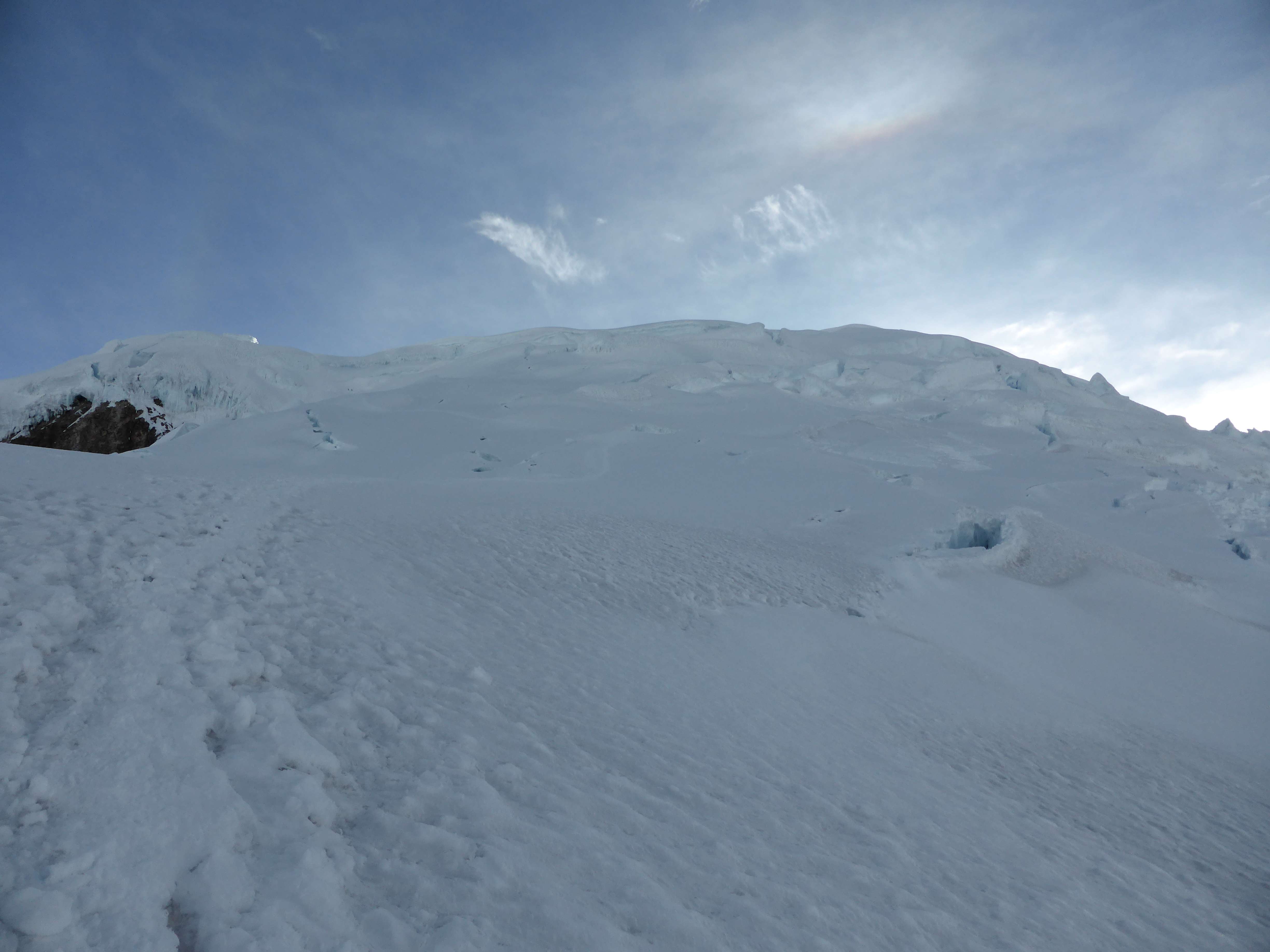
..
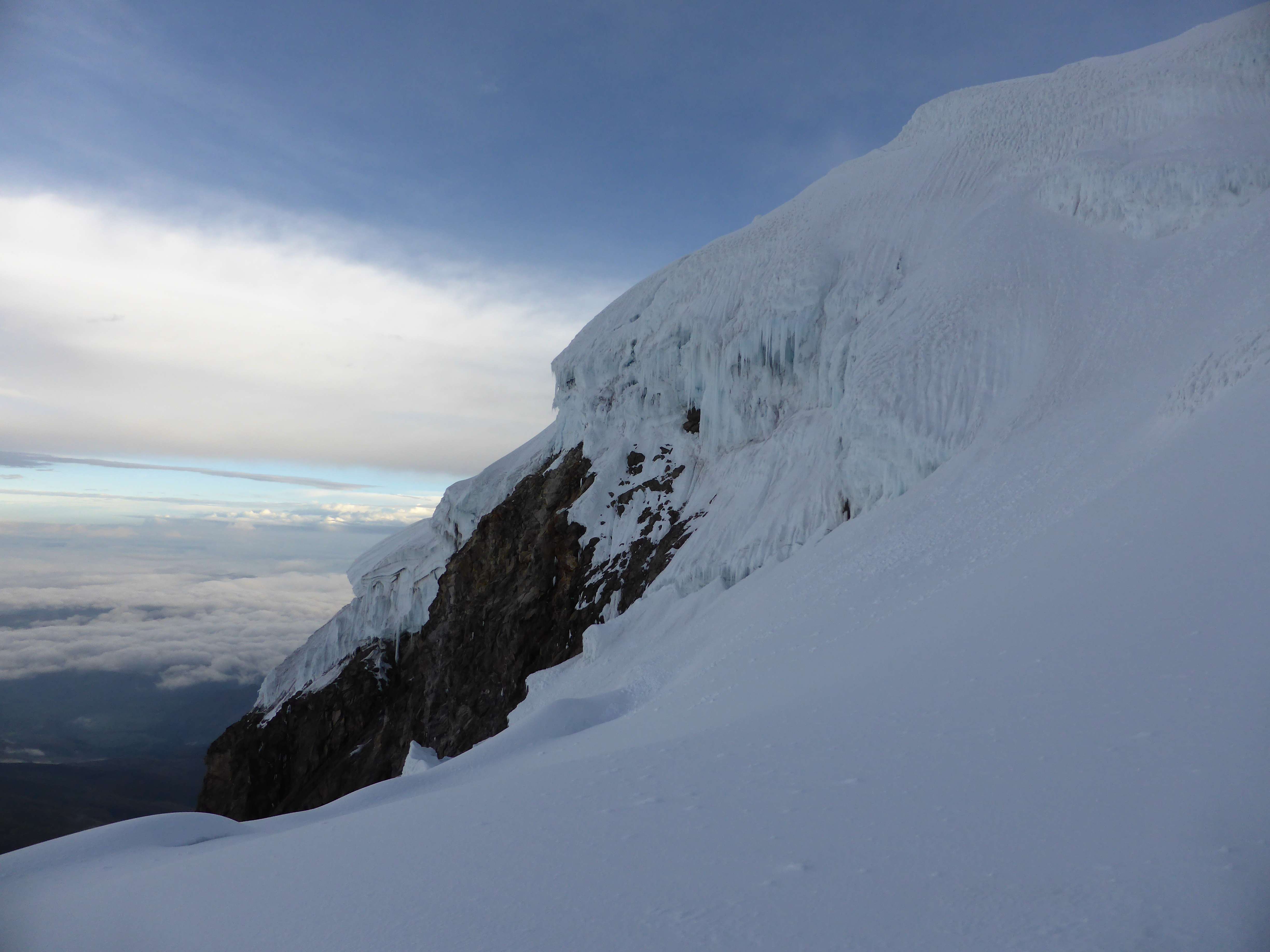
Crosses on the rocks above.
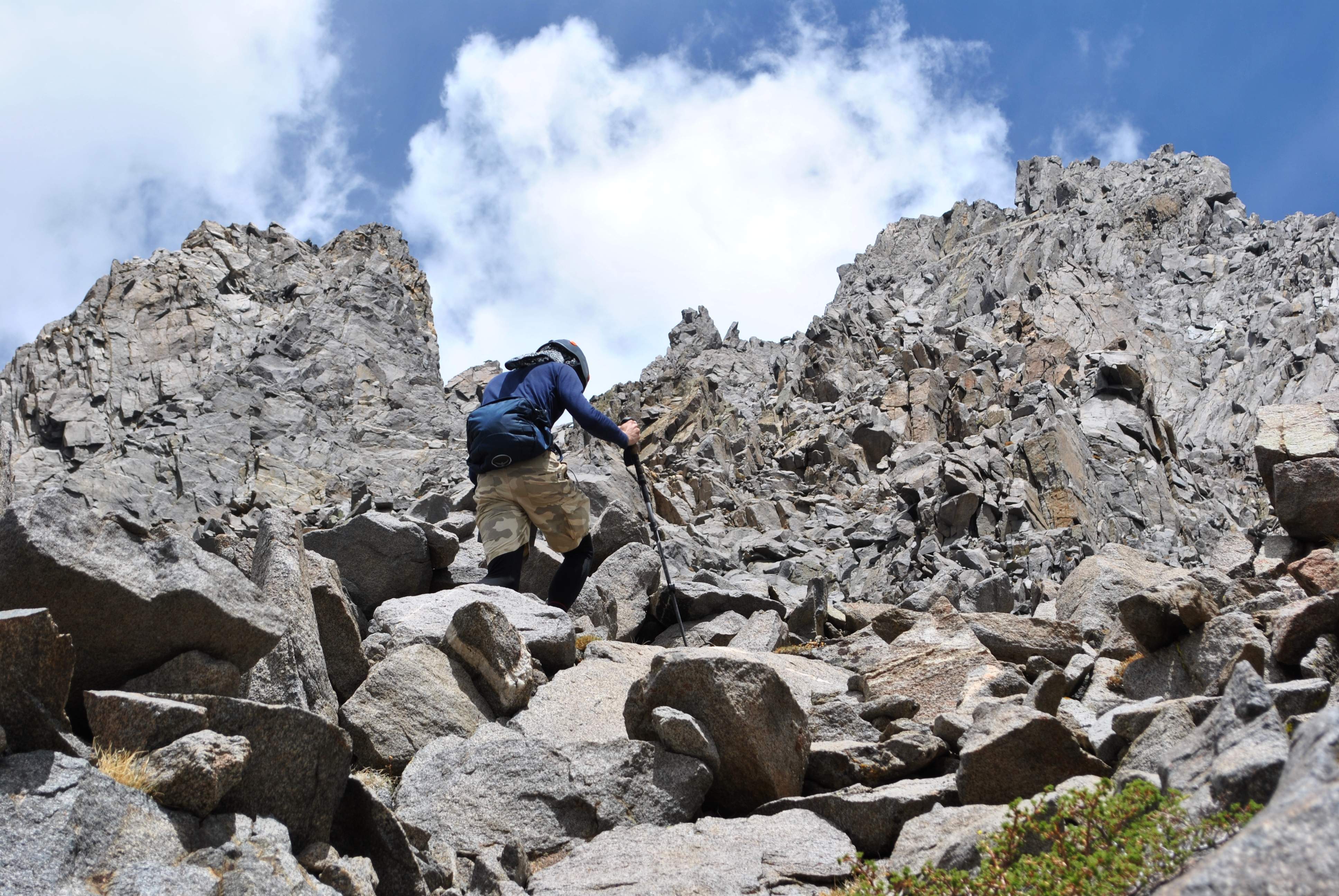
Finally we cleared a ridge and saw the Grupo de los Ciens hut below us.

..

The Grupo de los Cien hut.

At an elevation of ~4600m, the hut serves as a rough overnight and an excellent high camp for a climb to Iztaccihuatl’s summit.  The hut is located just below the ‘knees’ of Iztaccihuatl, when considering the mountain’s sleeping woman profile.

..

The Grupo de los Cien hut is nothing if not sturdily constructed.

..

Crosses lined the rocks above the hut.

Inside, we unpacked and began sorting gear for our overnight climb to the summit.  Comfortably, the hut would accommodate around eighteen people.  We had it mostly to ourselves, only sharing it with two others who were on their way down.

..

Inside the Grupo de los Cien hut.  Each half of the hut has three ‘bunk layers’.

Looking past the hut, a steep scree slope awaited us.

..

A clear usage path followed steep scree upwards.

Day 3: We woke up early, ate a fast breakfast, and headed up the scree-covered ‘knees’ towards the summit.  Below, the lights of Amecameca shone brightly.

..

Amecameca below us.

Atop the knees, at roughly 4930m, we discovered the ruins of another hut, long destroyed by weather.

..

The ruins on top of the knees.

Shortly after we passed the knees the sun began to rise, giving us gorgeous views of Pico de Orizaba in the distance.

..

Sunrise illuminated Pico de Orizaba, far in the distance.

..

Orizaba’s silhouette at sunrise.

..

Popocatepetl at dawn.

..

Popocatepetl above the clouds.

Ahead of us the Ayoloco glacier, Iztaccihuatl’s ‘belly’, glowed in the sunrise.  The summit plateau was visible past the glacier.

..

The Ayoloco, ‘belly’, glacier.

Here we stopped to put on crampons.  Probably not necessary for the flat crossing, but the ice was very hard in the cool morning air.  From the glacier, Iztaccihuatl’s shadow stretched over the clouds below.

..

The shadow of Iztaccihuatl.

..

Looking over the clouds from the Ayoloco glacier.

..

Sun cups on the glacier.

Looking at the route behind us.

Looking at the Ayoloco glacier behind us, Popocatepetl in the distance.

From up here Pico de Orizaba could be seen in the distance, above the clouds.

..

Pico de Orizaba (right) in the morning clouds.

..

Popocatepetl.

Across the summit plateau the summit was visible across a large snow field.  Three ridges of similar height ring this snowfield, but the farthest ridge marks the true high point of the mountain.

..

The true summit is at the top of the farthest summit-plateau ridge.

After crossing the snowfield, the ridge was an easy walk.

..

Looking back at the ridge.

From the summit the ‘head’ of Iztaccihuatl was visible below.  The rocks of the head had an eerily realistic resemblance to a human face.

..

The ‘head’ of Iztaccihuatl resembles a human face when viewed from above.

The summit, at 5230m, was marked with crosses and prayer flags.

..

The summit of Iztaccihuatl.

..

On the summit.

Shortly after we reached the summit, Popocatepetl began to smoke.

..

Popocatepetl smoking in the distance.

Below us, an incredible cloud ocean.

..

Cloud ocean from the summit of Iztaccihuatl.

Descending was much faster than ascending in the dark had been, and we made our way back above the Grupo de los Cien hut without issue.  The weather was perfect, and the sunny views very enjoyable.

..

Returning to the knees, the Grupo de los Cien hut below.

Popocatepetl had stopped smoking, and we enjoyed a final clear view of it in its entirety.  Popocatepetl used to be glaciated, but its recent volcanic activity has melted everything, and it now appears to be a mountain of rock and scree.

..

Popocatepetl from the knees.

At the Grupo de los Cien hut we packed up all of our gear, filled a few bags with garbage left behind by other hikers, and had an uneventful descent to La Joya.  In Amecameca we celebrated our hike with a dinner of Mexican street food, and then parted ways.  I would meet the three Canadians again while climbing on Orizaba, but as we had arranged the services of different lodging/transport providers, we traveled and climbed separately from here on.

Iztaccihuatl was a rewarding hike.  The views of Orizaba, Popocatepetl, and the Ayoloco glacier made for interesting scenery, and the hike itself was enjoyable.  As an acclimatization hike, at 5230m Iztaccihuatl was superb preparation for my Orizaba climb a few days later.

Accessibility

Iztaccihuatl is easily accessible.  From the Mexico City airport, take an inexpensive taxi to the TAPO bus station.   From there, a bus ticket to Amecameca can be purchased via the Sur or Volcanes bus companies.

Bus tickets to Amecameca can be purchased at the SUR / Volcanes Ticket Counter in the TAPO bus station, Mexico City.

Bus tickets to Amecameca can be purchased at the SUR / Volcanes Ticket Counter in the TAPO bus station, Mexico City.

Once in Amecameca, look for the San Carlos Hotel, located right on the town’s central square.  In the below photograph, a prominent building is visible to the far left.  The San Carlos is located just to the right of this easily found building – its ‘hotel’ sign is at the far right of the photo.  The San Carlos is a great place for safe, affordable lodging and luggage storage.

..

The prominent building at the left is a good landmark – the San Carlos is to the right of it.

The address, from their keychain.

..

Once in Amecameca, Butane/Propane fuel canisters can be purchased at the Ferreteria, a hardware store just off of the central square.  It is bright orange and easy to find.

..

This store in Amecameca is an excellent source for fairly priced fuel canisters.

Iztaccihuatl can be climbed year round, but the dry season occurs from November through March, and this is the most popular time to climb.

A permit is required to access the La Joya trailhead by car, and to hike Iztaccihuatl.  Permits can be obtained at the Izta/Popo park headqurters, near the Hotel San Carlos.  A driver to La Joya can easily be found nearby the park headquarters, and I am told that a ride to La Joya from Amecameca costs around $50 USD.  Don’t forget to bring a large quantity of water to La Joya – enough for three or four days.  There are no water sources below the glaciers on Iztaccihuatl.