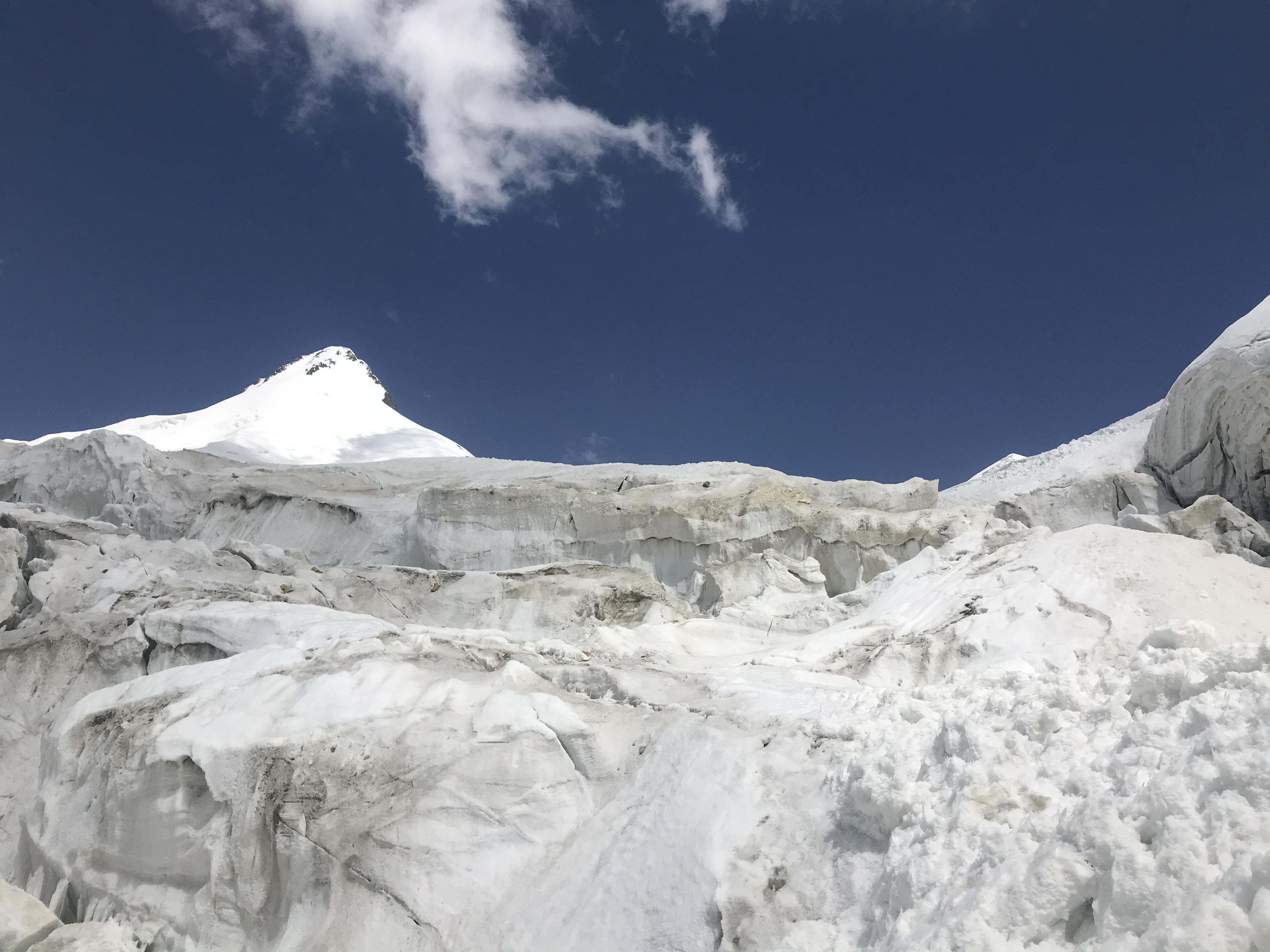
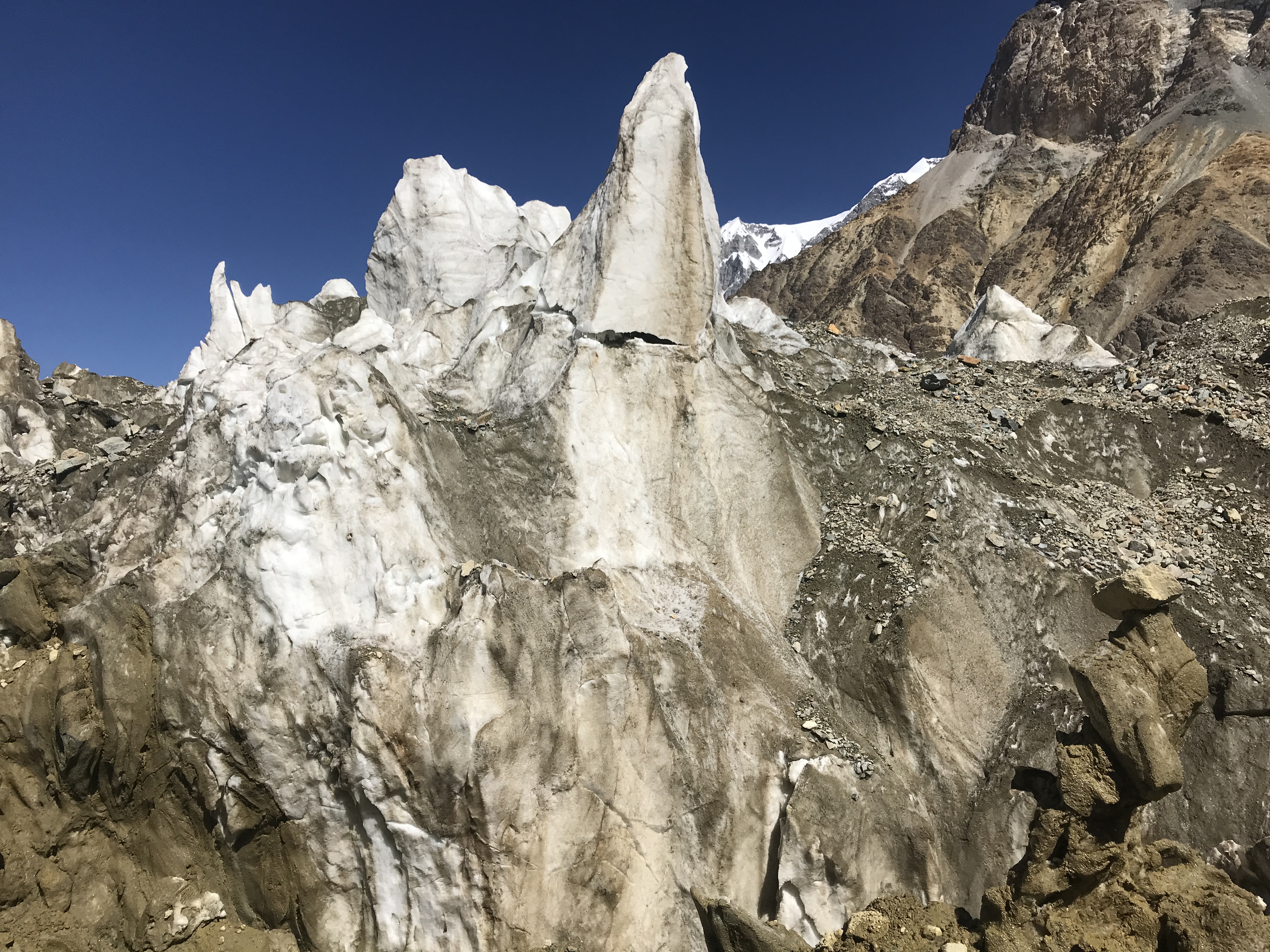
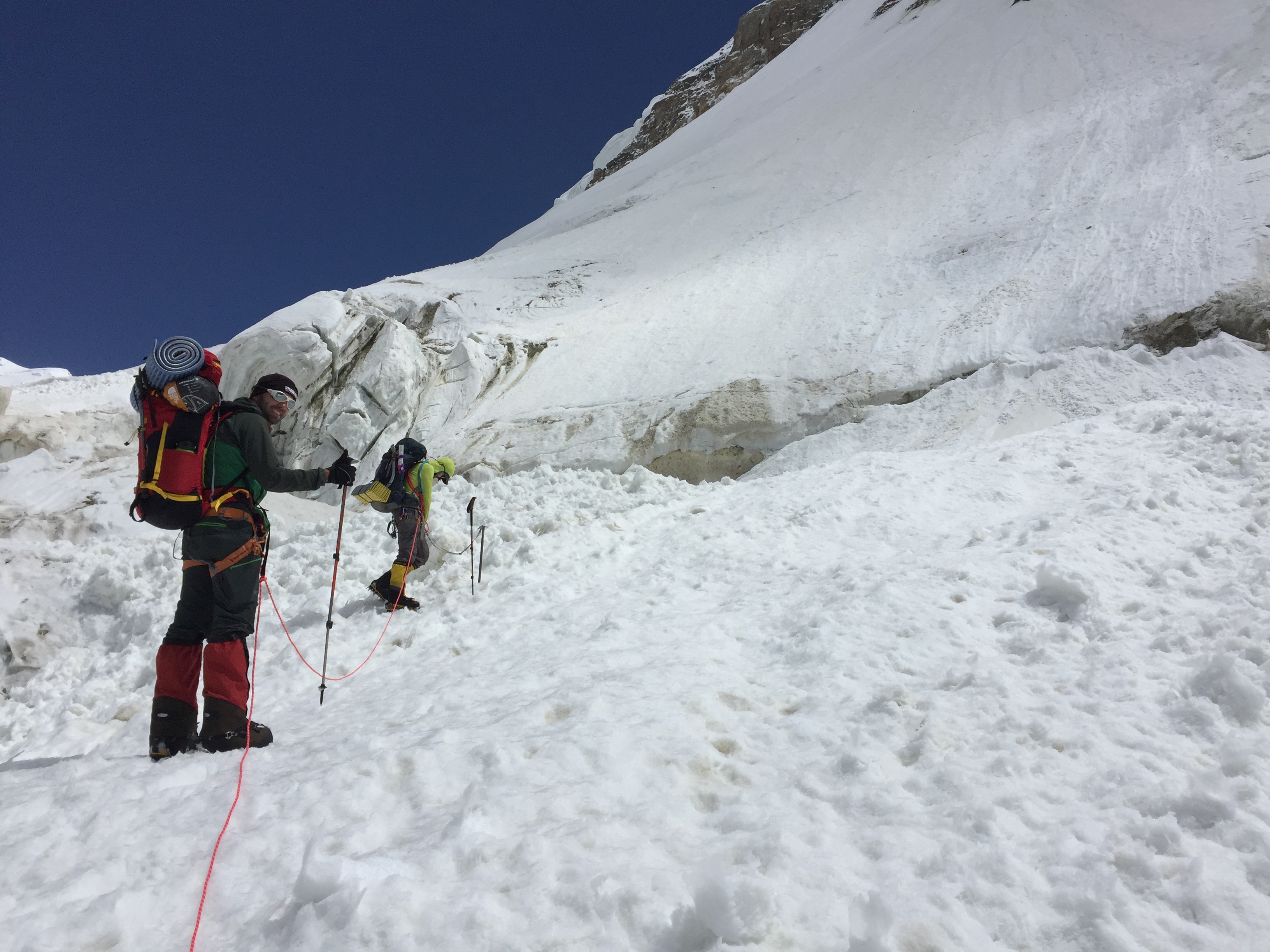
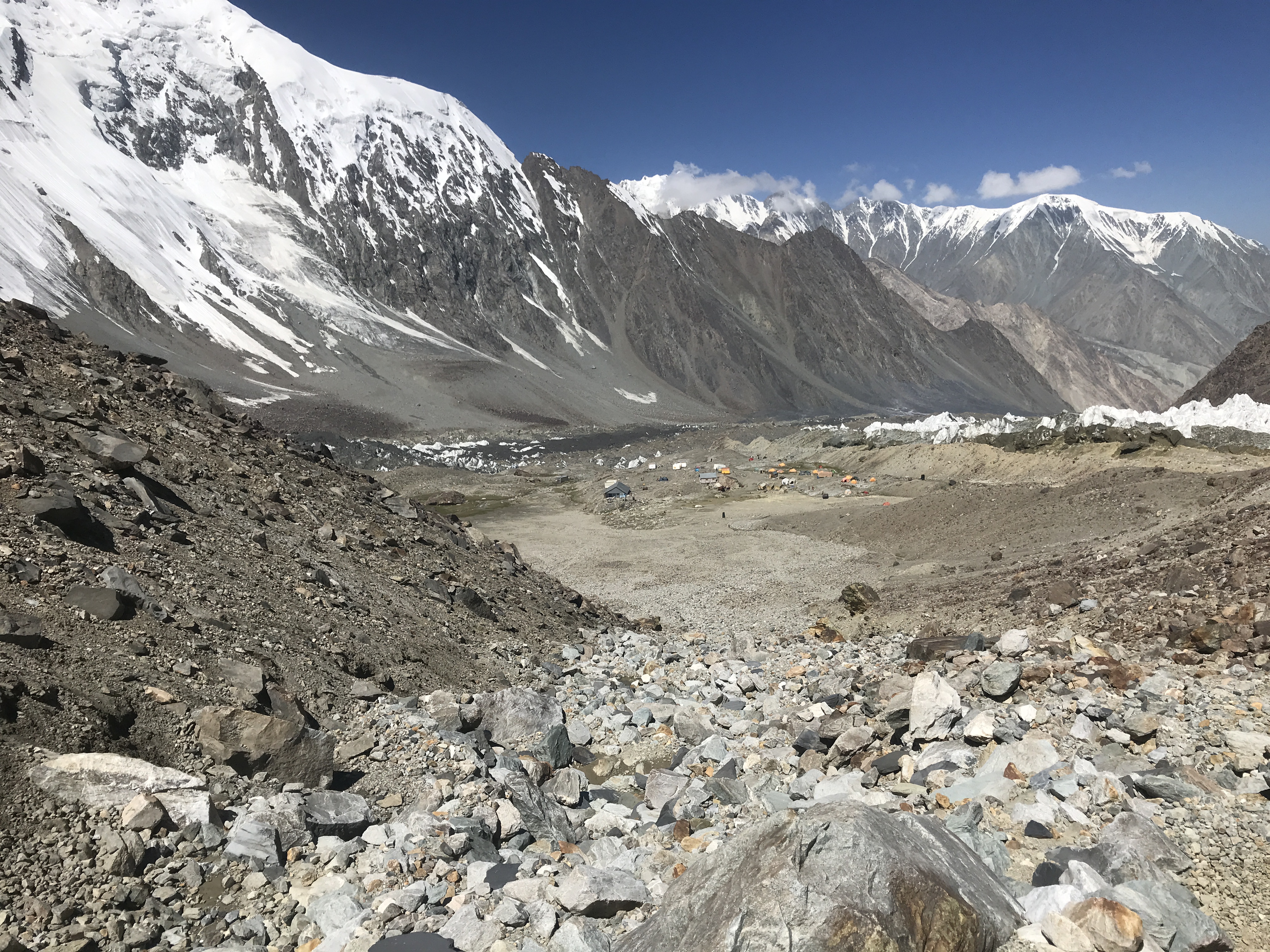
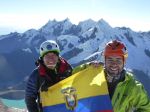
Ojos del Salado – February 2017

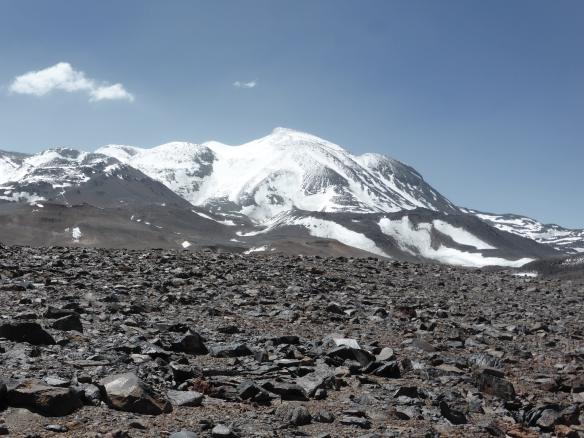
P1040593

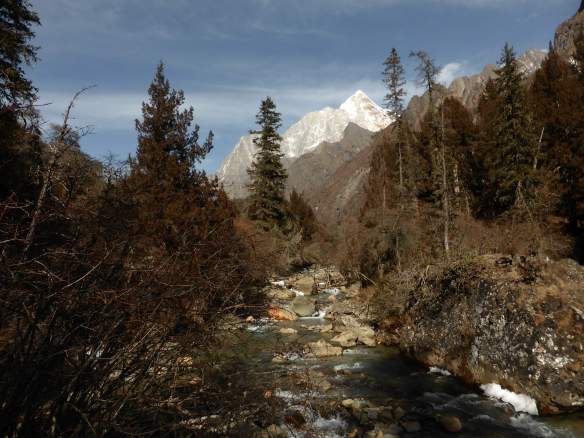
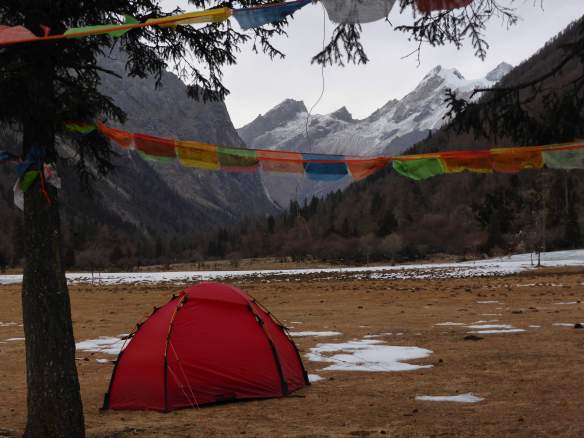
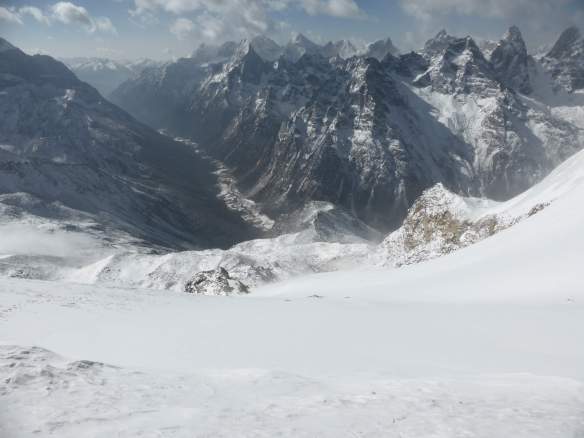
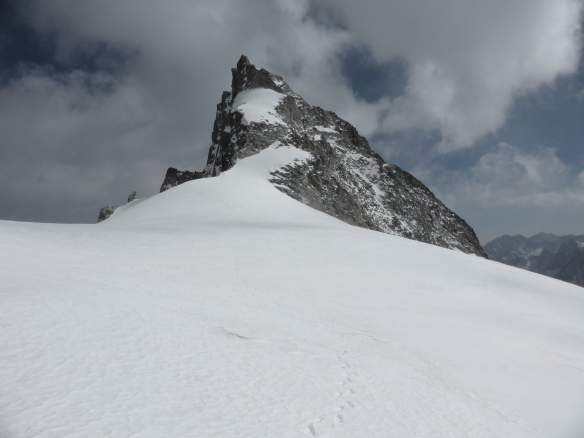
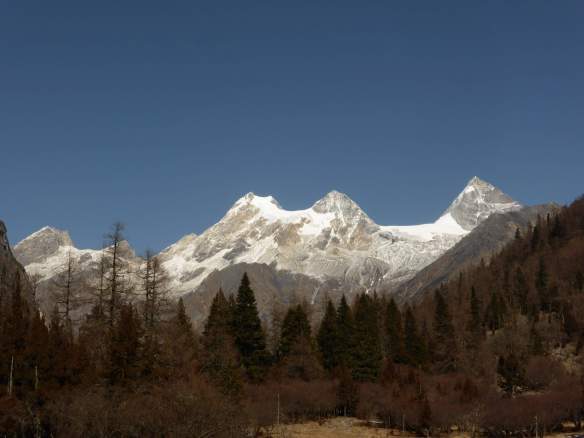
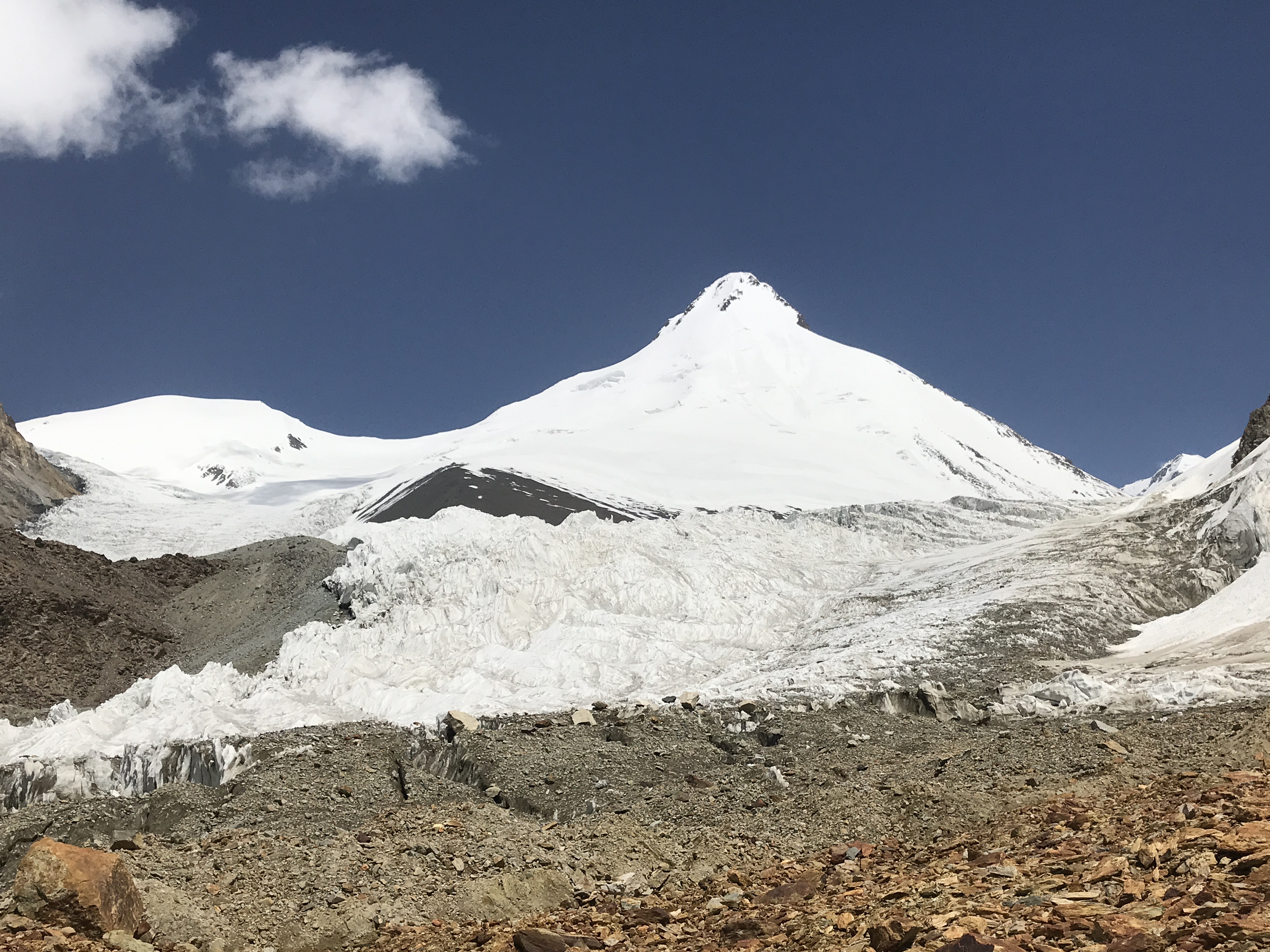
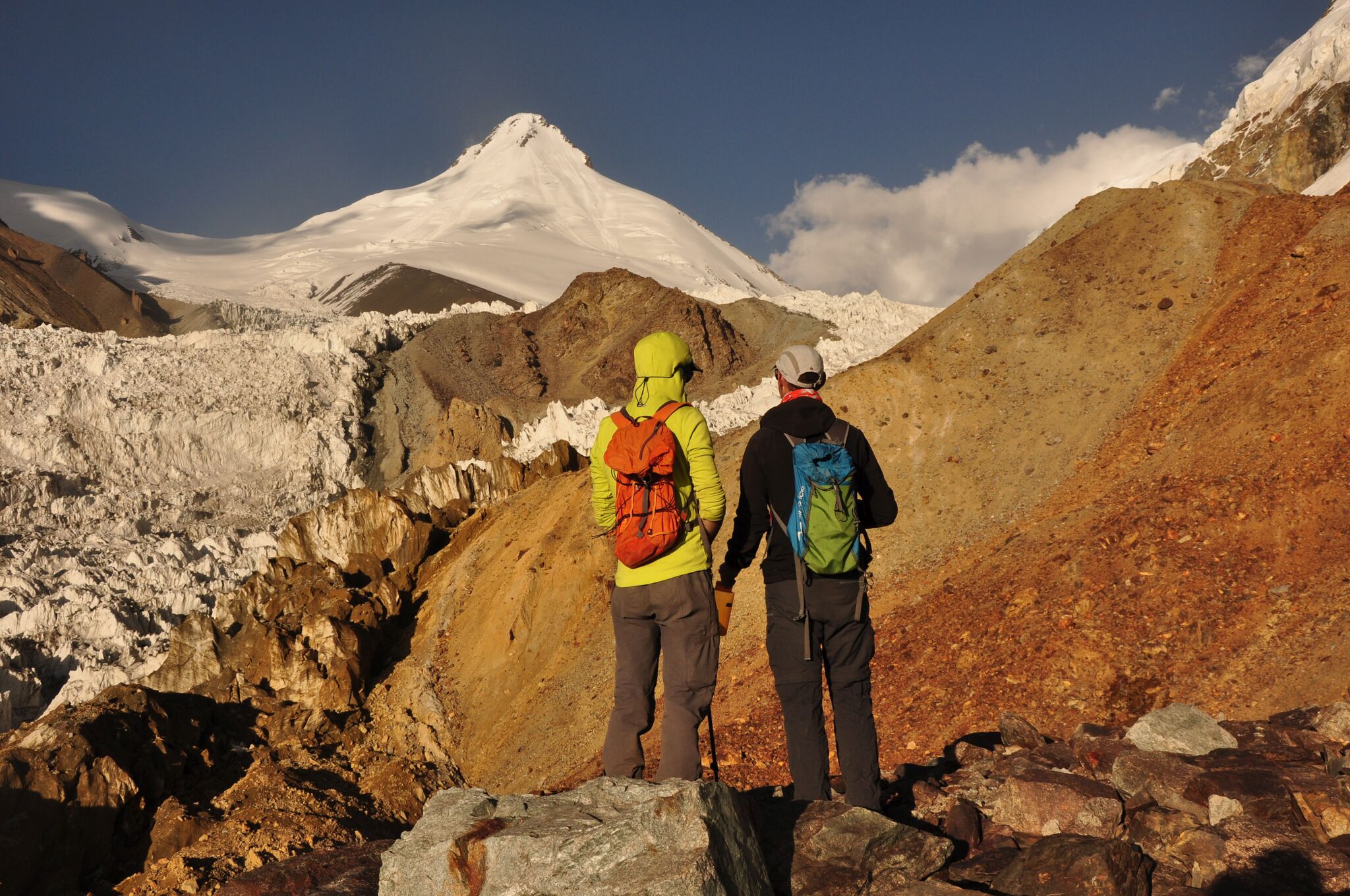
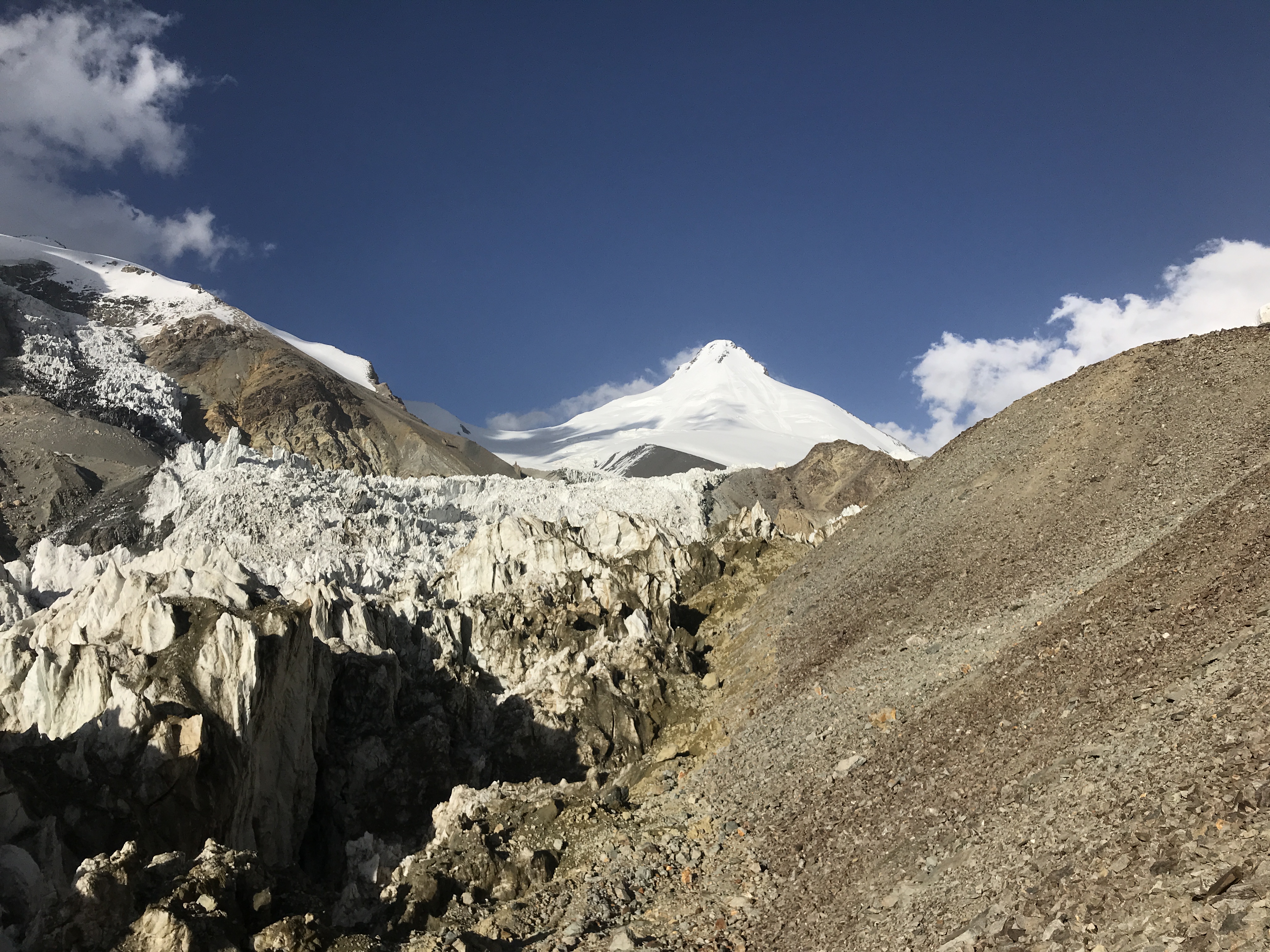
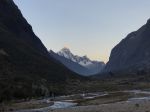
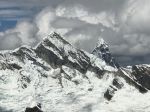
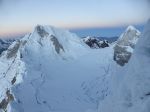
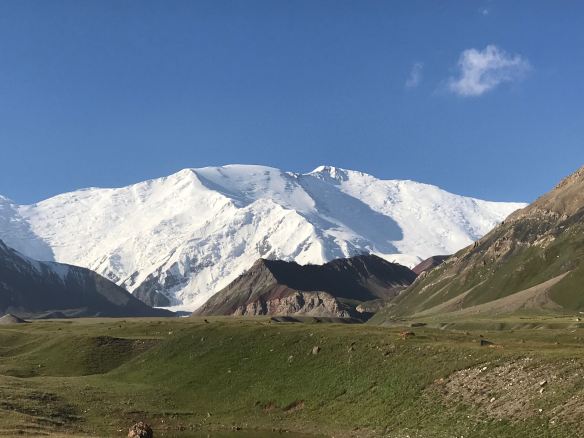
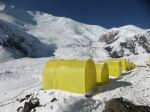
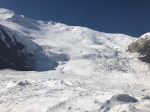
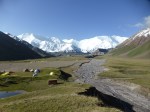
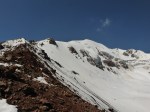
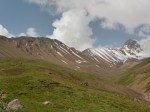
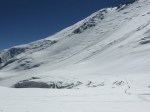
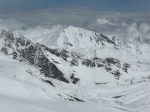
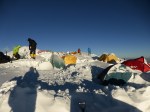
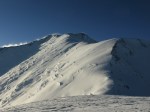
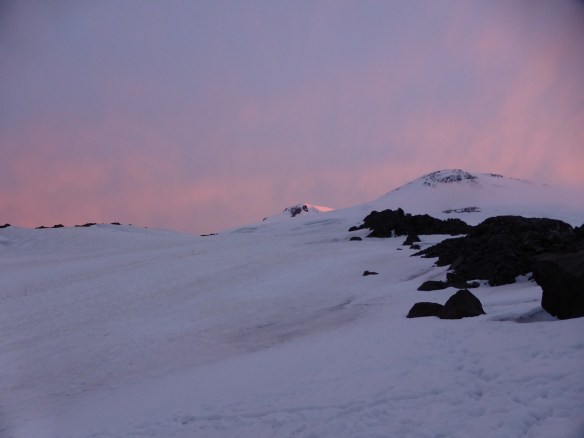
Ojos del Salado from el Arenal, still many kilometers from high camp.

Ojos del Salado Trip Report

I visited Argentina for a second time in February 2017, with the goal of climbing the 6893m Ojos del Salado.  Ojos is the second highest mountain on the South American continent, the highest volcano in the world, and given its location on the Chilean/Argentinean border is also the highest mountain in Chile.  As with most volcanoes, Ojos by its normal routes is considered an easy climb, and is entirely non-technical barring a section of scrambling near the very top of the mountain.  That said, its location deep within the high Atacama desert makes for a unique environment, offering its own particular challenges.

An ascent of Ojos del Salado has two possible starting points – Chilean or Argentinean.  The Chilean route is very well developed, with huts conveniently placed all along the way, and is very accessible via 4×4; where records have been set for highest driving altitudes.  Climbers commonly begin the climb on this side with a drive to 5200m.  The Argentinean approach is the polar opposite; remote, desolate, inaccessible, wild.

In researching and planning my 2017 winter expedition, I sought an opportunity both to challenge myself and to develop the range of my expedition experience.  The ~43km, extremely remote approach to Ojos from the Argentinean side had been on my radar for quite some time, and appealed to me as an ideal objective.  I knew that the climb itself was comparable to Aconcagua, if not easier, and decided that the land approach from Argentina would add desirable complexity and difficulty to an attempt.

I decided to make a solo attempt, approaching over land through the high Atacama desert.  I would begin unacclimated, and utilize the desert approach for my acclimation.  The isolation of the area, the distance involved, and the relatively high altitude of the entire affair comprised a compelling test of my training and logistical planning skills.  I would need absolute self-sufficiency and robust physical endurance in order to succeed.

Attempting Ojos from Argentina entails getting to Fiambala, a dusty little town in northwest Argentina.  In late January I flew in to Buenos Aires, hopped a cheap domestic flight to La Rioja, and from there rode a run down bus to Fiambala.  The same can also be done via Catamarca instead of La Rioja, if the flights are more accessible or less expensive.  In Fiambala I hoped either to find a well-regarded local fixer and operator, Jonson Reynoso, or to sort out independent transportation to the Refugio Cazadero Grande at the side of Highway 60, a roadside emergency shelter in the middle of nowhere, where the approach to Ojos begins.

Jonson is a legend in the area, and is the go-to person for any and all logistical needs in the high Atacama.  I had read about Jonson on Summitpost and had seen his name mentioned in numerous trip reports, but was unable to find a means of contacting him ahead of my trip – I figured that I’d show up in Fiambala and sort things out when I got there.  Jonson can be contacted via his email, which I now have; please send me a message if you need his address.

I arrived in Fiambala at dusk, and with my terrible Spanish managed to get a taxi from the bus station.  I told the taxi driver “Jonson Reynoso, Ojos del Salado”, and he immediately knew where to go.  We pulled up in front of Jonson’s office as the sun was setting, and there he was, larger than life, standing in the doorway.  I introduced myself, told him that I wanted to climb Ojos, and we arranged for a drive at 4 a.m. the next morning.  In Jonson’s office I met an Irish climber who had returned from Ojos that afternoon, having made an unsupported but pre-acclimated approach in much the same manner I planned to.  He had barely made it off the mountain, a vicious snowstorm having completely buried his tent as he descended from the summit, and only a GPS waypoint of his campsite location had saved him.  He warned me that conditions would likely be poor in the high desert.

The next morning, we loaded up the car and I began my approach.  From the roadside Jonson’s 4×4 was able to cover an additional 10km across open desert, to Quemadito at the head of the Cazadero valley.  From this point, Ojos highcamp is roughly 43km away.

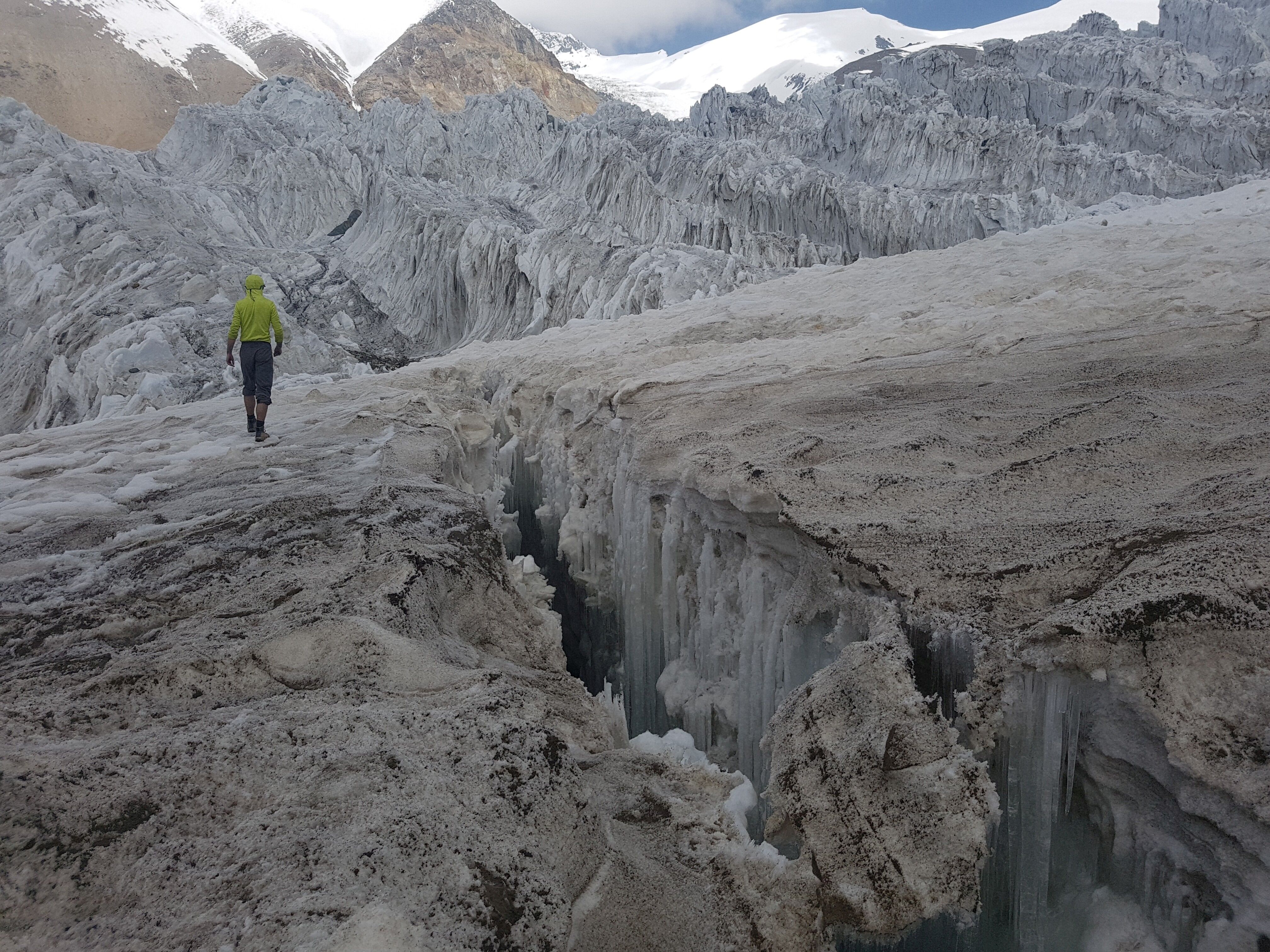
It would be apt to describe the Atacama as a place of death.  While the Cazadero river in the lower valley supports surprisingly abundant life, sparse flora and large herds of vicuña, as one ascends higher the river soon runs dry.  The mummified corpses of dead vicuña rest alongside the path, preserved by the aridity and heat.  Past 4400m or so there remains nothing but rock, dust, and sand – the terrain is devoid of life.  Water was  scarce, and to obtain it I often had to walk as far as 1km to distant fields of ice penitentes, which I chopped, bagged, and hauled back to my camp.  One stretch of  about 14km near the middle of the approach lacked any water whatsoever, necessitating a single carry crossing.  Without a sat phone the approach in its entirety objectively is unsafe, with even a sprained ankle representing a potentially fatal injury.  The nearest road is days away, and the nearest human settlement is over 100km distant.

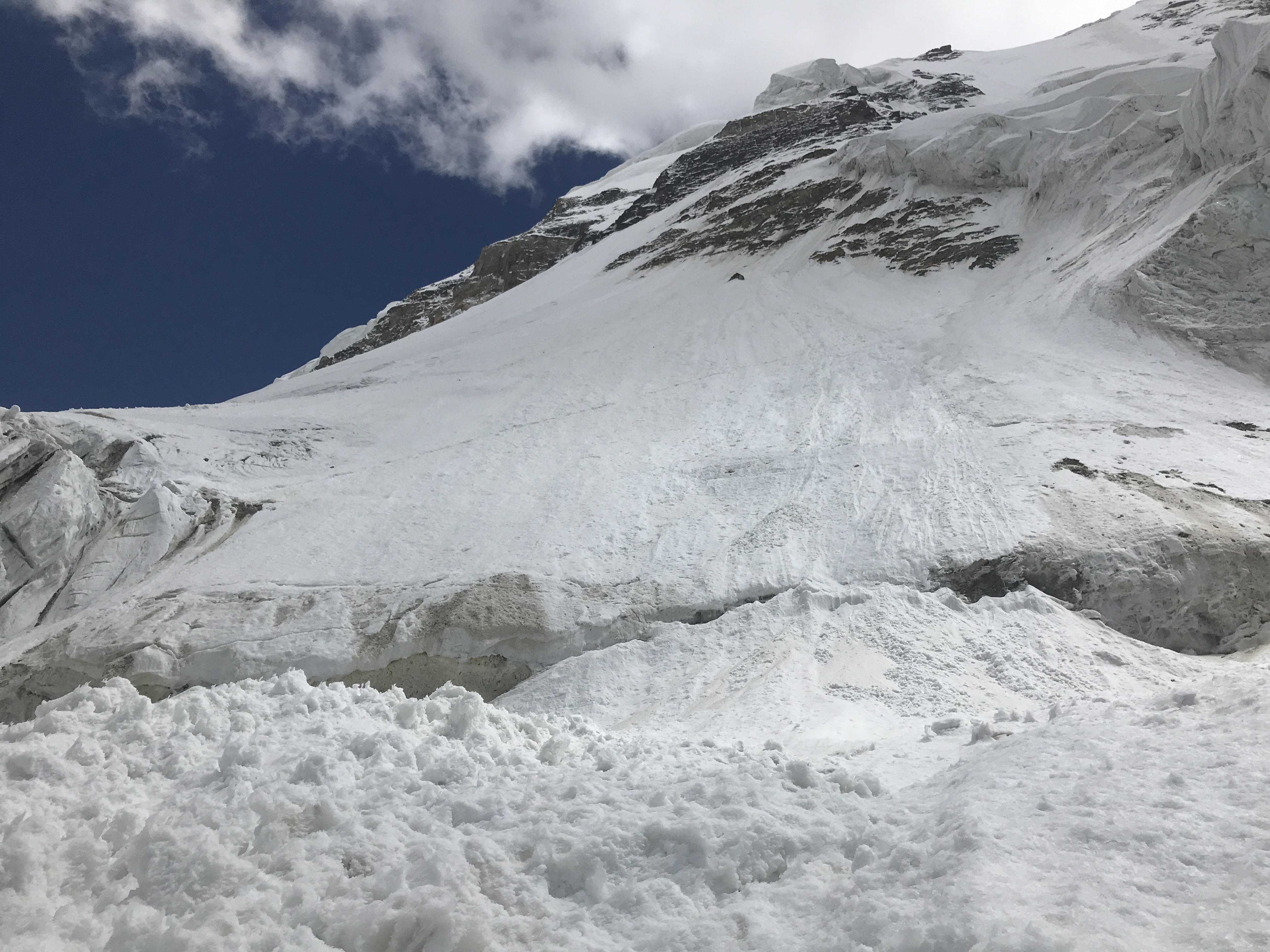
Ultimately, I did not succeed in summiting Ojos del Salado.  I did make it to ~6400m on the mountain, where 60-70km/h winds and knee deep snow prevented further progress.  Violent winds roared straight down the mountain from Chile to the northwest, threatening to knock me over entirely.  Without ax and crampons firmly planted to brace myself during gusts, I was at times unable to even maintain my balance.

The unusually deep snow was the result of unnaturally heavy precipitation throughout the days of my approach; five consecutive days translated into heavy snow higher up.  After I made the decision to bail on my summit attempt, Jonson informed me via sat phone that the four day weather forecast remained poor.  With barely enough food remaining to stick it out for several days and wait for a weather window, and rationalizing that the soft snow would take more time than I had to consolidate properly, I decided to descend.  In hindsight, I can infer that the mountain’s conditions had likely remained poor since the Irish climber’s lucky descent.

In total I covered 170km above 4000m, shuttling loads of equipment and food, with more than half that distance higher than 5000m.  I didn’t actually see the mountain itself until the sixth day of the approach, when I reached the Portezuelo Negro pass leading into the high plateau of el Arenal which sprawls below the mountain.  I spent a total of 10 days to reach my high camp at ~6000m, in large part due to beginning the climb completely unacclimated, and further owing to my acclimation strategy of rotating loads higher so as to ‘climb high, sleep low’ the entire way up.  I made the descent from my high camp to the pickup at Quemadito over three days, a single carry with an extremely heavy pack.  During the approach hike I spent eight consecutive days completely isolated, no other human being within sight.  One local man lives in the Cazadero valley, where he raises mules, but he does not venture higher than the lower river valley.  It is worth noting that a cache of ~3 days food supply, dry garbage, and extra equipment which I had left some ~15km into the approach was raided in my absence.  Upon my return the equipment and food had been stolen, but the garbage left behind for me to carry down.

Although the expedition without summiting was by definition unsuccessful, I do not feel much sense of regret or deep disappointment.  I had completed a difficult solo land approach across the high Atacama, and had attained the base of the mountain.  The grueling approach, and particularly the descent hike, had tested my mental focus and tolerance for physical suffering.  I remain convinced that the hideous conditions on the upper mountain made my summit, alone, impossible to accomplish, and as a result I feel that there wasn’t much I could have done differently.  Weather is fickle, yet sometimes absolute in its impacts.

I fully intend to return to Ojos del Salado in order to finish what I started, but would absolutely not consider approaching from the Argentinean side.  When I do return, I will focus on gaining the summit, will ascend via the Chilean side, and pre-acclimate with a few other 5000m-6000m peaks.

Ojos del Salado Photographs

Life in the Atacama

Camel Peak West – 骆驼峰西峰 – February 2016 (中文)

Luotuo265

Camel Peak, the west summit to the left.

骆驼峰地区

5484米高的骆驼峰坐落在中国著名的四姑娘山边。它因与骆驼相似的外表而命名,由两个山峰和一个高高的马鞍支撑着美丽的冰川。四姑娘山,即四美女山,同样以四座高低错落的山峰,紧紧相连一线的外表而命名。当地人说这四座截然不同的山峰就像一家人,最年轻最美丽的叫作“幺妹峰”,同样也是最高的。剩下的三姐妹分别叫作“三峰”,“二峰”和“大峰”,其中三峰是第二高的,大峰是最矮的。北至四川北部的邛崃山,骆驼峰,四姑娘山以及周边的山脉位于四姑娘山国家公园,也是四川省的大熊猫保护基地和一项世界文化遗产。

四川省的这一地区属于阿坝藏族羌族自治州,被当地人称为阿坝。阿坝人以藏族为主,他们友好,安居乐业,很多人至今还保留着传统的生活习性。他们以普通话为主,但汉语水平不尽相同,当然英语就非常少见了。旅游业是当地经济的重要组成部分,虽然冬季并不是旺季,但是仍有许多美味的餐馆。离四姑娘山和骆驼峰最近的小镇叫日隆镇,也是我登山的基地。我就住在日隆镇中心外的昌平谷入口的一家当地旅馆。

Luotuo262

Camel Peak (center), Yangmantai (right), and Changping Valley.

许可证,登山准备,不确定性

我攀登骆驼峰的计划始于10月,当时我在广州和一位朋友商量着在中国春节期间能够攀爬的山峰。我的朋友熟悉那块地方,他曾在昌平谷远足过。他推荐我攀登骆驼峰,但和我的假期有冲突。所以骆驼峰的西峰成为了最合适我攀登的冰川,我开始为独自一人的登山做准备,训练。

在没有英文翻译的情况下,想要得到中国山脉的良好信息是非常困难的,中国旅行报告里常常缺少详细的资料和图片。当地旅馆老板和四川登山协会的联系人都对我的研究有着无可计量的帮助,在他们和少量中国旅行的网络报告的帮助下,我对将那些数据和我的行程组合起来有了很大的信心。我的女朋友帮助我进行了超出我能力的中文阅读,帮助我认证完成了许可证的申请需求。

尽管如此,不确定性迫在眉睫。一方面我有能力进行冬季的攀登,一方面我不确定中国登山协会是否会授予我登山许可证。这让我在训练中很难专注于我的目标,因为不知道我是否有机会踏上这座山峰。为一个毫不确定的目标而训练,能帮助我心里上建立攀登。在寒假的一个礼拜前,我收到了好消息,我的单人登山许可证被批准了,我收到了官方的认可。

My Chinese Mountaineering Association Climbing Permit.

My climbing permit.

攀登前的适应驯化

到达日隆很费时间。首先乘坐到成都的晚班飞机,第二天搭6小时车程的车越过4400米的关隘,驶往山脉。如果和其他人共同乘坐一辆私家车,那么每人共花费150人民币车费,此项服务由旅馆老板提供并组织。那里也有从成都茶子店公交站到日隆的公交车。

日隆海拔3200米,是个很好的适应高海拔的过度地区。在开始我的攀登前,我花了两天时间适应那里的水土海拔。第一天开车经过关隘并在那休息,第二天探索双桥沟。双桥沟峡谷,长坪沟和海子沟是国家公园里三座主要的山谷。长坪沟只能徒步到达,但双桥沟经过开发和居住,有一条铺好的道路。沿着山谷向上行驶,是不是停下来散步和拍照是个令人享受的事。并且很好地领略了这里的地形和适应高达3800米的海拔。

邛崃山多陡峭险峻,且未开化。攀登它们需要较好的技术,一个小失误都能导致严重后果,许多山脉至今都没有被攀登过。连四姑娘山两边的山峰都令人望而生畏。尤其令人印象深刻的是猎人峰的裂隙脊,也被称为尖峰。这座山的名字似乎有些争议,但我所接触的当地人都称它为猎人峰。

Luotuo038

Hunter Peak.

Luotuo026

Hunter Peak (left) and a cleft peak of unknown name.

Luotuo032

The frozen valley river framed distant ridges and peaks.

Luotuo037

Shuangqiao Valley.

日隆的山峰依旧很雄伟,像最高的幺妹峰,在镇子最远的边界的天空中都能看到它。幺妹峰美丽迷人,令人印象深刻,因为它险峻令人望而生畏,很少有人尝试或者成功登顶,是个很有难度的山脉。

Luotuo055

Yaomei Feng (left) and the other three sisters (San Feng, Er Feng, and Da Feng, left to right) above upper Rilong.

骆驼峰西部旅行反馈

我原计划六天完成骆驼峰的攀登,其中的三天背着我沉重的背包,徒步到达长坪沟,另外两天用于下山。在即将出发的最后一刻,我在四姑娘山国际公园的办公室里进行许可证的检查,公园的办公人员告诉我导游是强制性的——于是就变成了“当地的马夫会带我去山脚下”。

当时打的几通电话显示没人想去——因为这个地方的冬季意味着夜晚的寒冷,结冰的山谷阻碍了马的前行。一个小时的焦虑和通话,旅馆老板终于找到了一个愿意去的人。黄先生带来了一匹强壮的马,他陪同我走了比往常远的一段路。如果非法地在没人帮助的情况下攀登,我将无路可走。幸亏我没有试图在没有帮助的情况下背着我的装备独自上山。

Luotuo057

My sturdy packhorse.

第一天: 由于在公园办公室的突发状况,我的出发推迟了。黄先生和我在喇嘛庙于中午12点出发,喇嘛庙是一个巨大且新建的佛教寺庙,位于长坪沟约3400米的地方。长坪沟的山脚下有一个大约四千米的木板制的道路,我在那里遇到了几个当地的牧民。幺妹峰从远处望去很突出。

Luotuo062

Lama Temple and Yaomei Feng.

Luotuo068

Yaomei Feng above Changping Valley.

Luotuo070

Yaomei Feng above Changping Valley.

Luotuo059

Yaomei Feng.

走到木板路店尽头,我们遇到了大块的厚冰。一条河流流经长坪沟,从周围山脉流出的溪水从河谷壁直流而下。在冬季,这些河流结冰,泛滥,河岸和森林被覆盖着厚厚的一层冰。马无法安全地在滑的冰面上行走,这让我们的步伐变得很慢。于是我们就用我的冰镐在崎岖的冰面上砍来砍去,或是在树丛中绕道而行。

Luotuo075

Large swathes of ice covered sections of the valley and were impassable for the horse.

在蜿蜒的山谷中,那个石头金字塔般令人印象深刻的婆缪峰就映入我们的眼帘。随着海拔的升高,越来越多的河岸被雪覆盖着,锋利如锯齿般的山脉沿着山谷壁拔地而起。

Luotuo079

Pomiu Feng.

Luotuo080

Pomiu Feng.

Luotuo086

Sharp mountains, names unknown.

Luotuo108

Livestock grazing on the riverbanks.

晚上五点半,在五个半小时的远足后,我们到达了这一天的露营地,位于3800米的木骡子,就在一个巨大的木屋处。有人告诉我,这个小木屋是专门接待旅游季节来过夜的游客的,除了守门人现在就是空的。到达了露营地,我们终于看到了骆驼峰,就在山谷的尽头。我在树丛边,面向山峰,搭起了我的帐篷。

Luotuo099

The wooden cabin at Muluozi.

Luotuo092

Camel Peak from Muluozi.

Luotuo094

My first night’s campsite.

晚餐,我做了汤面,香肠和一些饼干,并为第二天煮了一些水。太阳下山,气温骤降,我帐篷内的温度只有零下六摄氏度。

第二天: 在我享受了一顿悠闲的早餐后,我们整理好行装和马,在中午十一点半时出发。在木骡子上方,我们遇到了更多的冰,只能沿着河岸慢慢行走。大段的河流都被冻住了。

几个小时后,我们到达了山谷的尽头,绕着冰面前行,沿着牲畜留下的脚印,我们到达了山谷的山脊,也就是骆驼峰的山脚。天气开始变化,云层在我们上方逐渐形成,延至北部。

Luotuo131

Changping Valley from the trail to highcamp. Mr. Huang and horse in bottom right corner.

通往骆驼峰的小径沿着崎岖的牲口小道一直延伸到山谷,偶尔会要掉头。我们很快突破了树丛线,看到了骆驼峰山脉和羊满台,金字塔形状的山脉直达天际。地形很快变成松散不结实的冰碛、巨石和夹杂着雪的碎石。

在下午六点,我们一直到了马足以安全行走的地方,在树木无法生长的4700米海拔处停了下来。这里的冰碛物夹杂着雪,有些巨石之间的夹缝非常深。经过一番探索,我们发现了一个几近平坦的地面,在雪地上搭起了我们的帐篷。在这里,我即将独自完成剩下的攀登。长坪沟位于我们的下方,幺妹峰高耸于其上,在傍晚的阳光下分外华丽夺目。

Luotuo171

Yaomei Feng from my highcamp.

Luotuo172

Yaomei Feng and Changping Valley from my highcamp.

Luotuo242

Camel Peak, from near my highcamp. West summit to the left, East summit to the right.

晚餐,我还是做了汤面,涂了花生酱的黑麦面包,香肠和一些巧克力棒。顿时觉得自己很强壮,很适应,并且能够吃下一顿大餐。我将雪煮成热水,取出我靴子里的小鞋子,电池,太阳眼镜,首套,袜子,相机和衣物,将它们放进了我的睡袋,包裹着热水瓶子。夜晚很冷,我量了我的双层帐篷的温度,只有零下十二摄氏度。断断续续的云从我的上方翻腾,但是明亮的星星非常闪烁,黑漆漆的夜空没有任何强光的污染。

第三天: 我将我的闹钟设定到早上五点半,特意在寒冷的清晨出发。我醒来就发现一夜之间,雪足足下了30-40厘米,给大地铺上了一层软软的白色粉末。早上六点半,我整理好我的装备,吃了顿简单的早餐便开始了我的行程。湛湛蓝天,没有一丝云彩,但狂风卷起了阵阵浪花。

想要在冰碛上取得进展就要在深雪中卖力前进。除了巨大的岩石,冰碛没过了我的膝盖,很难判断在我脚下的是什么东西。石缝被积雪覆盖的地方是看不见的,很难找到稳定的落脚点。我以着蜗牛的速度向上行走,试着站在大石头的表面,避免掉进深深的雪里。尽管我很努力,但我也经常仍会沉入岩石间松软的雪中,有时雪高达我的腰部。

Luotuo178

Morning view towards Camel Peak, slightly above my highcamp.

Luotuo176

Deep snow over the moraine made progress above highcamp slow.

多变的地形让我无法找到合适的节奏来控制我的步伐,冰碛也似乎从未停止过。这让我想起阿空加瓜岛的上卡纳莱塔,步履艰难,让我很不愉快:道路很滑,不稳定,身体透支。在最初的两小时,我曾想要返回,但是我逼迫自己继续前行,一遍一遍地告诉自己,冰川将能让我更好更快地攀登。三小时后,早上九点半,我终于到达了骆驼峰的冰川地区。

Luotuo182

Looking down the snow-covered moraine, from near the base of Camel’s glacier.

在探索骆驼西部传统的攀登路线时,我想到了几篇下方山坡发生致命雪崩的报导。从冰川脚下可以明显地发现此处的地形覆盖着新鲜且松散的雪。冰川的口鼻处显示有冰,我猜测那晚的降雪应该是落在结实坚硬的底部。以防雪崩的危险,我小心翼翼地远离主斜坡,沿着整个山较矮一边的岩石前进。如下图:

My route of ascent, avoiding climbing directly up the main slopes wherever possible.

My route of ascent, avoiding the main slopes wherever possible. From left to right are the west summit, false west summit, and east summit.

环境状况不尽人如意,松软厚厚的积雪下有着坚硬的冰,狂风阵阵打在我的身上。一条旧的线固定在较低低冰川上,但是很难看清它的锚,所以我并没有冒风险使用它。慢慢地我找到了合适的速度,在深深的积雪中找到了很好的节奏前行。

Luotuo194

Looking down the lower glacier towards the moraine.

我沿着低处的冰川的岩石走到了山峰的东部,用我的冰镐和一个登山杖向上攀登。最陡峭的地方,坡度达到45度。

还有一个斜坡,向上倾斜至东、西峰的山顶。我待在东峰山顶的南面,因此可以避免穿过主斜坡上厚厚的积雪。山脊对面假西峰的山顶显现在眼前。

Looking towards the false west summit, from below the east summit.

Looking towards the false west summit, from below the east summit.

Luotuo197

The false west summit, across the saddle.

在山脊上,我饱览了许多名不经传的美丽山脉,西至长坪沟。东峰的山脊上覆盖着厚厚的雪,很难找到穿越的路径,但当我靠近虚假的西峰山顶时,东峰的山顶在我身后显得优雅无比。

Luotuo200

Jagged peaks to the west of Changping Valley.

Luotuo203

Looking back across the saddle towards the east summit.

在假西峰的南面脚下,冰川向南倾斜成一个陡峭的斜坡,向着西边蜿蜒而上。山脊的北面是个几乎垂直的面。在这里攀登变得极其陡峭,大约有55-60的角度,有些路段的积雪没过膝盖。我收起我的登山杖,只用我的长冰镐和短冰镐。

The base of the false west summit.

The southern base of the false west summit, from the saddle.

Luotuo209

Ascending, curving up and around the false west summit through steep, deep snow.

一旦穿过假西峰,绕过一个陡峭的山脊就能到达真正的西峰。我从前看过这段路程的照片,所以我知道在北部有个很大的飞檐。过慢地攀过山脊会把我暴露在雪崩的危险中,然而过快地前行会致我于飞檐的边缘。山脊上的雪并没有非常深,所以我选择了一条位于中间的道路,用最快的速度越过这道飞檐。

Luotuo212

Looking across the final ridge from below the west summit. In the distance from left to right are Yangmantai, the east summit, and the false west summit (the snow covered point below and in front of the east summit).

穿过山脊,西峰就矗立在我面前,一道几乎垂直于西边的陡峭的石墙。我开始探索出一条向上行走的道路。

Luotuo235

Looking across the final ridge towards the west summit.

我很快地发现北部的墙是一个垂直的墙面,没有任何合适的地方能让我在没有保护的前提下前进。南面的墙看起来很不错,但是我发现道路被平凡的垂向下的石头挡住了。回头向北走,我爬上了一块三级难度的斜坡,它停在一块雪地上,大约占据了墙的三分之一。从这里起,唯一的路是随着石块的裂缝垂直向上的。我用我的短冰镐插进裂缝中为我提供额外的保护,我小心翼翼地向上攀爬着。这并不是很难,大约为五级难度,但是狂风和各种危险让我聚精会神地前进着。专注于我的手,较和工具的位置,我一点点地取得了进步,最终我发现我站在了顶端。

Luotuo219

Looking down the summit rock wall from roughly halfway up.

Luotuo218

Looking down Changping Valley from below the west summit.

我的前方的小雪坡上,矗立着胜利的旗帜和一块小石碑。风从我身边呼啸而过,我慢慢地走到了最顶端。下午2:40,我终于成功登顶,虽然很疲惫,但是我很开心。

Luotuo221

The west summit of Camel Peak.

Luotuo226

The west summit of Camel Peak, Yangmantai and the east peak behind.

Luotuo228

Atop Camel West.

在狂风中登顶是非常寒冷的。我很快地拍了些照片,准备在4,5分钟后下山。我用着我的小冰镐慢慢小心地爬下去。在山顶下的一块小石壁边,我稍微休息了一下,在穿过山脊前,我吃了点零食。

回想我下山的路程,明显比上山快了许多,除了被东,西山峰分开的山脊,我的足迹在狂风吹虐下,被覆盖在厚厚的雪中。下午四点,我到达了冰川基地,遇到了在岩石边上等我的黄先生,我们穿过冰碛,在下午五点半,我们回到了高处的帐篷处,从帐篷出发到回来,一共花了十一个小时。我吃了些面包,喝了些水,开始整理我的装备,准备立刻睡觉。

Luotuo238

Looking across the moraine, on the way back to highcamp.

第四天: 早上八点半我们醒来,吃了些早餐,把一些装备放在马上,开始了漫长的越过长坪沟的路程。我们只带了一些面包和水,从4700米的高营地,徒步走到了3200米的喇嘛庙,全长33千米,高1500米,总时长7.5小时。回到日隆,我洗了澡,然后吃了辣牛肉火锅来庆祝我的胜利。

Luotuo243

Looking down Changping Valley, descending from high camp.

骆驼峰总结

骆驼峰的攀登考研了我的坚韧意志力,身体训练和以往的攀登经验。独自攀登是非常值得留念而且振奋我心的。回想我独自一人在山上的经历,也许近几周只有我一人,也许是近几个月,我觉得我非常得特别。山上恶劣的天气和环境,让攀登变得很有挑战性,在各种不确定因素的阻扰下,让最终的胜利变得来之不易,也让我觉得非常有成就感。四姑娘山地区是非常险恶的,充斥了狂风,陡峭严峻的未知山脉。我有幸能来到这个地方,即便只是攀登了最简单的山峰,但也很自豪能站在山顶端饱览这群美丽的景色。

Luotuo283

Camel Peak and Yangmantai.

Luotuo298

Yaomei Feng.

资料

我的联络人和日隆本地人告诉我,尽管高海拔的寒冷气温,冬季仍然是个攀岩的好时间,是不那么恶劣的。在山上,我经历了夜晚的大雪和强风,但是他们告诉我在其他季节,降水可能会更加地严重和频繁。由于中国的国庆节,十月是个该地区的旅游旺季,整个山谷都会被中国登山家围绕。所以这个地区一年四季都处于可攀岩状态。

期间,我住在日隆的阿伦本旅馆,在我的旅行前,我提前联系了老板。他为我提供了往返日隆的车辆,并且帮我找到了黄先生,一个为我提供马匹,最后一刻在山上陪着我的人。微信或者电话联系该旅馆是最好的方式。在旅游旺季,他们可能还有会英语的工作人员,但是在我的冬季旅行中并没有,他们的网站是:www.aleeben.com/.

通过四川登山协会,是可以拿到该地区的高山峰的登山许可证。他们似乎没有会英语的员工,而且许可证的申请可是需要用中文填写。许可证需要详细的行程表,一张可接受的登山履历表,护照照片复印件,中国签证和一张申请表。攀登开销——500元,即100加币的许可证。微信或者电话是联系登山协会的最好方式,微信上他们是非常友好,乐于助人的。他们的网站是:www.sma.gov.cn/。

对于过夜游客来说,长坪沟的门票是150元。登山许可证可以通过SMA获得,位于四姑娘山公园的管理处会强制进行检查。他们是没有会英文的工作人员,他们不准我在没有人帮助的情况下进行攀登,至少会强制安排一个当地的马夫来帮助你。该公园的网站是:www.sgns.gov.cn/。

Pik Korzhenevskaya – August 2018

IMG_4390

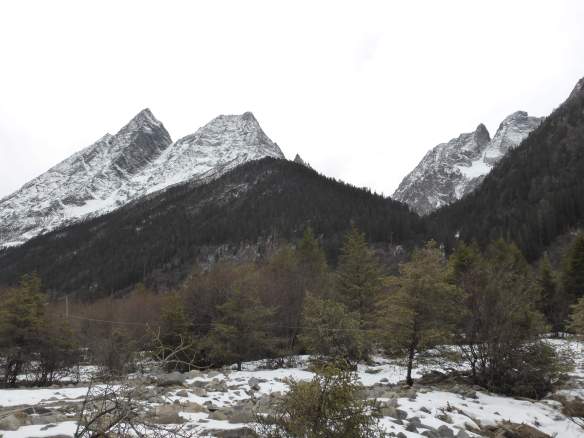
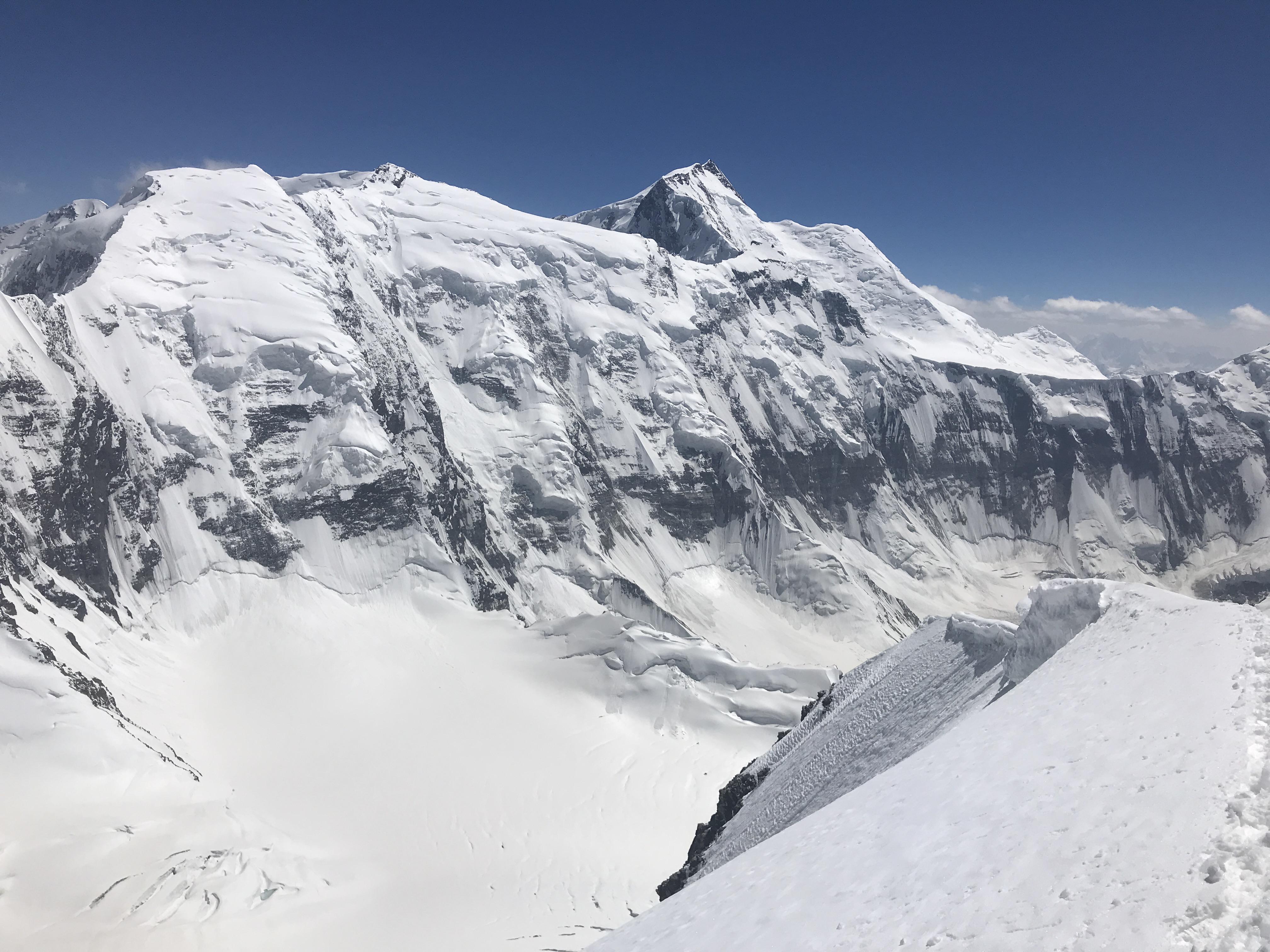
Pik Korzhenevskaya, viewed from the approach to Pik Chetyreh.

IMG_4383

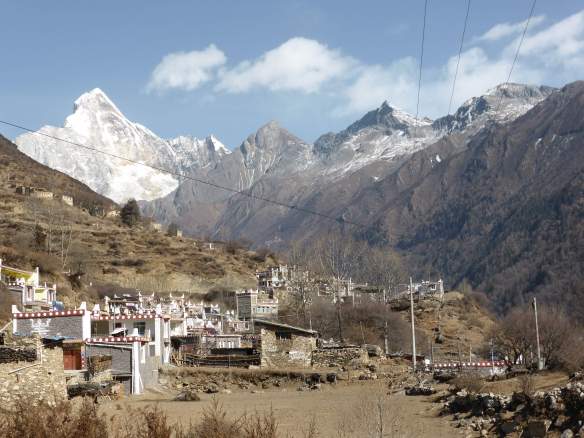
Pik Korzhenevskaya from the east, viewed from the summit of Pik Chetyreh.

Pik Korzhenevska and
Moskvina Glades Basecamp

Tajikistan’s 7105m Pik Korzhenevskaya isn’t the most famous 7000m mountain, but is undeniably a peak of extraordinary beauty.  Korzhenevskaya is named for the wife of the Russian geographer who discovered the peak, and the compliment in this gesture is clear to understand as soon as one sets eyes upon the mountain’s profile; the mountain’s eastern aspect is a gorgeous pyramid of snow and rock rising high above the surrounding valleys, both gargantuan and elegant in its lines.  The standard climbing route is as inspiring as the mountain’s figure, and after navigating the lower mountain follows the exposed southern ridge line for over 1,000 vertical meters directly to the summit.  Pik Korzhenevskaya is one of five 7000m peaks of the old Soviet Union, and thus is a required objective for any mountaineer who aspires to earn the Snow Leopard climbing award granted to those who attain their summits.

The Moskvina Glades basecamp used for ascents of Korzhenevskaya doubles as the basecamp for the highest peak in the area, 7495m Pik Kommunizma / Pik Somoni.  This makes for a largish international population of varying ability and experience.  The basecamp itself is operated by the Pamir Peaks company, who are the only game in town for logistics.  The basecamp is decidedly rough and ready, and essentially only accessible by helicopter.  The helicopter departs from the small town of Djirgital, a full day’s drive from Dushanbe, and operates on an unreliable, delay-prone schedule.  Approach via foot is possible but very difficult, and in 2018 only two individuals made the trek into basecamp, both later opting to fly on the way out. The helicopter crashed several days after my departure from basecamp, killing five.

There is no sensible alternative to using the Moskvina Glades basecamp, and it is far better than nothing – I would be doing a grave disservice not to compliment the wonderful sauna facility built from a repurposed shipping container, and would be wasting my energy were I to complain about any perceived inadequacies.  One would do well to bring spare food, stomach medicine, water purification tabs, and all personal equipment – especially ropes.  I kept a detailed diary throughout my time in basecamp and on the mountain, which I have summarized into this page.
IMG_4535

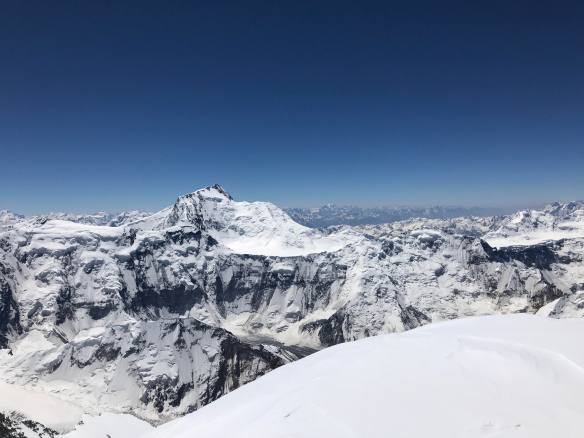
Pik Somoni, viewed from the summit of Pik Korzhenevskaya.

Route Description

The normal route is somewhat convoluted, at least until ~6100m where it gains the south ridge.  The below images are of a map drawn by my Polish friend Konrad, who graciously gave me permission to share it.  His descriptions are written in Polish, but it nonetheless should serve as a visual aid for understanding the route.  I have color coded the camps and route sections in the image adjacent to the original drawing.  Below, I have written my own detailed descriptions for each section of the route.

4200m Basecamp to 5100m Camp 1

Besides summit day this is the longest section of the route.  Immediately outside of basecamp the route crosses a section of glacier.  This area melts rapidly in the daytime, and the cleanest route through will change day by day.  While crampons aren’t needed, it is well advised to mark one’s path with cairns or wands.  There will be a variety of easy ways through to the other side, and it is best to route find rather than waste time climbing vertical ice walls.

On the other side a well worn footpath switchbacks up grassy hills.  The route continues to be well marked as it crosses a section of river.  The boot track soon transitions onto rock, and while the direction should be mostly obvious one should keep an eye open for cairns.  There are several class 3 moves in this rocky section, as the route gains altitude.  After crossing a significant river below a large waterfall the route becomes harder to visualize, but large cairns should still be in sight.  Ascending several hundred meters of hideous scree takes one onto a rocky plateau adjacent to an icefall; 5100m Camp 1.

5100m Camp 1 to 5300m Camp 1.5, to 5600m Camp 2

The route out of Camp 1 starts on a visibly worn boot track and is fairly obvious.  It ascends an icefall adjacent to a meltwater waterfall, involving several steep sections of glacial ice.  Without fixed ropes in place the competent use of crampons and axe are essential for ascending, and this area becomes congested when large groups are on the mountain.  Fixed lines were placed along this part of the route in 2018, but the ‘rope’ used was merely unrated ~6mm nylon twine with no sheath.  Beware; ropes of this quality, along with their suspect anchors, are not to be fully trusted for hauling body weight on an ascender.  This is a steep, slightly technical section.

Above the icefall is a muddy river, and on its bank is 5300m Camp 1.5, a popular alternative to Camp 1.  The water here will need to be filtered for debris.

Continuing across the muddy river, the route gains the glacier proper.  This section of lower glacier is rapidly melting out and was a hazardous crevasse field in 2018.  The cracks are numerous and large, and the snowbridges were changing day by day.  Crossing after early morning is ill advised, and crossing at any time of day unroped represents a terribly risky exposure to a bad fall.  I watched this section of glacier visibly transform during my time on the mountain, with enormous crevasses opening and forcing rerouting.  The old Camp 2 at ~5800m no longer exists, as the glacier has completely receded several hundred meters away from the rock face which the camp used to to sit alongside.  5600m Camp 3 now sits on a flat area of snow, above the worst of the crevasses.
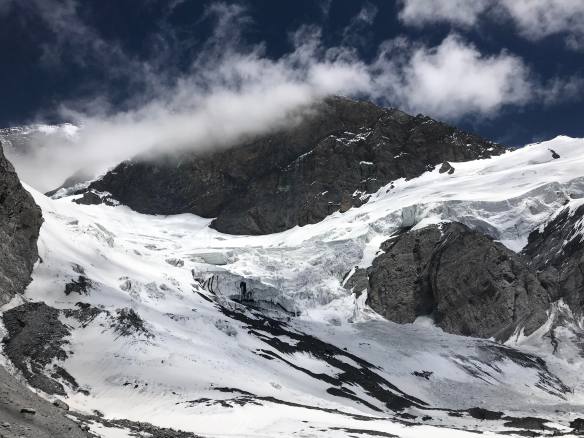
IMG_4430

Looking up the lower glacier towards 5600m Camp 2, from 5300m Camp 1.5.  Camp 2 is out of sight, but would be located in the middle-left of this image. 6100m Camp 3 is visible in this image, where the rock meets the snow along the skyline in the upper right of the picture.

5600m Camp 2 to 6100m Camp 3

Above 5600m Camp 2 the glacier improves significantly and involves far fewer crevasse hazards.  The route continues to ascend the hanging glacier visible in the above image (ascending to the right, in the image above), crossing several slopes of moderate steepness.  A bergshrund must be crossed at around ~5900m.  This section was fixed with nylon twine in 2018.  6100m Camp 3 sits at the top of the glacier, at the very base of the south ridge, and is visible to climbers as a notch in the rock.  It is a small space, and suitable for only 4-5 tent platforms.
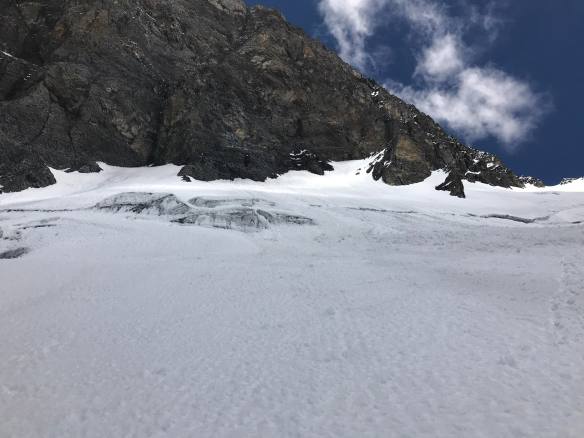
IMG_4438

The bergshrund.  6100m Camp 3 is visible in this image as a notch of snow against the sky, in the top right corner of the picture.
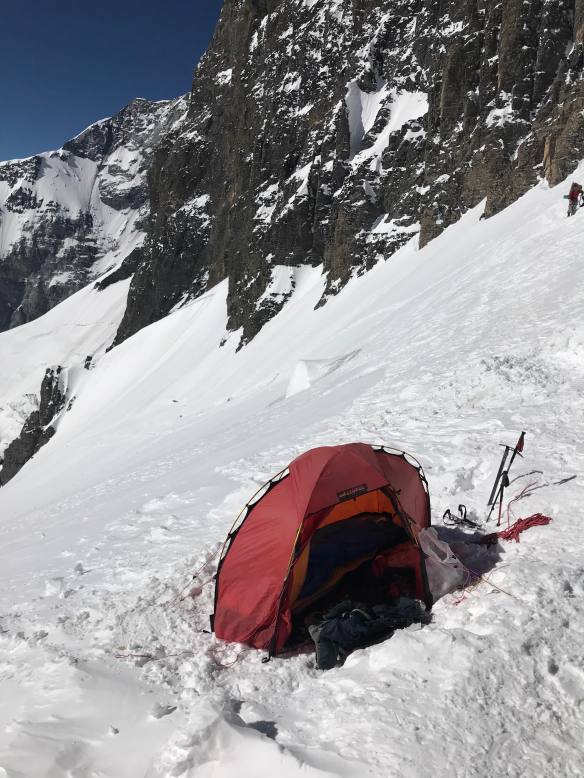
IMG_4491

My tent at 6100m Camp 3.

The three photos below are not mine, but are of my partner Pat and I.  Credit to Dave from Lithuania for taking such excellent shots of us arriving at Camp 3, and for being so kind in sharing them with me.

6100m Camp 3 to 6300m Camp 4

Past 6100m Camp 3 the route ascends roughly ten meters of rotten, low class 5 rock in order to gain the south ridge.  Old fixed lines were in place on this section, with good anchors tied off on large boulders.  This short rock step is the most technical section of the entire climb, but is made trivial by fixed ropes.  Above the rocks one must ascend a section of narrow, exposed ridgeline before gaining the nicely sized plateau of 6300m Camp 4.

IMG_4504

6300m Camp 4, Pik Somoni in the distance.

6300m Camp 4 to 7105m Summit

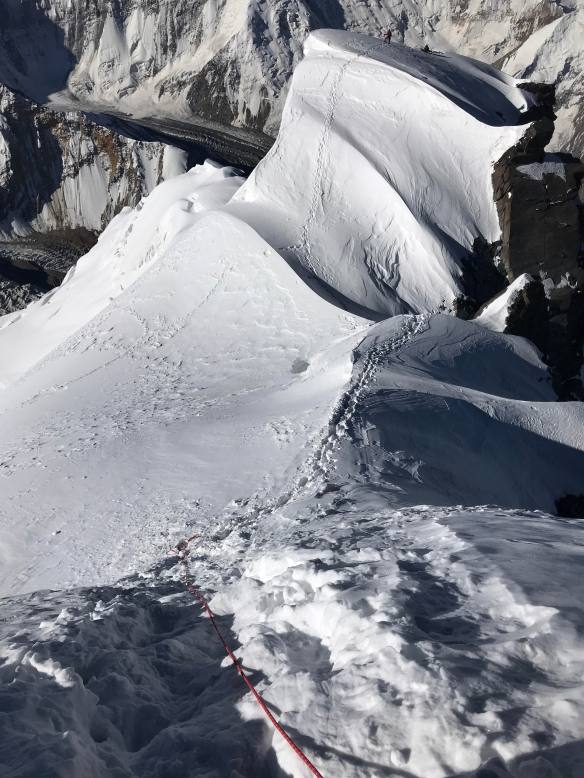
The route to the summit is delightfully direct, and follows the ridge line straight to the base of the summit pyramid.  The ridge is very exposed in places, and involves several short slopes up to ~65 degrees.  One of these slopes was iced over on my ascent, and I fixed my 30m rope on it.  The route steepens at the base of the summit pyramid, but there were sturdy old fixed lines in place.  The flat, broad summit was marked with only a single tent pole.
IMG_4519 2

Looking down the south ridge after fixing my line, en route to the summit.

IMG_4527

The summit pyramid.

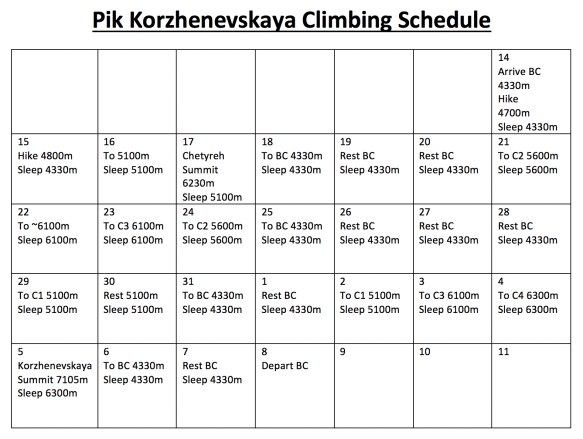
Schedule and Trip Report

Screen Shot 2019-09-09 at 11.56.28 PM

Screen Shot 2019-04-28 at 10.46.46 PM

Acclimation near Dushanbe

Prior to flying into the Moskvina Glades basecamp and beginning Pik Korzhenevskaya, I spent five days hiking in mountains nearby Dushanbe with Estonian friends.  The hike was very pretty, and served as a great warmup.  I do not know the name of the range which we hiked in, but do know that it wasn’t the Fan Mountains! We reached a high point of around ~3,500m and spent a night above 3,000m for acclimation.  A few days spent between 2,000m-3,000m made a significant difference in providing some pre-acclimation to make for a smoother transition higher.

July 14th
Arrive 4330m Moskvina Glades basecamp.
Acclimation hike to 4700m.

Helicopter into basecamp with Estonian friends.  Acclimation hike to 4700m along the approach to Pik Chetyreh.

July 15th
Acclimation hike to 4800m.

Carried 10kg of equipment to ~4800m in preparation for an attempt on Pik Chetyreh.  Lots of scree and loose rock on this section of the approach.

July 16th
Move to 5100m.

Left Moskvina at 9:30 a.m., arrived at 5100m Pik Chetyreh basecamp at 4:30 p.m., 7 hours.  See my Pik Chetyreh trip report for more details of this climb.

July 17th
Ascend 6230m Pik Chetyreh, sleep 5100m.

5:30 a.m. start, 2:30 p.m. at 6230m Pik Chetyreh summit (likely main summit, possibly a sightly lower sub-summit; see trip report), 7:00 p.m. back in tent.  13.5 hour day.

July 18th
Descend to 4330m basecamp.

7:30 a.m. depart Pik Chetyreh basecamp, 10:00 a.m. arrive Moskvina.  Descent on scree was unpleasant with a heavy bag.

July 19th-20th
Rest days at 4330m basecamp.

Two full rest days.

July 21st
Move to 5600m Camp 2.

My friend Pat and I departed Moskvina Glades basecamp at 6:20 a.m., making the long approach hike to 5100m Camp 1 in just over 4 hours and arriving at 10:40 a.m.  At Camp 1 we spent some time arranging equipment and changing boots for the next leg of the climb on snow and ice.  We ascended the icefall/waterfall past Camp 1 and reached 5300m Camp 1.5 at around 1:00 p.m.  After a short rest and some conversation with other climbers staying at the camp we continued onto the hideous lower glacier.  The snow was melting out in the early afternoon sun, and conditions were miserable.  Knowing what we were getting into when planning to climb from basecamp to Camp 2 in one push, we had agreed that we’d turn around if afternoon conditions were too unsafe.  With care and a steady pace we made good progress across the sketchy terrain, and arrived at 5600m Camp 2 at 3:00 p.m.

July 22nd
Move to 6000m.

We departed Camp 2 at 11:00 a.m. – in hindsight far too late in the day and a costly mistake.  Snow conditions were predictably terrible in the afternoon heat and slowed our progress significantly.  No climbers had been further then just above the bergshrund, or roughly ~5900 on the route, and below the bergshrund we found ourselves slogging through mostly unbroken mush.  Crossing the bergshrund itself was tricky due to the soft snow, and above we realized that a significant traverse across a steep slope made unstable by melt separated us from the proper location for Camp 3.  Late in the day, and tired from breaking trail through slush, we opted to ascend the rock ridge directly above the bergshrund.  We pitched it into two 20m pitches of rotten ice and loose rock, with a single screw and a picket for protection.  Atop the ridge at ~6,000m we dug a tent platform and hunkered down for the night.  Had we departed Camp 2 earlier, or had I been willing to take on the full traverse in the slushy conditions, we likely could have moved to the proper 6100m Camp 3.

July 23rd
Move to 6100m Camp 3.

Starting early, we packed up and completed the traverse to the normal 6100m Camp 3.  The traverse only took about an hour and made me question whether or not my call to camp atop the ridge the day before had been wise – we likely could have completed the traverse the day prior in roughly the same amount of time, albeit with terrible, soft snow conditions.   At 6100m Camp 3 we met six other climbers who had ascended from 5600m Camp 2 that day.  We dug a good platform for our tent, and spent the remainder of the day resting.

July 24th
Descend to 5600m Camp 2.

Moderate wind, snowfall, and cloud cover made for a thoroughly uninviting looking summit ridge.  All eight of us agreed that a summit push would be ill advised in the conditions, especially given that we would be breaking trail and opening the route for the season.  Two of the other climbers decided that they would head higher in the afternoon to check, and if necessary replace, the fixed lines on the rock step above camp.  After breakfast Pat climbed up to the base of the ridge, breaking trail to scope out the rock.  When he returned, we discovered that we were almost out of propane – we had packed for four days, and had used most of our supplies.  Facing more inclement weather for the next few days, we opted to pack up and descend immediately rather than try to wait a day or two for a summit shot.  The six other climbers stayed and all summited the next day, the first of the season, albeit in very poor, difficult conditions.

Pat and I departed at 12 p.m., and reached 5600m Camp 2 in just an hour.  Unfortunately, once again arriving in the afternoon, we realized that the glacier below Camp 2 was out of condition for a descent lower; crevasses were open, snow bridges were marginal, and the snow was even softer than our first crossing on ascent.  We opted to stay in Camp 2 with what we had, scrounging some spare propane which Pat had stashed earlier.  We sat throughout the afternoon with nothing to do but look down over the glacier, and were surprised when, at 3:30 p.m., we saw figures ascending solo and unroped.  The first climber, an extraordinarily strong and very experienced Bulgarian named Ivan, made it without incident.  Regardless, it was agonizing watching him gingerly ascend the melting death trap of cracks.  The second, a Chinese climber whom I’d met earlier in basecamp, wasn’t as fortunate.  When his first snowbridge blew, dropping him waist-deep into the monster crevasse below, Pat and I quickly scrambled to rope up and get rescue gear racked; we were certain that we’d need to venture out into the crevasse field to try and recover him from a fall.  Luckily, as he went in he was able to struggle, flail, and pull himself out – only to fall through, waist-deep again, on the next bridge.  Somehow escaping unscathed after his second punch-through, he greeted us below Camp 2.  It turned out that he had ascended with no down parka, no sleeping bag, and no gas or stove.  By sharing equipment we devised a rough and ready sleeping situation good enough to keep three people warm, and we spent a cold night huddled together, squatting an empty 3-person guide tent out of necessity.

July 25th
Descend to 4330m basecamp.

Departed 5600m Camp 2 at 6:15 a.m., early so as to ensure stability when crossing the crevasse field below camp.  Arrived at 5100m Camp 1 around 8:00 a.m., to find a lot of congestion on the narrow route up the frozen waterfall.  Had a very limited supply of water coming from 5600m Camp 2, but was able to fill my bottle with clean, fresh glacial melt at 5100m Camp 1.  Thirst quenched, and leaving a large cache at Camp 1, I was able to maintain a brisk pace for the remainder of the hike down.  Arrived back in basecamp at 10:30 a.m.

July 26th-28th
Rest days at 4330m basecamp.

Three full rest days.

July 29th
Move to 5100m Camp 1.

Facing a dodgy weather forecast, Pat and I nonetheless decided to ascend to 5100m Camp 1, if only to recover the gear which we had cached there.  We left basecamp at 11:00 a.m., and arrived at 5100m Camp 1 at 3:20 p.m.

From around ~4700m onwards deep snow covered the route, and with snow still falling steadily it was clear that the route was out of condition.  Descending climbers, many unsuccessful in their summit bids the day prior, reported waist deep snow above 5600m Camp 2.  We figured that we would carry on and see conditions for ourselves, and accepted that we might merely be on a gear recovery mission.  As we met more people descending, among them climbers we knew, we continued to hear the same description of waist-deep snow conditions on the upper mountain.

At 5100m Camp 1 we pitched our tents and hunkered down, the snow steadily continuing to blanket everything.

July 30th
Rest day at 5100m Camp 1.

It continued to snow.  We opted to wait rather than to descend, in the hopes that the weather would shift.  The weather didn’t shift.

July 31st
Descend to 4330m basecamp.

As it continued snowing, we gave in to the fact that the weather was not going to cooperate with our plans, and packed our cached equipment for the descent to basecamp.  The descent was slow with heavy bags, and the snow covered path made navigating the rock scrambling trickier.  We departed at 10:20 a.m. and reached basecamp at 1:20 p.m.

August 1st
Rest day at 4330m basecamp.

Weather remained inclement, and having cleared all of our equipment off of Korzhenevskaya we began to prepare ourselves for an attempt on Pik Somoni.

August 2nd
Move to 5100m Camp 1.

The weather began to improve overnight.  Rather than wait another 2-3 days to begin a Pik Somoni attempt alongside Estonian friends, we opted to return to Korzhenevskaya and take another shot.  Another Estonian friend, Marie, joined Pat and I.  We repacked all the equipment we had brought down two days prior – a psychologically arduous task, knowing that we could have simply left it all at 5100m Camp 1!  We took our time, in no rush given our intent to overnight on the rocks at Camp 1, and departed basecamp at 2:20 p.m., reaching 5100m Camp 1 at 6:20 p.m.

August 3rd
Move to 6100m Camp 3.

We departed 5100m Camp 1 early so as to ensure a safe crossing of the crevasse fields below 5600m Camp 2.  Left 5100m Camp 1 at 6:20 a.m., arrived at 5600m Camp 2 at 9:10 a.m.  The route had changed significantly since my first crossing of this section, and crevasses were fully opened up, snowbridges collapsed.  Circumnavigating the cracks made the route longer, and generally not much better than it had been a week earlier.

We took a short rest, and began from 5600m Camp 2 at 10:10 a.m., reaching 6100m Camp 3 at 2:40 p.m.  The route above Camp 2 was straightforward enough, and in much better condition that my earlier ascent of it – the recent heavy snowfall had consolidated very nicely.  The bergshrund was nicely frozen up, and a smooth climb this time around.

At Camp 3 we dug tent platforms, and began to prepare for a summit bid the following morning.

August 4th
Move to 6300m Camp 4.

We awoke early to discover relatively high winds.  We quickly made the decision to go back to sleep and use the day for a move to 6300m Camp 4, from where we would have a shorter shot at the summit.  We departed after lunch at 11:50 a.m., and arrived at Camp 3 at 1:30 p.m.  The move up wasn’t difficult, gaining the summit ridge via a moderate rock step.  Later in the afternoon saw the arrival of two Polish friends, Piotr and Konrad, who would later join us on the climb to the summit.

Camp 3 is a generously sized plateau a few hundred meters up the ridge, with enough space for several tents.  We spent the afternoon eating, hydrating, and resting.  In my notes I remarked that I “hydrated more than 2L, ate a full meal, lots of snacks, hot cocoa, nuts, gels, granola bars, some oats.  Stomach is full, feel very warm and comfortable.”  I had a healthy appetite at high camp, and with plenty of time to take the day slowly was able to thoroughly fuel up for the next day’s climb.

August 5th
Ascend 7105m Pik Korzhenevskaya, sleep 6300m.

We planned to start early, but given our good pace in the days prior opted not to push an alpine start so as to avoid the cold of night.  I woke up at 3:30 and took my time eating a light breakfast – instant noodles with half a liter of soup broth – drinking coffee, and preparing equipment for the summit push.  I brought 1L of hot tea and 1L of hot electrolyte mix in my down parka, along with Honey Stingers gels and crunchy granola bars for snacks.  As usual, I carried my storm mitts and down pants in my summit bag.

I left my tent at 5:00 a.m., feeling strong.  I made a steady pace up the ridge; snow conditions were perfect, there was almost no wind, and overhead the sky was blue and free of clouds.   At around 6800m I briefly stopped to fix my rope to an iced over slope which I figured I’d want to rap on descent, but otherwise took only a few hydration breaks.  I reached the summit without incident at 11:30 a.m., and spent almost an hour completely alone at the top.  Konrad was the first to arrive, and after he helped me to take some photographs I began to descend.  I departed the summit at around 12:20 p.m., and was back in my tent at 6300m Camp 4 at around 2:35 p.m.  The descent was relatively smooth, although it is notable that several sections of ridge are distinctly ‘no fall zones’ due to the narrow terrain and severe drop-offs.

IMG_4603

On the summit of Pik Korzhenevskaya.

August 6th
Descend to 4330m basecamp.

Cleaned camp, packed all equipment into a massive descent bag, and headed down the mountain.  I departed 6300m Camp 4 at 9:00 a.m. with Pat and Marie, and reached 5100m Camp 1 at 1:00 p.m., where I stopped to take a rest.  I left 5100m Camp 1 at 2:30 p.m. and reached basecamp at 5:30 p.m., in time for a delightful sauna and a dinner of borscht in the mess hall.

August 7th
Rest day at 4330m basecamp.

August 8th
Depart basecamp via helicopter
.

I lucked out, and got onto an emergency evacuation helicopter back to Djirgital – there was room for several passengers in addition to the evacuee.  This was enormously fortunate, as the helicopter’s normal schedule is infrequent and prone to unexpected delays – Pat remained in basecamp, and would later wait over a week for an exit helicopter after he summited Pik Somoni.  A few days after my departure the helicopter crashed, killing five.  I spent the remaining 6 days of my trip getting food poisoning and resting in the sweltering heat of summer Dushanbe.  I stayed in the City Hostel, an excellent place, and rented the basement out with other climbers who were also waiting for flights home.  I was happy to meet my Estonian friends in town when they returned from Moskvina Glades just a day before my departure.

I was delighted to have summited Korzhenevskaya after two false starts, and pleased to have made it up Pik Chetyreh despite our team being woefully underequipped.  I felt some sense of personal regret for not having made any attempt whatsoever on Pik Somoni, especially since the loss of time stemming from our decision to halt the first attempt on Korzhenevskaya was largely responsible.  I feel strongly that I will return to Moskvina Glades again in a few years time, likely after fully pre-acclimating on another 7000m mountain.
Pik Chetyreh – July 2018

IMG_4344

Pik Chetyreh, from nearby Moskvina basecamp.

Pik Chetyreh

I visited Tajikistan in the summer of 2018, with the intention of making an attempt on 7105m Pik Korzhenevskaya.  The basecamp for Korzhenevskaya, Moskvina Glades, sits at around ~4300m, and is accessed by helicopter.  Moskvina is remote, far from civilization, and nestled deep within Central Asia’s Pamirs it is surrounded by impressive 6000m mountains.

6230m Pik Chetyreh is impossible to ignore once in Moskvina basecamp, as its prominant, aesthetic pyramid rises on the northeast skyline with remarkable independence; no other summits are nearby to distract one’s perspective of it.  As the vast majority of climbers who make their way to Moskvina do so in order to attempt the pair of mighty 7000m giants, Pik Korzhenevskaya and Pik Kommunizma, Pik Chetyreh sees little traffic.  Nonetheless, the mountain has been climbed many, many times as acclimation prior to beginning on the higher, more committing 7000ers.  It is not hard to imagine the decision making which many before me went through in choosing to attempt it; the mountain is beautiful, and its shape alone is alluring enough to justify a climb.  Besides, a 6000m peak is always a worthy challenge, even if only for acclimation!

On setting my eyes upon Chetyreh for the first time, I knew that I would take a shot at it.  It looked close to basecamp, and appeared relatively simple.  When I found two similarly minded others, a duo composed of an extraordinarily experienced Welshman, Chris, and a friendly Lithuanian, Dave, the plan quickly came together.  We’d head up packed light, just for three days, and have an easy acclimation climb above 6200m.

IMG_4346

Pik Chetyreh, from roughly halfway through the approach hike.

Climbing Route

In the above photographs, our route of ascent can be described as switch-backing up the right-hand skyline ridge – which is quite wide and very gentle lower down – all the way to the upper section of exposed rocks.  At the upper rocks we then traversed a few dozen meters left, out on to the face, and up to the closest of three summits along the inside of two rock bands. We did not traverse so far left as to cross the ridge which cuts down the middle of the mountain in the above photo, and almost ascended the skyline ridge in its entirety. From the lowest exposed sections of rock and upwards the climbing became fairly steep, and I was very happy to have two tools with me, especially when down climbing on descent.  Two 60m ropes would make descent much safer, as two 60m rappels would cover all of the steepest terrain.

Approach

The approach from Moskvina basecamp took us around 7 hours, packed relatively light.  The approach was much slower than anticipated, as while totaling only ~5km, it was made slow by the endless scree and unstable moraine which had to be crossed.  Past the lower moraine we encountered quite a bit of rockfall, and were well advised by experienced Russian climbers when they warned us to avoid moving below any slopes during the warmth of afternoon.  Past the moraine, the three of us roped up to cross the broken glacier which lay ahead of us.  A small bergshrund had to be crossed, easily climbed on stable snow, and immediately  followed by a ~150m traverse above large, otherwise impassable crevasses.  The final section of approach crossed a long, wide glacial plateau, covered in ankle deep snow and riddled with small crevasses.  I led the full glaciated section of our approach hike, and punched through twice on the plateau – not an issue with two partners behind me.  We made our basecamp at around 5100m, one of the few sections free of crevasses, and right near the base of the wide, skyline ridge described above.

Climb

Our climb did not end up being as clean as we had thought it would.  We left our tents at around 5 a.m., as the sun was just beginning to crack the horizon and dispel the chill of a brisk Pamir night.  The ascent to the first rocky section was smooth and fast, with Chris maintaining a measured pace and making even switchbacks on excellent morning snow conditions.  Above the rocks Chris continued to lead, and quite commendably ended up taking point all the way to the summit.  At the first section of exposed rock the climbing began to get steeper, but remained easy to moderate.  Further above, we eventually reached the upper sections of exposed rocks, and could no longer ascend directly up the ridgeline.  We crossed out onto the face, and began moving up through some easy mixed terrain on loose snow and chossy rock.

It was in this short mixed section – easy enough climbing, but not so easy to downclimb – that I began to seriously question the wisdom of my continuing.  How were we to get down?  I knew that I would not be confident downclimbing more than a few of the moves we had been making, and was cognizant of the fact that with just one 30m rope and limited pro – just two of Chris’s ice screws and my one picket – rapping wasn’t much of an option for us. After heated discussion, in a bad location, we agreed that we would be able to try descending via another gully, and continued to ascend.  In hindsight, the decision to continue upwards was the correct choice, and much safer than trying to descend the mixed moves which we had climbed.  The terrain soon cooled off, welcoming us back onto straightforward snow, and we found ourselves on the summit ridge.  Hypoxic and tired, we had climbed for 9 hours and 15 minutes, reaching the top at around 2:15 p.m.

The summit views were spectacular, and offered us full perspective of both Korzhenevskaya and Kommunizma, along with views of innumerable 6000m peaks to the north and east, remote and wild.  Behind our high point were two additional summits, and we were uncertain whether they were on par with the point we stood upon, slightly higher, or slightly lower.  Looking carefully at images from the top, and photos I later took from Korzhenevskaya, it is possible that perspective is deceptive and that they are a part of a different mountain entirely.  The Russian guides in basecamp had told us that the true summit was the one closest to basecamp, which described the prominent ridge we stood upon, and we decided that it was acceptable to call it good.  We didn’t stay at the top long, and quickly began to descend.

We were in over our heads descending the upper mountain.  Without gear to rappel, we had no choice but to down climb the steep snow of a fresh gully, adjacent to our path of ascent.  Chris fell just below the summit, but arrested himself well, and between this and my arrest backing him up didn’t slide very far. After his slip I led the remainder of the descent, carefully placing my tools and gingerly kicking good steps, aware that nothing was protecting a fall but caution and stable, steady movement.  Dave fell three times on the down climb and traverse across the face, with Chris and I catching each of the falls with quick self arrest, fueled by adrenaline.  It was an unpleasant, dangerous finish to the climb, the likes of which I hope to never repeat.  I should have brought a second 30m rope, to rappel on alongside the 30m line which we used to tie in.  We should have had more screws than the two which Chris had the good foresight to have packed.  We all should have had two tools.  Ideally, we should have had two 60m ropes and several spare pickets.  We made it back to the lowest exposed rocks safely, and from there we trudged down the rest of the mountain, me breaking trail through now-soft, knee deep slush.  The sun works wonders in the Pamirs, even at high elevations, and everything melts out in the afternoon!

The day after our summit we descended, and returned to Moskvina basecamp in around 4.5 hours.  Rockfall in the moraine was more severe on our descent day.  The bergshrund crossing was getting periodically showered with golf ball sized rocks – particularly unnerving when I wanted to place a picket before crossing.  Back in basecamp Pik Chetyreh remained as charismatic as before, albeit far more satisfying to look upon having visited its summit.


Mount Shuksan – July 2017

We climbed Washington State’s 2783m Mount Shuksan over 3 days in early July, 2017, via the Fisher Chimneys and Southeast Rib. The climb was particularly fun, one of the most enjoyable I’ve recently undertaken.

Shuksan Thumb

Mount Shuksan

We began with a false start ‘warmup’ hike in/out of Lake Ann due to a bad stove nozzle, which resulted in a full bottle of gas being wasted. The approach was very much snow covered, and route finding was a little bit tricky – having a GPS track was useful. After making the approach once, our subsequent gas-retrieval and exit hikes were easy enough!

After doubling down on the approach hike, we counted ‘the first day’ as our third hike to Lake Ann, where we camped overnight. On the second day we climbed to the summit from Lake Ann, via the Fischer Chimneys route. The chimneys involved loads of cool class 3 scrambling, the glacier above the chimneys offered easy but beautiful snow slopes, and the southeast rib of the summit pyramid presented us with four pitches of interesting, low class 5 rock which was straightforward enough to securely solo (I climbed the rib in my beater Koflach shells) in its entirety.  We made ~6 rappels on the way down, several in the summit pyramid gully to avoid downclimbing on snow covered rock, and two in the chimneys for a greater sense of security. It took us about 6:45 to climb from our tent to the top, without rushing.  On the final day we hiked out to the car. Below are images from the climb.


Alpamayo – August 2017

IMG_0925

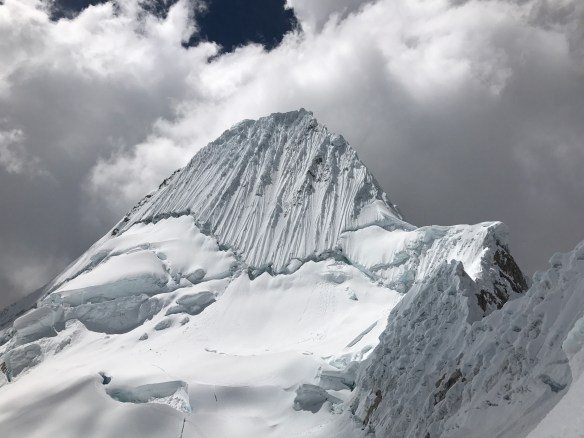
Alpamayo’s southwest face.

Alpamayo

Alpamayo is a stunning pyramid of ice and snow, its steep faces gorgeously fluted with spine-like runnels of ice. Located in the heart of Peru’s beautiful Cordillera Blanca, Alpamayo’s northern aspect is that of a perfectly symmetrical ice pyramid, while it’s southwestern face and standard climbing route rises above the surrounding glacier like an enormous flake of sheer ice, vertical runnels forming a complex texture of natural snow gulleys. At 5947m Alpamayo is not quite high enough to scratch the magic 6000m mark which makes so many climbs in South America popular objectives, yet Alpamayo’s southwest face is nonetheless one of Peru’s most sought-after climbs due to it’s powerful aesthetic appeal and delightfully high quality climbing.

I had been keen on an Alpamayo attempt for several years, but had as yet not been confident enough in my ice ability to take a shot at the steep, relatively technical face. For quite some time Alpamayo was just a dream, an idea, not something which represented a realistic objective for me. I knew that this state of affairs would change if I wanted it to; 6000m and 7000m high altitude climbs had likewise been mere dreams of mine in the not-so-distant past.

In the two years leading into 2017 I had gotten significantly more experience climbing on steeper snow and easy ice, had been doing a lot of multipitch rock climbing throughout the work year, and finally felt comfortable with the systems involved in a climb of Alpamayo’s technical scope. With no local partners for a climb, I contacted my friend Edgar in Ecuador – it so turned out that Edgar was free at the same time as me in August, and we started talking about a plan. Edgar is a strong, experienced guide whom I had climbed with several times previously, and I knew that with him on the rope a summit of Alpamayo would be a realistic objective. After sorting out dates and a rough itinerary for flights, the goal solidified into something real, and I began to put more effort into the upper body endurance elements of my mostly cardiovascular focused training regime.  In Huaraz Edgar’s friend Flavio, also an experienced Ecuadorian climber, joined us for a solid team of three.

Acclimatization Strategy

Prior to Peru I spent roughly three weeks in Kyrgyzstan making a solo climb of 7134m Pik Lenin. My intention was to come into Peru pre-acclimated, saving time and expense by enabling a fast and efficient shot at Alpamayo without spending days acclimating ahead of time. I had effectively utilized a similar strategy the year prior in order to make an overnight climb of Mount Elbrus, and was keen to repeat the efficiency and success of that expedition. Finishing on Pik Lenin much earlier than expected, I spent ten days at sea level after getting off of the mountain. I was quite nervous that such a significant rest period would adversely affect my strong acclimation, or compromise it altogether, but these fears were ultimately unfounded. Despite the ten day break from altitude the strategy worked perfectly; throughout the entire climb of Alpamayo I never felt any adverse effects from altitude, and operated very comfortably, extremely well acclimated throughout. Edgar, living above 3000m in Ecuador and constantly climbing Ecuador’s variety of 5000-6000m volcanoes, was likewise well acclimatized from the outset of the trip.

Photographs

Itinerary and Trip Report

Day 1: August 16th
Cashapampa ~2900m to Llama Corral ~3700m. 3:00 hours.

After a long drive disrupted by striking school teachers blocking the road out of Huaraz, we arrived at Cashapampa around lunch time.  We ate a quick meal of chicken and potatoes, sorted out Donkeys for carrying our gear, and then headed up the start of the Santa Cruz valley trek which doubles as the approach trail to Alpamayo’s base camp.  The hiking was hot, dusty and sweaty, the afternoon sun oppressive.  In Llama corral we pitched camp, bought some bottles of cola from a small shop, and slept early.

Day 2: August 17th
Llama Corral ~3700m to Alpamayo Basecamp ~4300m. 3:30 hours.

Another day of approach hiking across long stretches of dry, level ground.  We passed several gorgeous high glacial lakes, and enjoyed fantastic views of surrounding peaks.  We turned left off of the Santa Cruz trek and onto a path heading up through steep forest, taking us to Alpamayo Basecamp.

Day 3: August 18th
Alpamayo Basecamp ~4300m to Moraine Camp ~4900m. 2:45 hours.

Due to our strong acclimation, we decided on an aggressive strategy for our summit attempt.  We would attempt the summit from Moraine Camp, rather than making the long carry over the Quitaraju-Alpamayo Col to the Col Camp/High Camp.  While we knew that this would add some 3-4 hours to the summit bid, we also knew that it would save a lot of energy, avoiding a gear carry over the steep and technical Col.  From Basecamp we no longer enjoyed donkey support, and so we left early after breakfast with heavy bags full of equipment.  The hike to Moraine Camp follows a trail of switchbacks up through brush and onto bouldery moraine, with clear views of surrounding mountains.  The moraine itself has several flat spots for tents – we chose to camp as close as possible to a small stream.

Day 4: August 19th
Moraine Camp ~4900m to Alpamayo Summit 5947m. Descent to Alpamayo Basecamp ~4300m.

4:00 hours, Moraine Camp to the base of the face.
5:00 hours on the face, to the summit of Alpamayo. 1:00 hour on the summit. 7:15 Hours from the summit to Moraine Camp. 1:00 Hour from Moraine Camp to Alpamayo Basecamp.
We departed Moraine Camp at 10:30 p.m., and got down to Basecamp at 5:50 p.m. making for a big day of over 19 hours on the move.

From our tents to the base of the snow we walked for around an hour, crossing large boulders and chossy moraine.  From the snowline, the climb to the Quitaraju-Alpamayo Col ascends steep slopes, and although we didn’t feel the need to belay any of it I was very happy with our decision not to haul all of our gear up.  It took us a full four hours to reach the base of the wall in the middle of the face, where we arrived at around 2:30 a.m.  A team of four Germans was around 30 minutes behind us.

I had heard from an Ecuadorian climber in Kyrgyzstan, and others in Huaraz, that the French Direct route was in great condition this season – and we weren’t disappointed.  Gaining the face involved a big move onto overhanging snow above the bergshrund, which Edgar led in style, and seconding it clean felt burly and strong.  Pitch 1 above the bergshrund was a moderate snow slope of around 55-60 degrees, with each subsequent pitch getting progressively steeper and icier.  The climbing was sustained, but the snow condition was firm and crisp – tooling and frontpointing upwards felt delightfully secure and fun.  This being the longest pitched snow route I’d ever undertaken, at eight 50-60m pitches, I focused on my stamina, controlled my breathing, and tried to move carefully and efficiently up the face.  Around Pitch 5 I realized that we were roughly halfway up and were going to make it to the top; this sense of impending success fuelled the remaining three pitches.  Pitch 8, the last, was rock hard 75-80 degree water ice riddled with pockets, large swathes of it thinly plastered over rock.  A final crux above the ice involved a few balance moves onto the summit cornice – and we were on top!  The German team followed onto the summit directly behind us, and were very friendly despite having had to climb below us (and all the ice chunks we knocked down) for the entire route, and wait for us to sort out some rope tangles below the final ice pitch.

We were extraordinarily lucky to have direct access to Alpamayo’s true summit – something of a rarity.  The true summit is often inaccessible, or very dangerous, guarded by a traverse across the unstable and extremely exposed summit ridge, but this season the French Direct route terminated directly below the highest point on the ridge.  We spent roughly an hour on top taking photos of the gorgeous views and enjoying the sense of success.  Rappelling the face involved eight raps off of good v-thread anchors, and after a break to shed layers and hydrate at the Col our descent to Moraine Camp took another three raps.

At Moraine Camp we immediately began packing up for a descent to Basecamp, keen to get as low as possible so as to avoid spending an extra night camping.  The trudge down to basecamp was heavy and uncomfortable, all three of us tired from the long day.  We arrived at basecamp just before sunset, and had enough time to eat a quick meal before heading to sleep, exhausted and satisfied with our accomplishment.

Day 5: August 20th
Alpamayo Basecamp ~4300m to Cashapampa ~2900m. 5:00 hours, with time spent swimming in the high glacial lake between Base Camp and Llama Corral.

Feeling worn out, we took our time descending from Basecamp to Cashapampa.  With the donkeys carrying almost all of our gear and leftover food, we enjoyed light packs and good speed down the long, gently sloped trail.  Between Bascamp and Llama Corral we stopped to swim in a gorgeous glacial lake; it was freezing cold but refreshing!  In Cashapampa we ate a big meal, drank some cold beers, and started the drive back to Huaraz.

Pik Lenin – August 2017

I summited 7134m Pik Lenin on August 2nd, 2017. I climbed solo above 5300m Camp 2, using a basecamp support package for 3500m Basecamp and 4400m Advanced Basecamp (“Camp 1”) from Central Asian Travel. I roped with other independent climbers while crossing the heavily crevassed lower glacier between 4400m Advanced Base Camp and 5300m Camp 2. Images and details from my unsuccessful 2016 Pik Lenin expedition can be found here.

IMG_0925

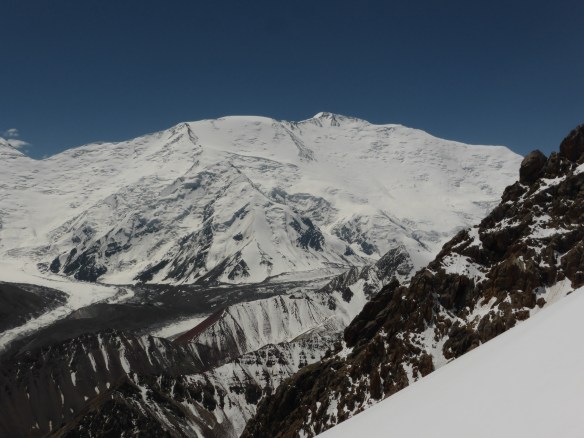
Pik Lenin, from 3500m Basecamp.

In July of 2016 I made an unsuccessful attempt on Pik Lenin.  Afterwards, the mountain and my non-summit had persistently lingered on my mind.  I thought about the climb almost daily, dwelling upon my feelings of disappointment and considering what had gone wrong.

In February of 2017 I made a rather unpleasant, and ultimately unsuccessful attempt on a solo of 6893m Ojos del Salado from the Argentine side, via an approach across the vast and barren high altitude Atacama Desert.  While unsuccessful, reaching only ~6350m due to thigh deep snow, extreme winds, and an incoming storm, I was surprised afterwards by my feelings of acceptance.  The solo approach from an unacclimated start had been so gruelling that I was glad just to have made it to the base of Ojos, and the snow/weather conditions so poor that progress beyond my high point would indeed have been impossible for me; the non-summit had been entirely out of my control.

I didn’t feel the same way about Pik Lenin.  I felt that I had made a mistake, that I should have continued and forged on instead of turning around, that I had given up too easily and let myself down.  I decided to return and try again.

IMG_0859

Pik Lenin.

Below are images from the expedition, a calendar/schedule of my 2017 climb, and a day-by-day trip report.

Pik Lenin 2017 Photographs

Pik Lenin 2017 Trip Report

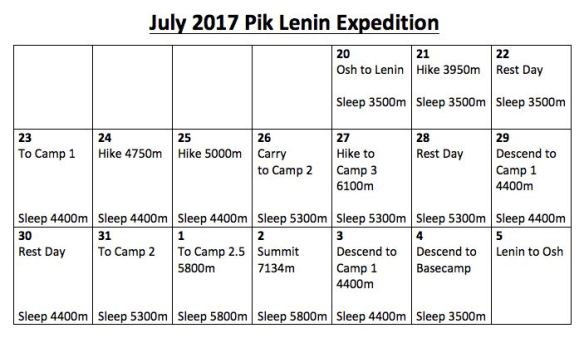
2017 Lenin Calendar

My 2017 Expedition Schedule.

July 20th

A 7.5 hour drive from Osh to Pik Lenin basecamp, arriving at 6:00 p.m.  I ate dinner and immediately went to sleep, still jetlagged due to the transition from North America.

July 21st

A relaxed hike took me to 3950m on nearby Pik Petrovski.  Having climbed to the summit the year prior, I opted to stop after an hour of hiking and relax instead of pushing myself to move higher.  A rapid descent down a scree slope took me back to basecamp.

July 22nd

One of my bags had not made it to Bishkek, missing the London/Moscow transfer.  Within were all of my climbing clothes.  I opted to take a full rest day in basecamp, and as luck would have it, the bag arrived just after midnight on a truck from Osh.  Central Asian Travel’s Osh manager had sorted the delayed luggage’s transit from Bishkek to Osh, and delivered it on the next basecamp supply truck.  Very impressive.

July 23rd

Loaded horses with 32kg of equipment and food, taking a ~12kg bag for myself.  Hiked to Advanced Basecamp 4400m, 9:45 a.m. to 2:45 p.m. or 5 hours at a leisurely pace.  I hiked accompanied by a Ukrainian soloist whom I had happened to meet several years prior on Aconcagua.  It rained steadily throughout the day, transitioning into wet snow as we reached Advanced Basecamp.

July 24th

After lunch I took a leisurely hike to 4760m up a nearby scree ridge.  Stopped hiking after an hour, rested in the sun for about an hour, and then made a quick descent back to Advanced Basecamp.

July 25th

I roped up with the Ukrainian soloist who had hiked to Advanced Basecamp with me, and we made an acclimation climb up to 5000m on the route to Camp 2.  We began at 4:15 a.m. and reached 5000m at 9:00 a.m., a time of 4:45.  At 5000m we took a break for about half an hour and then headed back down.  We began early in order to avoid poor snow conditions and ensure that snowbridges would be in good shape.

The route was in decent condition, albeit with many more crevasses than I had encountered the year prior.  A large avalanche had hit the route to Camp 2 about a week earlier, along the flat traverse below a heavily corniced section of the North Face immediately prior to Camp 2, and an early start in cold, stable conditions would also help to mitigate our exposure to another event.

July 26th

I roped up with my Ukrainian friend once again for a carry to 5300m Camp 2 – fairly essential practice given the volume and state of the crevasses on route.  I opted to take up all the supplies I would need for 8 days on the mountain in one foul shot on this carry, and thus make it the only truly heavy load of the entire climb.  Rather than bring a second heavy load with me during my summit bid, which would burn energy and time when I would need it most, I had decided ahead of time that getting the carrying over with all at once was both manageable and reasonable given the technically easy nature of the route to Camp 2.

We departed 4400m Advanced Basecamp at 4:20 a.m., and arrived at 5300m Camp 2 at 11:40 a.m., a very slow time of 7:20.  We took a slow, easy pace with our heavy bags, slowing further when the morning sun turned the route into a horrible furnace of soft snow and glare.  On arrival I immediately pitched and anchored out my tent, cooked lunch, and took a nap.

July 27th

After breakfast I packed a light bag and climbed to 6100m Camp 3, 9:15 a.m. to 12:15 p.m., or three hours.  The route out of Camp 2 follows a ~35-40 degree slope before traversing across gentle terrain to the base of Pik Razdelnaya.  A final slope of increasing steepness, to around 40-45 degrees, leads to Camp 3 at 6100m-6150m on the summit of Pik Razdelnaya.  I rested for half an hour at 6100m and then descended to 5300m Camp 2, taking one hour.  I had a headache on return to Camp 2, and to my dismay discovered that I had packed an empty Ibuprofen blisterpack.  I took a nap, spent the afternoon reading, and struggled to eat a full dinner.

July 28th

I had initially planned to make a second acclimation hike to 6100m today, but woke up feeling lethargic and uncomfortable.  I had a minor headache and no appetite; mild AMS.  I began my acclimation hike, but stopped at around 5500m and decided that I should take a full rest day instead.  While I didn’t feel terrible enough to warrant descending, I had a fairly unpleasant rest day roasting in the heat of my tent.

July 29th

I packed a light bag and descended from 5300m Camp 2 to 4400m Advanced Basecamp, leaving my tent and supplies well anchored.  I departed at 7:00 a.m., and reached ABC at 8:50 a.m.  I descended alone, unable to find another independent climber to rope with, gingerly making my way across the crevasses.  In ABC I spent the remainder of the day resting, checking the weather forecast for a possible summit window.

July 30th

The forecast showed a few days of favourable weather, followed by an abrupt spike in wind speeds.  I took a full rest day, and prepared to begin my summit bid on the 31st.

July 31st

With an extremely lightweight bag, I departed for 5300m Camp 2 roped up with an independent Czech climber.  We began climbing at 4:15 a.m. and arrived in Camp 2 at 9:00 a.m., taking 4:45.  The weather was perfect, clear and windless, and the climb much easier than my load carry several days before.

August 1st

I packed all of my equipment and supplies and climbed from 5300m Camp 2 to 5800m, near the base of the final slope below 6100m Camp 3.  I departed Camp 2 at 10:30 a.m., and arrived at my 5800m “Camp 2.5” at 1:00 p.m., taking 2:30 while moving at a leisurely pace.  Here I stopped and pitched my tent.

I had decided in advance that I would forego sleeping at 6100m Camp 3, and instead use this spot at 5800m as the high camp from which I would launch my summit bid.  I had made this decision for several reasons.  First, Camp 3 is filthy. Human waste and dirty snow is everywhere, making it very difficult to prepare clean water.  This had likely contributed to the stomach issues I had experienced in 2016.  Second, Camp 3 is fairly high, making it difficult to eat and sleep well.  I knew from prior experience that camping 300m lower would have a significant positive influence on my appetite and sleep.  Third, Camp 3 is very exposed, and I knew from my three nights there in 2016 that in high wind or storm it would be a particularly unpleasant place to be based.

While I was nervous that the additional 300m of altitude gain on summit day would be quite significant when undertaken prior to the already very long summit ridge (almost 6km above 6000m), I also felt strong, and confident in my endurance.  Given that the ridge to the summit descends ~100m immediately past Camp 3, I was setting myself up for a 1400m summit day.  I had decided that the tradeoffs of using a lower high camp were worth it, and indeed I enjoyed a quiet, pleasant afternoon of rest and abundant eating.  I checked the weather forecast on my satellite phone before going to sleep; it called for 25km/h winds and light snowfall.

August 2nd

Awake around 3 a.m., I managed to eat a light meal and drink some water.  I packed two litres of water with electrolyte mix (one heavily caffeinated), some snacks, my down pants, and my storm gloves into a summit pack.  I left my tent at 4:20 a.m., intentionally late compared to the standard departure times used by most who climb Lenin. I left late because I knew the route to be of very moderate difficulty, and because I wanted to minimize the time spent climbing in darkness and the cold of night.

I crossed the ridge towards the slope to Razdelnaya and Camp 3 and began to ascend, reaching Camp 3 at 5:40 a.m. as the sun began to rise, taking 1:20 from my tent.  Without stopping in Camp 3 I descended ~100m to the saddle between Razdelnaya and Lenin’s summit ridge, where I continued upwards on moderate snow slopes.  The sun began to cast a glow over the mountain, warming things up and providing superb views of the surrounding mountains and the massive glacier far below.

I began to pass other climbers, a few having turned around.  I soon reached the base of ‘The Knife’, a short ~50-55 degree snow slope sporting a fixed rope of dubious anchorage, and front pointed up it with my 70cm straight shaft ice ax and trekking pole.  From the top of the knife the route continued along gentle slopes for what felt like an eternity.  The entire summit ridge from Camp 3 to the high point is well above 6000m and is almost 6km long.

At around 11:45 I met a friendly French Canadian climber whom I had spoken with in Camp 2 days earlier; he was descending from the summit, was encouraging, and told me that I was getting close to the top.  I enjoyed the bright sunshine and blue skies, and made steady pace with a focused, controlled rest stepping rhythm.  Around half an hour later the weather abruptly and somewhat violently worsened.  A strong wind picked up, clouds rolled over the mountain, and snow began to fall.  I double checked my phone battery, confirmed that my GPS was tracking correctly, and continued on.

I soon found myself ascending across the upper summit ridge in deteriorating visibility.  At around 12:30 p.m. I reached the upper plateau of rolling hills and false summits, where I encountered a group of climbers debating their course of action.  Another climber descending from the summit was telling them that the summit was still about an hour away, and further that he felt the worsening conditions made the upper slopes too dangerous to proceed.  Confident in my GPS navigation, holding a litre of water, still feeling strong, well prepared with abundant backup layers in the form of my down pants and storm mittens, and still feeling quite comfortably warm in my extremities, I continued past them.  Ten minutes later the summit came into view, one climber descending from it and a third figure standing atop.

I reached the summit at 12:45 p.m., 8:25 from my tent at 5800m and 7:05 from Camp 3 at 6100m.  I spent about 3 minutes quickly taking a few dozen photographs of the summit and of myself.  The climber who was on top when I arrived was Russian, alone and preparing to descend.  While he did not speak English, nor I Russian, I introduced myself and offered to accompany him down with my GPS, to which he happily agreed.  We began down through an absolute whiteout.

The descent was long and psychologically arduous.  Moving in atrocious visibility and high winds, which felt as if gusts were reaching into the ~70km/h range, my GPS track was the only thing keeping me headed in the right direction and off of the slopes leading down to Lenin’s north face.  Below the slope of ‘The Knife’ visibility improved somewhat, but progress remained slow.  As we reached the saddle between Razdelnaya and Lenin’s summit ridge we met three friendly Ukrainians whom I had run into twice previously on the mountain.

Only about 100m of distance and 80m of vertical away from Camp 3, the GPS nonetheless remained absolutely essential for navigation in the poor visibility.  As we broke trail through now-knee-deep snow, electric shocks buzzed our hair; thunder boomed in the distance.  Rather than risk being struck by lightning, we removed all of our metal equipment, tossed it in a heap several meters away from us, and grounded ourselves for roughly half an hour until the thunder ceased.  I reached Camp 3 at 7:20 p.m., and continued down to my 5800m high camp, getting back into my tent at 8:00 p.m., making for a fifteen and a half hour day.

August 3rd

The storm continued all night, dumping a good 20-30 cm of fresh snow.  High winds continued in the early morning, and I resigned myself to the fact that I might have to wait a day before descending.  Around 9:00 a.m. the wind began to calm somewhat, and I quickly began packing my equipment for descent.  I departed my camp at 10:20 a.m., and started the slog back down to Camp 2.

Along the way I met a pair of friendly and experienced Czech climbers who agreed to rope up for the final descent from 5300m Camp 2 to Advanced Basecamp.  I was delighted to have a group of three on my rope for the lower glacier, as while conditions were wet enough for crevasses to be easily visible, the route was made somewhat riskier for now being snow covered.  We reached Advanced Basecamp at 3:00 p.m., an unpleasant and slow descent on loose, wet snow while hauling heavy bags.

August 4th – 5th

I descended from Advanced Basecamp to Basecamp, using horses to haul some ~30kg of equipment down.  The day after arriving in Basecamp I drove back to Osh.

Pik Lenin – July 2016

7134m Pik Lenin is well known for predominantly two reasons; as one of the “easiest” 7000m climbs in the world, and as the site of the worst mountaineering accident, by fatality count, to ever occur. The mountain’s designation as “easy” strikes me as an inside joke of sorts. The climb is very much a non-technical glacier slog, and Lenin is frequently summited by relatively inexperienced climbers. However, the high altitude, long distances, expedition nature of climbing from an unacclimated start, and the fierce weather of the area make Lenin a considerably more involving climb than its mild technical grade may initially suggest.  Images and a detailed trip report from my successful 2017 Pik Lenin expedition can be found here.

P1040118

View of Pik Lenin from near the summit of Pik Petrovski.

In deciding to attempt Pik Lenin I felt that I would be following a very logical approach to making my first 7000m summit. A non-technical 7000m mountain seemed a good progression from walk-up and moderately technical 6000m climbs. The nature of the climb also seemed conducive to undertaking the expedition independently above basecamp, and perhaps even entirely solo – as much as one can ‘solo’ a mountain as popular as Lenin. After a fairly moderate five month training cycle I sorted out service for access and basecamp logistics, hiring Kyrgyz operator Ak-Sai Travel for this, planned out a balanced supply of food for my high camps, put together an acclimation plan, and booked airfare for Bishkek, Kyrgyzstan.

Ultimately, my attempt on Pik Lenin was unsuccessful. My acclimation routine, rotations up the mountain, and high camp move all went very, very well. However, during my summit bid I experienced an upset stomach and unstable bowels, and this paired with 40-50km/h morning winds caused my decision to turn myself around and descend from only ~6400m. Flight timeframes and energy were not conducive to a second summit attempt, and so I left Kyrgyzstan without a summit, a profound sense of disappointment weighing upon me.

Below is a calendar/schedule of my acclimation and climb, as well as a collection of images from my 2016 Pik Lenin expedition.

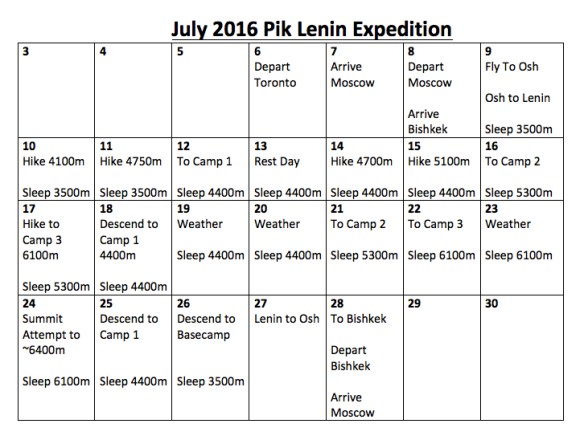
Pik Lenin Calendar

My 2016 Expedition Schedule.

Mount Elbrus – August 2016

P1040358

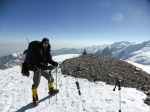
Mount Elbrus from the south.

At 5642m Mt. Elbrus is considered by most to be the highest summit of Europe.  Located in southern Russia within the Caucasus mountain range near the border with Georgia, Elbrus stands just within the widely accepted boundaries of the European continent.  A dormant volcano, Elbrus is gently sloped and a non-technical climb.

Trip Report

I had planned to make a quick ascent of Elbrus after climbing 7134m Pik Lenin in Kyrgyzstan, due to the low cost associated with getting to Russia from Kyrgyzstan and the even lower cost of basic logistics support once within Russia.  I was unsuccessful on Pik Lenin, and found myself headed to the Caucasus mountains intent on finding some redemption.

My trip began in the Mineralnye Vody airport, where a driver from Pilgrim Tours picked me up and drove me ~5 hours to their hotel in Terskol, a small tourist town nearby Elbrus.  Terskol is a ski resort village, and in the summer caters mostly to climbers.  Elbrus is a very popular climb, and lots of climbers from all over the world were around.  Already acclimated from climbing on Pik Lenin, I planned to begin my ascent the next afternoon and turned in early.

Day 1: I took a taxi about 5km into Azau in the early afternoon.  In Azau a cable car runs from 2350m up to 4050m.  I used the cable car to access the base of Elbrus’ glacier, and the beginning of the southern ‘standard’ climbing route.  This shaves 1700m off of the climb, quite considerable.  Use of the cable car is considered standard practice when climbing the southern route and is the same, I suppose, as making an approach via vehicle when climbing similarly sized mountains elsewhere.  Regardless, using a gondola to access the base of the mountain gave me an odd feeling.  Elbrus’ southern side is highly developed, and gondola access was only the first of several infrastructural elements which I would encounter.  I found myself considering the difference which the Gondola made and reflecting on climbs in Peru and in China, as well as my recently attempted ascent of Pik Lenin, and how such climbs are made considerably more difficult due to the long approaches which they entail.

P1040342

The Gondola in Azau

The gondola stops at several stations on the way up.  One such station, the Barrels Hut at 3700m, is where many climbers opt to stay for acclimation.  I continued higher, to the 4050m Diesel Hut station at the base of the climbing route.

P1040343

The Barrels Hut.

At 4050m I left the gondola and was surprised to find the lower glacier quite crowded.  A large number of people, some clearly climbers acclimating, others Russian day-hikers, were all over the place.  Snowmobile drivers were selling rides higher, and the noise of their engines was everywhere.  Snowcats were taking large groups of people up the slope, and a variety of ugly buildings stood amongst the rocks.

P1040348

Snowmobiles and snowcats at the 4050m station.

P1040359

Snowcats were moving up and down the lower slopes.

I had read that Elbrus was crowded during the climbing season, but wasn’t prepared for what I encountered.  The lower mountain was unattractive, noisy, and overdeveloped.  I began to hike upwards at a leisurely pace, and stopped around 4 p.m. at ~4300m to pitch my tent in the rocks.

P1040428

My campsite at ~4300m

Day 2:  The forecast had called for 30+cm of snowfall, and so I woke up at around 1 a.m. to check the weather.  The skies above were clear but a thunderstorm was booming, lightning flashing to the south.  A snowcat loaded with climbers drove past – evidently many choose to use them for a ride higher before beginning their summit push.  I went back to sleep.  Awake again around 4 a.m. and the thunderheads had moved off, so I began preparing to head upwards.  The sun cracked the horizon, and the sky began to resemble a watercolour painting, awash with pastel colours.

P1040368

Sunrise from my tent.

Above the mountain was tinged purple with alpenglow, and with no other climbers around was quite a pretty sight.

P1040369

Elbrus at sunrise.

I began moving upwards at 5:15 a.m.  I focused on my breathing and foot placement, and it felt great to be rest-stepping upwards at a clean and steady pace.  Already acclimatized from 20 days of climbing on Pik Lenin, with a climax of three nights at 6100m, moving at this relatively low elevation of ~4500m felt easy and smooth.  The slope was gentle, no more than ~30 degrees, and the snow condition was good.

P1040371

The view down the lower slopes of Mt. Elbrus.

I first encountered other climbers at the base of the east summit, and soon was passing small groups.  The weather was holding nicely, with only low winds.  Clouds were building to the south, but were still quite far away.  The terrain was very easy, with the route following a gentle slope to the base of the east summit and then traversing westward below it towards the saddle between east and west summits.  I continued steadily, not rushing or pushing my breathing, and focused on maintaining my pace.

P1040377

Heading towards the saddle between summits, the west summit in view.

The route dropped a bit into the saddle, a large level area, before beginning up the west summit block.  The slope was somewhat steeper here, but still no more than an easy ~40 degrees.  I was happy to have brought two trekking poles, opting to carry my ax in my pack.  Atop the west summit block I walked across nearly level terrain towards a distant highpoint, and then continued on past it towards another.  As I got closer, I saw others atop it and realized that this was the summit.  I reached the top at 11:25 a.m.

P1040390

The west summit of Mt. Elbrus.

The clouds began to move in, obscuring views.  The top was marked by a peculiar rock and several plaques.

P1040402

Elbrus’ west summit marker.

The other climbers, a friendly Polish group, left as I arrived and I spent 15 minutes or so alone on top. With clouds rolling past, light snow beginning to fall, and the wind picking up I began to descend.  Through periodic gaps in cloud the east summit stood ahead of me.  As the weather was worsening, I decided to continue descending and abandoned any thoughts of tagging the top of the lower 5621m east summit.

P1040422

The east summit of Elbrus, from near the west summit.

The weather deteriorated further on the way down, and I found myself walking through a whiteout.  Near the base of the east summit a buried snowcat – likely having been there for quite some time – served as an easy to spot landmark.

P1040425

The descent was very fast and I reached my tent at 1:15 p.m., where I took a one hour nap before packing up my equipment and heading down towards the gondola.  The weather had begun to clear somewhat, although dark storm clouds still haunted the horizon.  View of the Caucasus to the south were interesting, but marred by the ugly buildings clustered around the gondola station.

P1040430

The Caucasus to the south.

P1040441

Taking the gondola down to Azau.

I was back in Azau by 4 p.m., where a cold beer and some lunch in a cafe were a welcome celebration.

Thoughts on Mt. Elbrus

Mt. Elbrus was an easy climb, and somewhat uninspiring due to the overdevelopment on the southern side of the mountain and the lack of any technical challenges.  I had been repeatedly told that the north side of the mountain is wilder, undeveloped, and a much better choice for a proper expedition, but my time constraints and solo climbing dictated my choice of the southern normal route.  The climb was long, with over 1300 m of elevation gain between my tent and the summit, but completely non-technical.  Due to good snow conditions I didn’t feel the need to use my ice ax during the climb, and was more comfortable with two trekking poles for balance on the gentle slopes.  The famously unstable weather reared its head during my descent, and I can see how the mountain has developed a reputation for being dangerous as a result of this.  Disoriented in the frequent whiteout storms a climber could easily get lost and descend the wrong direction, or manage to get off route and into a crevasse.  Every year numerous climbers die on Elbrus’ slope, many due to weather instability, and the climb – like all high altitude mountains – isn’t to be taken lightly.

Coming into the climb pre-acclimatized and completing the climb solo in a single ‘overnight’ push with the use of a simple campsite was a good choice, as doing so saved me the time consuming process of acclimating on the mountain itself.  This is a strategy which I definitely intend to use again in the future, and its success for me on Elbrus served as a valuable lesson.  I am glad that I climbed Elbrus in a financially inexpensive manner, as the mountain isn’t particularly beautiful, remote, high, or challenging.  I wouldn’t go back to Elbrus, and wouldn’t really recommend undertaking the costs of flying to Russia just to climb Elbrus by itself.

Access

Climbing Elbrus does involve some red tape.  I utilized the service of Pilgrim Tours for a very basic logistics package.  They provided me with my permits, airport transfers, a ride into Azau, and a hotel room.  They were professional, their services are very reasonably priced, and they have a lot of experience with the mountain.  I would strongly recommend them.

Mount Kinabalu – February 2016

Kinabalu07

Kinabalu, from near the park entrance.

4096m Mount Kinabalu is Malaysia’s highest mountain.  Kinabalu stands on the island of Borneo, in Malaysia’s Sabah province.  Kinabalu is an accessible trekking peak famous for its sunrises, spectacular clouds, and the many interesting rock formations found on the upper mountain.

We began our hike in Kinabalu National Park, where we arrived by bus in the early afternoon.  We had booked a climbing package in advance, going directly through the national park.  After doing a good amount of research this appeared to be the least expensive means of hiking.  The park rules mandate that all hikers be accompanied by a local guide, and a multi-day hike with an overnight in the Laban Rata resthouse (a hotel) was also mandatory without special permission when we hiked.  This makes hiking Kinabalu quite expensive when compared to comparable mountains in Taiwan or China.

After an evening resting in a dorm room within the national park, we were up at around 8 a.m. to meet our guide and begin the hike.  A short drive in a park bus took us to the trailhead.  The first day of the hike was steady and laid back, with no need for much rush.  Our destination was the Laban Rate resthouse, located at 3272m below the bare rock of the upper mountain, where we would spend the evening before heading for the top the next morning.  The hiking trail is a well maintained path through dense forest, with an abundance of stairs.  We were lucky not to see any precipitation on the way up, although clouds and mist flowed past us through the forest as we ascended.

Kinabalu09

Hiking through the lower forests.

We reached the Laban Rata guesthouse in the early afternoon.  Given the slow pace we had taken, it struck me that there isn’t much reason to hike Kinabalu across two days.  Indeed at Laban Rata we met a British hiker who decided to head for the summit that afternoon rather than wait until morning, and did so with daylight still remaining when he returned.  Laban Rata is a well stocked hotel, and meals were included with the room booking.

Kinabalu15

Laban Rata.

Kinabalu10

View of the upper mountain from Laban Rata.

After dinner the clouds began to rise, and we were treated to a fantastic light show as the sun set.

Kinabalu13

Sunset from Laban Rata.

Kinabalu11

Sunset from Laban Rata.

Kinabalu14

Sunset from Laban Rata

Kinabalu12

Sunset from Laban Rata.

Overnight it rained heavily.  We woke up at around 1 a.m. and ate breakfast, ready to get started.  The rain stopped, and we began hiking alongside the crowd at 2:30 a.m.  Above Laban Rata the trail first follows stairs and a dirt path, and later begins to ascend over bare rock.  Kinabalu’s rock is wonderful granite, grippy and textured.  Fixed ropes were in place along steeper sections, but with my trekking poles for support they weren’t really needed.  The steepest section involved a little bit of easy scrambling, and above it we reached the checkpoint hut below the mountain’s enormous plateau.  From here the going was easy, following a guideline across mostly level rock towards the plateau’s highpoint.  Reaching the summit before the sun, I joined the crowd of other hikers waiting for the sunrise.

Kinabalu01.jpg

The signpost on Kinabalu’s summit.

The sunrise was far less impressive than the vast sea of clouds which obscured it.  Low’s Gully was impressively deep, stretching out beyond the edge of the summit plateau.

Kinabalu02

Sunrise from the summit.

Kinabalu03

Low’s Gully, from Kinabalu summit.

Kinabalu04

Looking down the guideline which stretches across the summit plateau.

Kinabalu05

The summit plateau.

Kinabalu06

The summit plateau.

The way down from the top was a lot more enjoyable than the ascent, and I jogging downwards across the grippy rock.  Returning to Laban Rata for a second breakfast, we took a nap before making the long walk back down to the trailhead and park entrance.


Kinabalu was a very straightforward hike across easy terrain.  The low altitude of the mountain doesn’t pose significant difficulty, and the extensive infrastructure in place on and around the mountain makes the hike very accessible.  The cost to hire a guide, book a room in Laban Rata, and cover meals was relatively a lot more expensive than ‘free’ mountains elsewhere which still offer equally interesting terrain.  The hike is not particularly challenging.
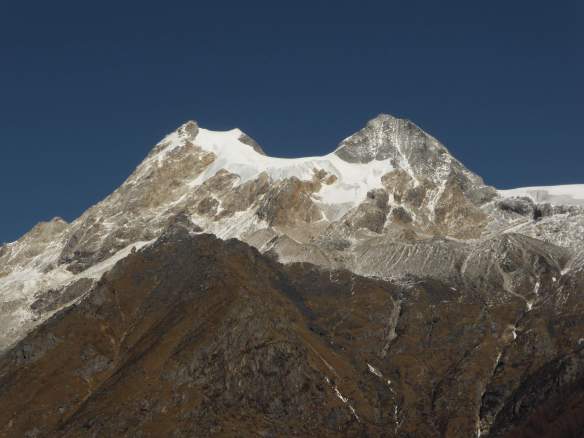
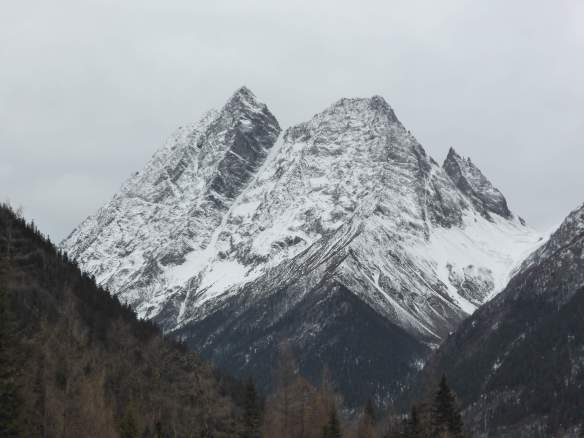
Despite all of this the upper mountain does offer some impressive and beautiful rock, and the cloud formations we encountered were quite lovely.  Living close to Malaysia and already visiting for tourism, hiking Kinabalu was particularly accessible for me and worth the two day time commitment.  I wouldn’t recommend travelling specifically for Kinabalu, but a hike as part of a grander travel itinerary makes sense provided that the price of access isn’t too off-putting.  From some perspectives it might be a better idea to save the money and put it towards a trip to South America or China instead!

We booked our hike through Sutera Sanctuary Lodges, the company which directly manages the park’s restaurants, dorms, and Laban Rata resthouse.  In planning our trip their rate was the least expensive I could find, likely because they are the direct service provider which other companies book through.  Their website is http://www.suteraharbour.com/ and while the site has no mention of Kinabalu they can be contacted about bookings via email.